Seven days is the right amount of time for Istria: enough for the coast, the islands and the interior, with room for long lunches and lazy afternoons.
A week is the length of stay that suits Istria best. The peninsula is compact, so you never spend long in the car, yet it holds a surprising range of places: Roman ruins and Byzantine mosaics, Venetian harbour towns, a national park of islands, hilltop villages above truffle forests and a mountain with views across the Kvarner Gulf. Seven days lets you see all of it without rushing, and still leaves afternoons for swimming and long lunches.
The route below uses two bases, which saves you from packing every morning: three nights in the south, around Pula or Fažana, and four nights in the middle of the west coast, around Rovinj or Poreč. You will need a car. If you are still planning the journey, start with how to get to Istria; if you only have a long weekend, our three-day itinerary is the condensed version.
Day 1: Pula, the Roman city
Begin where Istria's written history begins. Pula's Arena is one of the best preserved Roman amphitheatres in the world, and the old centre around it holds the Arch of the Sergii, the Forum and the Temple of Augustus. Walk it in the morning, have lunch near the market, and spend the late afternoon swimming in the coves of Verudela or Stoja. Our resident's guide to Pula and Roman Istria cover the details.
Day 2: Brijuni and Fažana
Boats to the Brijuni National Park leave from Fažana, a short drive north of Pula. The islands combine Roman remains, parkland, a safari park and quiet shoreline, and a visit takes most of a day. Book ahead in summer. Back on the mainland, stay in Fažana for dinner: it is still a fishing village, and the harbour at sunset faces the islands you have just seen.
Day 3: Cape Kamenjak and the south
Give a whole day to the wild southern tip of Istria. Cape Kamenjak, beyond the village of Premantura, is a protected landscape of low scrub, white rock, hidden coves and clear water, with no hotels and very little shade. Bring water, a hat and shoes for the rocks. If you prefer an easier beach day, Medulin's shallow bay is close by. On the way back, stop in Vodnjan, the town of olive oil, for an evening walk.
Day 4: Bale, Svetvinčenat and on to Rovinj
Change bases today, slowly. Drive north through the countryside and stop in two small inland towns: Svetvinčenat, with its Renaissance square and castle, and Bale, a compact stone town above the coast. Both are in our guide to Bale and Svetvinčenat. Arrive in Rovinj in the late afternoon and walk up through the old town to the Church of St Euphemia for the sunset. The Rovinj travel guide has everything for the evening.
Two bases, seven days and very little time in the car: Istria is made for a slow week.
Day 5: Rovinj, Lim Bay and the Golden Cape
Spend the morning in the old town while it is quiet: the lanes, the harbour and the morning market. Before lunch, take a boat into Lim Bay, the long, steep-sided inlet north of the town, famous for oysters and mussels. In the afternoon, swim in the pines of the Golden Cape forest park, which we describe in Rovinj beaches and the Golden Cape. Divers can swap the swim for a dive; see diving in Istria.
Day 6: Poreč and Novigrad
Head up the coast to Poreč, whose Euphrasian Basilica is a UNESCO World Heritage Site with some of the finest Byzantine mosaics anywhere. Arrive early, see the basilica and its atrium, then walk the Roman street plan of the old town. Our guide to Poreč and the Euphrasian Basilica explains what you are looking at. Continue north to Novigrad, a quiet walled town on the sea, for a late swim and dinner by the harbour.
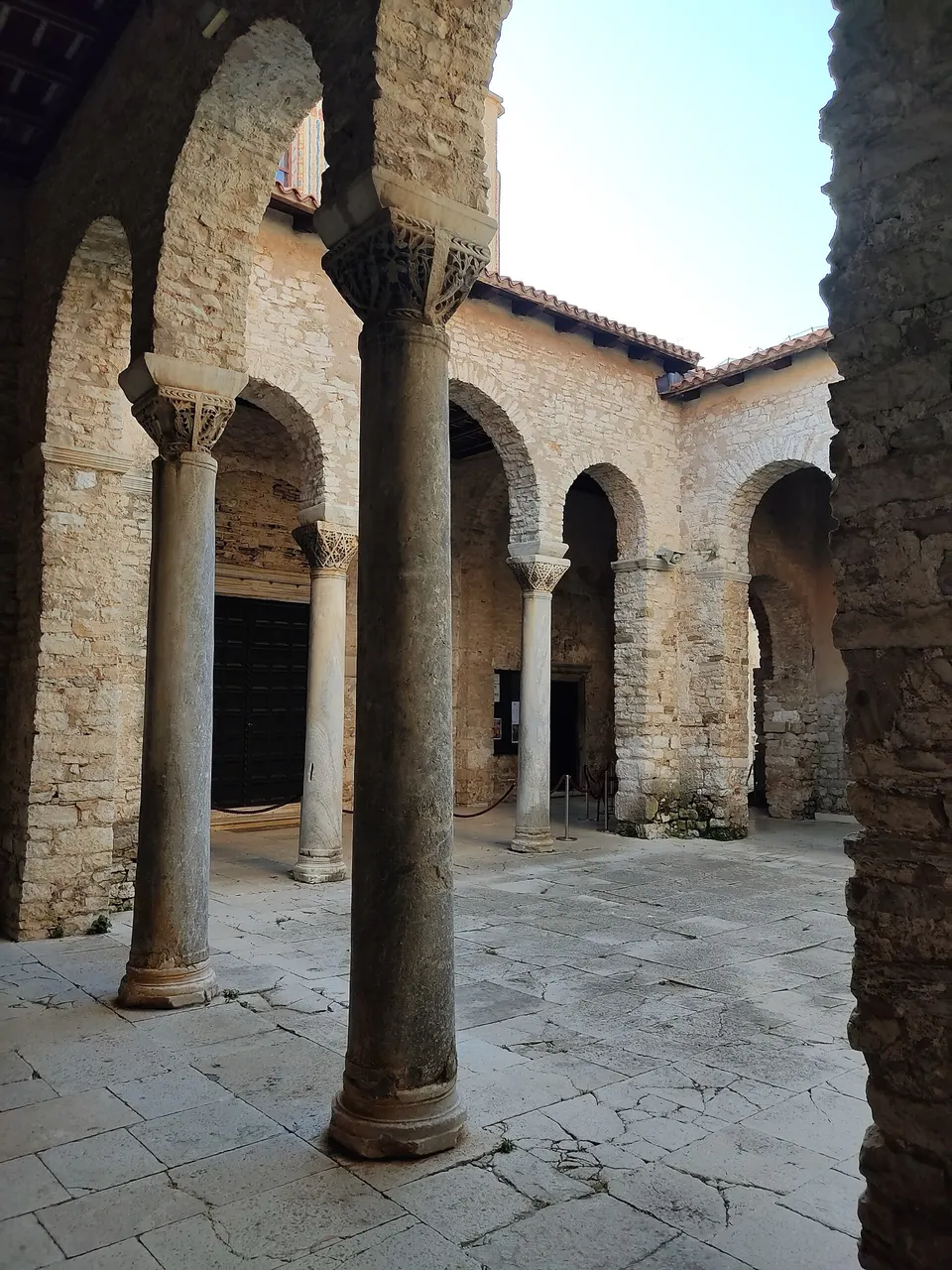
Day 7: Motovun, Grožnjan, Hum and the interior
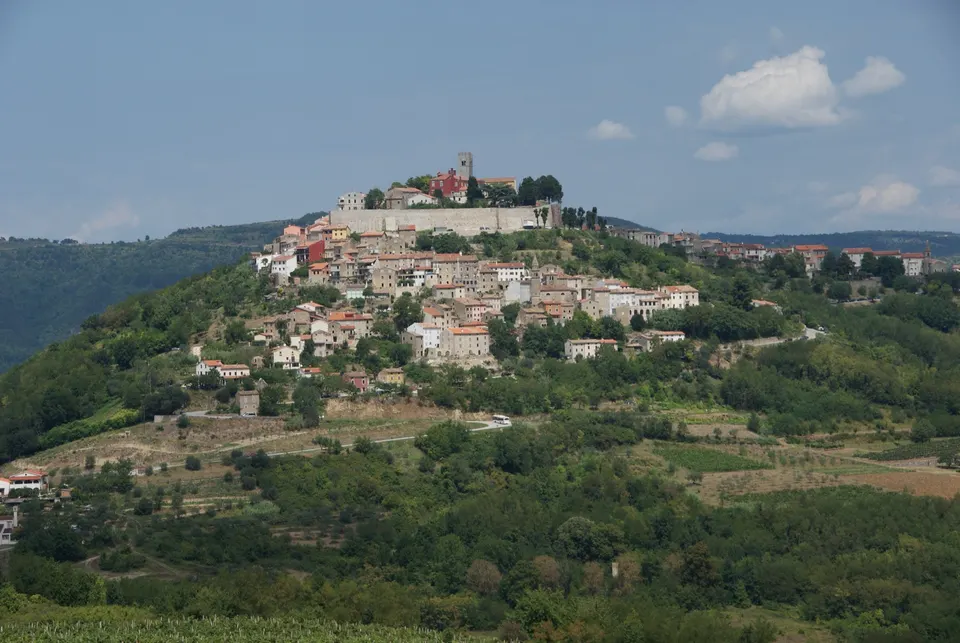
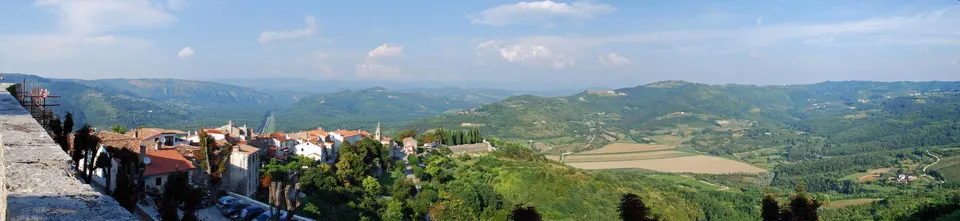
Save the interior for the end, because it is where most people fall for Istria. Start in Motovun, on its hill above the Mirna valley and the truffle forest, and walk the town walls. Drive on to Grožnjan, the small town of artists and musicians, for lunch. In the afternoon, follow the Glagolitic Alley to Hum, often called the smallest town in the world. Our guides to Motovun, Grožnjan and Hum have the details, and truffle season explains why autumn menus here are special.
Have an extra day? Pazin, Labin or Učka
- Pazin and Beram. A castle above a dramatic abyss, and nearby the medieval frescoes of the Dance of Death. See Pazin and Beram.
- Labin and Rabac. A former mining town on a hill and a resort on the bay below, on Istria's east coast. See Labin and Rabac.
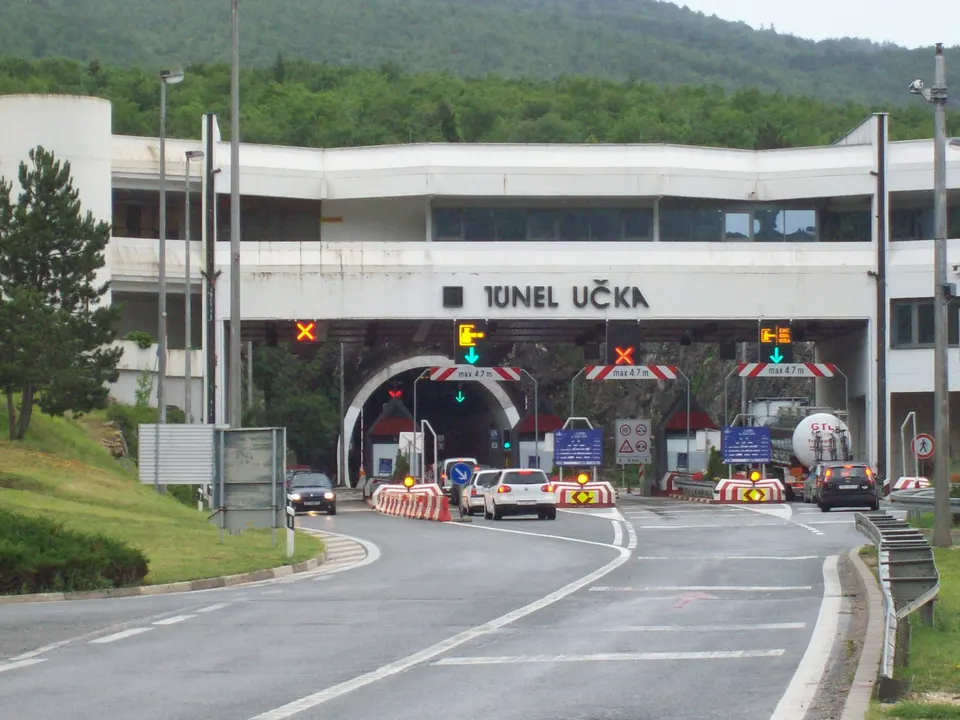
- Učka. The mountain on Istria's eastern edge, with walking trails and views over the Kvarner Gulf. See hiking in Učka Nature Park.
- Opatija. Just beyond the Učka tunnel, an elegant resort of villas and seafront promenades. See our day-trip guide.
- The Parenzana. The route of an old railway, now a walking and cycling trail through the hills. See cycling the Parenzana.
Practical tips for a week in Istria
- Reverse it if you like. The route works just as well north to south, which suits travellers arriving from Trieste or Ljubljana and flying home from Pula.
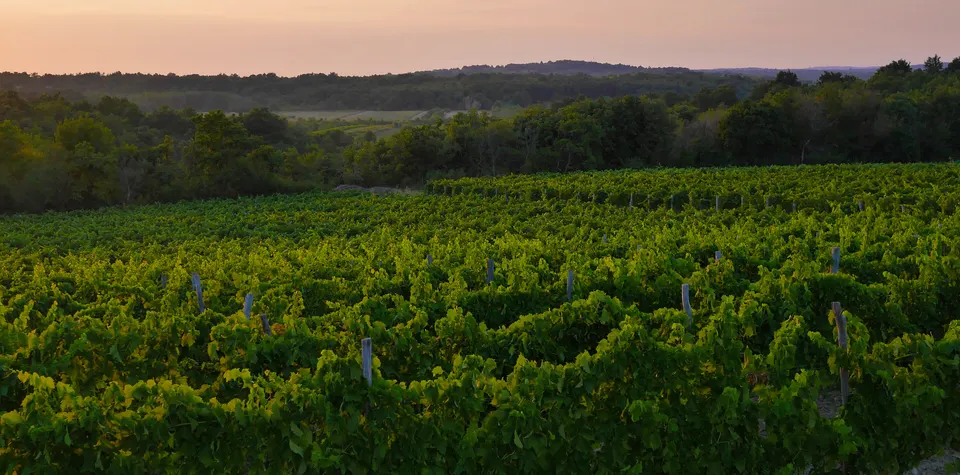
- Choose the season. Late May, June and September are the sweet spot; autumn is best for food and the interior. See the best time to visit Istria.
- Book the fixed points. Brijuni boats and popular restaurants fill up in summer. Everything else can be decided on the day.
- Leave gaps. One unplanned afternoon in the week is worth more than one more sight.
- Travelling with children? Swap a town for a beach where needed. Our guide to Istria with children has ideas.
At the end of the week, you will have seen the Roman south, the Venetian west and the green heart of the peninsula, and eaten well in all three. Many people who make this trip once come back to the same corner every year, and some start looking at old stone houses on the way home. If that happens to you, take your time: Istria rewards slow decisions as much as slow holidays.