Just across Učka, the old Habsburg resort of Opatija feels like another world: grand hotels, camellia gardens and a seaside promenade made for walking.
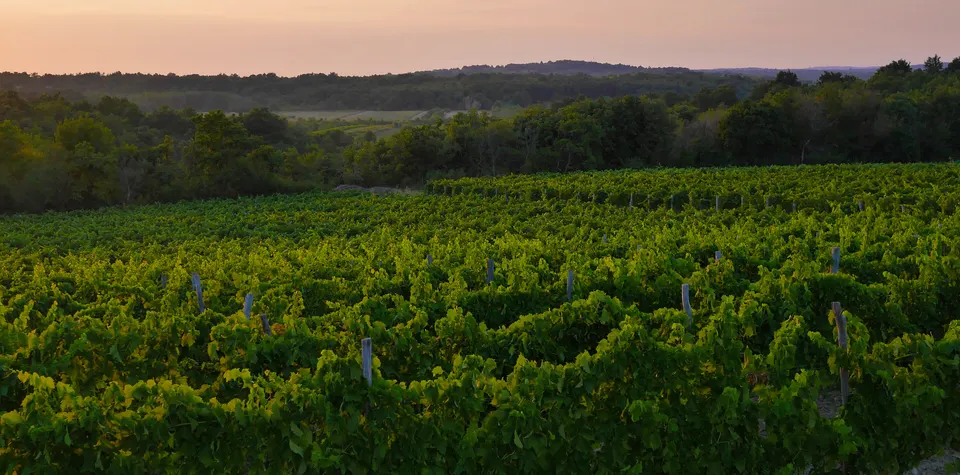
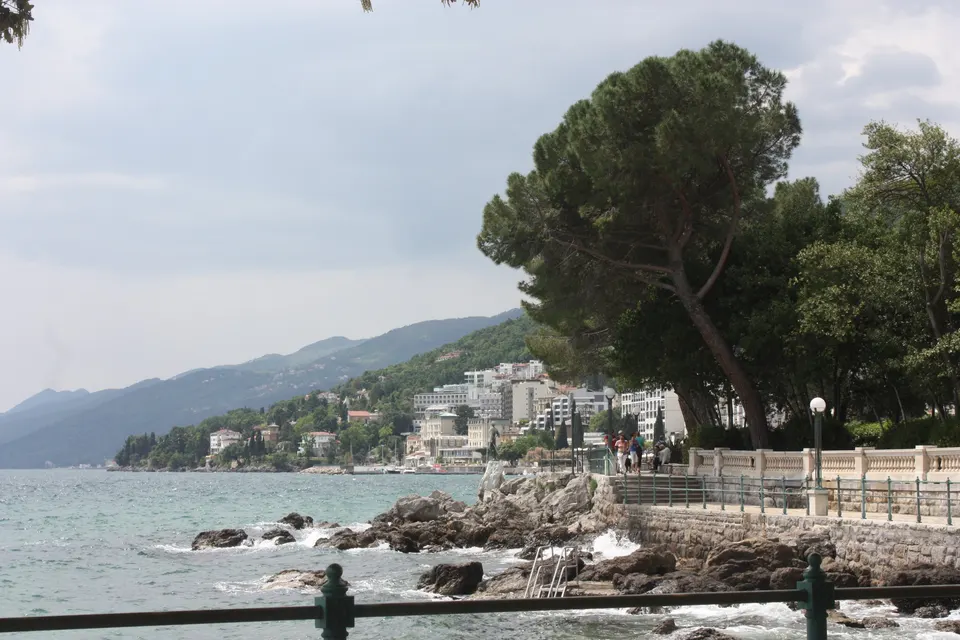
Most of Istria is stone villages, vineyards and fishing towns. Drive over or under Učka mountain, though, and you arrive in a different kind of place. Opatija, on the Kvarner Gulf, was one of the most fashionable seaside resorts of the Austro-Hungarian Empire, and it still has the look of one: pastel villas with wrought-iron balconies, grand hotels, palms and laurels, and a promenade along the sea that invites a long, slow walk. It makes an easy and rewarding day trip from almost anywhere in Istria.
How to get to Opatija from Istria
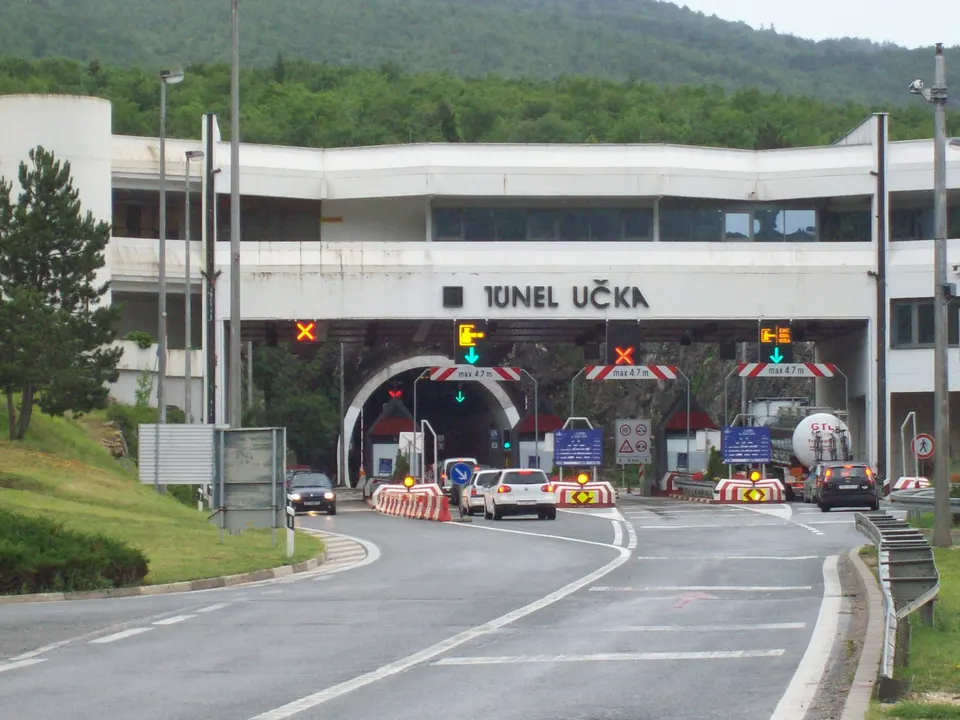
Strictly speaking, Opatija is not in Istria but on the Kvarner coast, on the far side of Učka. From central and western Istria the quickest way is the motorway through the Učka tunnel, which brings you down towards Rijeka and Opatija. The slower and more beautiful route follows the east coast of the peninsula, past Labin and Plomin, then along the cliffs above the sea through Mošćenička Draga and Lovran. A good plan is to take one road there and the other back.
- By car. The simplest option. Parking in the centre is limited and paid in season; arrive in the morning.
- By bus. Regional buses connect Istrian towns with Rijeka and Opatija; check current timetables before you travel.
- Combine with Učka. The road over the mountain passes close to the trailheads for Vojak, the highest peak. See our guide to hiking in Učka Nature Park.
- Best season. Opatija was built as a winter and spring resort, and it is at its best outside the hottest weeks of summer.
A short history: from abbey to Riviera
The name Opatija comes from an old Benedictine abbey dedicated to St James, and the Italian name, Abbazia, means the same thing. For centuries it was a small village around that church. Everything changed in the nineteenth century. In 1844 a wealthy merchant from Rijeka built a summer villa here and surrounded it with an exotic garden. A few decades later the railway reached the coast, the first hotel opened, and Opatija became a fashionable health resort where doctors sent patients for the mild winter climate and the sea air. Emperors, composers and writers followed, and the town grew into the Riviera you see today.
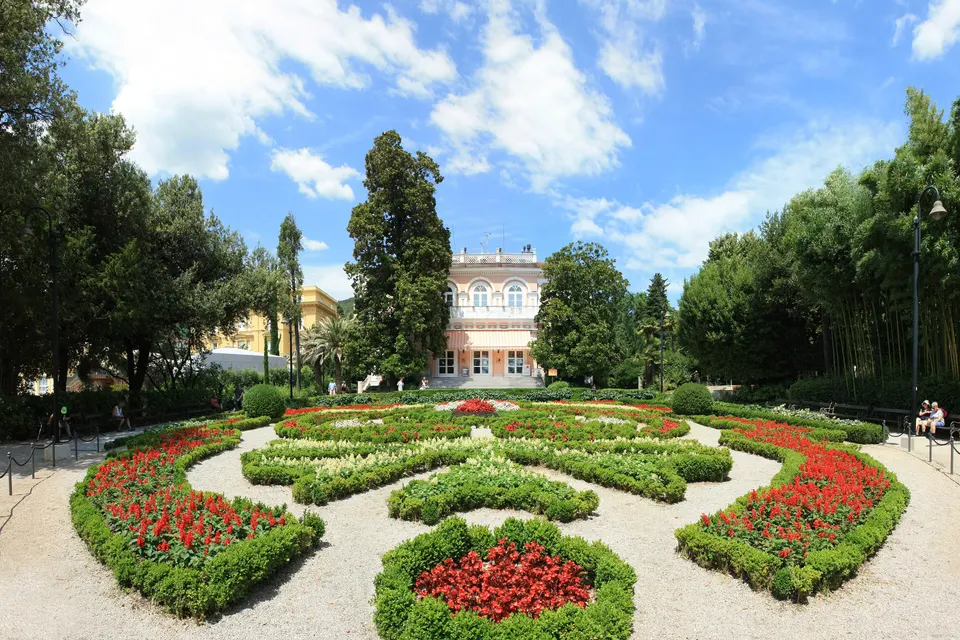
Villa Angiolina and the park
Start where Opatija itself started. Villa Angiolina, the neoclassical summer house of 1844, stands in a park full of trees and plants brought from all over the world, from cedars and sequoias to bamboo and palms. The camellia, which flowers here in late winter and early spring, became the symbol of the town. The villa today houses the Croatian Museum of Tourism, a fitting home given the building's role in the birth of tourism on this coast.
Next to the park is the church of St James, on the site of the old abbey, with a small terrace looking out over the sea. Spend a little time simply walking the paths in the shade. On a hot day, the park is noticeably cooler than the street.
Opatija was built for slow afternoons: a walk, a coffee, a view, and then another walk.
Walking the Lungomare
The Lungomare, officially named after Emperor Franz Joseph I, is a coastal footpath that runs for around twelve kilometres from the fishing village of Volosko, through Opatija, to Lovran. It is paved, mostly flat, and follows the shore past rocky coves, swimming platforms, villa gardens and small harbours. You do not need to walk all of it. Even an hour in either direction from the centre gives you the essence of the place.
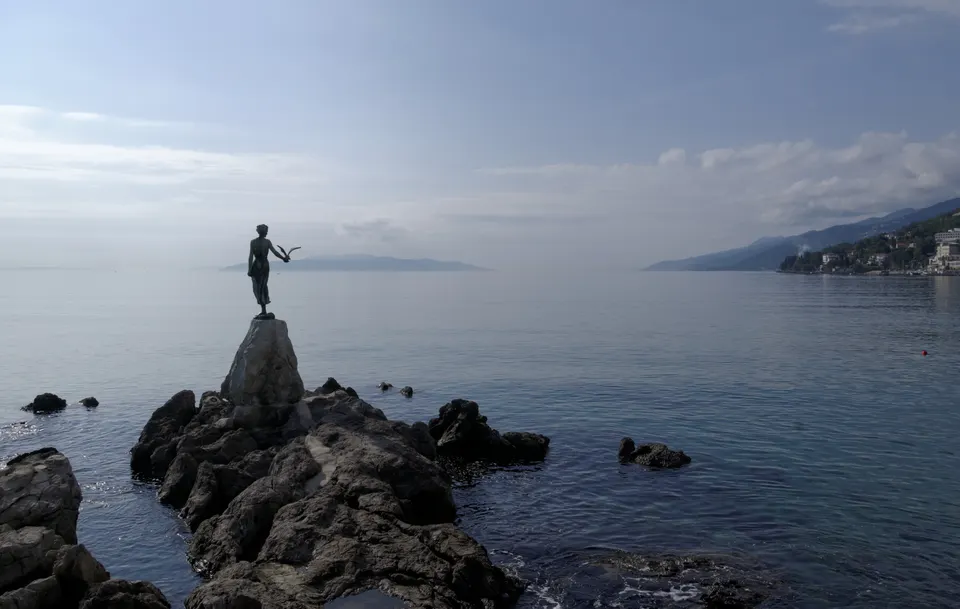
Just off the promenade, on a rock in the sea, stands the bronze statue of the Maiden with the Seagull, one of the most photographed sights on the coast. Bring a swimsuit in summer: the concrete terraces and ladders along the Lungomare make it easy to stop for a swim along the way.
Volosko and Lovran
At the northern end of the Lungomare, Volosko is a former fishing village of narrow stone lanes climbing up from a tiny harbour. It is quieter than Opatija and known for its seafood. At the southern end, Lovran is an old town with a medieval core, Austro-Hungarian villas and a long association with sweet chestnuts, called maruni locally, which are celebrated every autumn. Above the coast, the hilltop village of Mošćenice is worth a detour for its views over the gulf.
A one-day plan
- Drive over Učka in the morning and park near the centre of Opatija.
- Walk through the park of Villa Angiolina and visit the museum.
- Follow the Lungomare north to Volosko for lunch by the harbour.
- Walk back along the sea, stopping for a swim or a coffee on a terrace.
- In the late afternoon, take the coastal road south through Lovran and Mošćenička Draga, and home to Istria by way of Plomin and Labin.
Good to know
- Opening times. Museums and some attractions keep seasonal hours; check before you go.
- Footwear. The Lungomare is easy walking, but the stone can be slippery near the water.
- Rain plan. Opatija works well on a cloudy day too. Pair it with ideas from a rainy day in Istria.
- Rijeka nearby. If you have extra time, the port city of Rijeka is only a short drive further on.
Why it is worth the trip
Opatija shows a different chapter of the region's history from the Roman, Venetian and rural stories of Istria. It is a place that was designed for leisure, with an architecture of balconies, verandas, winter gardens and generous windows facing the sea. Even if you only stay for a few hours, it is a pleasure to see how carefully a whole town was shaped around light, air and the view. Many of those villas, now restored as homes and small hotels, are a lesson in how a Mediterranean house can feel both grand and relaxed.