On Istria's east coast, a colourful hilltop town with a coal-mining past looks down on a bay of pebble beaches. Two very different places, one short road apart.
Most visitors to Istria stay on the west coast, with its sunsets and Venetian harbours. The east coast faces the other way, towards the Kvarner Gulf, the islands of Cres and Lošinj and the dark slopes of Mount Učka. Here, Labin and Rabac form a pair that is easy to love: an old hilltop town full of character, and below it, a seaside resort set in a deep green bay.
Labin: the old town on the hill
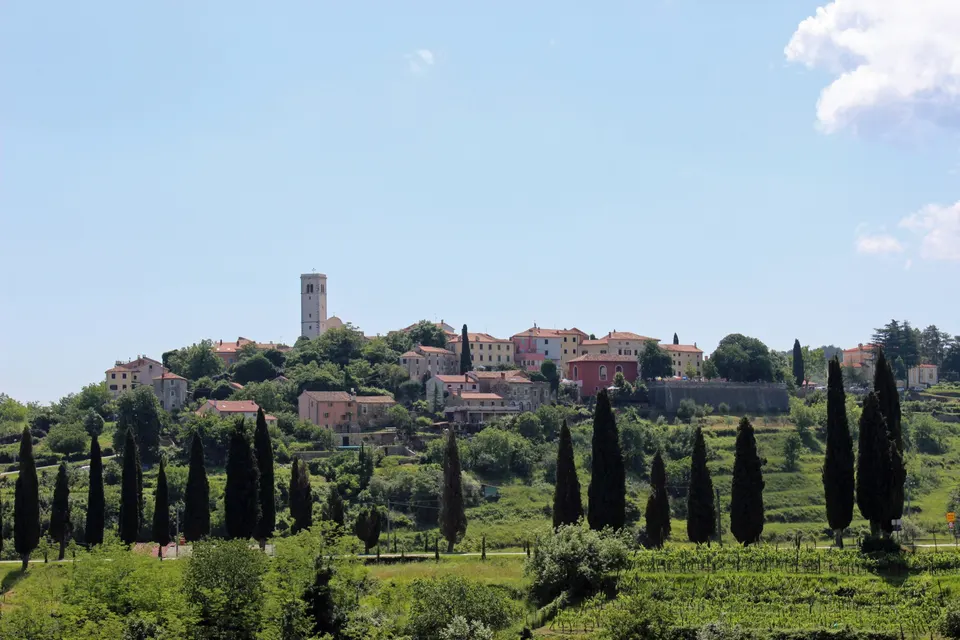
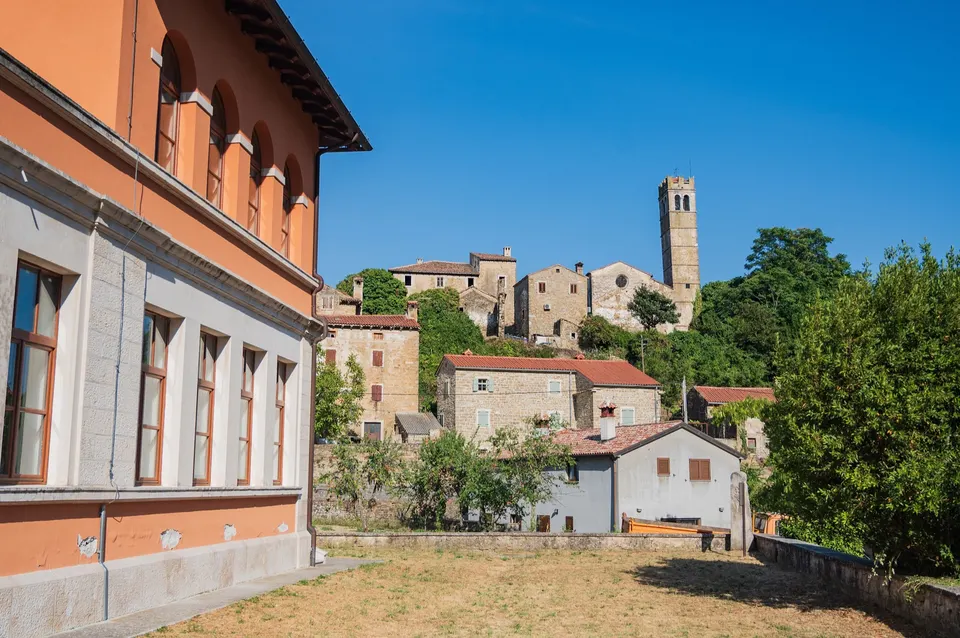
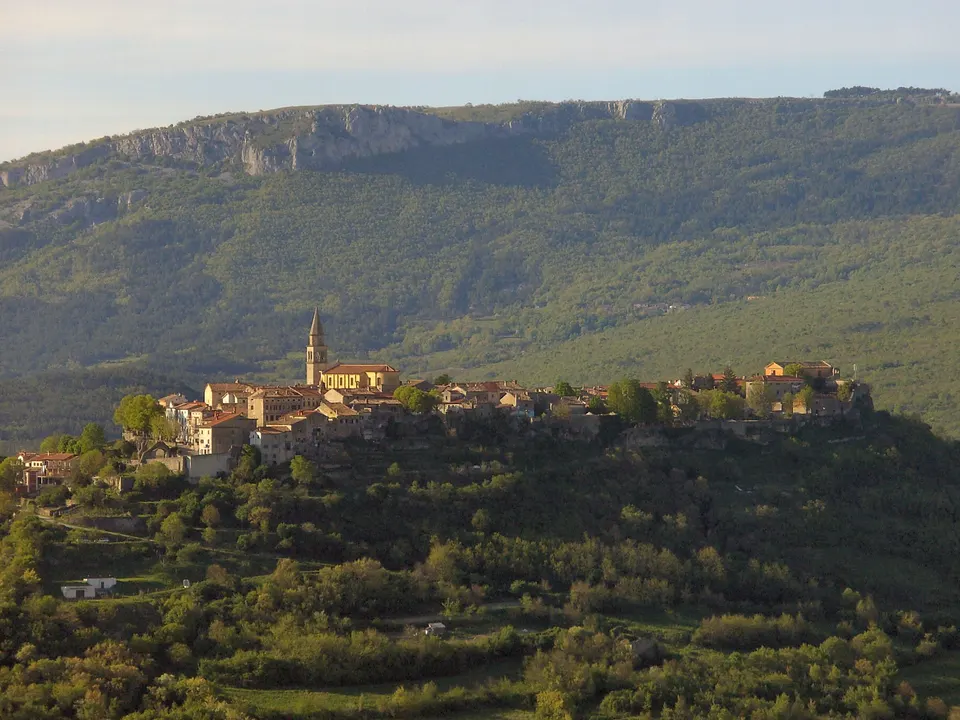
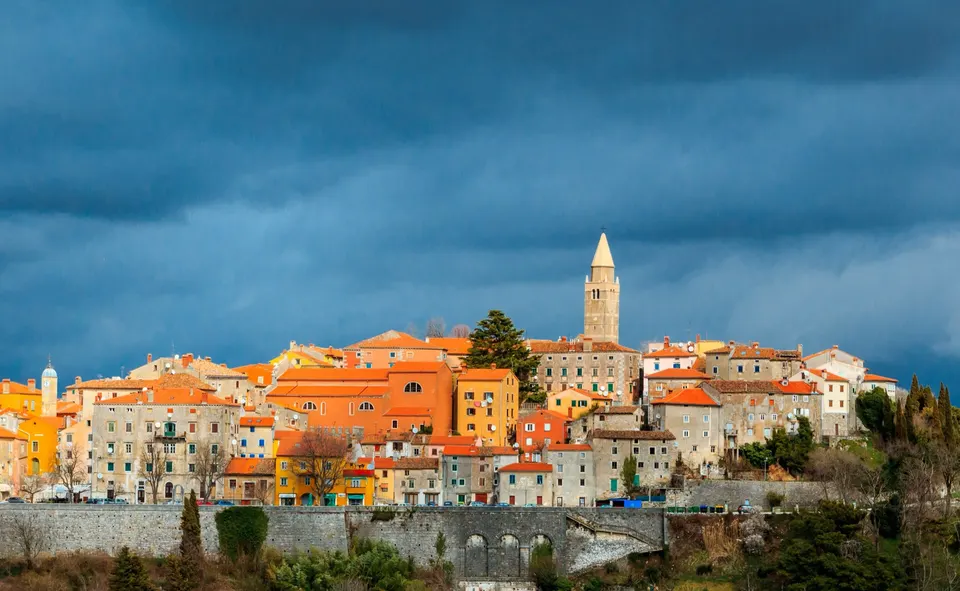
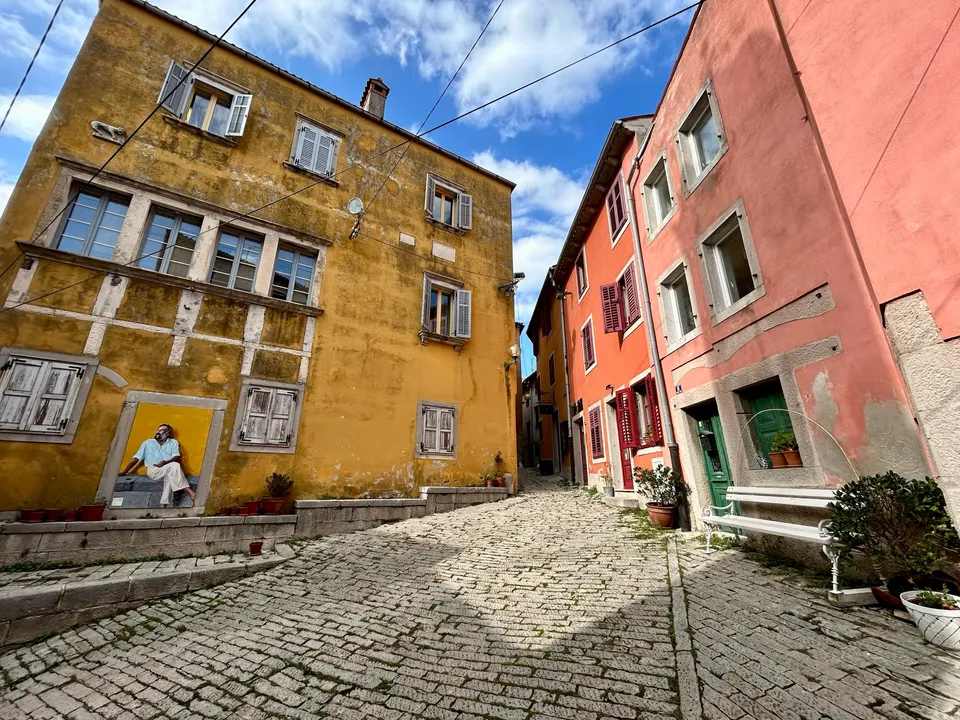
Labin's old town crowns a hill a few kilometres inland from the sea. Its houses, painted in ochre, pink and pale yellow, climb towards the parish church and the bell tower, and from the edges of the town the views reach across the Kvarner to the islands. The town was ruled for centuries by the patriarchs of Aquileia and later by Venice, and its streets are full of baroque palaces, small squares and carved doorways.
- The Church of the Birth of the Blessed Virgin Mary. The parish church at the heart of the old town, with a Venetian lion on its facade.
- The Town Museum. Housed in a baroque palace, it tells the story of Labin's mining past and includes a reconstruction of a coal mine.
- The Fortica viewpoint. At the top of the town, with a wide view over the coast, Rabac and the islands.
- Galleries and studios. Since the 1990s, the old town has attracted artists, and small galleries open in summer.
Why is Labin known for mining?
For generations, life around Labin was shaped by coal. The Labin area was the centre of coal mining in Istria, and mines operated in the surrounding valleys, around Raša and Krapan, until the end of the twentieth century. The newer part of town, Podlabin, grew down the hill to house the miners and their families, which is why Labin today has two faces: the historic old town above and the modern town below.
Labin's mining past is also linked to a famous episode in labour history. In 1921, local miners rose up and took control of the mines, an event remembered as the Labin Republic. It lasted only a few weeks but became a symbol of workers' struggles in the region. The Town Museum and the mining heritage around Labin keep this part of the story alive.
Labin has two faces: the historic old town above and the modern mining town below.
Matthias Flacius, a son of Labin
Labin was the birthplace of Matthias Flacius Illyricus (Matija Vlačić Ilirik), one of the most important theologians of the Protestant Reformation and a close associate of the reformers in Germany. The house where he was born is in the old town, and a memorial collection is dedicated to him. It is a reminder that this small town on the edge of Istria was once connected to the great intellectual debates of Europe.
Rabac: the bay below
Rabac lies directly below Labin, in a sheltered bay framed by wooded hills. Once a small fishing village, it became one of the first tourist resorts on the Istrian east coast, and today it is lined with hotels, pebble beaches and a promenade that follows the shore. The water is famously clear, and the views across to Cres give the bay its particular calm.
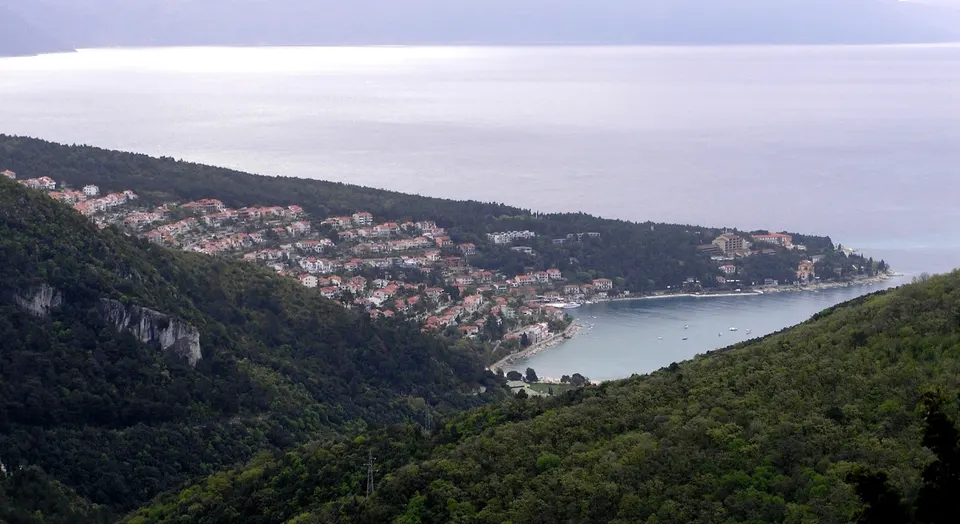
The beaches of Rabac are mostly pebble, with Girandella among the best known, and many coves along the coast in both directions are reached on foot along the shore. For a wider overview of where to swim, see the best beaches in Istria.
How to get from Labin to Rabac
The two are connected by a short road and, for those who prefer to walk, by a marked footpath that descends from Labin through woods and past a stream to the sea. The walk downhill is easy and pleasant; the climb back up is more demanding, especially in summer heat, so plan to do it in the morning or evening, or take the bus back.
What else is nearby?
- Dubrova Sculpture Park. Just outside Labin, an open-air park of large stone sculptures created during an international sculpture symposium held here since the 1970s.
- Raša. A former mining town built in the 1930s, notable for its planned layout and its church, whose bell tower is shaped like a miner's lamp.
- Učka Nature Park. The mountain rising behind the coast, with forest trails and views over the whole peninsula. See hiking in Učka Nature Park.
- Opatija. The Austro-Hungarian resort town on the Kvarner coast is within easy reach for a day trip.
Good to know
- Labin's old town is steep and car-free. Park at the edge and explore on foot.
- The east coast catches the morning sun; the beaches of Rabac are at their best early in the day.
- The bura, the cold north-easterly wind, can blow strongly on this coast, especially outside summer. It clears the sky but can make the sea rough.
- Labin is a good base for exploring both the coast and the interior, and generally quieter than the west coast in high season.
Labin and Rabac show a side of Istria that many visitors miss: industrious, layered, open to the east. Spend the morning in the lanes of the old town, the afternoon in the clear water of Rabac, and come back up the hill for dinner as the lights of the islands appear across the bay.