The big furniture chains furnish half the coast. If you want your house to feel like yours, there is another way, and it costs less than most people assume.
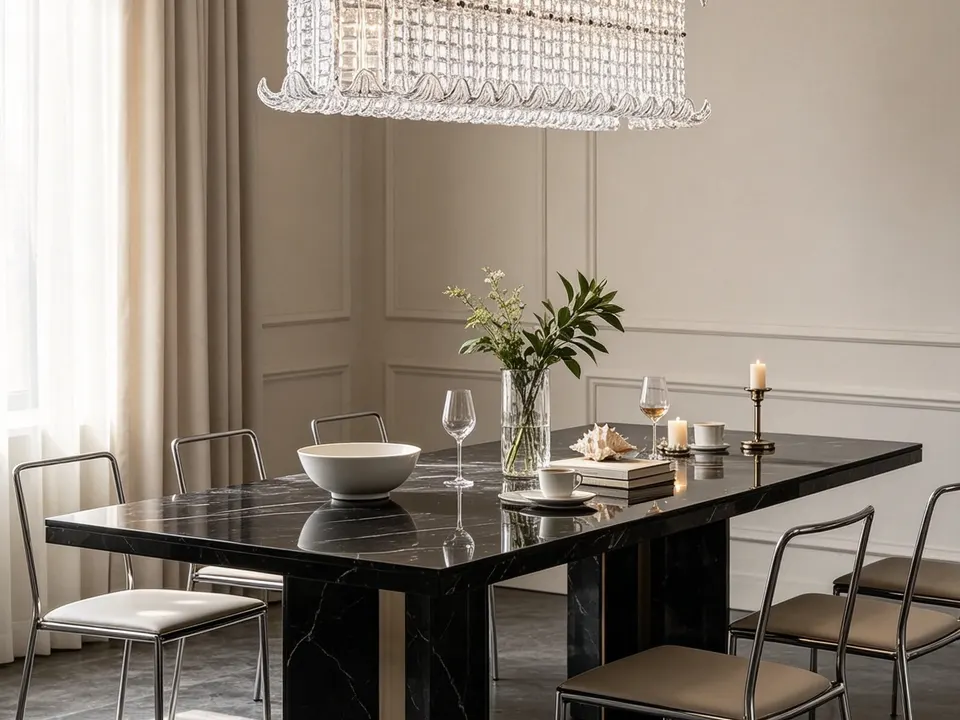
Ask anyone who has bought a house in Istria how they furnished it, and the story is usually the same. A drive to the retail parks outside Pula, a long afternoon between showrooms, a car full of flat boxes, and a weekend with an Allen key. It works. The big stores are fast, predictable and honest about what they sell. But walk into ten holiday homes between Umag and Medulin and you will often see the same sofa, the same dining chairs and the same sideboard, in slightly different colours.
For a rental apartment that needs to be ready in a fortnight, that may be exactly right. For the house you will return to every summer, or the villa you want guests to remember, it rarely is.
What the big stores do well
It is worth being fair. Mass-market furniture retailers solve real problems. They stock large volumes, deliver quickly, and their prices are clear before you buy. If you need twelve bunk beds and four sofa beds for a rental property before the season opens, nobody does it more efficiently.
The limits appear when your house stops being standard, or when the furniture has to live through a few humid summers. Most flat-pack furniture is made of particleboard, which swells if it gets wet and loosens its fittings each time it is moved. And Istrian homes are rarely standard. Old stone houses have walls that are not straight, alcoves of unusual depth and ceilings that slope under the roof. New villas have large open-plan spaces where a standard three-seater sofa looks lost. Kitchens are built around views, not around catalogue modules.
The gap in the middle
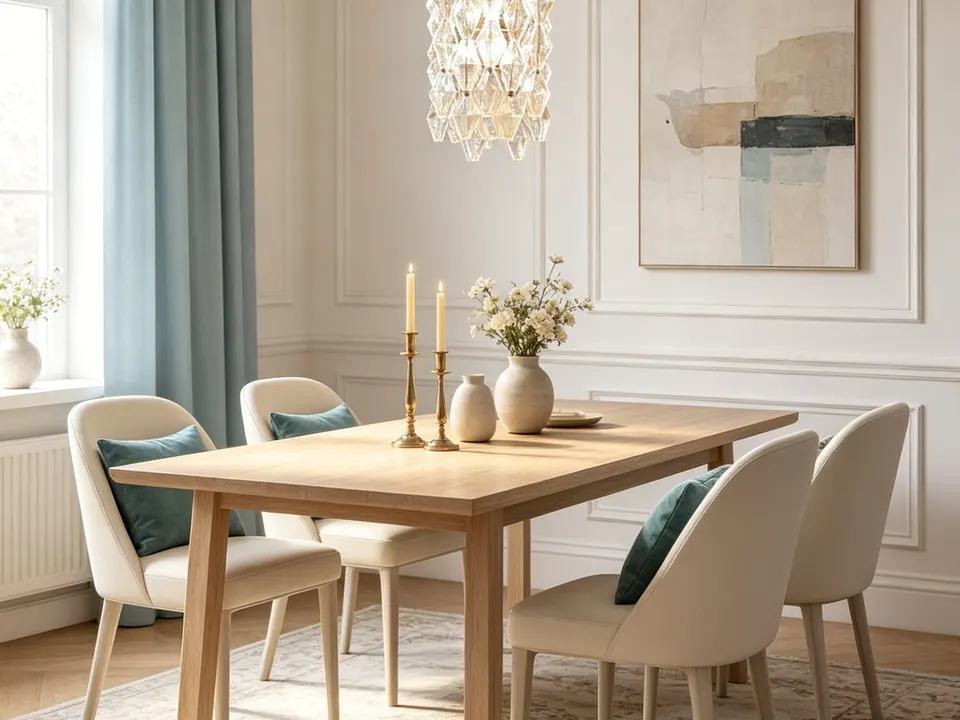
Between the retail park and the Italian design showroom there is a space that has been strangely empty in Istria: furniture made to measure, built on plywood rather than particleboard, by people who live here, at prices that do not include a showroom in Milan, an import margin and three layers of distribution.
That is the space where our partner atelier, Lampisa, works. Tables, beds, sofas, wardrobes and kitchens are drawn for your room and built for it, with plywood as the structure and the veneer, colour or fabric you choose as the finish. The piece arrives finished, and the atelier delivers and installs it.
Made to measure does not mean made for millionaires. It means made for your room.
So what does it cost?
Less than most people expect, and the reason is simple. When a piece is built locally and sold directly, the price is mostly materials and craft. There is no international logistics chain and no retail floor to finance. A plywood-built dining table made for your room, in a finish you choose, will cost more than a flat-pack one, but often considerably less than a branded equivalent from a design store, and it is built to outlast both.
It also helps to think of the whole house rather than the single item. Many owners mix: built-in pieces and the furniture people touch every day (the dining table, the beds, the sofa) are made to measure, while simple secondary pieces come from wherever is convenient. Spend where it shows and where it is used.
How it works in practice
You start with a conversation, either in person or by video call if you live abroad. The atelier visits the house, measures, and proposes drawings and material samples, or a 3D view of the room built from your moodboard. You receive a clear quote with a lead time. When the pieces are ready, they are delivered and installed, and the packaging leaves with the team. For owners who are not in Istria during the renovation, this matters more than anything: nobody has to drive to Pula with a trailer.
A simple test
Before you buy anything, stand in the room and ask three questions. Will this piece fit the space exactly, or will it leave an awkward gap? Will it look as good in ten summers as it does today? Will anyone else on the street have the same one? If the answer to any of them matters to you, it is worth asking for a quote before you drive to the retail park.