Pine shade, old quarries and clear water a short walk from the old town. A guide to Zlatni rt and the best places to swim around Rovinj.
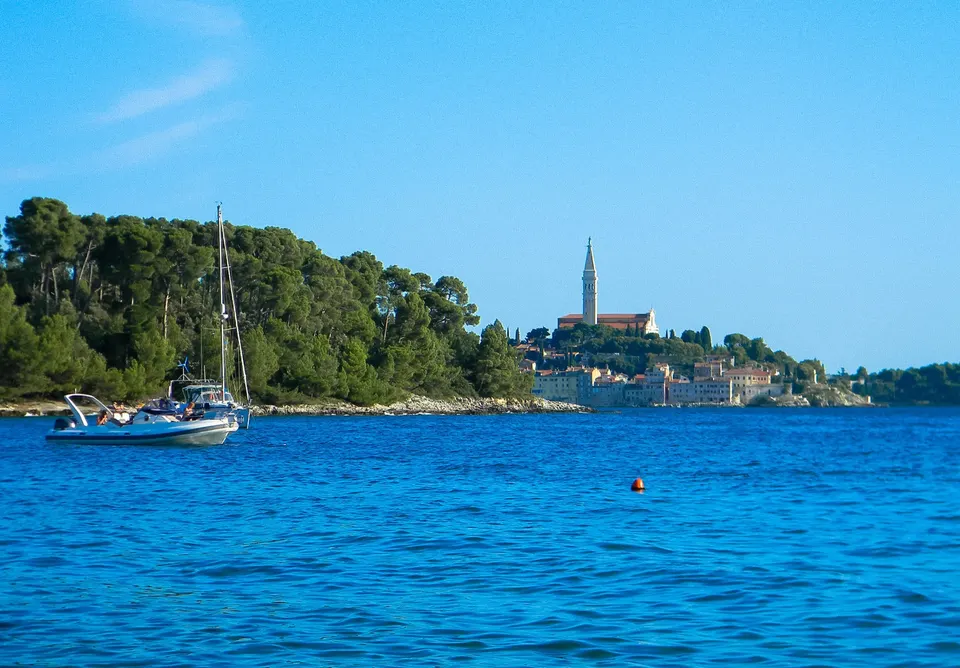
Few towns in the Mediterranean give you this combination: a Venetian old town on a hill above the harbour, and within a short walk, a forest park of pines and cedars running along a rocky shore. Rovinj has no great sandy beach, and it does not need one. Its swimming is done from rocks, pebble coves and flat stone terraces, in water that stays clear well into autumn, with the bell tower of St Euphemia on the horizon.
What is the Golden Cape?
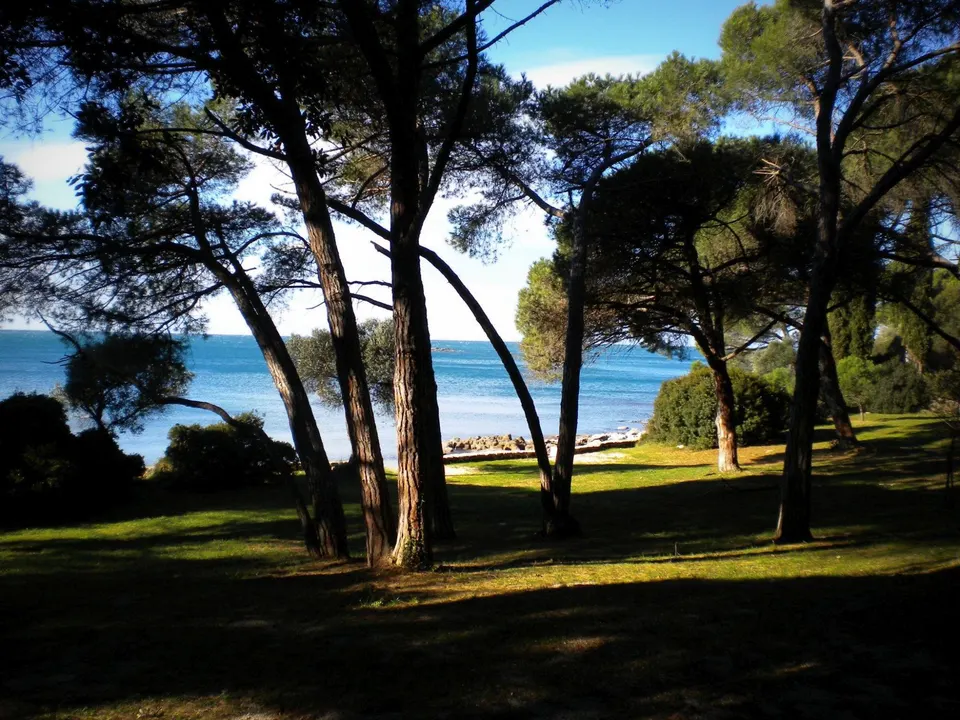
Zlatni rt, the Golden Cape, also known by its Italian name Punta Corrente, is the wooded headland just south of the town centre. Its look is not entirely natural. In the late nineteenth century the land belonged to Baron Georg Hütterott, an industrialist from Trieste, who also owned the island of Sveti Andrija, today known as Crveni otok. He had the cape planted with pines, cypresses, cedars and other species, and laid out paths through it. The result, more than a century later, is a mature forest park by the sea, protected since the middle of the twentieth century.
The park is closed to cars, and that is a large part of its charm. People walk, run and cycle along its gravel paths, and swimmers simply follow the shore until they find a rock that suits them.
The old quarries and the climbing rocks
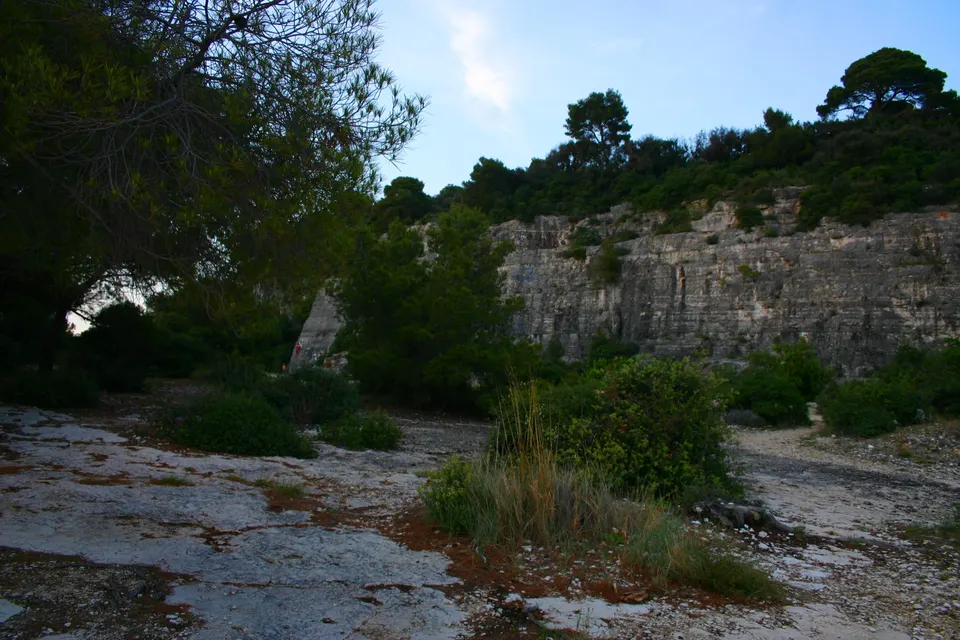
Stone was quarried on the cape for centuries, and the old quarry walls are still there, pale cliffs standing among the trees a little back from the sea. Today they are used by climbers, with routes for different levels, and they make a striking backdrop to the paths. If you are not climbing, it is still worth a detour to see them, and to understand that much of the stone of Rovinj and of other Adriatic towns came from shores like this.
Where to swim in and around the park
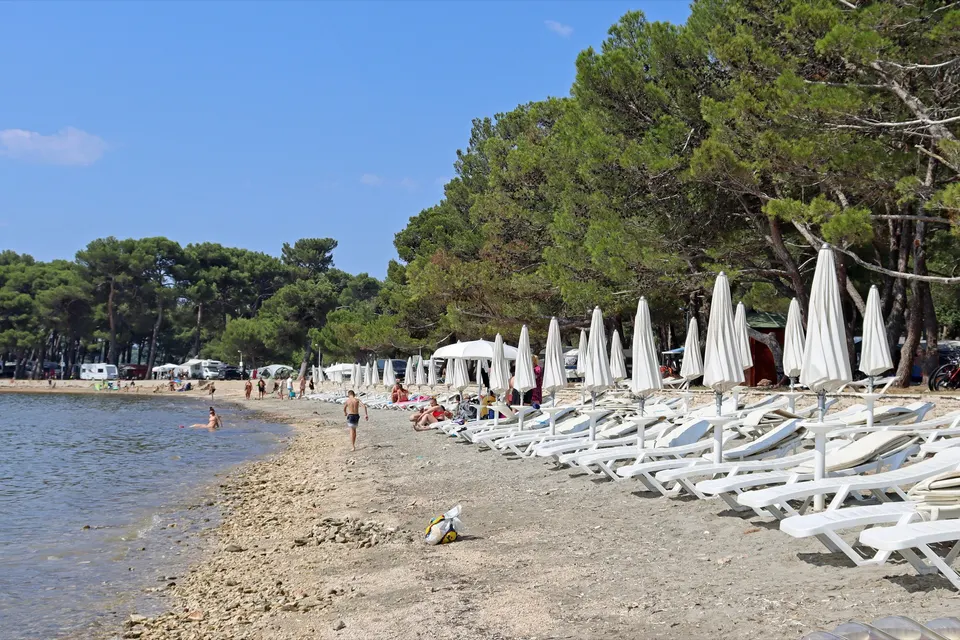
- Lone Bay. The large bay at the northern edge of the park, near the hotels. Organised, with sunbeds, cafés and shallow entries, and the most practical choice for families.
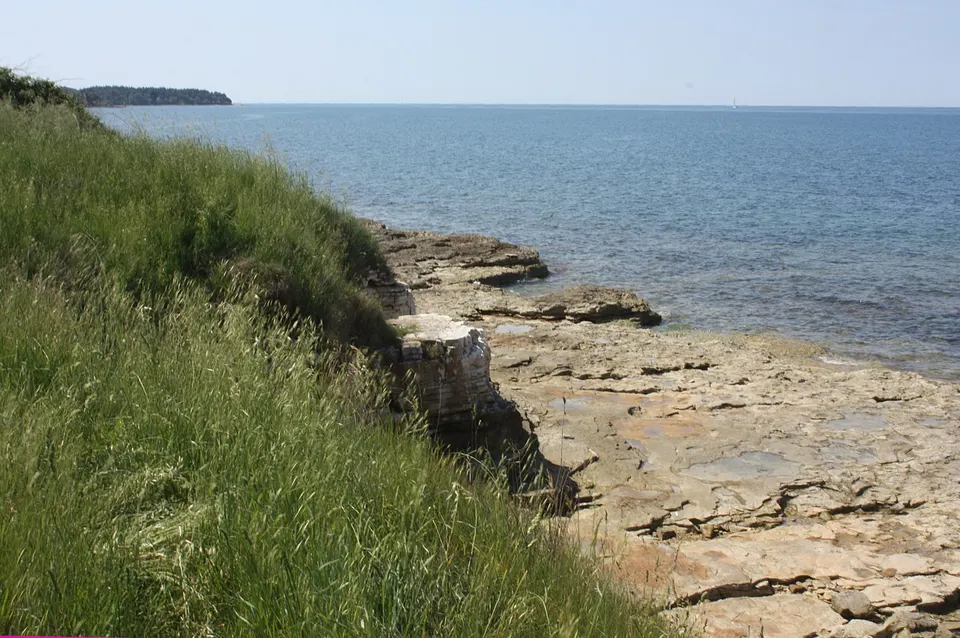
- The coves of Zlatni rt. Walk further along the shore of the cape and the beaches become smaller and quieter: pebble bays, flat rocks and ladders into deep water.
- Mulini. Close to the old town and the hotels, a stylish, busy beach with pine shade and easy access.
- The far side of the cape. Beyond the headland the coast continues south towards Škaraba, more natural and less crowded, with rocky shelves that are good for snorkelling.
Swimmers simply follow the shore until they find a rock that suits them.
North of the old town
Not everyone goes south. North of Rovinj the coast is lined with smaller beaches and rocky shores, with views back to the old town. You can also swim from the rocks right below the old town itself, where locals jump into deep water from the stone, especially in the evening when the light turns gold. It is not a beach in any formal sense, but few places to swim anywhere have such a setting.
The islands: Sveta Katarina and Crveni otok
Rovinj looks out on an archipelago of small islands. The two closest, Sveta Katarina, right in front of the harbour, and Crveni otok, a little further south, are reached by regular boats in season and have places to swim, shade and a change of scene. A morning on an island and an afternoon in the forest park is a very good Rovinj day.
Snorkelling around Rovinj
The rocky shores of the cape and the coast beyond it are some of the most rewarding places for snorkelling in this part of Istria. Just off the rocks the bottom drops in ledges and boulders, and with a mask you will see shoals of small fish, sea urchins tucked into the cracks, and on a lucky day an octopus watching from its hole. Early morning, before the wind picks up and the boats start moving, is the best time, when the water is at its calmest and clearest. Keep close to the shore, stay visible to passing boats and never swim across busy harbour entrances.
Children love the shallow rock pools at the water's edge, where tiny crabs and fish can be watched without getting wet above the knee. A cheap mask and a pair of water shoes are often enough to make an ordinary beach day into the most memorable part of a holiday.
When to come
The forest park is beautiful in every season. In July and August, arrive early or come in the late afternoon, when the light softens and the paths empty a little. In June and September the sea is warm, the crowds thinner and the walk along the cape is at its best. In spring and autumn the park becomes a place for long walks, runs and bike rides rather than swimming, and the views back to the town are just as good.
Good to know
- Getting there. From the old town, walk south along the harbour and the shore; the park begins after the marina and the hotels. Bicycles are a good alternative.
- Cars. Cars cannot enter the park. Use the car parks on the edge of town and walk in.
- Shoes. Rocks and pebbles everywhere. Water shoes are useful.
- Shade. The pines give plenty, but the best spots under them go early in high season.
- Respect the park. It is a protected forest. No fires, take your rubbish with you, and keep to the paths.
Make a day of it
A morning swim on the Golden Cape, lunch in town, an afternoon on the islands and a sunset from the rocks below St Euphemia: Rovinj rewards slow days. For the rest of the town, from the old streets to the harbour, read our Rovinj travel guide, and if you want to compare its beaches with the rest of the peninsula, see the best beaches in Istria.