In the green heart of Istria, a medieval castle stands on the edge of a deep karst gorge. Jules Verne sent his hero over the edge. You can take the path instead.
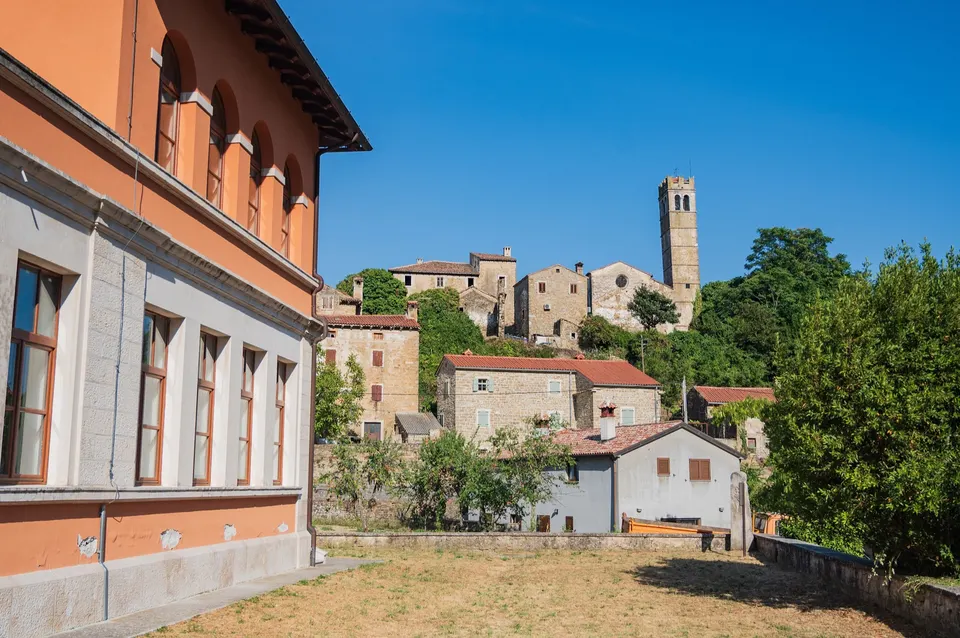
Pazin does not look like a postcard town. It is a working place, the administrative centre of Istria County, with schools, offices and a railway station. But walk to the edge of the old centre and the ground simply falls away. Below you is a steep, wooded gorge where a river disappears into the rock, and right on the rim stands one of the best-preserved castles in Istria. It is a dramatic sight, and it caught the imagination of one of the most famous novelists of the nineteenth century.
Where is Pazin?
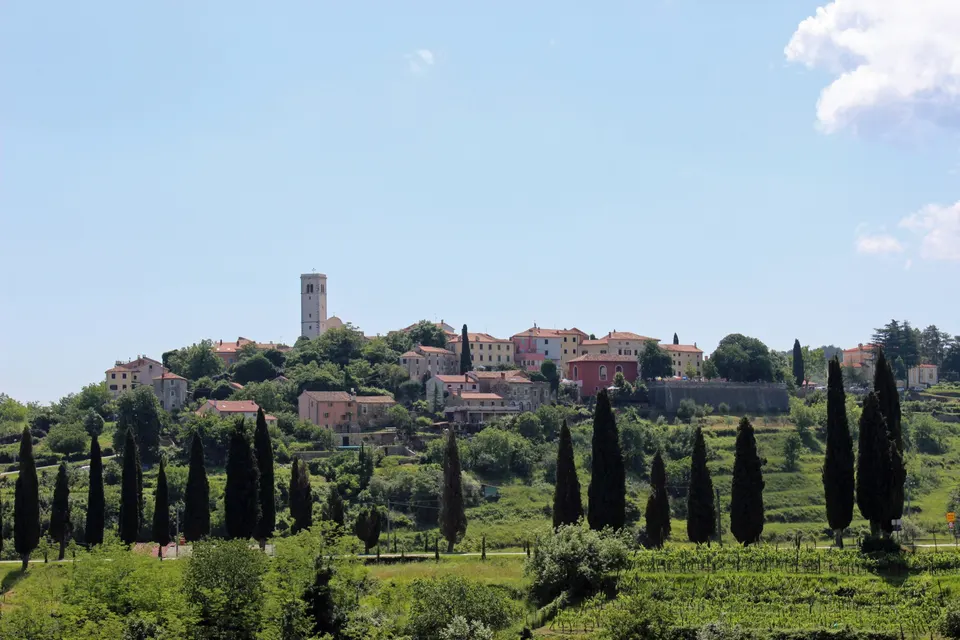
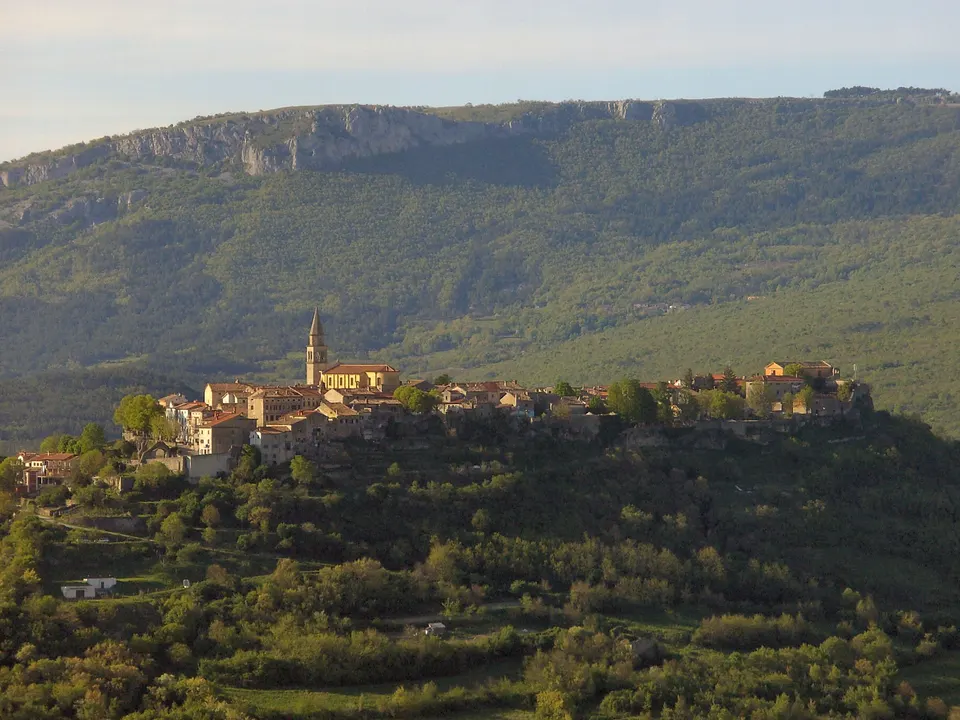
Pazin sits almost exactly in the centre of the Istrian peninsula, in what is often called green Istria: a landscape of rolling hills, woods, fields and clay soils, quite different from the red earth and stone of the coast. Because of its central position, it is within easy reach of most of the peninsula, and it makes a good stop between the coast and the hill towns of the north.
The castle
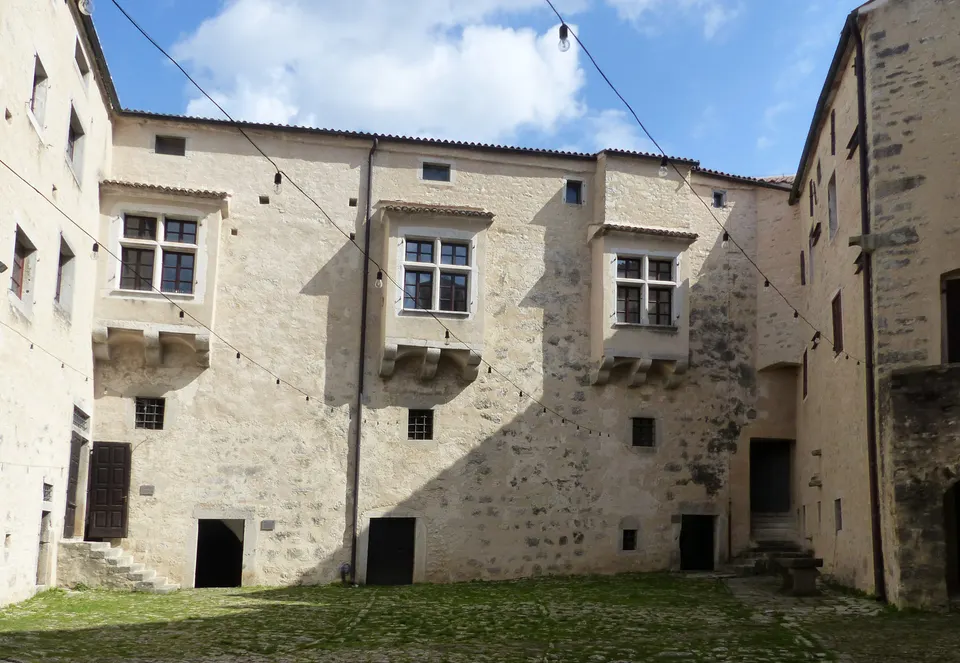
Pazin castle, the Kaštel, is first mentioned in a document from the tenth century, and it has been rebuilt and extended many times since. Over the centuries it passed between noble families and was for long periods tied to Habsburg rule, while much of the coast was Venetian. That frontier position shaped the history of the whole area, and you can feel it in the castle's solid, defensive architecture.
Today the castle houses the Pazin Town Museum and the Ethnographic Museum of Istria. The ethnographic collection is one of the best places to understand traditional rural life on the peninsula: costumes, tools, household objects, musical instruments and the crafts that shaped everyday life in Istrian villages. Even if museums are not your thing, the courtyard and the views from the castle walls over the gorge are worth the visit.
The Pazin abyss: what it is
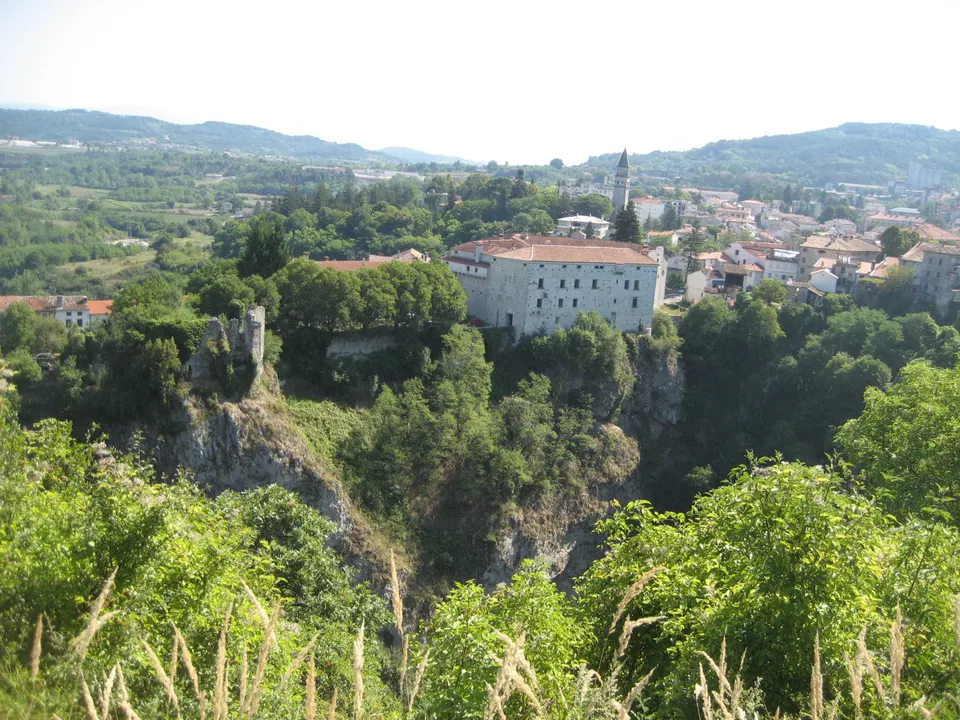
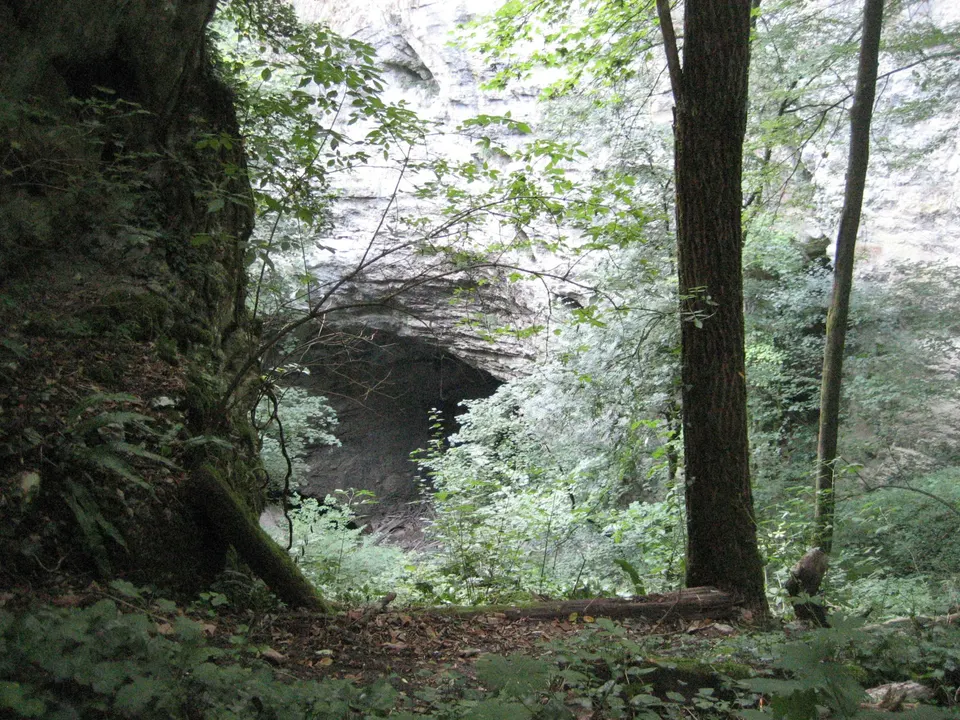
The Pazin abyss, Pazinska jama in Croatian, is a karst gorge beneath the castle. The Pazinčica stream flows across the impermeable flysch of central Istria until it reaches limestone here, and then it vanishes underground through a sinkhole into a cave system. The water continues its journey through the karst and is believed to reappear far away, though the exact underground route has long been a subject of study and speculation.
The gorge is steep and green, with vertical rock walls, dense vegetation and a cave mouth at the bottom where the stream disappears. After heavy rain the water can rise dramatically, sometimes flooding the lower part of the gorge. It is a protected landscape, and one of the most striking natural sites in inland Istria.
A river disappears into the rock, and a castle stands right on the rim.
Jules Verne and Mathias Sandorf
In his 1885 novel Mathias Sandorf, Jules Verne set one of the key scenes in Pazin. His hero, imprisoned in the castle, escapes by climbing down from the walls, falls into the abyss and is carried by the underground river until he emerges on the coast, in Lim Bay. Verne is said to have based his description on accounts and images of the place rather than a visit of his own, but the story stuck. Pazin has embraced the connection ever since, and you will find references to Verne and his hero around the town.
Reading the relevant chapters before you visit is a good way to see the gorge through nineteenth-century eyes: wild, mysterious, almost bottomless. In reality the abyss is smaller and greener than Verne imagined, but no less impressive.
Walking into the gorge
A marked trail leads down into the abyss and along the bottom of the gorge, with viewpoints over the castle above. It is a short walk, but it involves steep sections, steps and uneven ground, so proper shoes are essential. The trail can be closed or unsafe after heavy rain, when the stream rises. For those who prefer something faster, a zip line has been installed across the gorge in recent years.
Nearby: Beram and its frescoes
A few kilometres from Pazin, the small hill village of Beram is home to the church of St Mary on Škriljinah, famous for its fifteenth-century frescoes, including a remarkable Dance of Death. It is one of the great artistic treasures of Istria and pairs naturally with a visit to Pazin. Read more in our article on Beram and the Dance of Death.
Good to know
- Getting there. Pazin is in central Istria, close to the Istrian motorway, and has a railway station on the line through the peninsula.
- Time needed. Half a day covers the castle, the museums and a walk into the gorge; add Beram for a full day.
- Opening times. Museum hours and access to the abyss trail change with the season and the weather, so check locally before you go.
- Footwear. Walking shoes with good grip for the gorge; the path can be muddy and slippery.
- Best season. Spring and autumn, when the gorge is green and the stream is flowing. In late summer it can be almost dry.
- With children. The castle and the gorge are popular with families; keep a close eye on younger children near the edges.
A different Istria
Pazin is a good antidote to the idea that Istria is all sea and summer. Here the landscape is greener, the history more tangled, and the drama comes from rock and water rather than beaches. Combine it with a lunch in one of the surrounding villages and a drive through the hills towards Motovun, and you have a day that shows the heart of the peninsula.