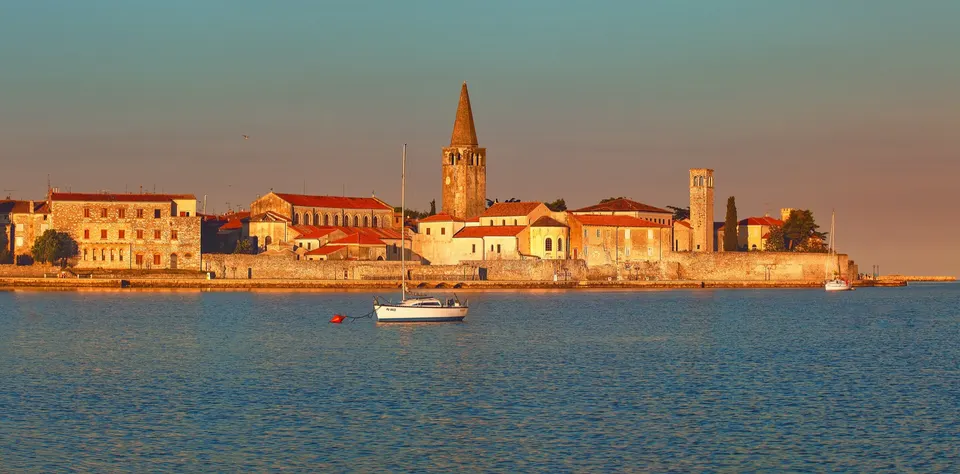
Sixth-century gold mosaics, a Roman street plan still in use and Venetian Gothic facades, all on one small peninsula. A guide to the old town of Poreč.
Poreč is best known as one of the busiest holiday towns on the Istrian coast, with long rows of campsites and hotels along the shore. But at its heart is a small peninsula that holds one of the most important early Christian monuments in Europe. The Euphrasian Basilica has stood here since the sixth century, and its mosaics still glow with the same gold they had when they were set.
The old town is small enough to walk from end to end in a few minutes, yet it layers almost two thousand years of history: a Roman grid, an early Christian cathedral complex, medieval towers and Venetian palaces. Give it a morning, not an hour.
What is the Euphrasian Basilica?
The Euphrasian Basilica is the cathedral of Poreč, built in the mid-sixth century under Bishop Euphrasius, after whom it is named. It stands on the site of earlier places of worship going back to the fourth century, when Christians met in a private house, and fragments of those older floor mosaics can still be seen. In 1997 the Episcopal Complex of the Euphrasian Basilica in the Historic Centre of Poreč was inscribed on the UNESCO World Heritage List as one of the best-preserved examples of early Byzantine art and architecture in the Mediterranean.
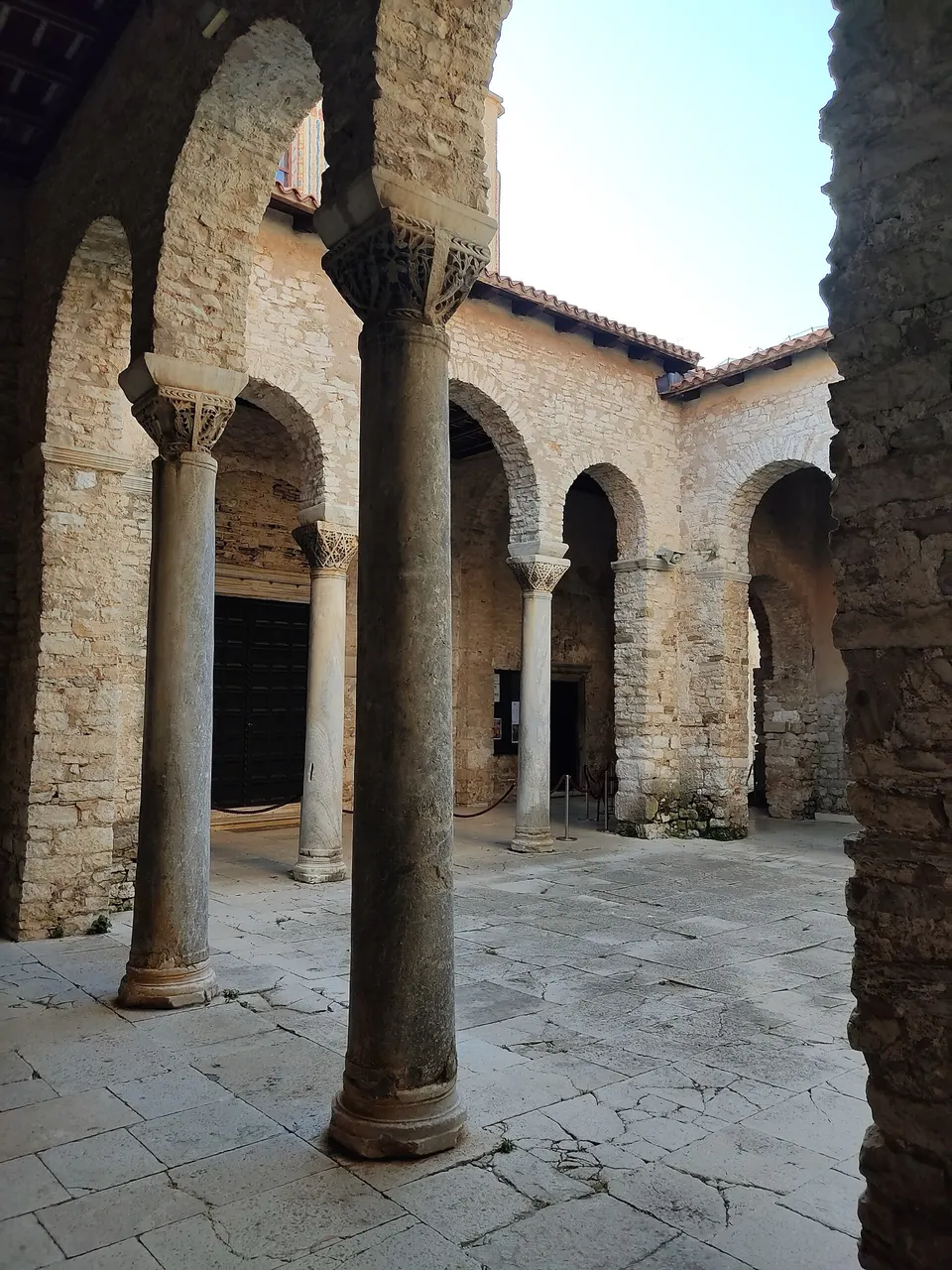
What makes it exceptional is that the whole complex survives together: the atrium, the octagonal baptistery, the basilica itself and the bishop's palace, with the bell tower added much later. Walking through it in sequence, you follow the route an early Christian would have taken, from the open courtyard to the font and finally into the church.
The mosaics: what to look for
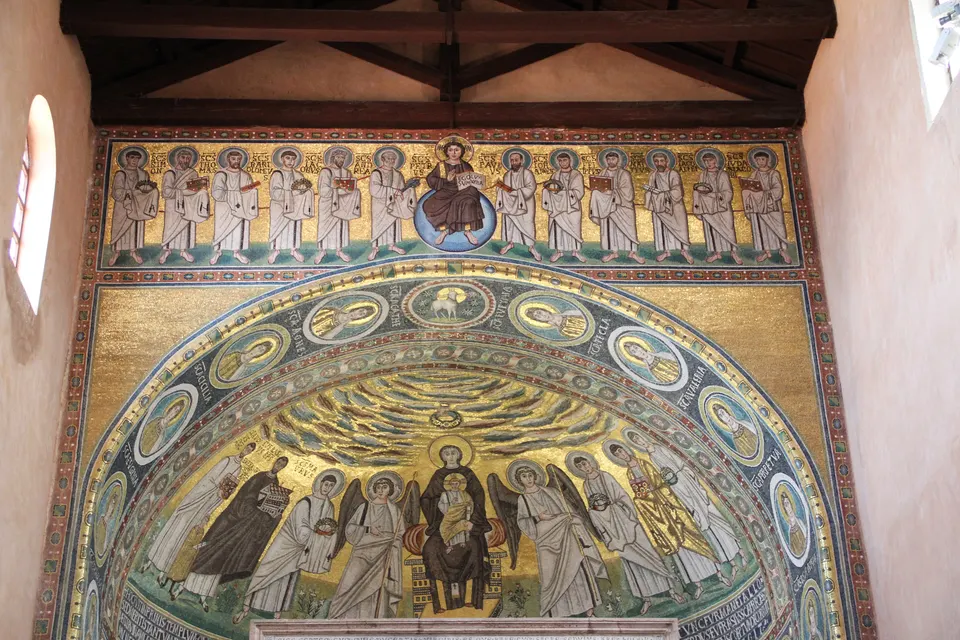
The main apse is the reason people travel here. Above the altar, the Virgin and Child sit enthroned against a gold background, flanked by angels and saints. Among them stands Bishop Euphrasius himself, holding a model of the church he built, a confident piece of self-portraiture from fourteen centuries ago. Below are scenes of the Annunciation and the Visitation, and on the arch above, Christ and the apostles.
Look also at the marble columns and their carved capitals, many brought from workshops in the eastern Mediterranean, and at the stone ciborium over the altar, which dates from a later period.
Before or after the church, step into the octagonal baptistery, where converts were once baptised by immersion, and visit the bishop's palace, which houses a collection of stone fragments and older mosaics from the earlier churches on the site. The bell tower, added in the Venetian period, is a later companion to the complex rather than part of the original design.
Bishop Euphrasius stands in the apse holding a model of the church he built, a confident piece of self-portraiture from fourteen centuries ago.
The Roman town and the Decumanus
Poreč was a Roman town, Colonia Iulia Parentium, and its street plan still follows the Roman grid. The main street, the Decumanus, runs the length of the peninsula and remains the town's busiest promenade, crossed by the Cardo. At the western tip, Marafor square was the site of the Roman forum, and nearby you can see the remains of large temples. For more on this period, see our guide to Roman Istria.
Venetian Poreč
From the thirteenth century Poreč was under Venetian rule, and it shows. Along the Decumanus look for Gothic palaces with pointed, trefoil windows and carved balconies, as well as Romanesque houses with wooden balconies. The defensive towers on the edge of the old town, among them the Pentagonal Tower and the Round Tower, belong to the town walls that once enclosed the peninsula. The former Franciscan church, later used by the Istrian Diet in the nineteenth century and still known as the Istrian Parliament hall, is another stop worth making. Our article on the Venetian heritage of Istria puts all this in context.
How long do you need in Poreč?
Allow two to three hours for the basilica complex and a walk through the old town. Add time for the waterfront and a swim, or take a short boat ride to the island of Sveti Nikola, which faces the harbour. Poreč is also a good base for exploring the west coast and the inland hill towns, which are rarely more than half an hour away.
Beyond the old town
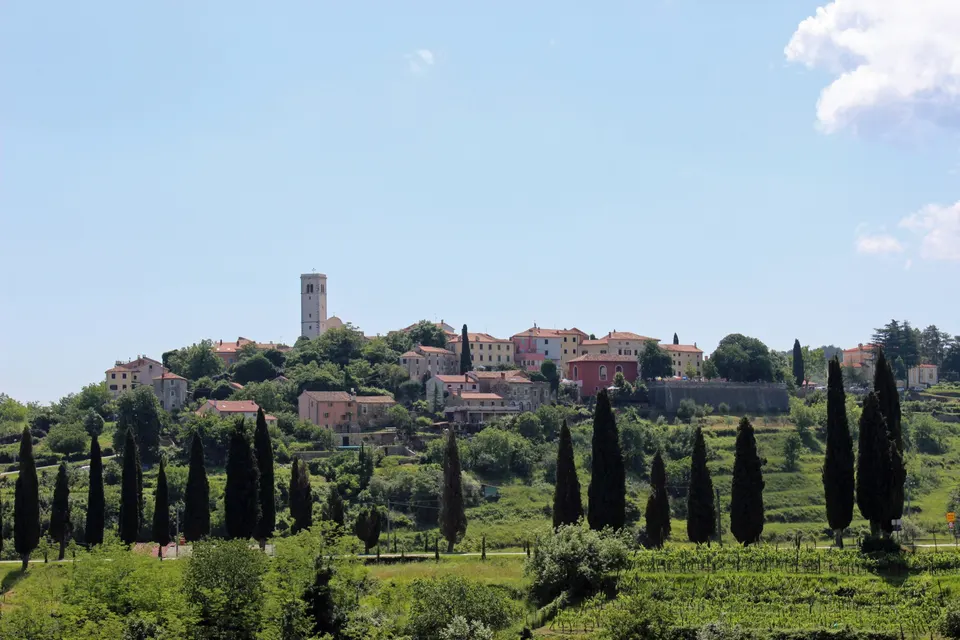
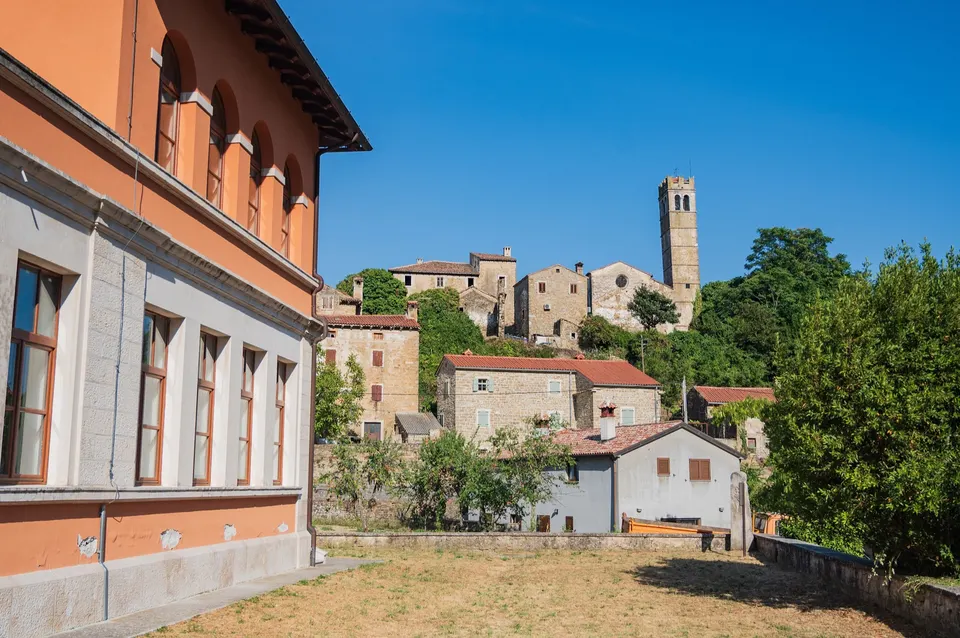
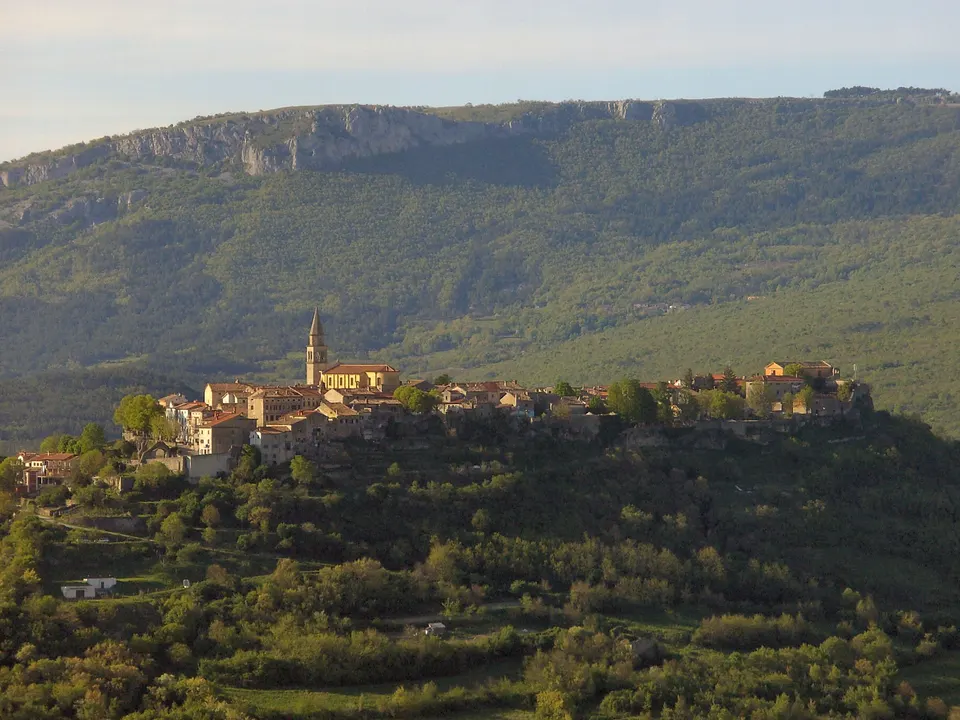
Within a short drive of Poreč, the coast and the interior change quickly. To the south, the small town of Vrsar sits on a hill above its harbour, and beyond it lies Lim Bay. Inland, Baredine Cave offers a cool underground walk on a hot day, and the hill towns of the interior, from Motovun to Grožnjan, are within easy reach for an afternoon.
Good to know
- Tickets. The basilica complex charges an entrance fee for visitors. Check opening times locally, as they change between seasons.
- It is a working cathedral. Mass is still celebrated here, so dress modestly and avoid visiting during services.
- Go early. In July and August, arrive at opening time or late in the afternoon to avoid tour groups.
- Concerts. In summer the basilica often hosts classical music evenings, and hearing music under the mosaics is memorable.
- Getting there. Poreč is on the west coast, roughly midway between Pula and Trieste by road. Park outside the old town and walk in.
- By bike. The Parenzana, the old railway route between Trieste and Poreč, now a cycling trail, takes its name from Parenzo, the Italian name for the town.
Poreč is often visited in a rush, between beach and dinner. It deserves better. Stand in the atrium early in the morning, before the town wakes up, and you will understand why this small peninsula has been considered sacred ground for so long.