Between Pula and Rovinj, a quiet stone town surrounded by olive groves, with the tallest bell tower in Istria and a church full of surprises.
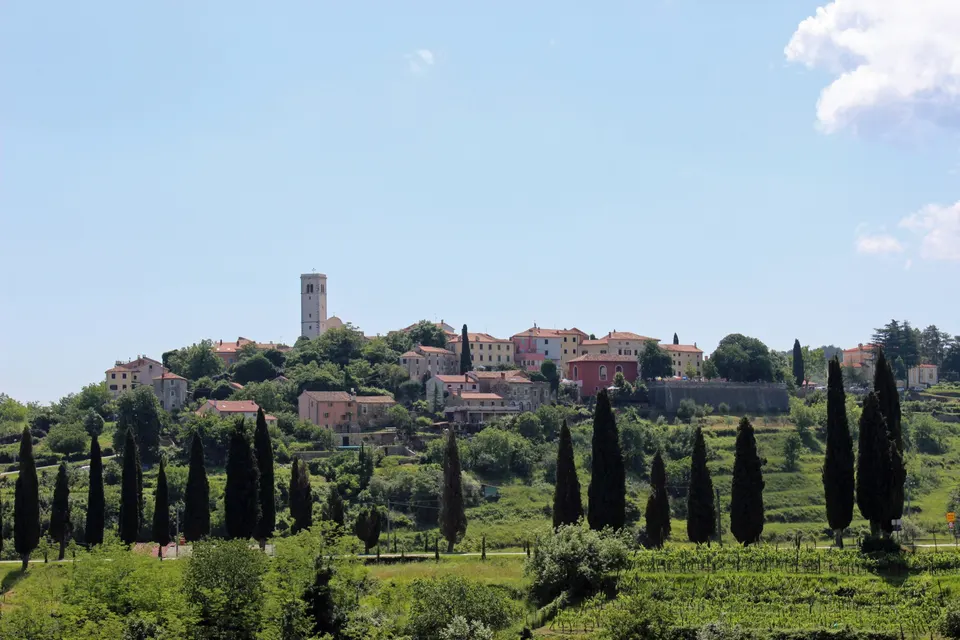
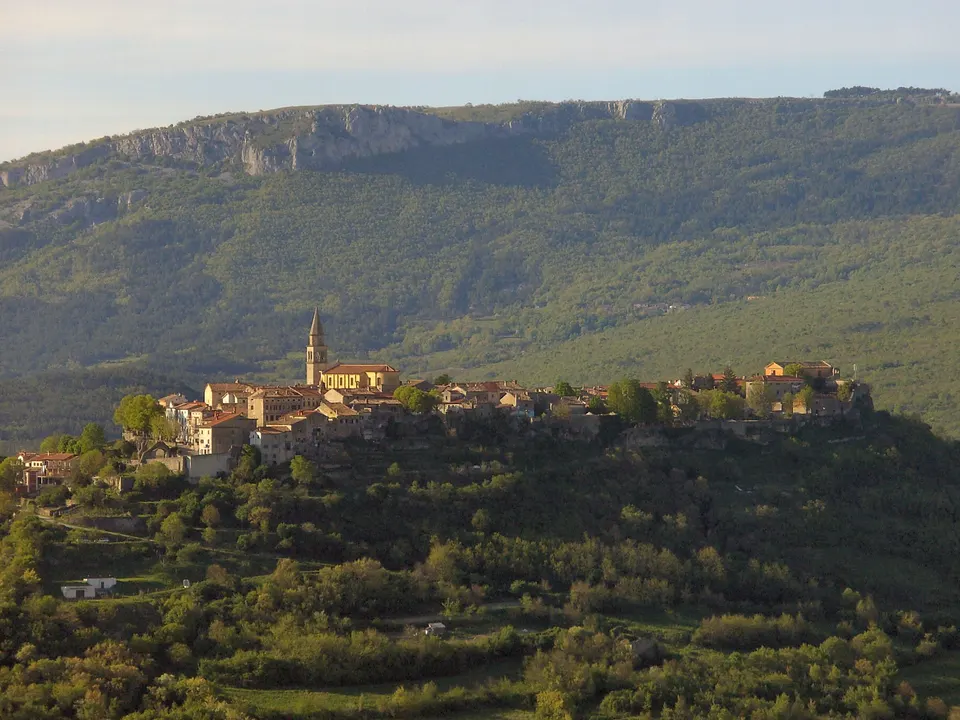
Most people see Vodnjan from the road: a long, low town on a gentle rise, with one very tall bell tower pointing at the sky. They are usually on their way somewhere else, to Pula, to Rovinj, to the beaches of Fažana. It is worth stopping. Vodnjan, or Dignano in Italian, is one of the most rewarding small towns in southern Istria, and it sits in the middle of some of the finest olive country on the Adriatic.
This guide covers what to see in the old town, how to taste the local olive oil, and how to fit Vodnjan into a day in the south of the peninsula.
Where is Vodnjan?
Vodnjan lies a few kilometres inland, north of Pula and south of Bale and Rovinj. It is close enough to the sea to feel its light, but the landscape around it is red earth, dry-stone walls and row after row of olive trees. The town has a long Venetian history, and it is still bilingual: street signs are in Croatian and Italian, and you will hear both languages in the cafés on the square.
What to see in the old town
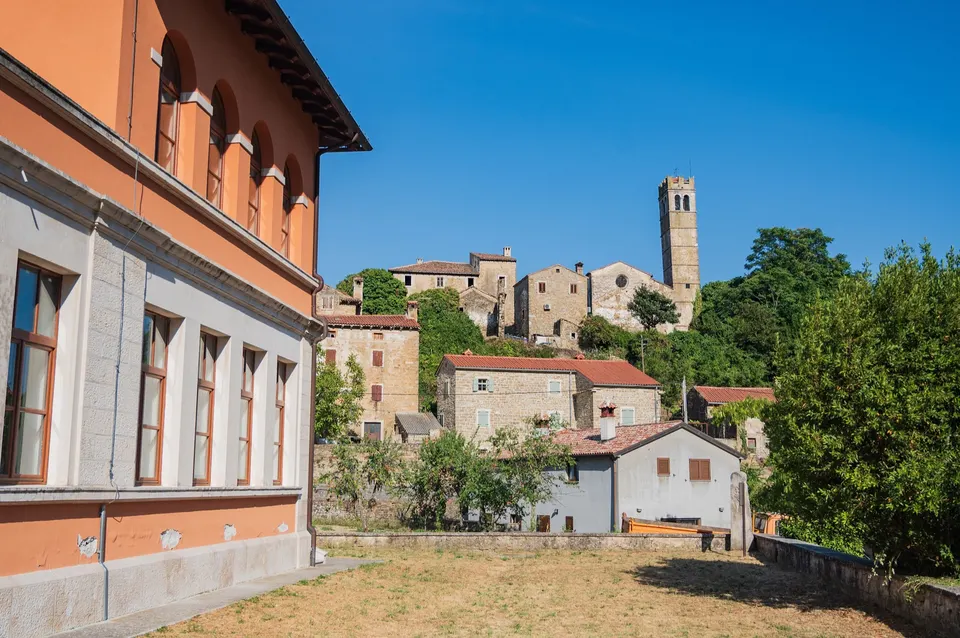
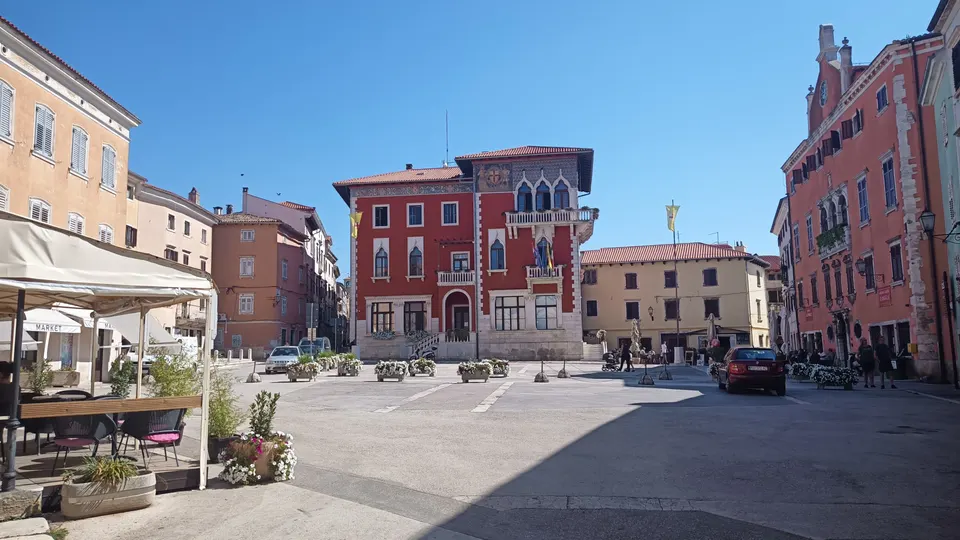
Start on the main square, Narodni trg. It is broad, sunny and lined with palaces that show off the town's Venetian past, including a striking red building in neo-Gothic Venetian style that looks as if it has drifted over from the Grand Canal. From here, narrow lanes paved in pale stone run in every direction. Many houses are built from the same rough limestone, with heavy wooden doors, stone window frames and small courtyards glimpsed through open gates.
The old town is compact, and the best way to see it is simply to wander. Look up at carved coats of arms above doorways, at old balconies and chimneys, and at the way the lanes all seem to find their way back to the bell tower. Vodnjan has also become known for colourful murals on some of its walls, a contemporary layer on very old stone.
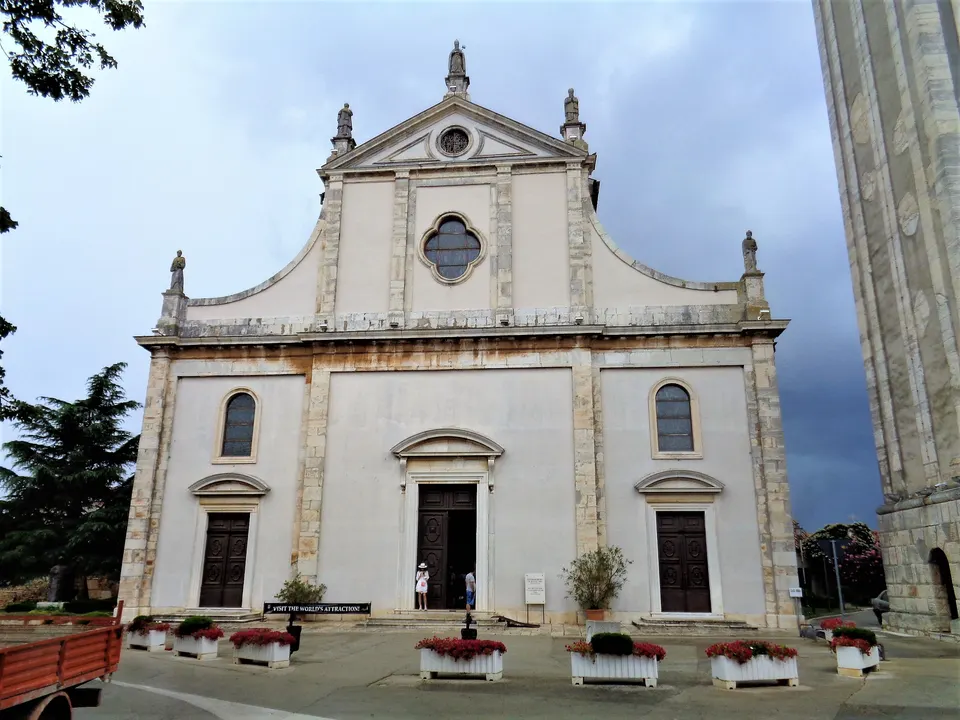
The church of St Blaise and its bell tower
The parish church of St Blaise (Sveti Blaž) is the largest parish church in Istria, built in the late eighteenth century in a calm, classical style inspired by Venetian models. Next to it stands the bell tower, the tallest in Istria, modelled on the campanile of St Mark's in Venice. On a clear day it is visible from far across the plain, and it is a useful landmark when you are driving the back roads between olive groves.
Inside, the church holds a large collection of religious art. It is best known, however, for the preserved bodies of saints kept in the church, often called the mummies of Vodnjan. Their remarkable state of preservation has drawn pilgrims and the curious for decades. The display is respectful and quiet; it is a church first, so dress and behave accordingly.
Vodnjan sits in the middle of some of the finest olive country on the Adriatic.
Olive oil: why Vodnjan matters
Olives have been grown around Vodnjan since antiquity, and the town remains one of the centres of Istrian olive oil. Many families still tend their own groves, and the area is home to producers whose extra virgin oils are known well beyond Croatia. Istrian oil tends to be green, fresh and peppery, with notes of cut grass, artichoke and bitter almond, especially when it is new.
The best time to come for oil is late autumn, during the harvest, when the mills are working and the new oil is cloudy, bright green and intensely fragrant. Outside harvest season, many producers welcome visitors for tastings by arrangement. A good tasting is short and focused: a few oils side by side, a little bread, and an explanation of how the variety, the timing of the harvest and the milling shape the flavour. If you want to understand what you are tasting first, read our guide to Istrian olive oil.
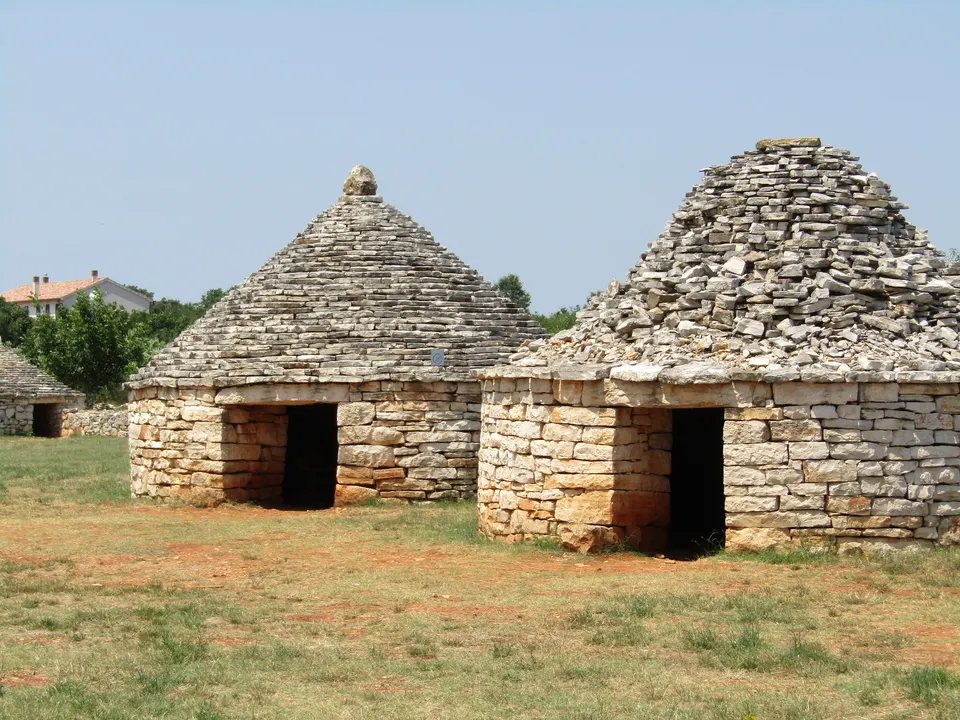
Kažuni: the stone huts in the fields
The countryside around Vodnjan is dotted with kažuni, round dry-stone huts with corbelled stone roofs, built without mortar. Farmers used them as shelters from sun and rain and as places to store tools. The Vodnjan area has a particularly dense concentration of them, and an open-air Kažun Park near the town presents several restored examples alongside dry-stone walls. It is a short, easy visit and a good way to understand how this landscape was worked by hand. For the story behind them, see our piece on the kažun.
How to spend a day in and around Vodnjan
Vodnjan works well as half a day on its own, or as part of a loop through the south. A relaxed plan: a morning coffee on the main square, a walk through the old town and a visit to St Blaise, then an olive oil tasting at a nearby estate. In the afternoon, drive down to the coast at Fažana for a swim and a plate of fish, or continue to Pula for the amphitheatre and the evening passeggiata. If you prefer to stay inland, Bale and Svetvinčenat are both a short drive away.
Good to know
- Getting there. Vodnjan is a short drive north of Pula, just off the main road towards Rovinj and close to the Istrian motorway. Pula airport is within easy reach.
- Parking. Leave the car on the edge of the old town; the centre is best explored on foot.
- Church visits. Opening times for St Blaise and its collections change with the season, so check locally before you go.
- Olive oil tastings. Contact producers in advance, especially outside the summer months and during the harvest, when everyone is busy.
- When to come. Spring and autumn are ideal: mild weather, green groves and, in late autumn, the new oil.
- Buying oil. Look for the harvest date on the bottle and store oil away from light and heat.
Why Vodnjan stays with people
Vodnjan is not polished. Some palaces need restoring, some lanes are quiet even in August, and that is part of its appeal. It feels like a working town that happens to have a remarkable church, a fine square and an extraordinary landscape all around it. Come for the bell tower, stay for the oil, and leave with the sense of having seen a part of Istria that many visitors drive straight past. Many who fall for it end up looking at the stone houses in the surrounding villages with a different eye.