Istria sits where Croatia, Slovenia and Italy meet, which gives you more ways in than most visitors realise. Airports, motorways, trains and summer boats, explained.
Istria is a peninsula at the northern end of the Adriatic, where Croatia, Slovenia and Italy meet. That position makes it one of the easiest parts of Croatia to reach from Central Europe: many visitors from southern Germany, Austria, Slovenia and northern Italy simply drive. Others fly into Pula, or into an airport just across a border, and finish the trip by road.
This guide covers the options that do not change from year to year. Flight routes, timetables and prices do change, often by season, so always check them with the airline, operator or station before you book.
Which airport is closest to Istria?
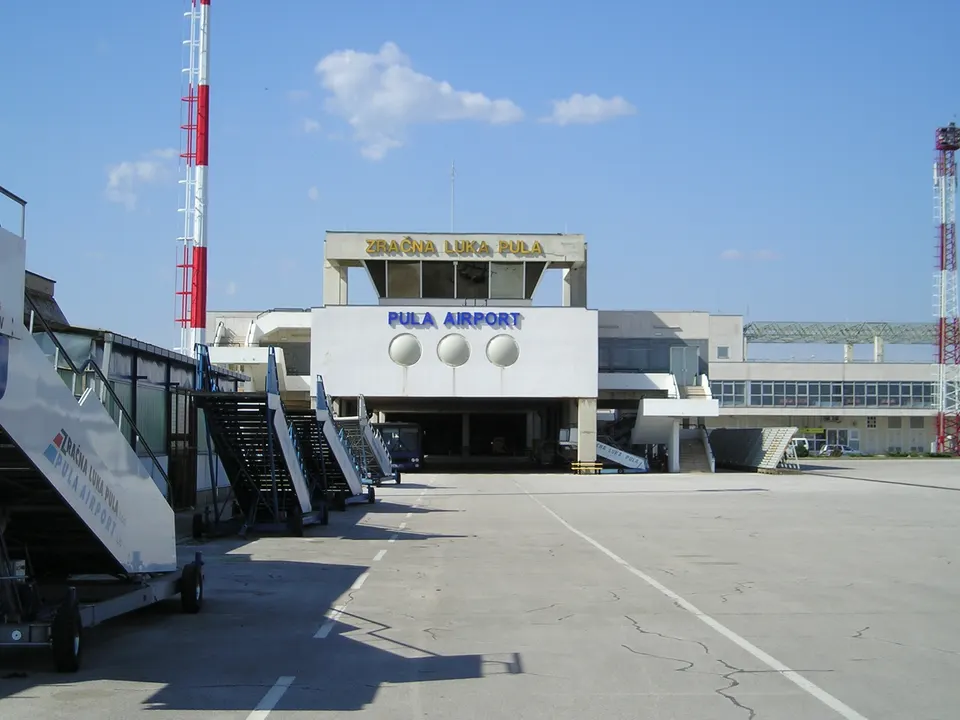
Pula Airport, just outside the city in the south of the peninsula, is the only airport in Istria with regular passenger flights. Most of its connections are seasonal, with many more flights in summer than in winter. The city itself is worth a day; see Pula beyond the Arena. From Pula, Rovinj is a short drive and the rest of Istria is easily reached by car or bus. If a direct flight to Pula does not suit your dates, several other airports are within driving distance.
- Trieste (Italy). The airport lies north-west of Trieste. From there, the road runs past the city and along the short Slovenian coast into northern Istria, making it a good choice for Umag, Novigrad and the north.
- Ljubljana (Slovenia). A motorway leads south-west from Ljubljana towards Koper and the Croatian border. Convenient for northern and inland Istria.
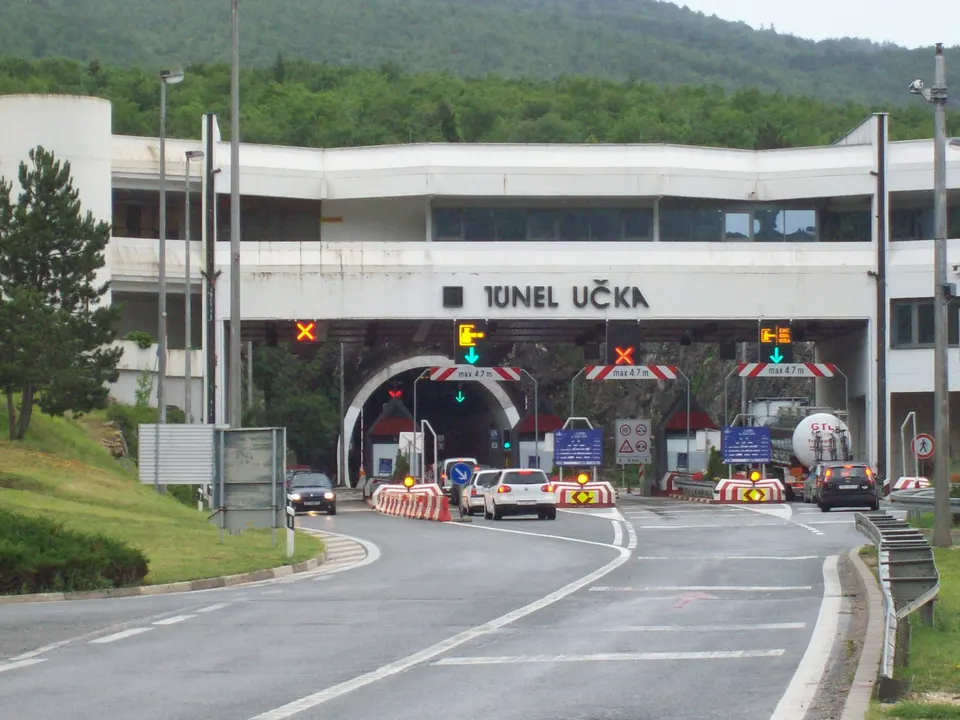
- Rijeka (Croatia). The airport is on the island of Krk, linked to the mainland by a bridge. From Rijeka, the Učka tunnel brings you straight into central Istria; good for the east coast and Labin.
- Venice (Italy). Marco Polo and Treviso airports have the widest choice of flights, but the drive to Istria is the longest of these options, via Trieste. In summer you can also continue by boat (see below).
- Zagreb (Croatia). The capital's airport is linked to Istria by motorway via Rijeka and the Učka tunnel.
Driving to Istria from Munich, Vienna and Ljubljana
Driving is the most common way to arrive, and it gives you the freedom you will want once you are here. Within Istria, the main motorway is known as the Istrian Y: one branch runs down the west of the peninsula from near Umag to Pula, the other crosses from Kanfanar in the middle of Istria east to the Učka tunnel and on towards Rijeka.
- From Munich. The usual route heads to Salzburg, then south on the Tauern motorway to Villach, through the Karawanken tunnel into Slovenia, past Ljubljana and on towards Koper and the Croatian border.
- From Vienna. Drive south via Graz into Slovenia, past Maribor and Ljubljana, then on towards Koper. An alternative is to continue through Croatia via Zagreb and Rijeka and enter Istria through the Učka tunnel.
- From Ljubljana. The motorway towards Koper brings you to the Croatian border near the coast; northern Istria is very close beyond it.
- From Trieste. A short drive through Slovenia's coastal strip brings you into northern Istria.
- From Venice and northern Italy. Follow the motorway east to Trieste and continue as above.
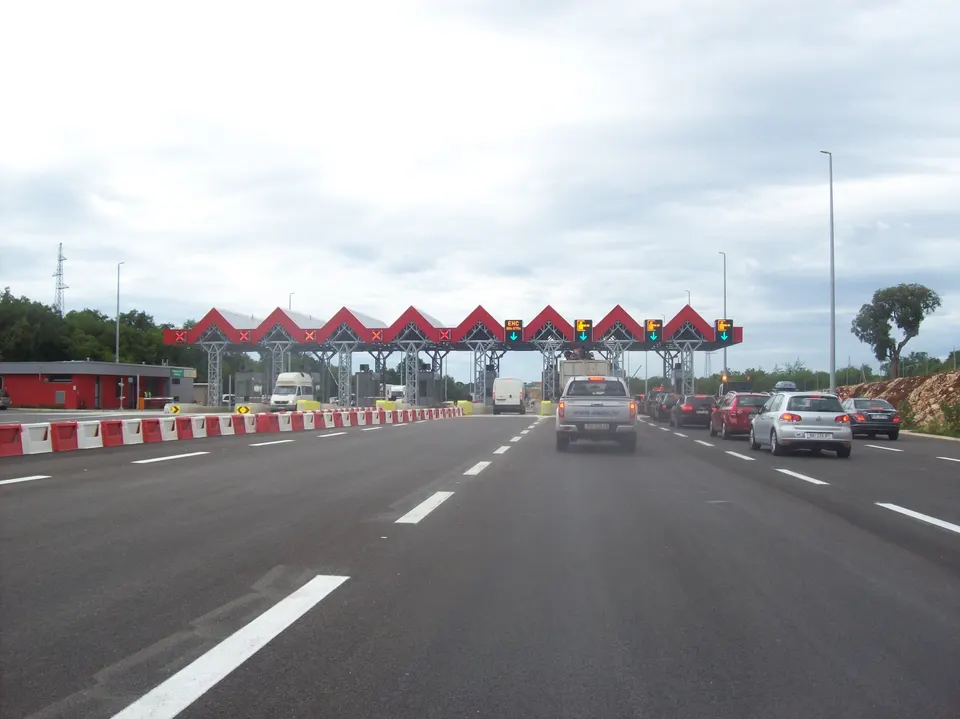
Tolls, vignettes and borders
- Austria and Slovenia. Both require a vignette for their motorways, and some Alpine tunnels charge a separate toll. Buy the vignette before you reach the motorway; both countries offer digital versions.
- Croatia. Motorway tolls are charged by distance, and the Učka tunnel has its own toll. Payment methods are changing as electronic tolling is introduced, so check the current system before you travel.
- Borders. Since Croatia joined the Schengen area in 2023, there are no routine passport checks between Slovenia and Croatia. Carry your passport or ID card anyway; checks can still happen.
- Hire cars. If you rent a car in Italy or Slovenia, tell the company you are driving to Croatia, and check whether a one-way return across a border is possible.
Istria is where three countries meet, which gives you more ways in than most visitors realise.
Can you get to Istria by train or bus?
By train, only partly. Istria's railway runs from Pula north through Pazin and Buzet and on into Slovenia, but it is not directly linked to the rest of the Croatian rail network, and passenger services are limited. In some summers a seasonal cross-border train has run from Ljubljana; check whether one is operating for your dates. A practical approach is to take the train to Trieste, Ljubljana or Rijeka and continue by bus or hire car.
Buses are more useful. Long-distance coaches link the main Istrian towns, including Pula, Rovinj, Poreč and Umag, with Zagreb, Rijeka, Trieste and Ljubljana, and international coach lines reach Istria from Germany, Austria and other countries. Within Istria, buses connect the coastal towns well, but the hill towns of the interior are much harder to reach without a car.
Arriving by sea from Venice and Trieste
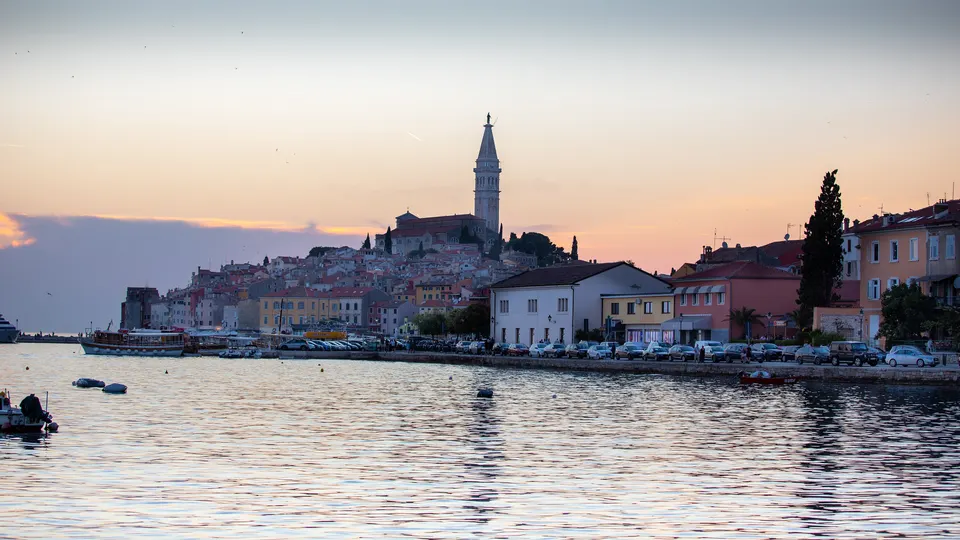
In summer, passenger catamarans link Venice with several Istrian harbour towns, such as Rovinj, Poreč and Pula, and seasonal boats also run along the coast from Trieste. They are a beautiful way to arrive, sailing straight into an old town harbour, but they carry foot passengers only, not cars, and timetables vary from year to year. If you are arriving on your own boat, our guide to sailing in Istria covers marinas and the winds; check current entry formalities before you set off.
Good to know for the journey
- Avoid summer Saturdays. Many holiday rentals change over on Saturdays, and border crossings, motorways and the Učka tunnel are at their busiest. Travel midweek, early or late if you can. See the best time to visit Istria.
- Plan the last stretch. Old towns such as Rovinj and Motovun are closed to traffic; ask your host where to park.
- You will want a car. Even if you arrive by plane or boat, hiring one for a few days opens up the interior. Our three-day and seven-day itineraries show what you can reach.
- Choose your base by your arrival point. Trieste and Ljubljana suit the north; Pula suits the south; Rijeka suits the east. See where to stay in Istria.
- A day trip on the way. Arriving through the Učka tunnel? Opatija is just on the other side.
However you arrive, the last few kilometres tend to be the same: a road through oak woods and olive groves, a hill town on the horizon and the sea somewhere beyond it. For many people that drive becomes a ritual repeated every year, and for some it ends at a house of their own.