Most visitors see the amphitheatre, take a photograph and leave. They miss a layered, lively city with three thousand years of stories.
Pula is a city that many people only pass through: from the airport to a villa, from the motorway to the beach. That is a pity, because few small cities in Europe hold so much history so casually. Roman temples stand next to cafés, Austro-Hungarian villas line quiet streets, and a shipyard skyline frames the harbour.
Begin with the Romans, then keep going
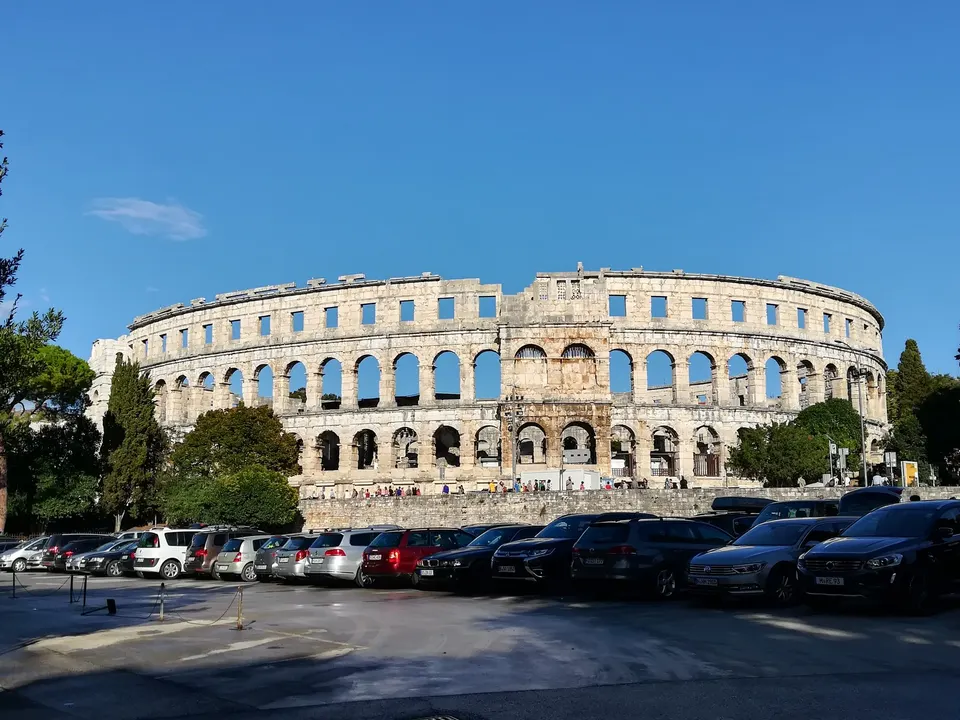
The Arena deserves its fame. It is one of the best-preserved Roman amphitheatres anywhere, and in summer it still hosts concerts and the Pula Film Festival. Visit early or late in the day when the stone glows and the crowds are thinner.
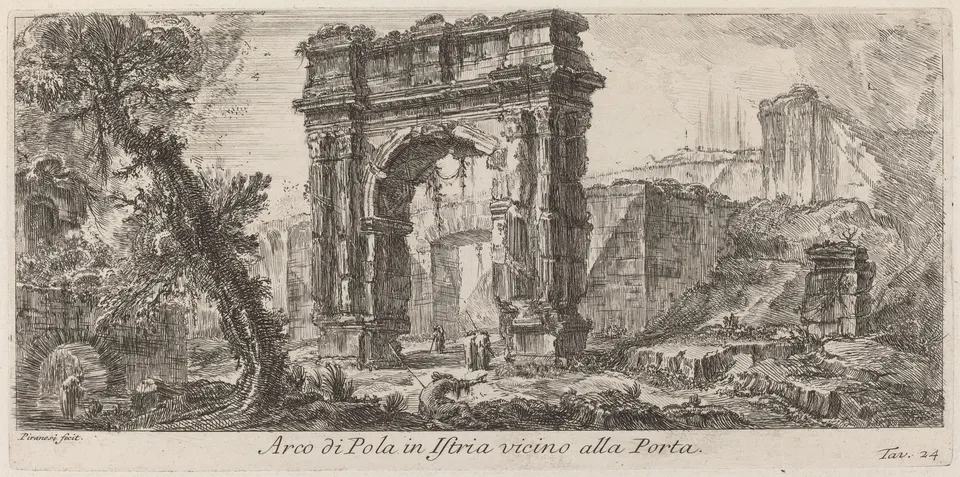
From there, walk to the Arch of the Sergii, the old Roman gate into the city, and on through the old town to the Forum, where the Temple of Augustus has stood for two thousand years. On the hill above, the Venetian fortress, the Kaštel, houses the Historical and Maritime Museum of Istria and offers wide views of the harbour.
The Austro-Hungarian city
In the late nineteenth century Pula became the main naval port of the Austro-Hungarian Empire, and much of the city was built in that period: villas, gardens, barracks and the residential streets of Verudela. Beneath the old town, the Zerostrasse tunnels, built as shelters during the First World War, can be visited and are a cool escape on a hot afternoon.
Few small cities hold so much history so casually.
The market
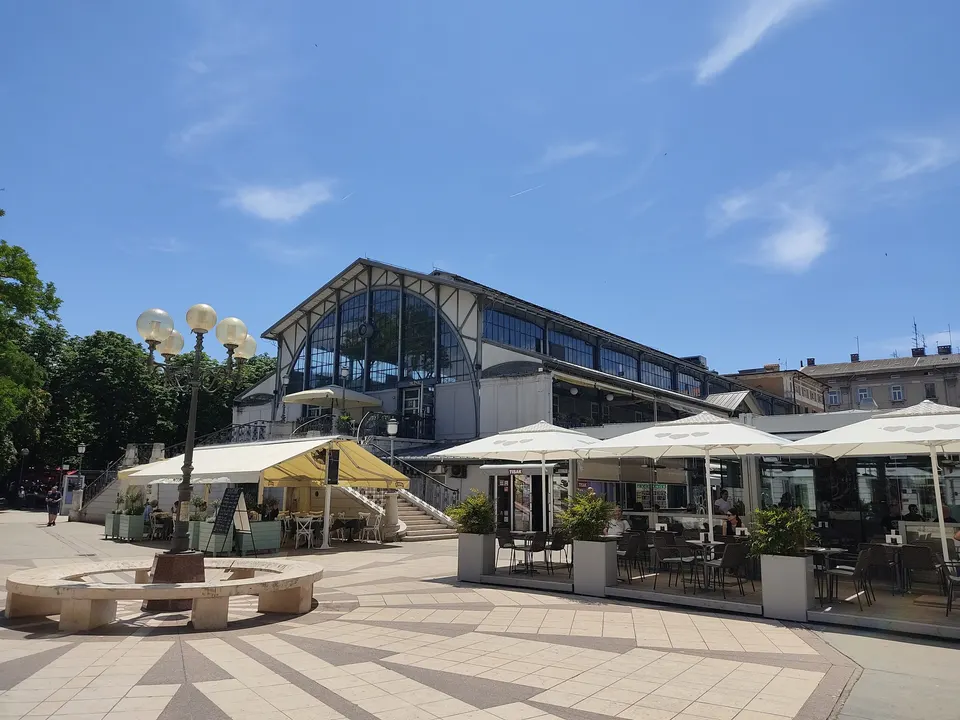
Do as residents do and go to the city market in the morning. The iron and glass market hall sells fish, cheese and meat inside, while fruit, vegetables, honey and olive oil fill the stalls outside. Have a coffee nearby and watch the city wake up.
The coast around the city
South of Pula, the Kamenjak peninsula near Premantura is a protected landscape of wild coves and clear water, best explored by bike or on foot outside high summer. To the north, boats leave Fažana for the Brijuni islands, a national park with Roman ruins, gardens and a fascinating twentieth-century history.
Evenings
After dark, the shipyard cranes along the harbour are lit in changing colours, an unusual and beautiful sight from the waterfront. Old-town bars fill up, and in summer there is almost always something happening in the Arena, the Kaštel or one of the city's squares.
Neighbourhoods worth walking
Beyond the old town, Pula is a city of distinct neighbourhoods. Verudela and the Lungomare along the southern coast have pine woods, coves and walking paths above the sea. San Policarpo and Monte Zaro hold some of the city's finest Austro-Hungarian villas and gardens, many now quietly restored. Veruda and Stoja are where residents swim on summer evenings after work. Walking between them is the best way to understand that Pula is not a museum, but a living port city with a strong local character.
Eating like a resident
Pula's food is simpler and more local than its coastal neighbours'. Fresh fish and shellfish, grilled or cooked in buzara, Istrian pasta with seafood or game, and plenty of seasonal vegetables from the market. In autumn, menus turn to truffles and young wine; in spring, to wild asparagus. Ask what came in from the boats that morning, and trust the answer.
Living here
More foreigners are choosing to live in and around Pula all year, not only in summer, drawn by the climate, the airport, good schools and a city that does not empty out in winter. Its villas and apartments range from Austro-Hungarian grandeur to contemporary new builds in the surrounding villages. Many of them share the same need: furniture that fits rooms with high ceilings or irregular stone walls, made by people who can visit the house rather than ship a box.