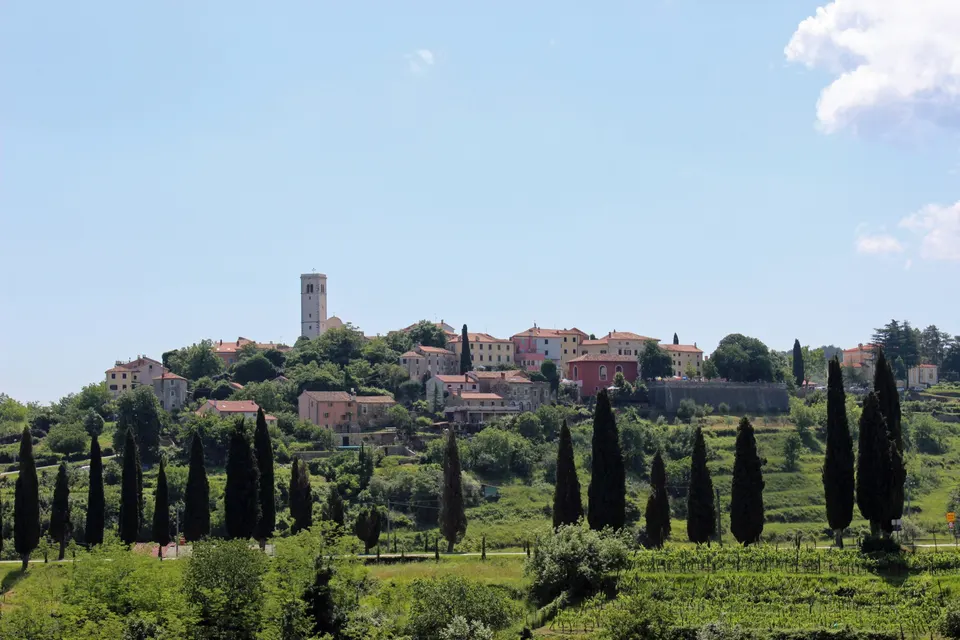
Half-empty after the war, Grožnjan was given to painters and musicians. Today its stone lanes are full of studios, and in summer the whole town plays.
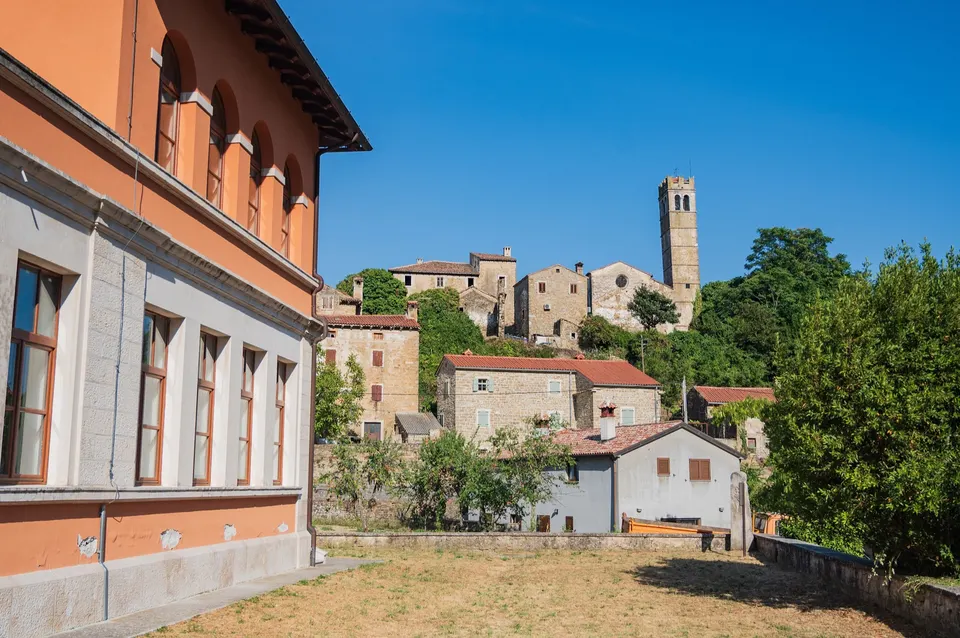
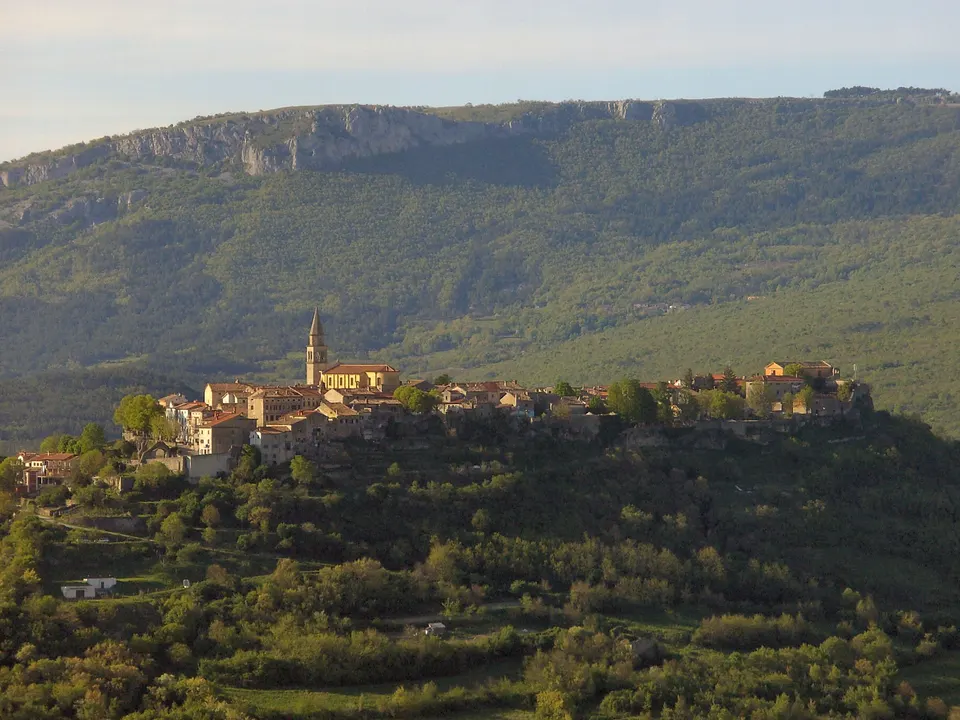
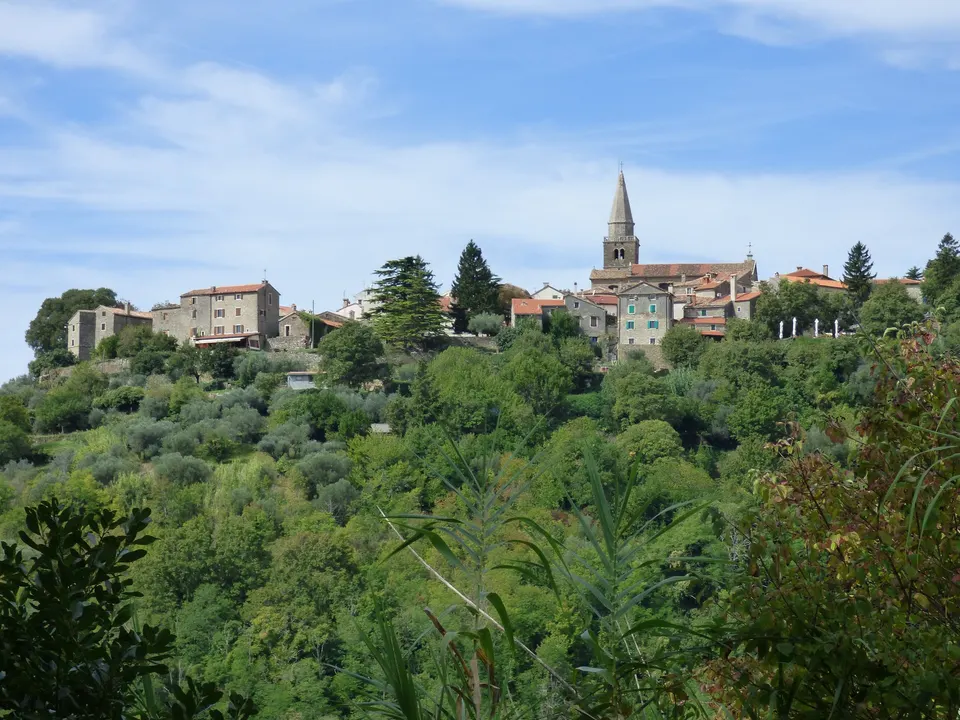
Grožnjan sits on a ridge in north-western Istria, above the green valley of the Mirna river. From a distance it looks like many other hill towns in the region: a tight cluster of stone houses, a bell tower, a ring of old walls. Walk through the gate, though, and the difference is immediate. Almost every other door opens onto a gallery, a studio or a small workshop, and on summer evenings the sound of rehearsing musicians drifts out of open windows.
Its Italian name is Grisignana, and like much of this corner of Istria it is officially bilingual.
How did Grožnjan become a town of artists?
After the Second World War, most of Grožnjan's population, largely Italian-speaking, left the town, as happened across much of Istria in those years. By the 1960s many houses stood empty and the town was slowly falling into ruin. In 1965 it was declared a town of artists: painters, sculptors and other creative people were invited to take over and restore abandoned houses as studios and galleries.
A few years later, in 1969, the international organisation Jeunesses Musicales made Grožnjan the home of its summer music centre. Since then, young musicians from around the world have come each summer for courses, workshops and concerts. The combination of art and music saved the town, and it remains the reason Grožnjan feels alive while some other hill towns are quiet.
Almost every other door opens onto a gallery, a studio or a small workshop.
What to see in Grožnjan
Start at the town gate and the small square beyond it. The town loggia, with its row of stone columns and arches, was where public life and justice took place under Venetian rule; above it stands the former fontik, the communal granary, where grain was stored for the town. Both are typical of Istrian towns under Venice, and both are still used today for exhibitions and events.
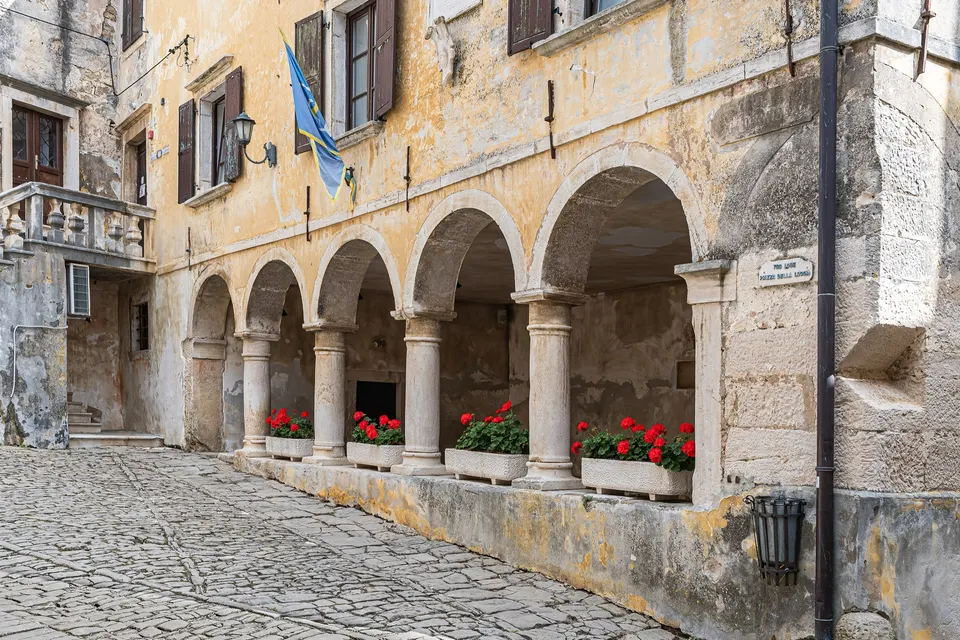
From there, climb towards the parish church of St Vitus, St Modestus and St Crescentia, rebuilt in the eighteenth century, and its separate bell tower. The terrace beside the church looks out over the Mirna valley and, on clear days, all the way to the sea. Then wander. The streets are short, cobbled and lined with houses that have been carefully repaired, many with their original stone door frames and wooden shutters.
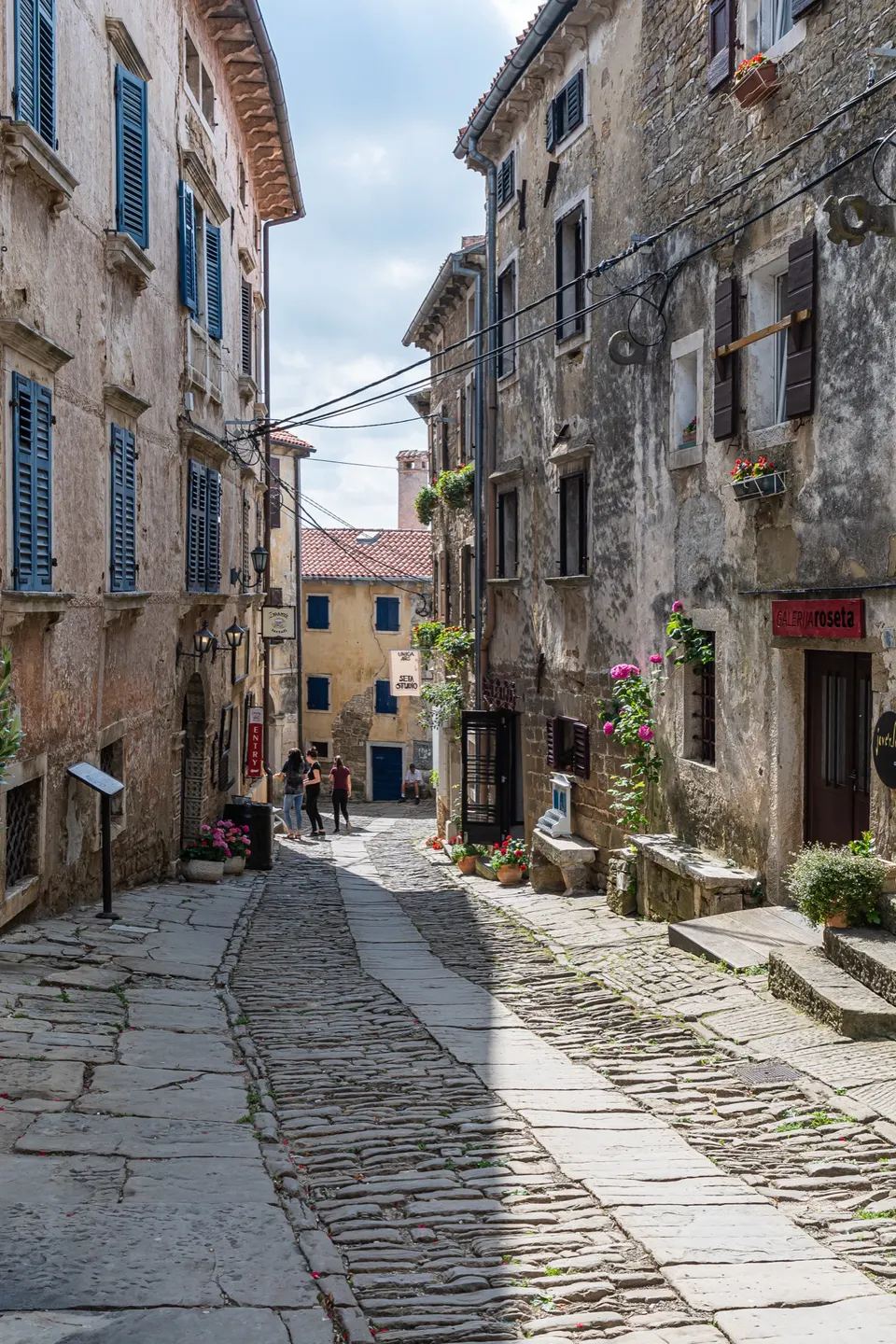
- Galleries and studios. Painting, ceramics, jewellery, glass and textiles, often made on the spot. Many artists are happy to talk about their work.
- The loggia and the fontik. The civic heart of the old town, used for exhibitions.
- The church terrace. The best view in town, especially in late afternoon.
- The town walls. Parts of the medieval walls survive around the edge of the old town, with views over the surrounding hills.
Music in Grožnjan
In summer, Grožnjan becomes a stage. The courses of the music centre bring orchestras, chamber groups and soloists, and many of their concerts are open to the public, held in the church, on the squares and in the old buildings of the town. The town is also known for its summer jazz evenings. Programmes change every year, so check the current calendar before you plan a visit around a particular concert. Even without a ticket, an evening walk through Grožnjan in July often comes with a free soundtrack.
When is the best time to visit?
Summer is the season of music and the busiest time, when most galleries are open every day. Spring and autumn are calmer and often more beautiful, with soft light over the valley and the colours of the vineyards changing. In autumn the surrounding woods are part of the truffle country of the Mirna valley; see our guide to truffle season in Istria. In winter, many studios close, and the town becomes very quiet.
How to combine Grožnjan with a day in inland Istria
Grožnjan sits close to Motovun and Buje, and a day that links them is one of the classic routes of inland Istria. Spend the morning in Motovun, have lunch in the valley, and come up to Grožnjan for the late afternoon light and an evening concert. Our slow weekend in Motovun offers more ideas for the area.
If you prefer to move under your own power, the Parenzana, the old narrow-gauge railway between Trieste and Poreč, passes below the town and is now a walking and cycling route. The section around Grožnjan, with its old viaducts and tunnels, is one of the most scenic. More in our guide to cycling the Parenzana.
Good to know
- The old town is car-free. Park outside the walls and walk in; the streets are steep and cobbled.
- Many galleries are open daily in summer but keep shorter or irregular hours out of season.
- Bring cash as a backup for small studios, and ask before photographing artworks.
- Evenings can be cool on the hill, even in summer, so bring a light layer for open-air concerts.
Grožnjan is proof that a town can be saved by giving it a new purpose rather than freezing it in time. Its stone houses were repaired by people who wanted to live and work in them, and you can feel that care in every lane. It is a lesson that applies to any old house in Istria.