An archipelago off Fažana where Roman villas, Austro-Hungarian hotels, Tito's summer residence and a safari park share the same pine-shaded islands.
From the harbour in Fažana, the Brijuni islands look like a low green line on the water. It takes only a short boat crossing to reach them, but stepping ashore feels like entering a different world: manicured lawns, avenues of umbrella pines, deer grazing under the trees, and buildings from almost every chapter of Istrian history. Brijuni, also known as Brioni, is one of Croatia's national parks and one of the most unusual places on the Adriatic.
What is Brijuni?
Brijuni is an archipelago of fourteen islands and islets off the south-west coast of Istria, just north of Pula. The two largest are Veli Brijun and Mali Brijun. The whole group was declared a national park in 1983, protecting both the land and the surrounding sea. Visits are organised by the park itself, and most of the islands are closed to the public, which is a large part of why they have kept their calm.
A short history in layers
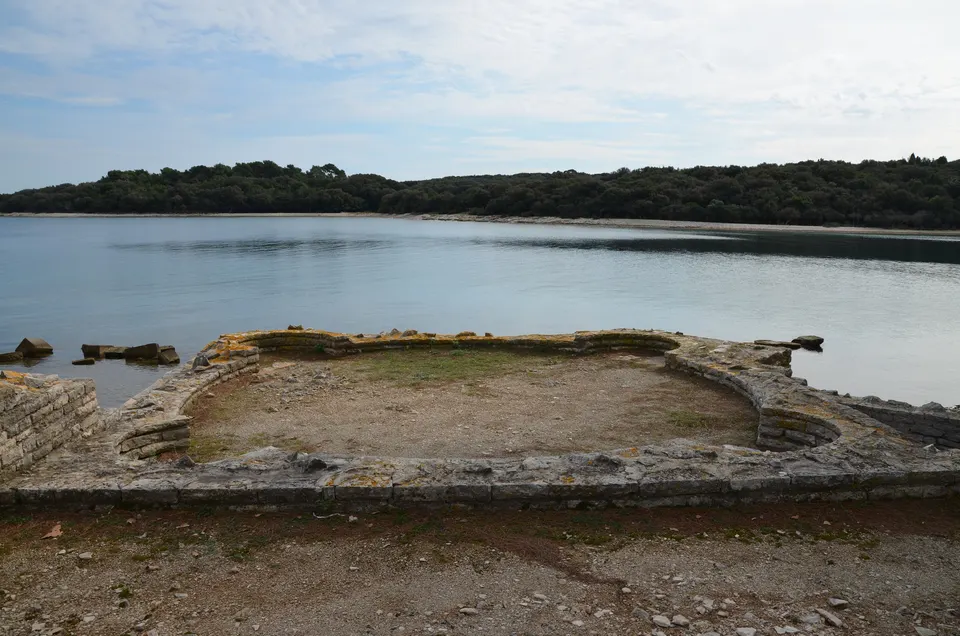
People have lived on Brijuni since prehistoric times. The Romans built luxurious seaside villas here, and the remains of a large villa complex in the bay of Verige on Veli Brijun are among the most important Roman sites on the eastern Adriatic. In late antiquity and the Byzantine period, a fortified settlement, the castrum, grew on the western side of the island. Later came Venetian rule, quarrying of the islands' fine limestone, and a long decline marked by malaria.
The modern story begins in 1893, when the Austrian industrialist Paul Kupelwieser bought the islands. With the help of the physician Robert Koch, malaria was eradicated, and Brijuni was transformed into an elegant resort with hotels, parks, a harbour and sports facilities, popular with the aristocracy and wealthy visitors of Central Europe in the early twentieth century.
After the Second World War, the islands became the summer residence of Josip Broz Tito, the leader of Yugoslavia. For more than three decades Brijuni was closed to ordinary visitors and hosted statesmen, royalty and film stars from around the world. Many of the exotic animals on the islands descend from gifts brought by foreign leaders. After Tito's death the islands were opened to the public and protected as a national park.
Roman villas, an Austrian resort and a twentieth-century summer residence, all under the same pines.
What to see on Veli Brijun
Most visits focus on Veli Brijun, the largest island. The standard guided tour usually combines a ride on a small tourist train with stops at the main sights. Highlights include:
- The safari park. A large enclosure with animals from distant countries, many descended from diplomatic gifts.
- The Roman villa at Verige. Foundations, terraces and mosaics of a seaside villa spread around a sheltered bay.
- The Byzantine castrum. Remains of a fortified late antique and early medieval settlement.
- The church of St Germanus. A small Gothic church with displays on medieval wall painting and Glagolitic inscriptions in Istria.
- The Tito exhibition. Photographs and objects recalling the islands' years as a political stage.
- The ancient olive tree. A gnarled olive said to be well over a thousand years old, still bearing fruit.
- Dinosaur footprints. Fossil tracks preserved in the rock along parts of the shoreline.
Nature on the islands
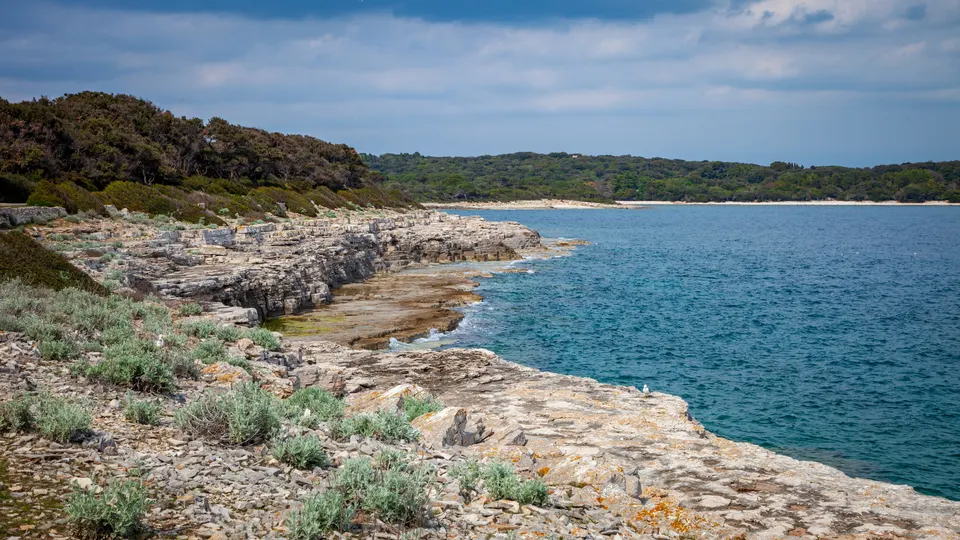
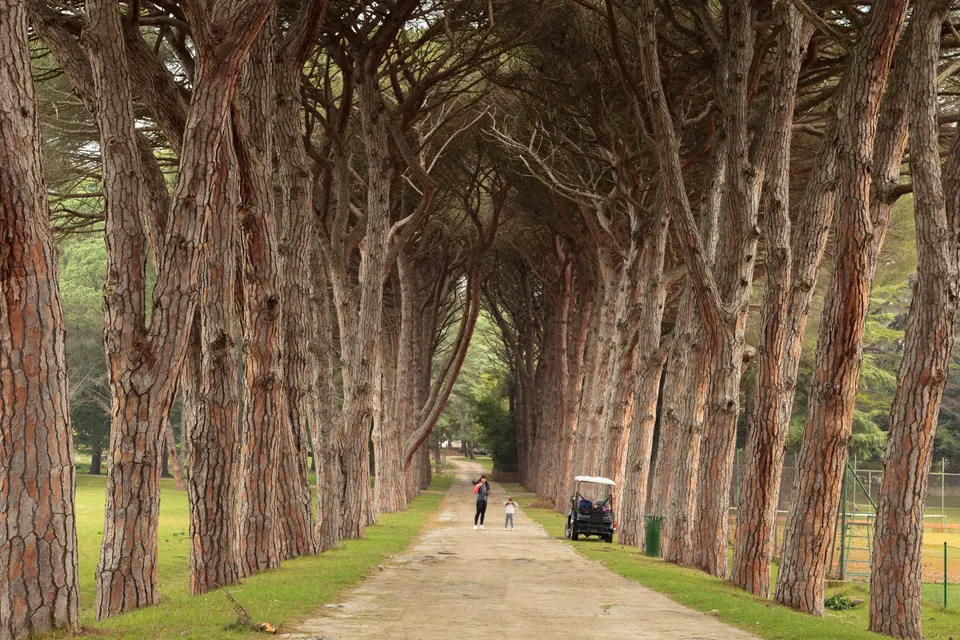
Beyond the history, Brijuni is simply beautiful. The islands mix Mediterranean holm oak woods with open parkland created in the Kupelwieser era, so you get both wild shoreline and long green lawns. Deer, mouflon and many species of birds live here, and the sea around the islands is protected, with clear water and rocky bays. Walking or cycling along the shore paths is the best way to enjoy it once the guided part of the visit is over.
How to get to Brijuni
The usual starting point is Fažana, a small fishing town north of Pula, where the national park has its office and its boats leave from the harbour. The crossing is short. Visits are booked through the park, and in summer it is wise to reserve ahead. Private excursion boats from Fažana, Pula and other towns also sail around the archipelago, but landing on the islands is regulated, so check what a trip includes before you book.
Good to know
- Booking. Reserve your visit with the national park in advance in high season; times and prices are set by the park.
- Time needed. The guided tour takes part of a day; allow extra time if you want to walk or cycle on your own afterwards.
- Getting around. Bicycles and electric carts can be hired on Veli Brijun, subject to availability.
- What to bring. Sun protection, water and comfortable shoes. Shade is generous, but summer days are hot.
- Respect the rules. It is a protected area: stay on paths, do not feed the animals and follow the guides' instructions.
- Summer evenings. An old Austro-Hungarian fortress on Mali Brijun has been used as an open-air theatre stage in summer; look for the season's programme.
When to go
Spring and early autumn are ideal: the light is soft, the islands are green and the boats are less crowded. Summer brings long days and warm sea, but also the most visitors, so book early and choose a morning departure if you can. In any season, combine Brijuni with an evening in Fažana, a plate of sardines on the waterfront and a walk along the shore as the islands turn dark against the sunset. For more ideas in the area, see our guide to Pula beyond the arena.