Motovun, Grožnjan, Hum and a dozen smaller towns crown the hills of inland Istria. How they differ, how to group them into day trips and how to see them at their best.
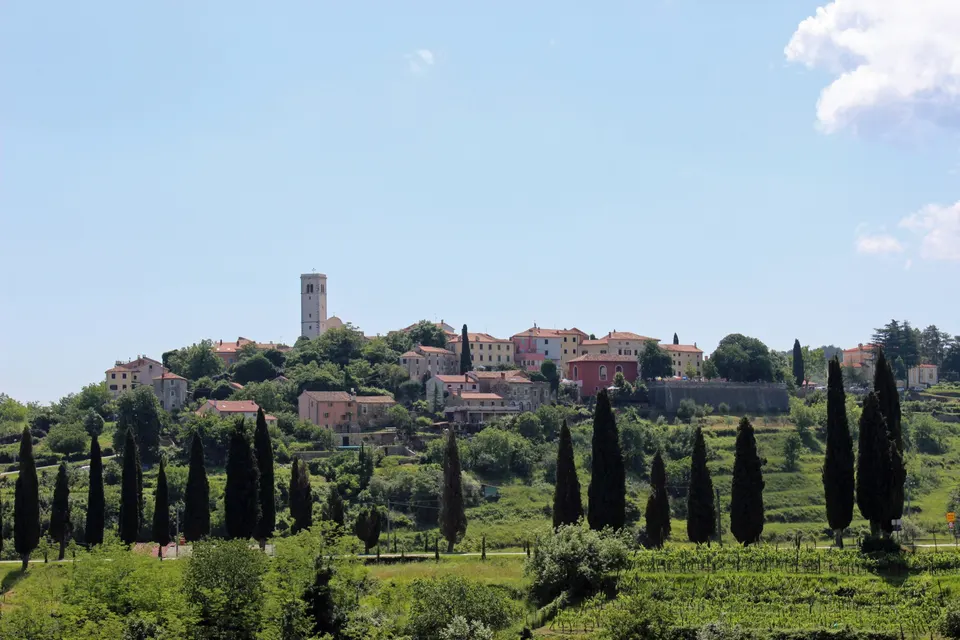
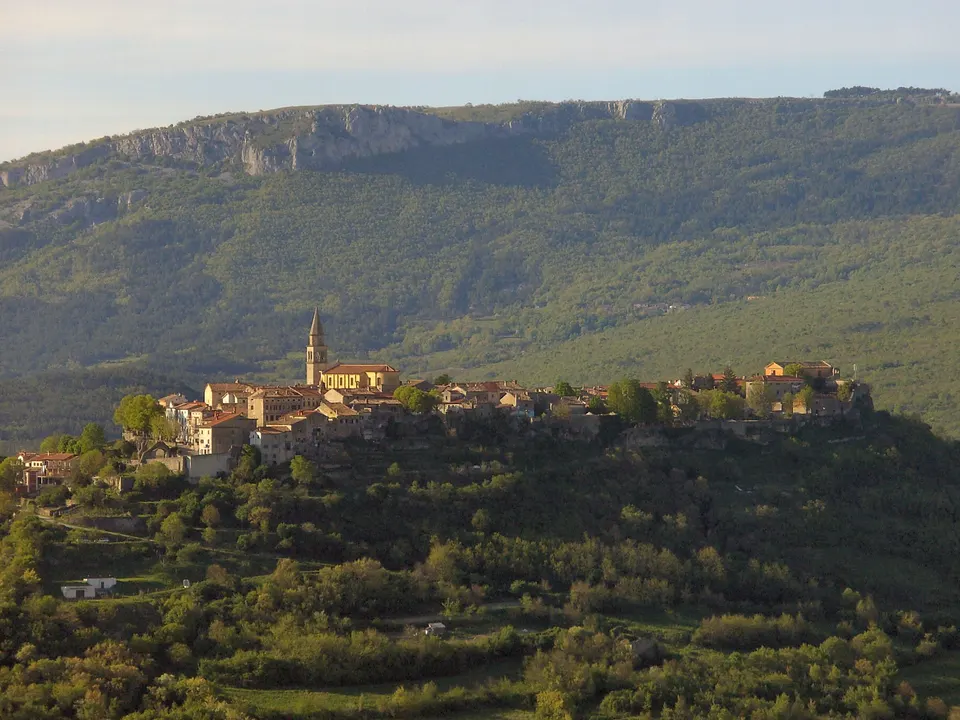
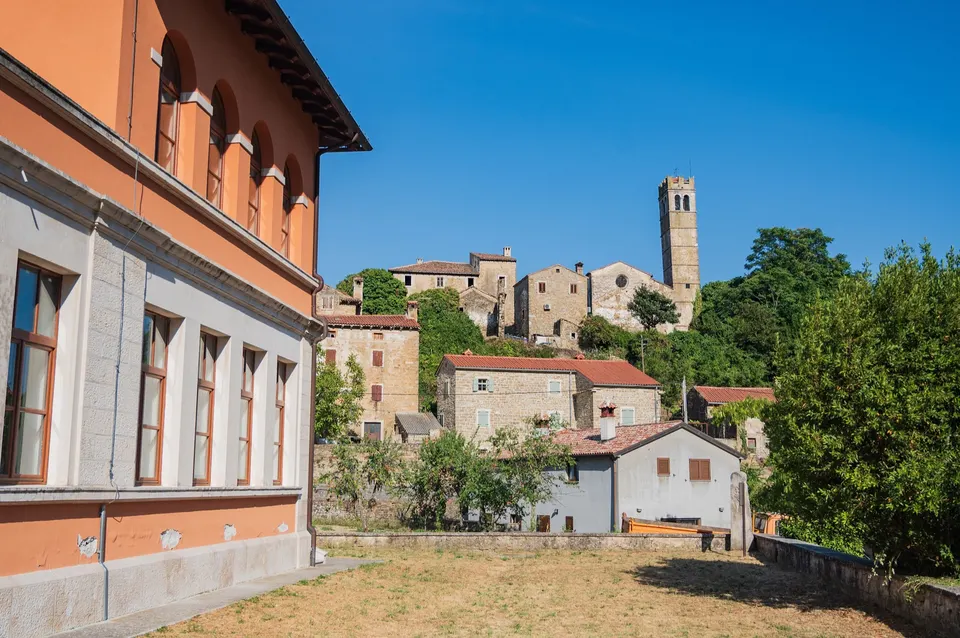
Drive inland from almost anywhere on the Istrian coast and within half an hour you will see one: a cluster of stone houses on top of a hill, a bell tower rising above the roofs, walls following the shape of the summit. Istria's interior is full of these towns. Most were built on hilltops for protection, many were fortified under Venice or the Habsburgs, and several emptied in the twentieth century as people moved to the coast and the cities. Today some are lively with galleries and konobas, others are almost silent.
There are too many to see in one trip, and visiting six in a day is the surest way to stop noticing them. The answer is to group them by area, choose two or three a day and leave time for lunch. Below are the main clusters, and the order in which they fit together naturally.
Which hill towns are worth visiting?
- Motovun. The best known, on a steep hill above the Mirna valley and its oak forest, with walls you can walk around. See a slow weekend in Motovun.
- Grožnjan. The town of artists, with galleries in old houses and music in summer. See Grožnjan, the town of artists.
- Oprtalj and Završje. Quieter neighbours above the Mirna valley, with Venetian loggias, old gates and wide views. See Oprtalj and Draguć.
- Buzet and Roč. The north-east, near the Ćićarija plateau, where Glagolitic heritage runs deep. See Buzet and Roč.
- Hum. Often called the smallest town in the world, a single street inside a ring of houses. See Hum.
- Pazin and Beram. The centre of Istria: a castle above a gorge, and nearby frescoes of the dance of death. See Pazin and Beram.
- Draguć. A tiny village on a ridge, with frescoed chapels and a view that has appeared in more than one film.
- Momjan and Buje. The north-west wine country, on hills facing the sea. See Brtonigla and Momjan.
- Sveti Lovreč, Svetvinčenat and Bale. The south-west and centre, closer to the coast, with castles and fortified squares. See Bale and Svetvinčenat.
- Pićan and Gračišće. The east, above the valleys towards Učka, rarely crowded even in summer.
Route 1: the Mirna valley and the north-west
If you see only one cluster, make it this one. Start early in Motovun, before the day visitors arrive, and walk the walls while the valley is still in morning haze. Then drive across to Oprtalj, a long, quiet town on a ridge, and on to tiny Završje, where a handful of houses and a tall bell tower stand above the valley. Finish in Grožnjan in the late afternoon, when the light turns golden and the galleries are still open.
With a free day, add the wine villages of the north-west, such as Momjan, with its ruined castle, and Buje, on a hill with views towards the sea. In autumn, the valley below Motovun is the heart of the truffle season.
Route 2: Buzet, Roč and Hum
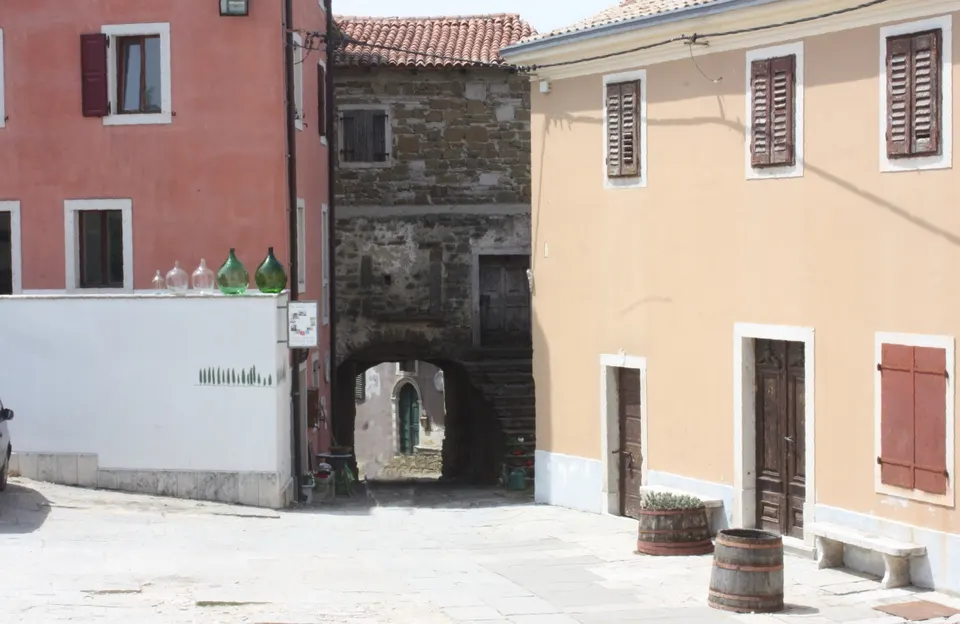
The second cluster lies in the north-east, in greener, wetter country beneath the Ćićarija plateau. Begin in Buzet, a hill town with a lived-in old quarter. Then follow the road towards Roč, a walled village with a strong Glagolitic tradition, and on to Hum. Between Roč and Hum runs the Glagolitic Alley, a series of stone monuments along the road celebrating the old Slavic script. Hum is so small that you can walk it in minutes; stay for a glass of biska, the local mistletoe brandy, and take your time.
Route 3: central Istria
The centre of the peninsula pairs well with a day of history. Pazin has its castle on the edge of a dramatic gorge, which inspired a famous scene in Jules Verne's novel Mathias Sandorf. Nearby, the small church of St Mary on the Rocks near Beram holds one of Istria's best-known fresco cycles. To the east, Gračišće and Pićan sit above deep valleys with Učka on the horizon, and you will often have their streets to yourself.
Route 4: the south and the coast
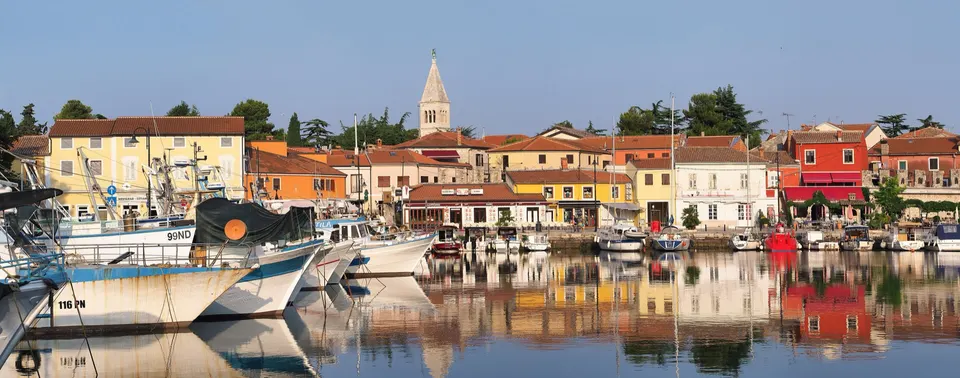
Closer to Rovinj and Poreč, the hills are lower but the towns are just as rewarding. Sveti Lovreč keeps its walls and towers almost intact. Svetvinčenat is built around a broad square with a castle on one side. Bale, close to the coast, is a compact medieval town of narrow lanes. Combine two of them with a swim in the afternoon, or with the ruins of Dvigrad, the abandoned town in the valley below Kanfanar.
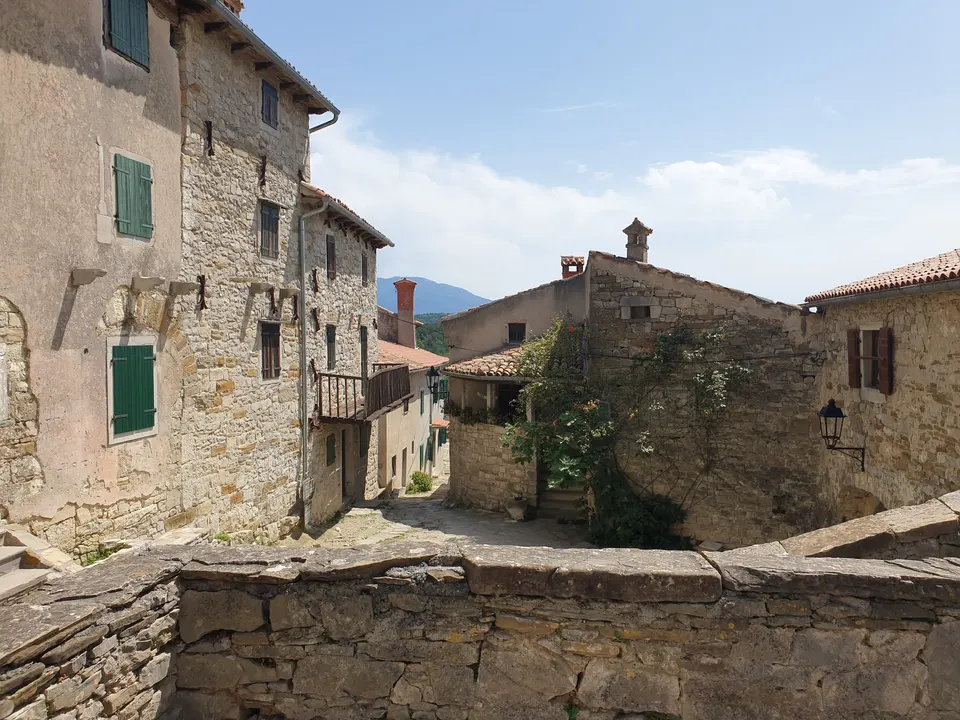
Two or three towns a day, a long lunch in between. Any more, and they start to blur.
Good to know before you go
- Park outside the walls. Old centres are largely closed to traffic. Park below and walk up; see driving in Istria for the roads and parking.
- Wear proper shoes. Streets are steep and paved with polished stone that can be slippery, especially when wet.
- Go early or late. Midday in July and August is hot and crowded in the best-known towns. Mornings and evenings are quieter and the light is better.
- Check opening times. Outside summer, galleries, cafés and konobas in the smallest towns may keep short hours or open only at weekends.
- Respect residents. These are homes, not museums. Keep your voice down in the evening, and ask before photographing people.
- Look out, not just in. The best moments are often at the edge of town: a bench by the walls, a view across the valley to the next hill and the next tower.
When is the best time to visit?
Spring and autumn are ideal. In April and May the valleys are green and the air is clear; in September and October the vineyards turn, the truffle season begins and the summer crowds have gone. Winter has its own appeal, with mist in the valleys and fires lit in the konobas, though some places close. Our guide to Istria month by month helps you choose.
Spend a few days among the hill towns and many people start to wonder what it would be like to live in one. Some go further, and restore an old stone house of their own; see buying an old house in Istria.