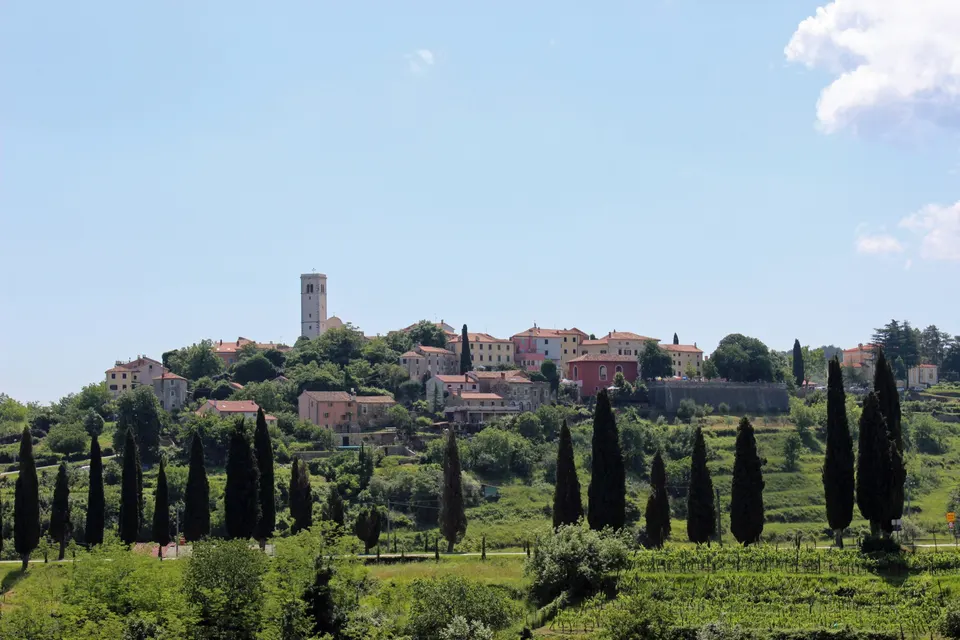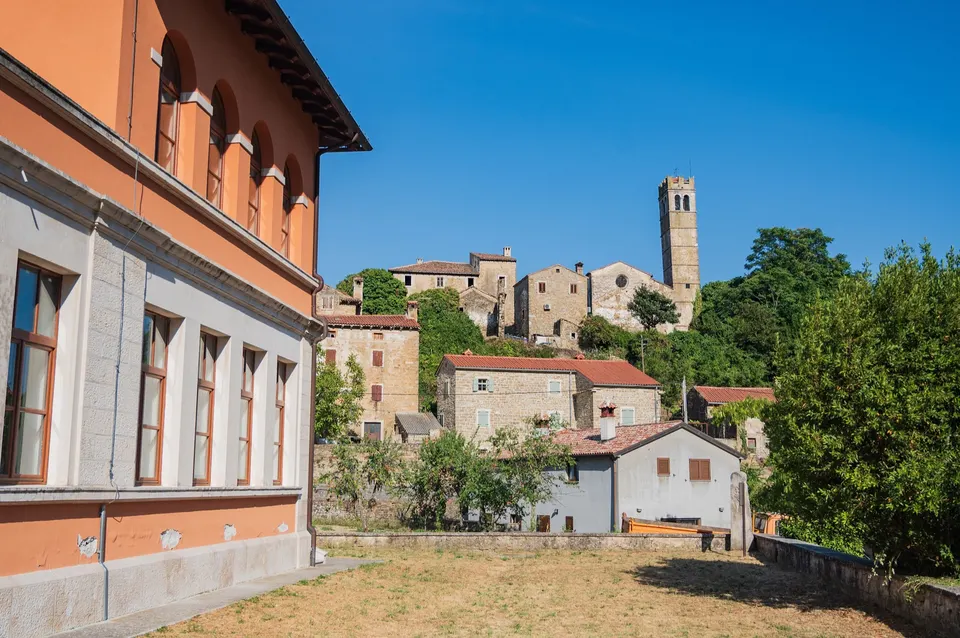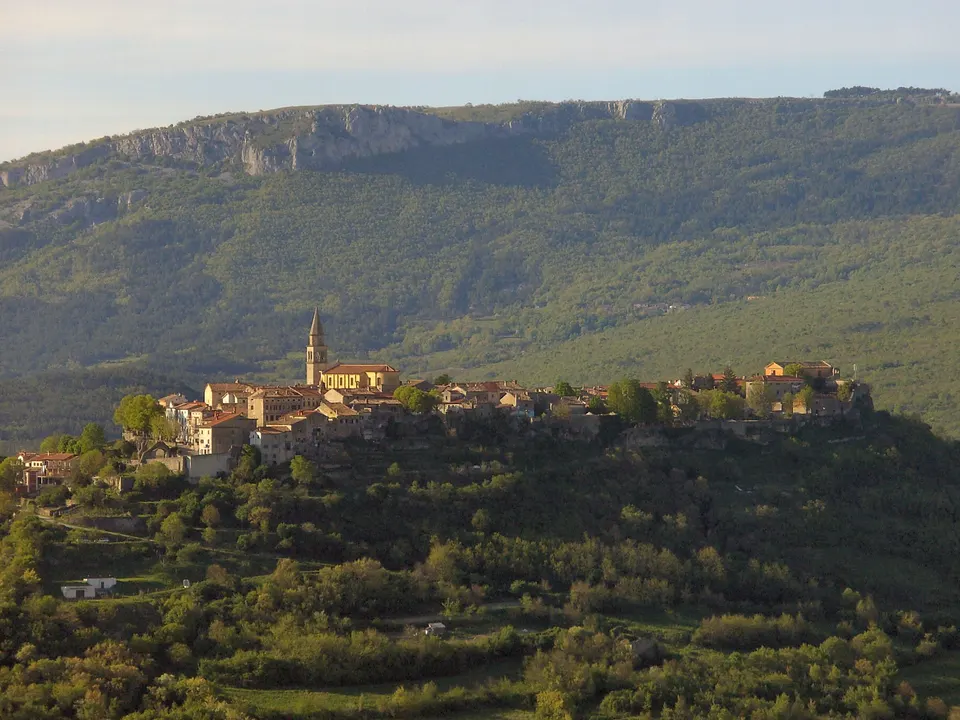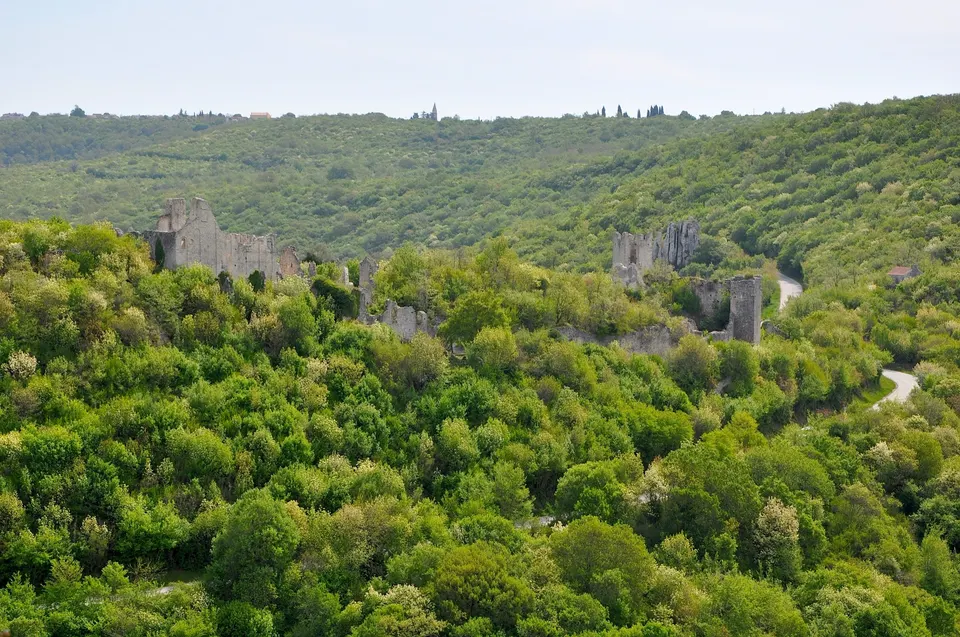
Walls, towers and the shell of a great church, swallowed by oak woods above a quiet valley. Dvigrad is one of the most atmospheric ruins in Croatia, and one of the easiest to visit.
Driving through the woods of central Istria, between Kanfanar and the Lim valley, you suddenly see grey towers rising out of the trees. This is Dvigrad, a fortified town that was home to a busy community for centuries and then, slowly, emptied. Today it is a ruin, but an unusually complete one: you can still walk through its gates, follow its streets, stand in its main church and climb up to its walls. Few places in Istria feel so much like stepping into the past.
Where is Dvigrad?
Dvigrad lies a few kilometres from Kanfanar, in the south-west of central Istria, on a hill above the Draga valley. This valley is the dry inland continuation of the Lim Bay, the long, fjord-like inlet that reaches the sea between Vrsar and Rovinj. The road from Kanfanar winds down towards the valley floor and passes right beneath the walls, so the ruins are easy to find. Rovinj, Pazin and Poreč are all within a comfortable drive.
Why is it called Dvigrad?
The name means "two towns" or "two castles". In the Middle Ages there were two fortified settlements facing each other across the valley. One of them declined early, while the other, the one you see today, grew into a proper walled town. Its Italian name, Due Castelli, carries the same meaning. The hill itself was settled much earlier: like many places in Istria, it began as a prehistoric hillfort, a natural defensive position above a valley that people used as a route through the interior.
Why was Dvigrad abandoned?
Dvigrad did not fall in a single dramatic event. Its decline came over several generations. The town sat close to the frontier between Venetian and Habsburg Istria, and in the early seventeenth century the area suffered badly in the war between Venice and the Habsburgs, often called the War of Gradisca or the Uskok War. Around the same time, outbreaks of plague and malaria swept through the region and the population fell sharply.
No single disaster emptied Dvigrad. War, disease and a slow drift to healthier ground did it, one family at a time.
The survivors gradually moved to higher, healthier ground nearby, and the settlement they strengthened became the village of Kanfanar. By the early eighteenth century Dvigrad was effectively empty. The people of Kanfanar did not forget their old town: the stone pulpit of the church in Kanfanar is said to have been brought from Dvigrad's main church.
What to see in Dvigrad
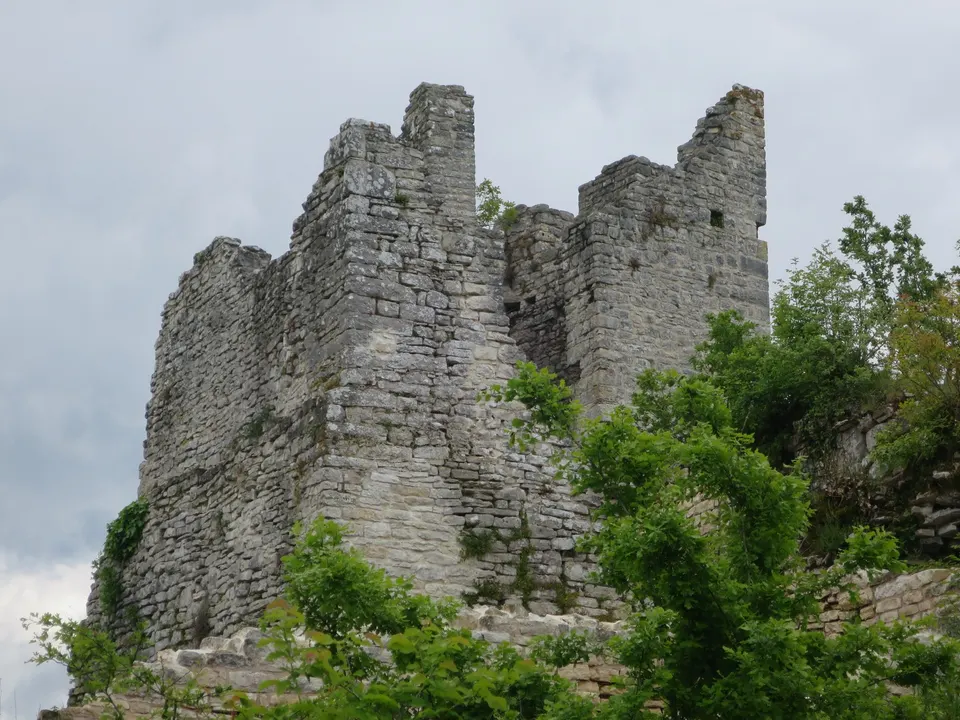
The site is compact, and an hour is enough for a first visit, although many people stay longer. Enter through the main gate and follow the old street up the hill, past the foundations of houses, workshops and small courtyards. The double ring of walls and the remaining towers give a good idea of how strongly the town was defended.
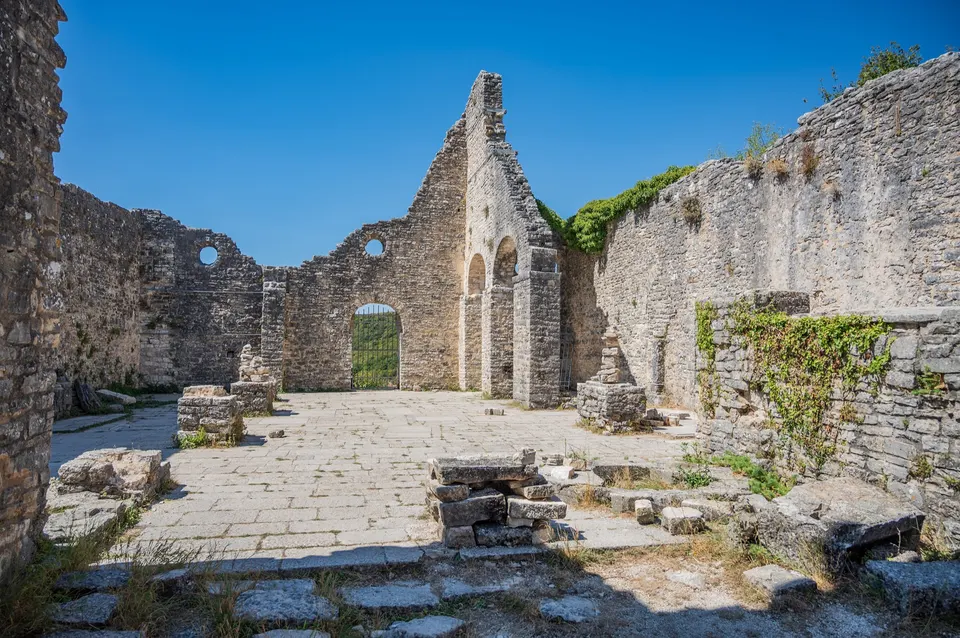
At the top stands the church of St Sophia, the heart of the town. Its roof is long gone, but the walls, arches and floor still trace the shape of a large church, and standing inside it gives a real sense of the community that once filled it. Around the church, the walls and towers on the highest part of the hill are the most photographed corner of Dvigrad.
Like every good ruin, Dvigrad has its legends. The best known claims that the pirate Henry Morgan hid treasure somewhere among the walls. There is no evidence for it, but the story is told with affection in the area and adds to the mood of the place. More solid treasures lie nearby: the small Romanesque church of St Mary of Lakuć, in the fields below the ruins, is known for its medieval frescoes, although it is not usually open, so ask locally about access.
Good to know
- Getting there. Drive to Kanfanar and follow the signs for Dvigrad. The road passes right below the ruins, and visitors usually park close by.
- Timing. Early morning and late afternoon are the best times: cooler, quieter and with softer light on the stone. In high summer, avoid the middle of the day.
- Footwear. Paths are uneven, with loose stones and steps. Wear proper shoes rather than sandals.
- Safety. Walls and towers are ruins, not restored monuments. Stay on the paths, do not climb the walls and keep a close eye on children.
- Opening and events. Access arrangements and summer events can change, so check with the Kanfanar tourist board before you go.
- Bring water. Shade is limited inside the walls, and facilities on the site are minimal.
How to combine Dvigrad with a day trip
Dvigrad fits naturally into a day in the interior. In the morning, take a boat trip or a walk along the Lim Bay, then drive inland to the ruins in the afternoon. Or combine Dvigrad with the nearby villages of Žminj and Barban, or with Bale and Svetvinčenat, two more stone towns that show how life looked in Istria before tourism. If you are staying in Rovinj, Dvigrad is close enough for a half-day outing.
A lesson in stone
What stays with most visitors is the stone itself: walls built without any decoration, by people who used what the land gave them, still standing centuries after the last family left. It is the same Istrian limestone that you find in every old farmhouse and village in the area, and it explains why so many people dream of restoring a stone house of their own.