The old railway path is only the beginning. Quiet hill roads, white gravel tracks through vineyards and easy coastal paths make Istria one of the best places to ride in the Mediterranean.
Most cyclists who come to Istria have heard of the Parenzana, the old narrow-gauge railway turned into a gravel path across the north of the peninsula. It deserves its reputation, and we cover it in detail in Cycling the Parenzana. But it is one route among many. Istria is criss-crossed by quiet asphalt roads, white gravel tracks and forest paths, and the region has invested for years in marked cycling routes, maps and services for riders.
What makes Istria special is the variety in a small space. In a single day you can climb to a walled hill town, roll through vineyards on gravel, eat in a konoba and finish with a swim. This guide explains the kinds of riding you will find and how to plan around the seasons.
Road cycling: hills, towns and empty lanes
Inland Istria is made for road riding. The hill towns sit on top of their hills for historical reasons, which means almost every town is a climb: Motovun, Grožnjan, Oprtalj, Buzet and their neighbours all reward the effort with a square, a café and a view. The roads between them are narrow but lightly used outside the summer peak, and the gradients, while steady, are rarely brutal.
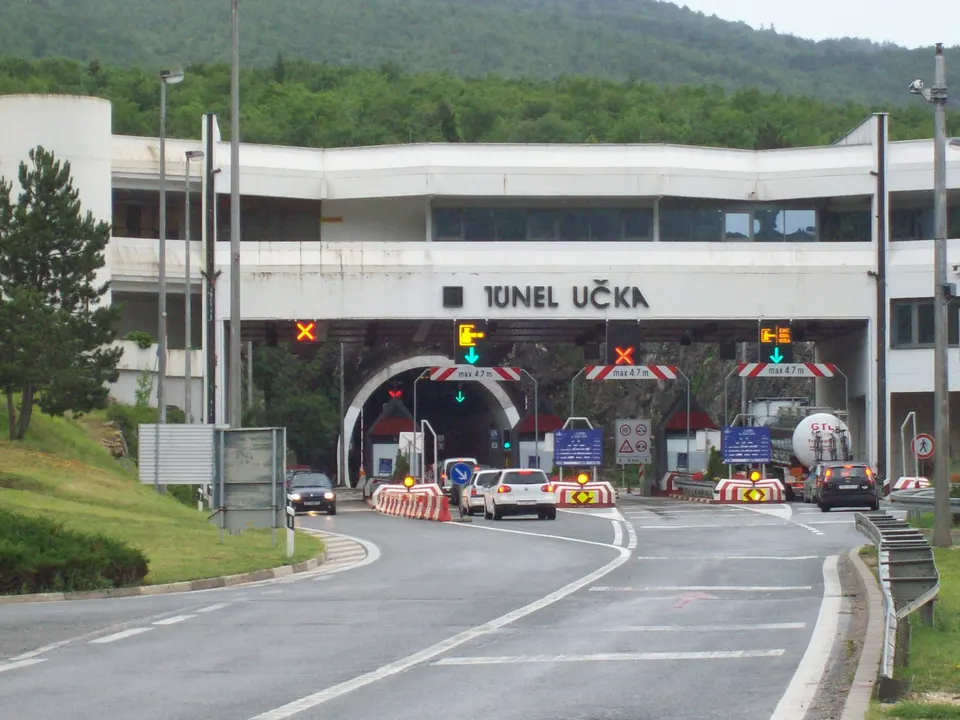
For a longer challenge, the roads up Učka, the mountain on the eastern edge of the peninsula, climb through beech forest towards Vojak, its highest summit, with views over Istria on one side and the Kvarner Gulf on the other. The weather on the mountain can be quite different from the coast, so carry a layer even on a warm day. Our guide to Učka Nature Park describes the area.
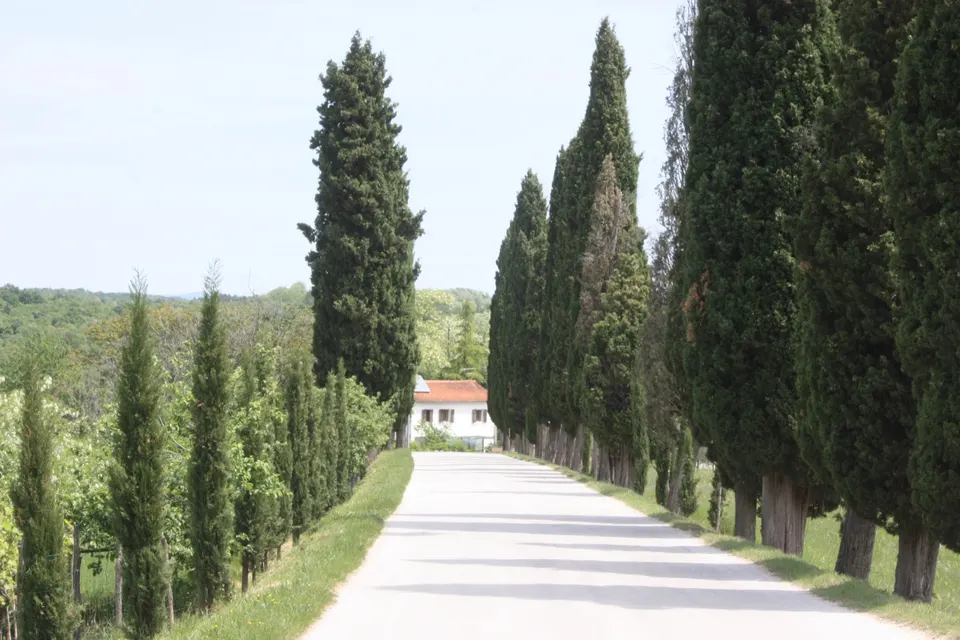
Gravel riding: the white roads
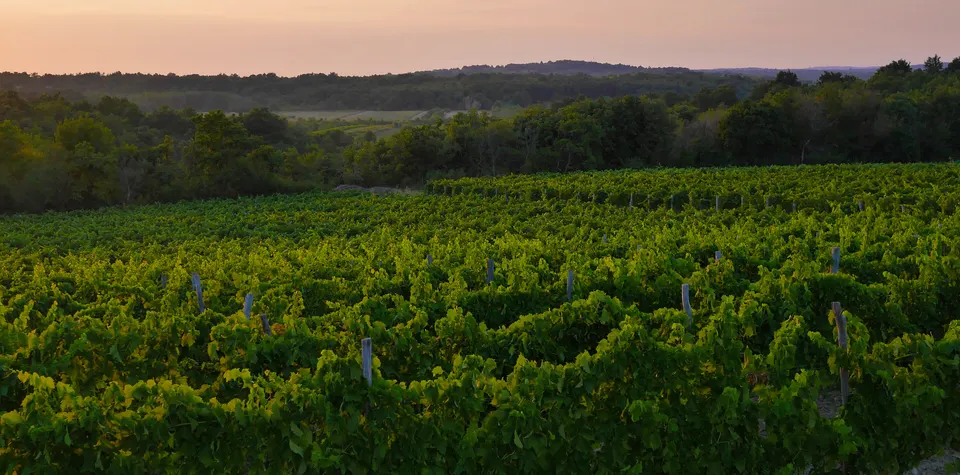
Istria is full of unpaved tracks: farm roads between vineyards and olive groves, old cart tracks between villages, forest roads through oak woods. Many of them are white with limestone dust, and in summer you will finish a ride with that dust on your legs. They are ideal for gravel bikes and for trekking bikes with wider tyres, and they let you link villages without touching a main road.
- Wine country. The north-west, around Buje, Momjan and Brtonigla, is a landscape of vineyards on rolling hills, crossed by farm tracks. See Brtonigla and Momjan.
- The Mirna valley. Below Motovun, flat roads and tracks follow the river through meadows and the edge of the Motovun forest, a rare easy stretch in hilly country.
- Central Istria. Around Pazin, Žminj and Svetvinčenat, the plateau is gentler, with long straight tracks through fields and woods.
- The Parenzana. The railway path connects naturally with many of these routes, so you can ride part of it and return on gravel or a country road.
Mountain biking
For more technical riding, the slopes of Učka and the karst plateau of Ćićarija in the north-east offer rocky trails, forest descents and long climbs. Parts of the coast also have singletrack through pine woods. Trails range from easy to demanding, and some are shared with walkers, so ride with care and respect waymarks. Local bike shops and guides know the current trail network best.
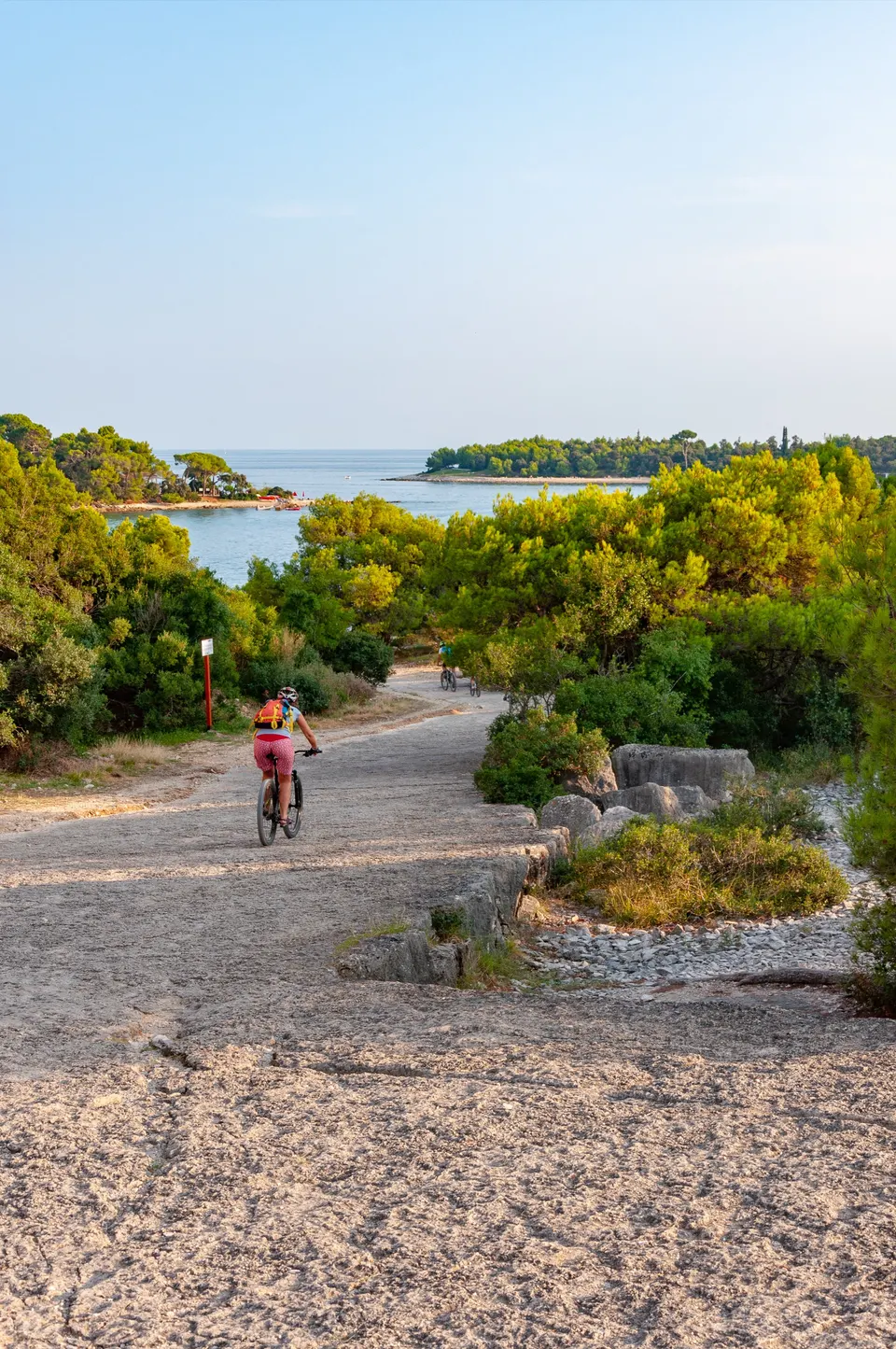
Family rides by the sea
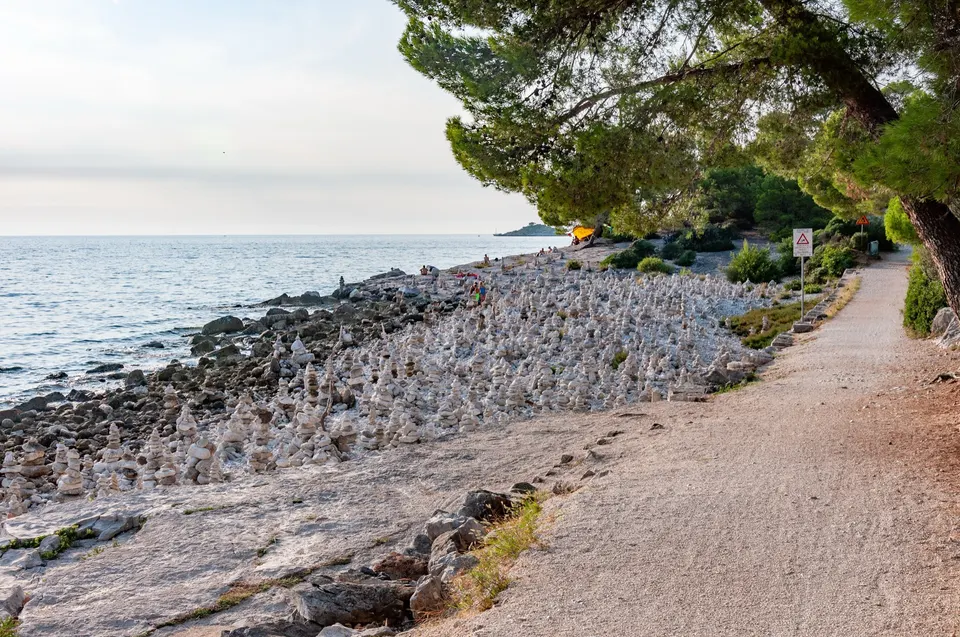
If you are riding with children, or simply want an easy afternoon, the coast is the place. Several coastal towns have flat paths along the sea, often through pine woods and away from traffic. The forest park at Zlatni rt (the Golden Cape) south of Rovinj has gravel paths along the shore, and the Kamenjak peninsula near Premantura has dirt roads leading to quiet coves, with a swim at the end of every ride. Many hotels, campsites and rental shops hire out bikes, including children's bikes, trailers and e-bikes.
Climb to a walled town, roll through vineyards, eat in a konoba and finish with a swim. All in one day, all by bike.
When is the best time to cycle in Istria?
Spring and autumn are the best seasons. From around April to early June, the countryside is green, the wildflowers are out and the temperatures are comfortable. September and October bring the grape harvest, the truffle season and warm, stable days. Summer is hot, especially inland in the afternoon; if you ride in July or August, start at dawn and be off the bike by late morning. Winter rides are possible on mild days, but some services close and the bura, the cold north-easterly wind, can make exposed roads hard work.
Good to know before you ride
- Marked routes. Istria has a network of signposted cycling routes, with maps and GPS tracks published by the regional and local tourist boards. They are the best place to start planning.
- E-bikes. Widely available to rent, and a good choice if you want the hill towns without the full climbs.
- Water. Carry plenty, especially inland. Village squares and cafés are your refill points; some villages have public taps.
- Shade and sun. Many gravel tracks are exposed. Sun cream, sunglasses and a light long-sleeved top are worth carrying.
- Traffic. Avoid the main coastal roads in summer. Inland lanes are quieter but narrow, with blind bends; ride single file and be visible.
- Lights and helmet. Carry lights for tunnels and dusk, and wear a helmet. Check the current Croatian rules for cyclists with the tourist board or your rental shop.
- Food stops. Konobas inland may open only at certain hours or days, especially outside summer. Carry a snack and do not count on a lunch stop you have not checked.
- Getting there. See driving in Istria if you are bringing bikes by car.
However you ride, Istria rewards curiosity. Turn off the marked route onto a white road, follow it between dry-stone walls, and it will almost always lead you somewhere worth stopping: a chapel, a spring, a view across the hills to the sea.