On the Istrian coast the terrace is often the busiest room in the restaurant. How to plan it for midday sun, evening wind, cool spring nights and a full service.
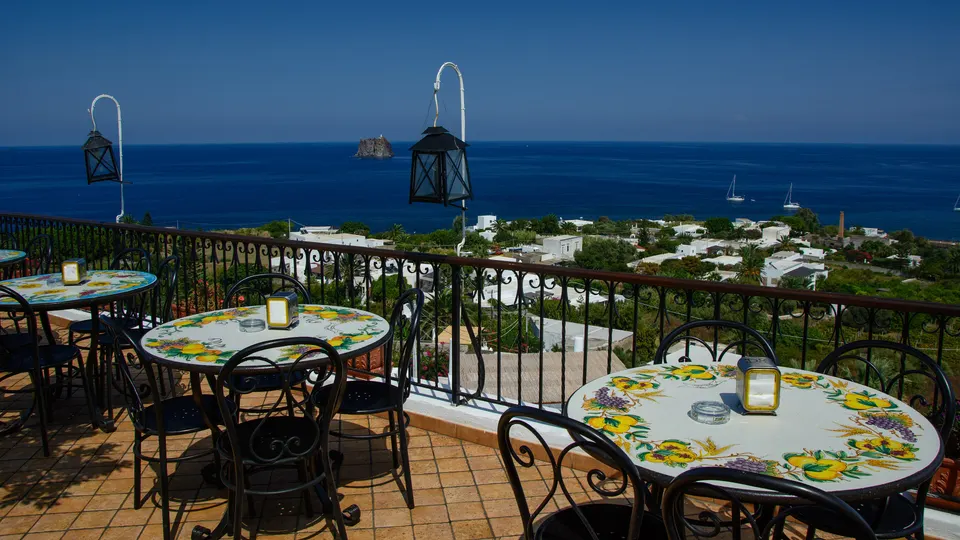
Guests choose a restaurant on the coast with their eyes. They walk past, see a terrace in the shade with the sea beyond it, and sit down. For many restaurants in Istria the terrace earns more than the dining room for much of the year. Yet it is often designed last, with whatever chairs and umbrellas were available, and then patched every season.
A good terrace is planned like any other room: around the service, the weather and the kind of evening you want to offer. This guide covers the decisions that matter most. For the indoor side, see our guide to restaurant interior design in Istria.
Start with the service, not the furniture
Before choosing a single chair, walk the route a waiter takes with a full tray from the kitchen to the furthest table. That path decides the layout. Keep main aisles clear and wide enough for staff to pass guests who are getting up. Place a service station on the terrace itself, with cutlery, glasses, napkins, water and the card terminal, so nobody runs inside for every small thing. A service station built as a proper piece of furniture, with closed storage and a worktop that can take a wet tray, saves more steps in a season than almost anything else.
Mix table sizes. Tables for two along the edge, where the view is, and a few tables that can be pushed together for families and groups. Leave room for high chairs and prams without blocking the aisle.
Shade: the first thing guests notice
At lunchtime in July, a terrace without good shade is empty. Large umbrellas are flexible and can be closed in wind. Shade sails look light and modern but need strong fixing points and must come down before storms. Fixed pergolas, with climbing plants, slats or a retractable fabric roof, give the most comfortable shade and turn the terrace into a room. Our article on pergolas and shade for terraces compares the options in detail.
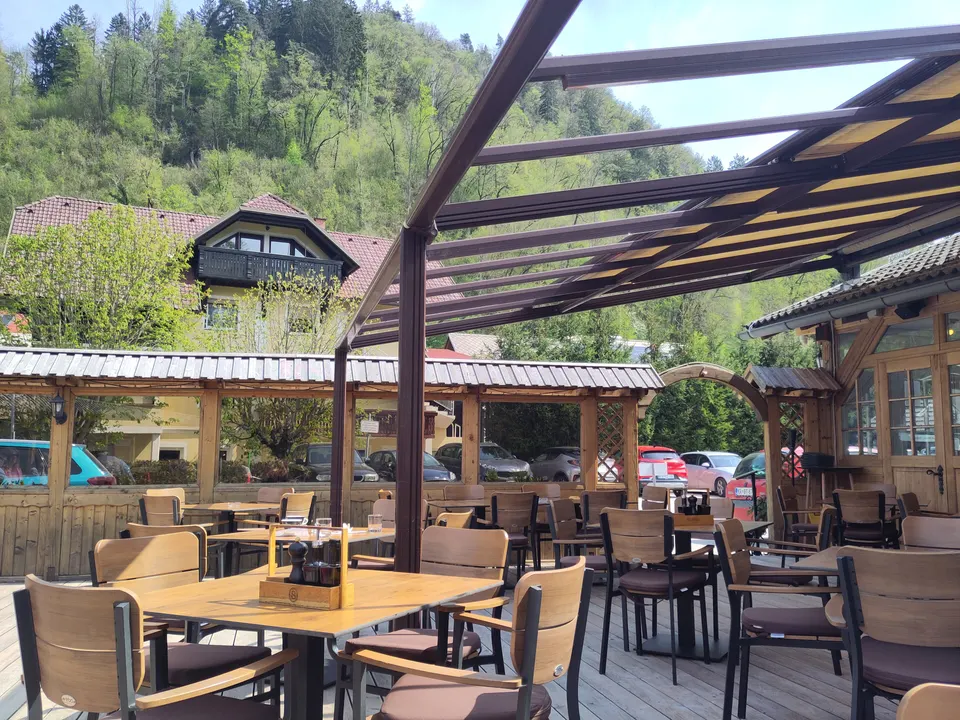
Think about the sun at different hours. A terrace facing west is pleasant at noon but can be dazzling at dinner, when the low sun shines straight into guests' eyes. Side screens or adjustable blinds can help.
Wind: bura, jugo and the evening breeze
Istria knows two famous winds: the cold, gusty bura from the north-east and the warm, damp jugo from the south-east. Even on calm days, a sea breeze often rises in the afternoon. Wind blows napkins away, cools food and makes umbrellas dangerous. Glass screens on the windward side keep the view while breaking the wind; large planters with dense shrubs work too, and soften the edge of the terrace. Furniture should be heavy enough not to slide or tip in a gust, and umbrellas need solid bases and a clear rule about when they are closed.
Heaters: extending the season
In spring and autumn, evenings in Istria can be cool even after warm days. Heaters let guests stay outside longer and extend the terrace season at both ends. Free-standing gas heaters are mobile and give a lot of heat but need gas bottles stored and changed safely. Electric infrared heaters, mounted on walls or pergola beams, heat people rather than air, are quieter and need no fuel to handle, but require proper wiring planned in advance.
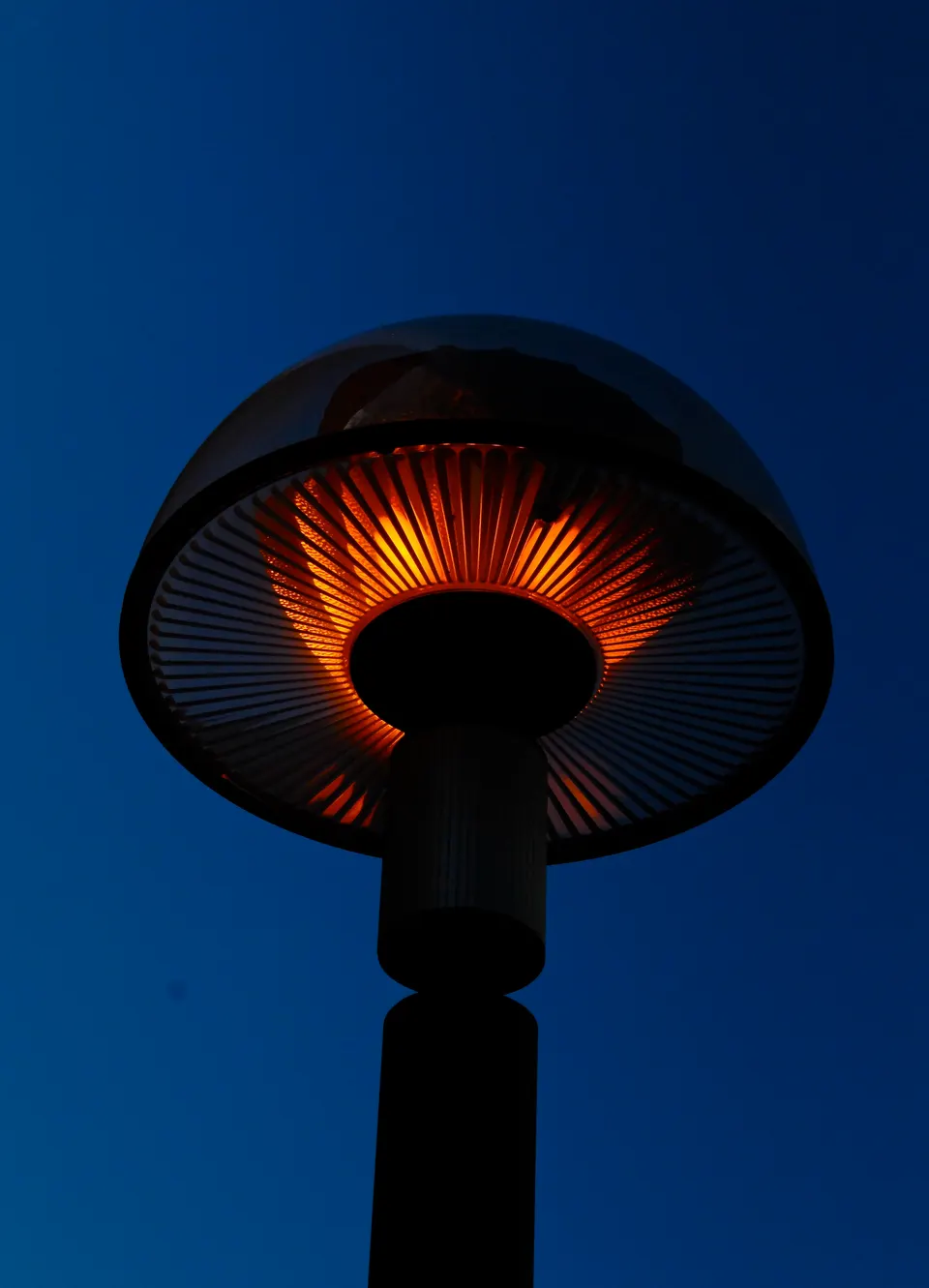
Keep heaters well away from fabric, umbrellas and planting, and follow the manufacturer's instructions and local safety rules. Blankets on chair backs are a simple, much-liked addition.
A terrace is a room without walls, and it needs to be planned with the same care as one.
Furniture that copes with sun, salt and service
Terrace furniture is used harder than almost anything in a restaurant. It stands in strong sun, catches salt air and rain, is dragged across stone and stacked every night. Choose chairs that are comfortable for a long dinner, not just for a coffee, with seat heights that match the tables. Check how they stack and where they will be stored. Cushions add comfort but must come in at night and dry quickly after rain. Our guides to beach bar and terrace furniture and materials that live with sea salt and sun go into materials in more depth.
The fixed pieces are where bespoke work pays off: the service station, the host stand at the entrance, built-in benches against a wall, planters that double as wind screens and storage for cushions and blankets. Our partner atelier, Lampisa, builds these from plywood rather than particleboard, finished and sealed for the conditions they will meet. Particleboard swells as soon as water reaches an edge; plywood is far more resistant to moisture when it is made with the right glue and its edges are protected, and it can be repaired rather than replaced. Which outdoor finishes suit fully exposed positions is best agreed with the atelier for each piece.
Light for the evening
As the sun goes down, the terrace should glow, not glare. Warm, low light on the tables, soft light on plants and walls, and enough light on steps and paths to be safe. Avoid bright floodlights that flatten faces and attract insects. Our article on terrace lighting covers the layers in detail.
Rules for outdoor seating
If your terrace sits on a public square, a pavement or a seafront promenade, its use is usually governed by the town or municipality, and fixed structures such as pergolas, platforms or screens often need approval. The rules differ from place to place, so check with the local authority and, for anything structural, with an architect before you build or order.
A terrace checklist
- Service route. Clear aisles and a service station on the terrace.
- Shade. Planned for both lunch and dinner, with a rule for wind.
- Wind. Screens or planting on the windward side; heavy, stable furniture.
- Heat. Gas or electric heaters planned with wiring and safety in mind.
- Furniture. Comfortable for a long meal, easy to stack, store and repair.
- Light. Warm and low, with safe steps and paths.
- Winter. A dry place for cushions, textiles and anything that should not face the bura.
If you are planning a new terrace or rethinking an old one, the atelier can draw the fixed pieces with you and show them as a 3D render before production. See our page for restaurants for how that works.