Stone walls, a terrace by the sea, guests from five countries. How to plan a restaurant interior in Istria that feels local, works for the kitchen and lasts for years.
Istria has an unusually wide range of places to eat. A family konoba in an inland village, a fish restaurant on a harbour in Rovinj or Novigrad, a wine bar inside a medieval town wall and a tasting-menu dining room in a renovated villa all compete for the same guests. Many of those guests travel from Austria, Germany, Slovenia and Italy, and many return every year. They remember the food, but they also remember the room.
A restaurant interior is not decoration. It decides how many covers fit, how fast the floor staff can move, how loud the room becomes on a Saturday in August and whether guests stay for dessert. This guide walks through the decisions in the order they usually matter, whether you are opening a new place or refreshing one that has been running for twenty seasons.
Start with the kind of evening you want to offer
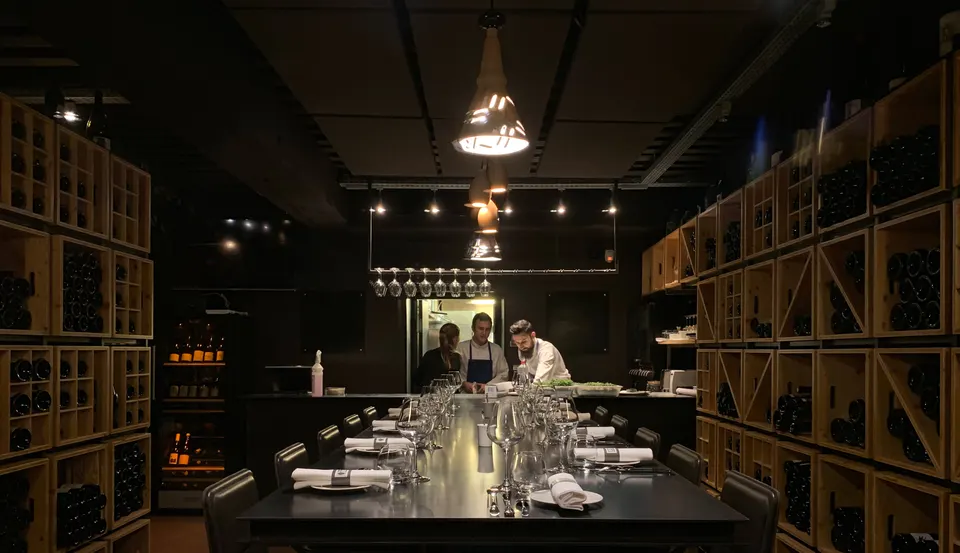
Before choosing a colour or a chair, describe the evening in one sentence. A konoba serving grilled fish and local wine to families wants warmth, generous tables and a relaxed pace. A fine dining room wants calm, space between tables and light that flatters both the plate and the faces. A lunch place near a beach needs quick turns and furniture that can take wet swimwear and sun cream. The answer shapes everything that follows: table sizes, chair comfort, lighting levels and even how much sound the room should absorb.
For the traditional end of the spectrum, our guide to the Istrian konoba describes what guests expect from these rooms. Designing one is less about copying rustic details and more about keeping what makes a konoba feel honest: real materials, simple forms and a kitchen that feels close.
Respect the building
Many Istrian restaurants sit in old stone houses, former stables, cellars or ground floors of town houses. Thick walls, vaulted ceilings and small windows are a gift for atmosphere and a challenge for everything else. Furniture has to be planned around irregular walls and uneven floors, ventilation and kitchen extraction have to be routed without spoiling the vaults, and the room is often darker than it looks on a sunny morning. In listed buildings and historic town centres, changes to the structure and façade may need approval, so involve an architect and check with the local authority before planning anything that touches walls, openings or the terrace.
Layout: the floor plan is the menu of the room
- Service routes first. Draw the path from the pass to the furthest table and back. If a waiter has to squeeze between chairs on every trip, the room will feel crowded however beautiful it is.
- A mix of table sizes. Two-tops that can be joined give flexibility; a few fixed larger tables suit families and groups, which are common in Istria.
- Banquettes along walls. They seat more guests in less space, soften the room acoustically and are often the most requested seats.
- A clear first impression. Guests should see a welcoming space, not a till, stacked high chairs or the door to the toilets, as they walk in.
- Storage you can actually use. Cutlery, linen, menus and wine need a place near the floor, not in a corridor.
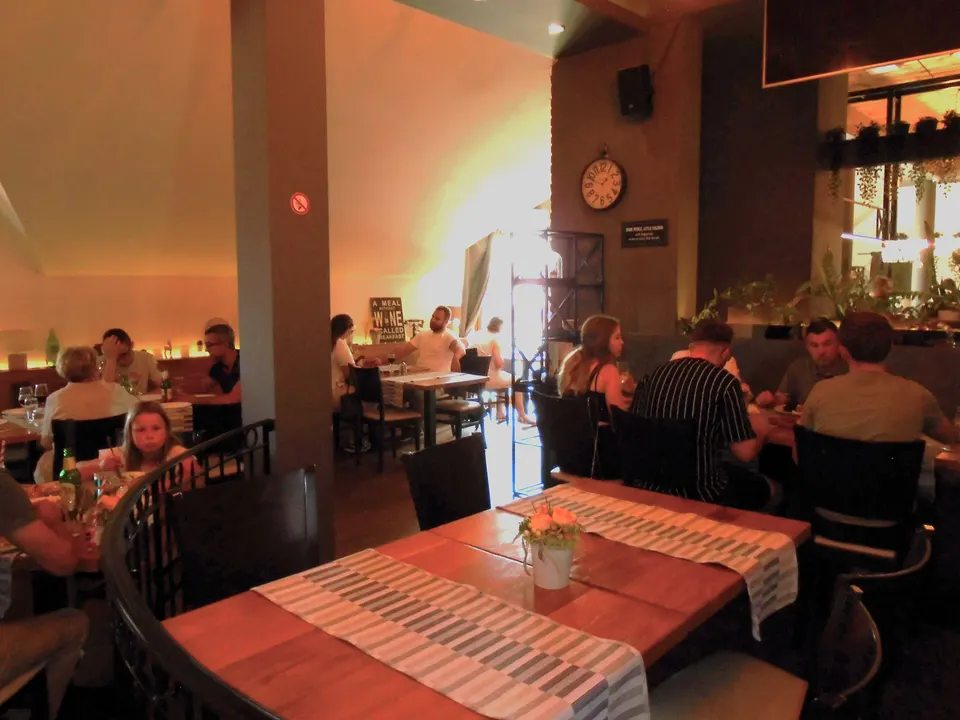
Seating that guests and staff both like
Chairs are the piece of furniture guests touch for the longest time and the piece that is abused most. They are dragged across stone, stacked at closing and leaned back on two legs. Comfort matters, but so does weight: a chair that is too heavy slows the staff, a chair that is too light feels cheap. Seat height and table height have to match, armrests have to clear the tabletop, and the backrest should support guests who stay for three hours. Our article on restaurant furniture that survives every night goes deeper into how chairs, tables and banquettes wear in service.
The best restaurant interiors in Istria do not try to look old. They use honest materials and let the building and the food do the talking.
Materials: what lasts in a working room
A restaurant is cleaned more often than any home. Tabletops are wiped with detergents many times an evening, bar fronts are kicked, and terraces live with salt air and sudden storms. Choose materials for how they age, not only for how they look on day one. Stone and well-sealed timber surfaces develop character; thin decorative layers on cheap boards chip, swell and cannot be repaired.
This is why our partner atelier, Lampisa, builds with plywood, not particleboard. Plywood is made of thin layers of veneer glued with the grain crossing from layer to layer, which makes it strong and stable in shape. It holds screws and fittings firmly even after repeated assembly, and with sealed edges it copes with moisture far better than particleboard, which swells permanently once wet. Lampisa states that spare parts remain available, so a damaged seat, tabletop or panel can be replaced on its own instead of buying a new set. Furniture is made to the room, which matters in old buildings where nothing is quite square. The finishing materials are chosen with each client.
Lighting: two rooms in one day
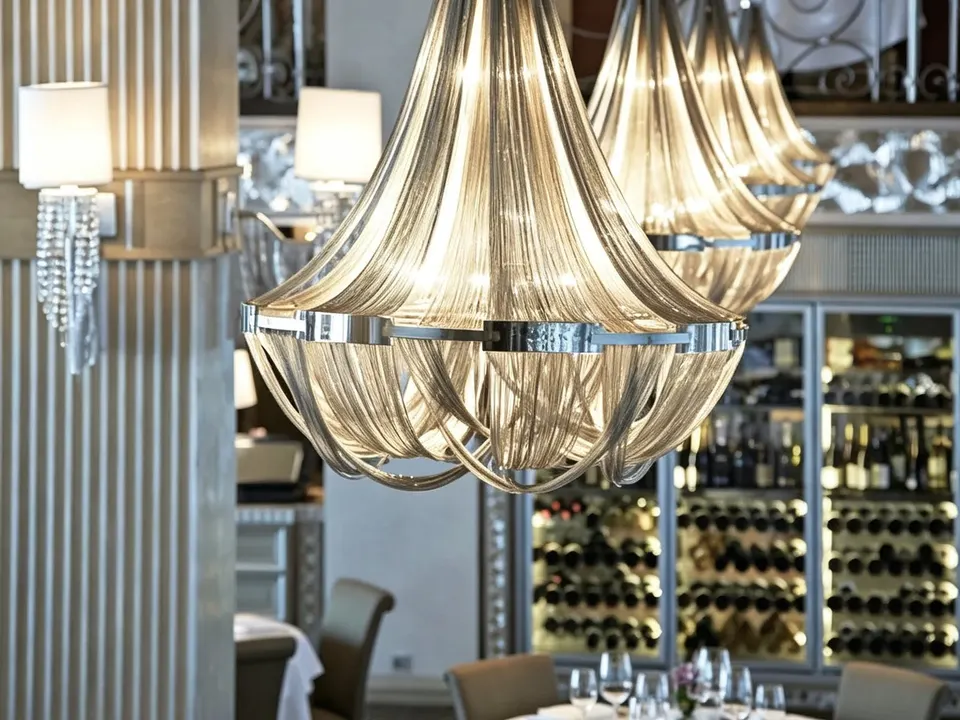
Many restaurants serve lunch in bright daylight and dinner after dark, and both need planning. During the day, control glare from windows and terraces. In the evening, lower the general light and add warm points of light over tables, so that every guest sits in a small pool of light. Dimmable circuits are essential; a room lit at full power all evening feels like a canteen. Pendants over tables should be fixed only once the table layout is final, or they will hang above empty floor. Decorative pieces, such as hand-blown Murano glass from the Lampisa range for restaurants, work best when they are few and deliberate.
Acoustics: the problem nobody sees
Stone, tiles and glass reflect almost all sound. An Istrian dining room full of happy guests can become tiring within an hour. Upholstered banquettes, fabric seat pads, curtains, panels behind seating and textiles under tables absorb sound without changing the character of the room. Plan acoustics together with the furniture rather than adding panels after the first complaints.
The terrace is half the restaurant
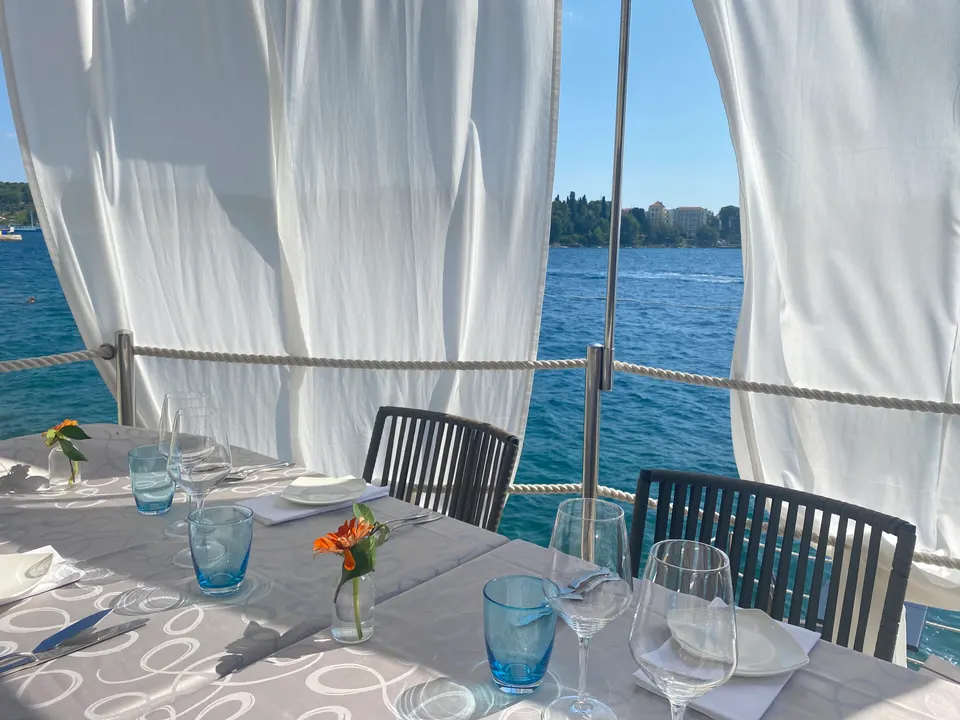
From late spring to early autumn many Istrian restaurants earn most of their turnover outdoors. Treat the terrace as a room in its own right: shade from sails, pergolas or curtains, lighting for long evenings, furniture that stacks or stores easily and cushions that can come in at night. Check local rules before fixing anything permanent on a public square or seafront. For outdoor materials, see materials that live with sea salt and sun.
A practical timeline
- Autumn. Review the past season: which tables were requested, what broke, where guests complained about noise or light.
- Early winter. Brief a designer or atelier with photos, a plan and a moodboard. Agree the budget and priorities.
- Winter. Approve drawings or a 3D render of the room, then confirm materials and finishes.
- Late winter to spring. Production and installation in the quiet weeks before the first guests. Lead times should be confirmed with the atelier well in advance.
- Opening. Test the room with staff before guests arrive: carry trays, move tables, dim the lights.
A good restaurant interior in Istria does not need to be expensive or theatrical. It needs to suit the food, make service easy, stay quiet enough for conversation and survive many seasons with small repairs rather than complete refits.