The Istrian coast is beautiful and unforgiving. Which woods, stones, metals and fabrics age gracefully here, and which give up after two summers.
Anyone who has kept a house near the sea knows the pattern. Metal hinges stain, cheap chrome blisters, particleboard swells at the edges in humid weeks, cushions fade on the side facing the window. Coastal Istria adds strong summer sun, salt carried on the wind, and in winter the bura, which can dry everything out in a day. Furniture here needs to be chosen for the climate, not just for the catalogue photograph.
Wood
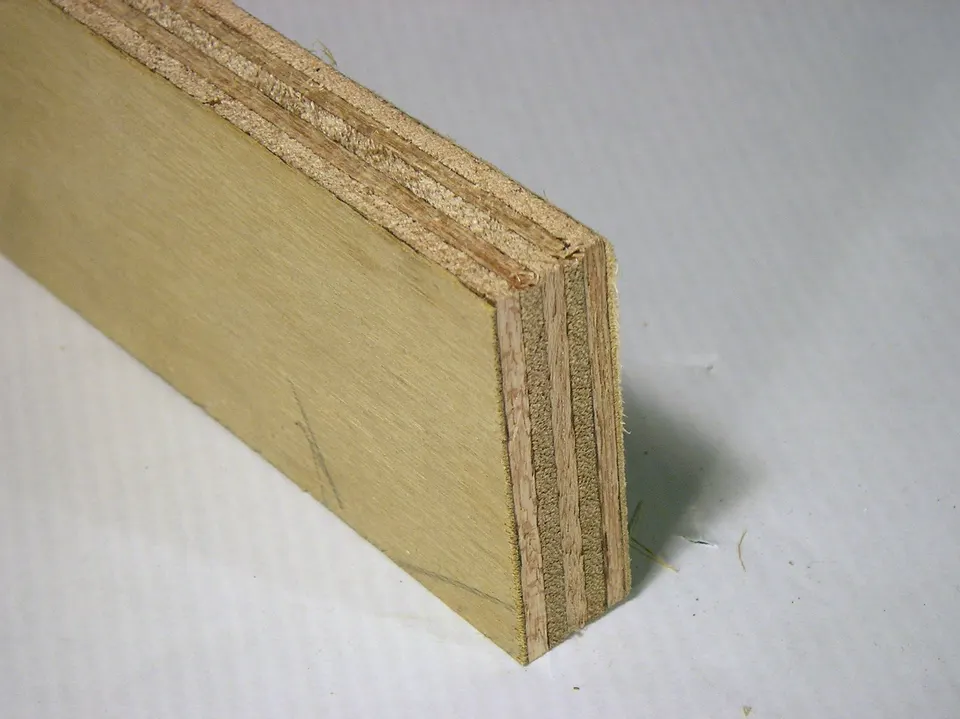
In changing humidity, what a piece is made of underneath matters more than its surface. Particleboard, the pressed wood chips behind most flat-pack furniture, swells when it gets wet and never recovers; its edges crumble and screws lose their grip. Plywood, thin layers of veneer glued with the grain crossing, is far more stable: it moves much less than solid timber, holds its fittings even after reassembly, and with the right glue and sealed edges copes much better with damp. Indoors, oak and walnut surfaces bring warmth and age beautifully. Outdoors, choose timbers with natural resistance to weather, such as teak or iroko, or heat-treated woods designed for exterior use, and accept that they will turn silver-grey unless they are oiled regularly.
Finish matters as much as species. Oil finishes can be renewed easily and suit a relaxed coastal house; hard lacquers look crisp but are harder to repair once damaged.
Stone
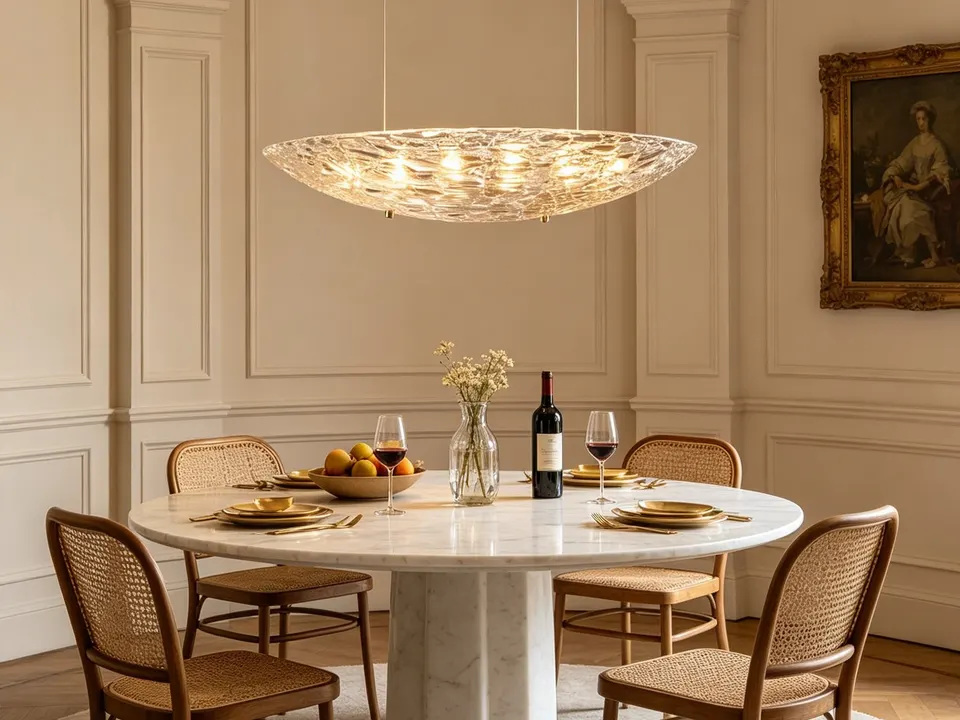
Istria is a stone country, and stone tables, worktops and basins feel naturally at home here. Dense limestones and marbles are wonderful but porous to varying degrees, so they need sealing and a little care with wine, lemon and olive oil. If you want a stone surface that can be treated carelessly, ask about harder stones or engineered alternatives for the most exposed places, and keep the softer, more characterful stone where it will be admired rather than abused.
Metal
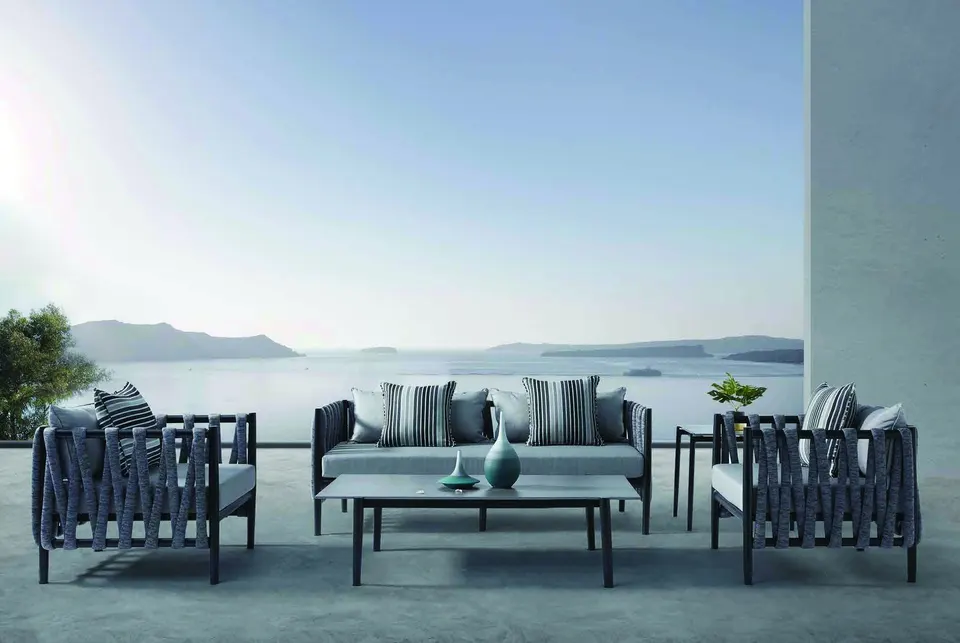
Near the sea, metal is where cheap choices show first. For anything outdoors or in a bathroom, look for marine-grade stainless steel, powder-coated aluminium, or solid brass and bronze that will develop a natural patina. Ask what the screws and fittings are made of, not just the visible frame: rusting fixings stain timber and stone around them.
Choose materials for the climate, not for the catalogue photograph.
Fabric
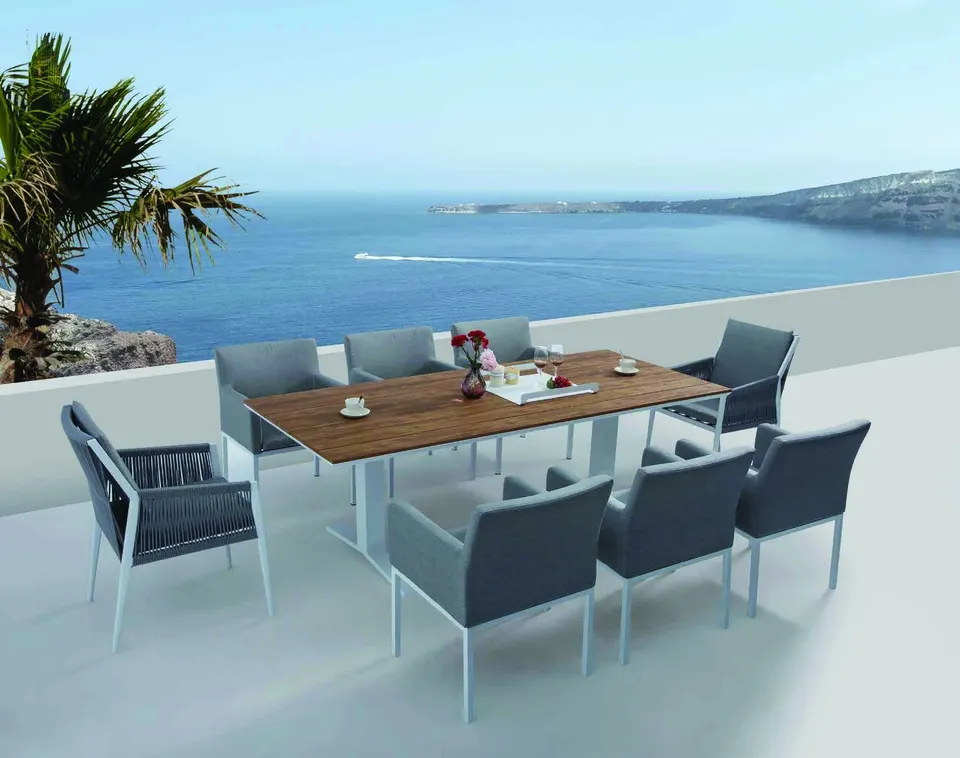
Indoors, natural fibres such as linen, cotton and wool suit the Istrian aesthetic beautifully. In rooms with strong afternoon sun, solution-dyed fabrics resist fading far better, and many now feel close to natural cloth. Outdoors, use fabrics made for exterior use, with quick-drying foam inside cushions, and plan somewhere to store cushions over winter.
Ask your maker the right questions
Where will this piece stand, and what will it face? Morning sun or afternoon? Sea spray or a sheltered courtyard? A good maker will adjust materials, finish and fittings to the place, not just the design. The atelier builds for Istrian houses specifically, which is a quiet advantage over furniture designed for a showroom in a northern city.
Inside, too
Coastal conditions do not stop at the front door. Humidity rises in summer and falls sharply when the bura blows. Rooms with large glazed areas facing the sea receive intense UV light that fades fabrics and wood. Furniture placed directly against the glass or next to air-conditioning outlets suffers most. Keep precious pieces a little back from windows, use UV-filtering glass or curtains in sun-facing rooms, and expect solid timber to move slightly between seasons; plywood moves far less, which is one reason it makes such a good structure for furniture in a coastal house.
Maintenance as a ritual
Every material needs some care, and in a coastal house it is easiest to make that care seasonal. In spring, re-oil outdoor timber and check fixings. Before summer, reseal stone tables and worktops. In autumn, clean and store cushions, and cover or bring in pieces that do not like winter rain. A few hours twice a year keeps furniture looking good for decades, and it is a pleasant ritual in a house you love.
When in doubt, look inside
The simplest rule for furniture near the sea is that what is inside a piece matters more than its surface. Plywood rather than particleboard, real brass rather than plated, through-coloured stone rather than printed laminate. When a sound material is scratched or worn, it can be repaired. When a thin surface over a weak core is damaged, the piece is usually finished.