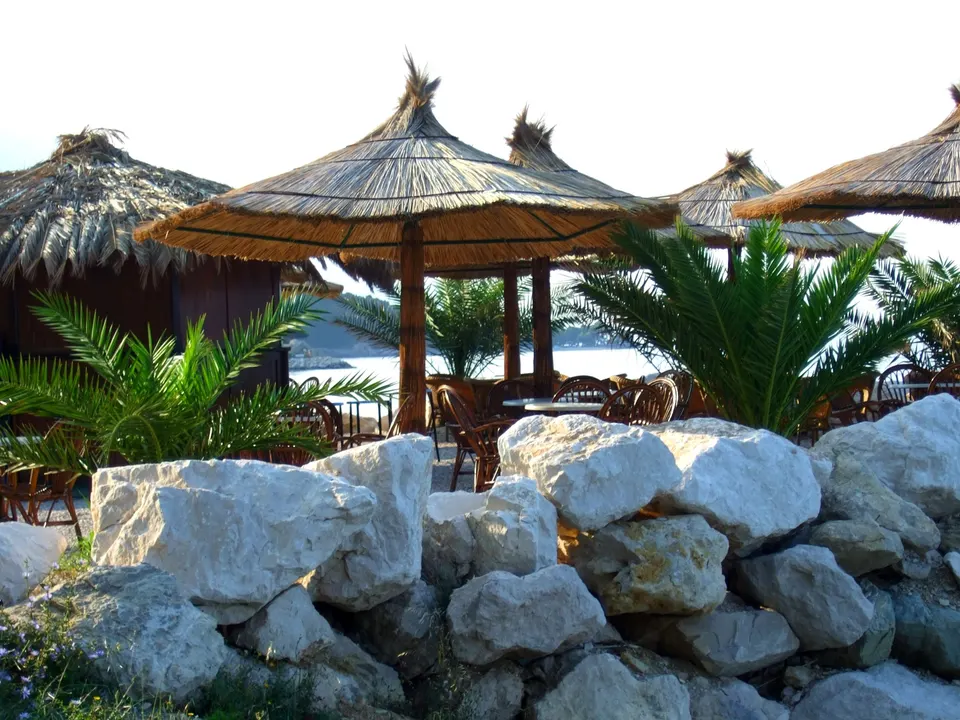
Sun from morning to sunset, salt in the air, sand everywhere and a full house every evening. Outdoor hospitality furniture has a hard life by the sea.
A beach bar or a seaside terrace is often the most valuable space a hospitality business has. It is where guests want to be, where photos are taken and where a single drink turns into dinner. It is also the harshest environment furniture can face. Strong sun for months, salt in the air, sand in every joint, sudden summer storms, and hundreds of guests who sit, lean, drag and stack every day.
Choosing furniture for these spaces is a balance between atmosphere, comfort and survival. Get it right and a terrace looks as good in its fifth season as in its first. Get it wrong and the furniture fades, rusts or wobbles before the end of the first summer.
What does the sea do to outdoor furniture?
Three things, mainly. Ultraviolet light fades colours and makes many plastics and some fabrics brittle. Salt settles on every surface and attacks metals that are not properly protected, especially at joints, screws and scratches. Moisture, from rain, sea spray, morning dew and cleaning, gets into joints, cushions and timber. Sand adds abrasion on top of all three. Any material on a seaside terrace has to be chosen with these forces in mind.
Which materials last best by the sea?
- Powder-coated aluminium. Light, does not rust, easy to move and stack. The quality of the coating decides how it ages.
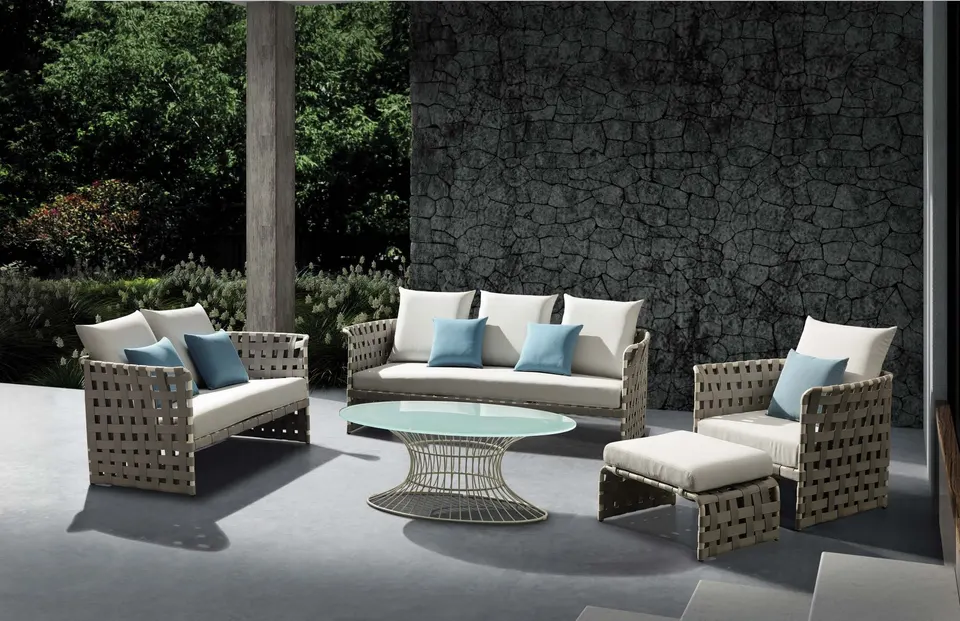
- Synthetic woven fibres. Rope and resin weaves on aluminium frames give a soft, relaxed look and resist UV well when they are of good quality.
- Teak and other dense hardwoods. Beautiful and durable outdoors; they turn silver-grey unless oiled regularly.
- Stainless steel. Strong, but the grade matters near the sea; lower grades can show rust spots.
- Stone, concrete and ceramic tops. Heavy and stable in the wind, resistant to heat and spills.
- Outdoor fabrics and quick-drying foam. Solution-dyed fabrics resist fading; open-cell foam lets rain drain through.
Ask suppliers specific questions: what the frame is made of, what protects it, how the joints are fixed, which fasteners are used and whether cushions and parts can be replaced. Our guide to materials that live with sea salt and sun goes into this in depth, and choosing outdoor furniture that lasts covers the same questions for private terraces.
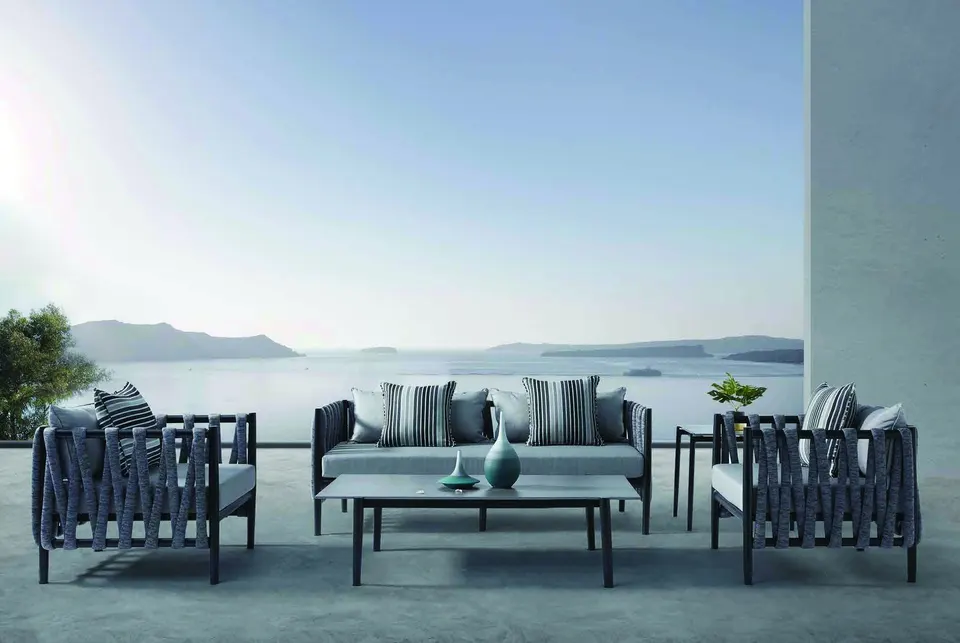
How comfortable should terrace seating be?
It depends on what you sell. A busy beach bar serving quick drinks needs light chairs and stools that turn over tables. A sunset terrace where guests stay for three cocktails needs lounge seating with cushions, low tables and space between groups. A terrace restaurant needs dining chairs that are comfortable for two hours and tables at a proper dining height. Many venues mix all three, and the most successful ones plan them as distinct zones.
Comfort also means shade. Umbrellas, sails and pergolas make a terrace usable at midday and keep furniture cooler to the touch. Dark metal seats in full sun can become too hot to sit on, so materials and colours should be chosen with the hours of direct sun in mind.
A seaside terrace is tested twice a day: by the midday sun and by the evening crowd.
Planning the layout
A terrace that is crowded with tables earns less than one that is planned. Staff need clear routes from the bar to every table, guests need to be able to get up without moving three chairs, and the best views should be shared rather than blocked by one large group. Furniture that is light enough to rearrange gives flexibility for groups and events; heavier pieces at the edge, such as planters or fixed benches, give structure and shelter from the wind.
- Keep a clear service route from the bar or kitchen to every part of the terrace.
- Mix table sizes so couples and groups can both be seated well.
- Place lounge seating where guests linger, such as the sunset side, and quick seating near the bar.
- Plan lighting for the evening: low, warm and safe on steps and edges.
- Allow space for staff to stack and store furniture at closing time.
What about the bar itself?
The bar is the heart of the space and the piece that works hardest. It must carry weight, survive spills, cleaning products and sun, and still look good up close. A bar counter, back bar, shelving and storage are usually built to measure, because no standard piece fits the space, the equipment and the flow of service. Indoors and under a solid roof, a well-built carcass in plywood with a durable top is a strong choice. Exposed to the weather, materials such as stone, concrete, metal or outdoor-rated timber take over.
Lampisa, our partner atelier, builds made-to-measure hospitality furniture with plywood as its structural material and offers outdoor furniture in its catalogue. Its moodboard to render process lets a venue see the terrace and bar in 3D before anything is made. For the indoor side of the business, see our article on restaurant furniture that survives every night.
Care through the season and the winter
Even the best furniture lasts longer with simple care. Rinse frames with fresh water regularly to remove salt, especially after windy days. Bring cushions in or cover them at night. Check and tighten joints before the season and halfway through it. At the end of the season, clean everything, let it dry completely and store it covered in a dry, ventilated place. Keep a few spare chairs, cushion covers and fittings so a broken piece does not leave a gap on a busy night.
Outdoor hospitality furniture is an investment that is judged every evening, in full view of the guests. Choose it for the sea it faces, plan the space around the way people actually use it, and look after it, and a terrace can carry a business for many summers.