On the coast, the terrace is where summer evenings happen. How to light it so that it feels warm, works for dinner and still lets you see the stars.
In a house by the sea, the terrace is used more than any room inside. Breakfast in the shade, a late lunch, then the long part of the day: dinner as the sun goes down, a glass of wine after it has gone, conversation until the cicadas stop. Most of that time is spent in the dark. How the terrace is lit decides whether those hours feel like a holiday or like sitting under a car park lamp.
Good outdoor lighting is less about fittings and more about restraint. A few warm, low sources in the right places do more than a single bright floodlight ever will.
Think in layers
Indoor lighting designers talk about layers, and the idea works just as well outside. Instead of one light that does everything, use several, each with its own job:
- Light to eat by. Soft, warm light over or on the table, enough to see the food and each other's faces.
- Light to move by. Low fittings along paths, steps and changes of level, so nobody trips on the way to the pool.
- Light for atmosphere. A few trees, a stone wall or a pergola lit gently from below or within.
- Light for safety. Entrances, gates and the edge of the pool, on a separate switch or a sensor.
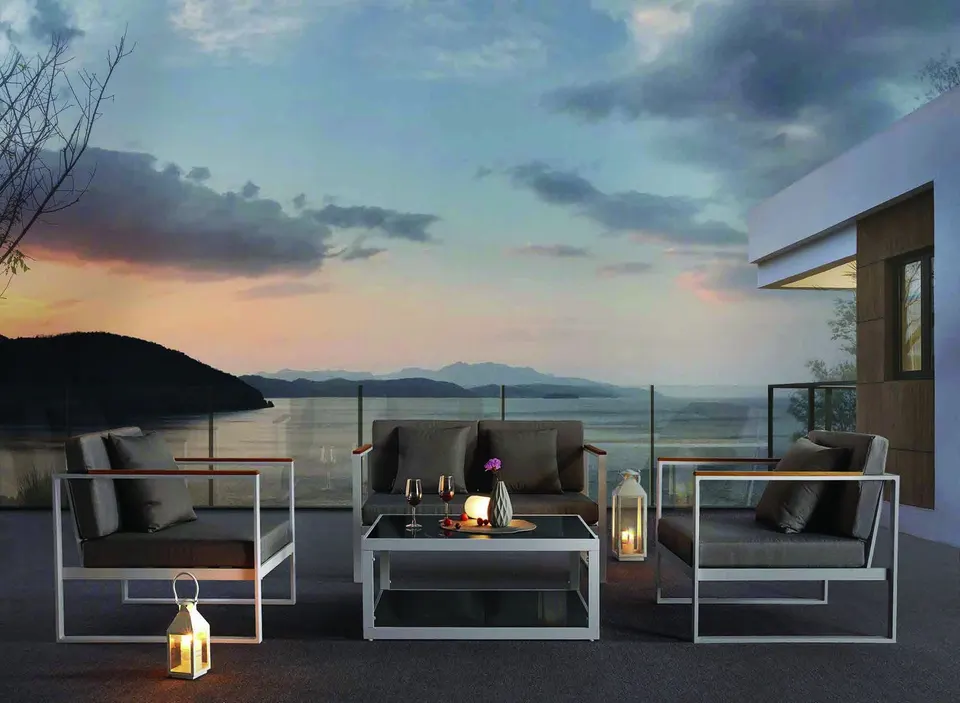
- Light you can carry. Lanterns and rechargeable lamps that follow the evening from table to lounge.
Put the layers on separate circuits or dimmers. A terrace that can be lit brightly for clearing the table and softly for the hour afterwards is far more pleasant than one with a single switch.
Warm light, kept low
The single most important choice is the colour of the light. Warm white, close to the glow of candles or an old filament bulb, flatters skin, food and stone. Cool white makes a terrace feel like a petrol station. When buying fittings or bulbs, look for warm white and test one at night before buying a dozen.
Keep the light low and pointed down. Light at eye height glares; light from below the eye line lets you see without being dazzled. Downward light also keeps the sky dark, which matters in Istria, where on a clear night away from the towns the stars are part of the view. Warm, low light also tends to attract fewer insects than bright white light high up.
A few warm lights in the right places do more than one bright lamp ever will.
The dining table
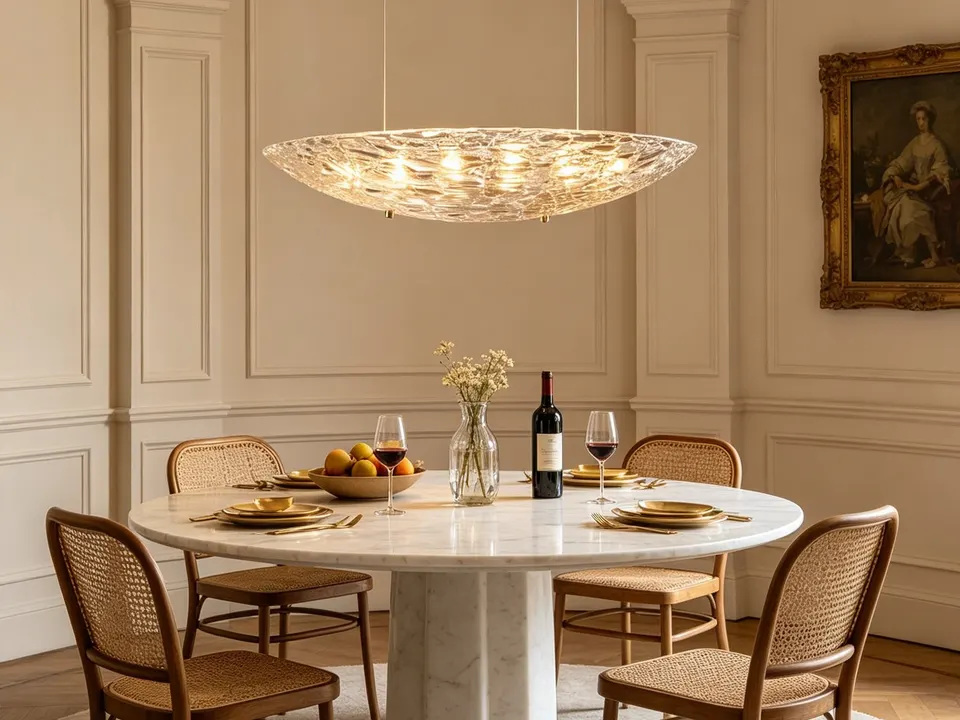
The table is the heart of the terrace and deserves its own light. Under a pergola, one or two pendants on a dimmer, hung fairly low, give the table a pool of light and leave the rest of the terrace in shadow. Where there is nothing to hang from, use lanterns and table lamps: rechargeable lamps have made this much easier, with no cables across the floor. Candles in glass hurricane shades still work beautifully, as long as the wind cooperates.
Avoid wall lights that shine straight across the table into people's eyes. If the house wall needs lighting, choose fittings that wash light up or down the stone rather than outward. For more on planning the terrace as a room, see outdoor living: terraces and long evenings.
Steps, paths and the garden
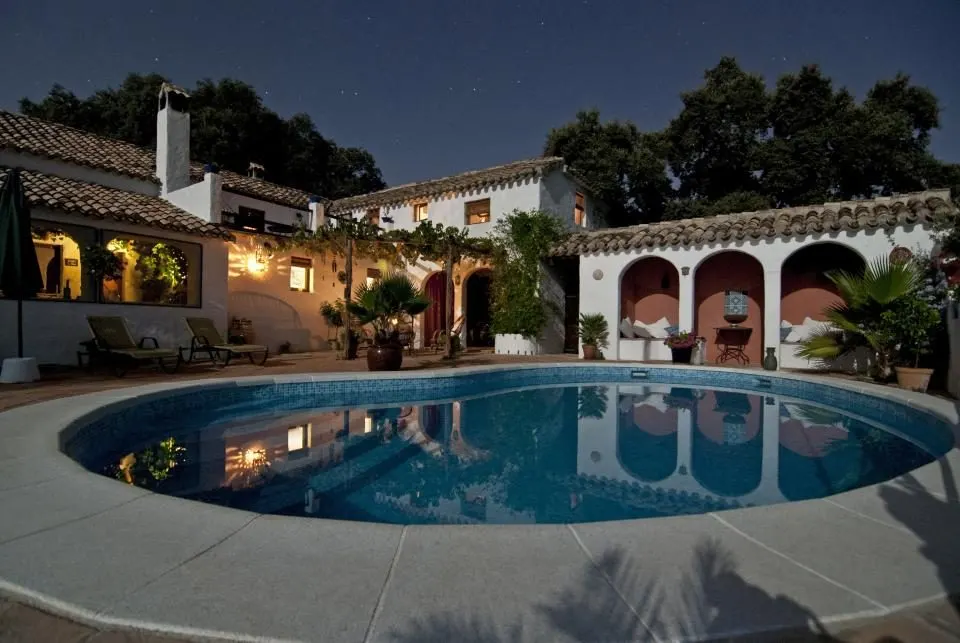
Steps are where outdoor lighting earns its keep. Small fittings set into the wall beside each flight, or under the nosing of each step, make them safe without lighting up the whole garden. Paths need only a low glow every few metres, enough to show the edge.
In the garden, light a few things well rather than everything a little. An old olive tree lit from below, a dry-stone wall grazed with light, the trunk of a pine: these give the garden depth at night. Leave plenty of darkness between them. Our guide to the Mediterranean garden suggests plants that look good this way.
Pools and water
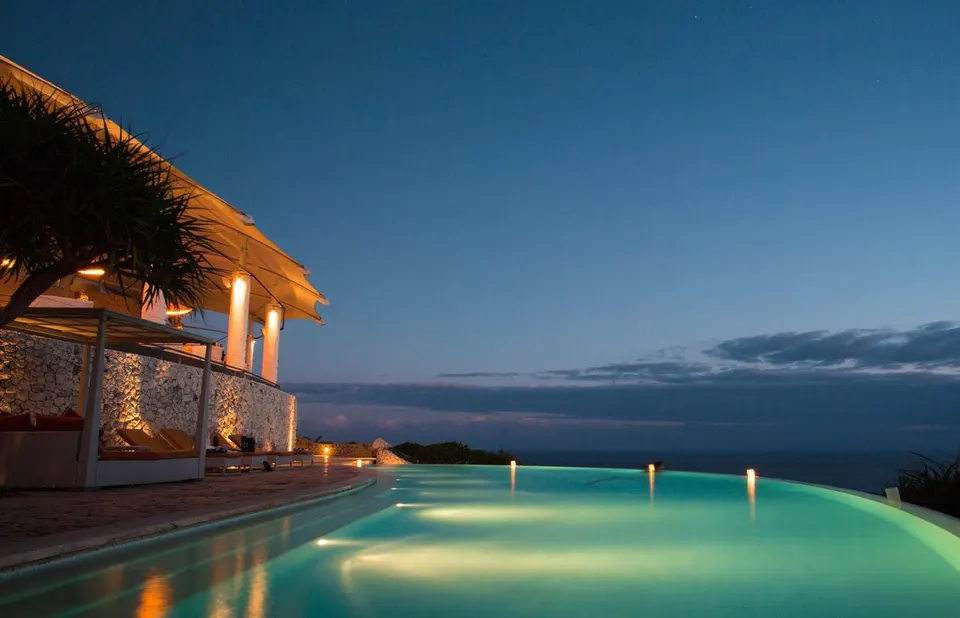
A lit pool is one of the most beautiful things a house can show at night, and also the easiest to overdo. Underwater lights in warm white, kept dim, make the water glow without turning it into a stage. Light the edges and steps of the pool so swimmers can see them, and make sure everything near water is specified, installed and protected for that use.
Coastal weather and practical choices
- Fittings made for outdoors. Check that each fitting is rated for its position: under a roof, exposed to rain, or near water.
- Materials that resist salt. Salt air corrodes cheap metals; choose finishes made for coastal use. Our article on materials that live with sea salt and sun explains why.
- A qualified electrician. Outdoor circuits, sockets and anything near the pool should be planned and installed by a licensed electrician.
- Timers and sensors. Useful in a holiday house that stands empty, and for security lights that should not burn all night.
- Spare bulbs and access. Make sure fittings in trees or high on walls can be reached and maintained.
Indoors and outdoors as one picture
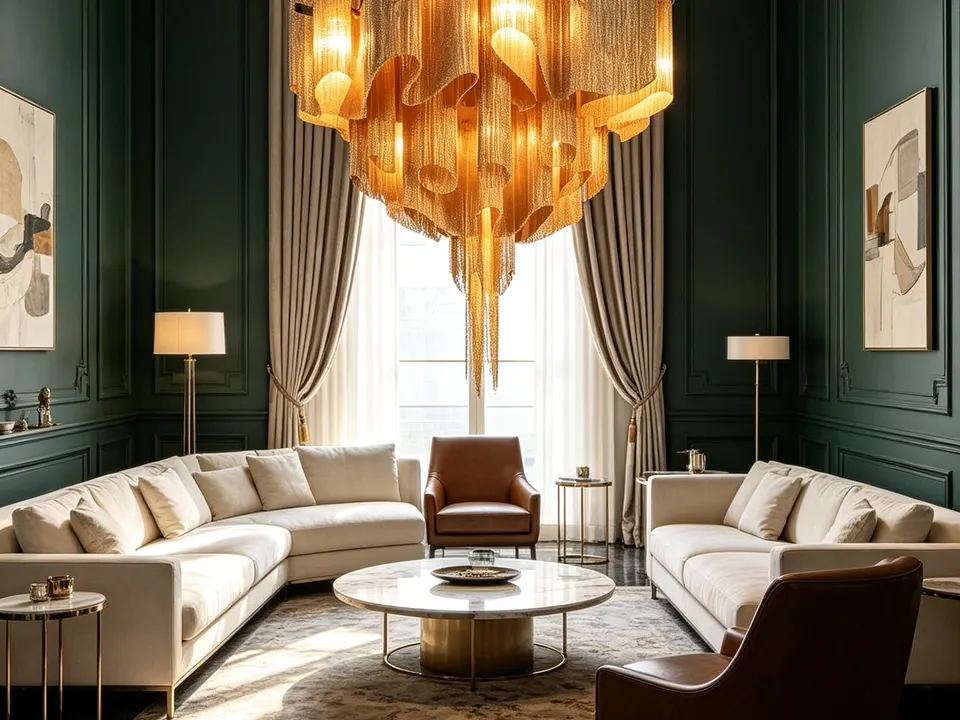
At night, the terrace and the rooms behind it are seen together through open doors. The best results come when both are planned together: warm light inside, warm light outside, nothing much brighter than anything else. Our guide to lighting a villa room by room covers the interior side.
Lampisa, our partner atelier in Istria, offers lighting including hand-blown Murano glass, and can advise on how indoor and terrace lighting work together. Its from moodboard to render service lets you see furniture and light in a 3D render of your own space before anything is ordered.