A plain-spoken guide to what Istrians actually eat: hand-rolled pasta, thick bean soups, wild-herb omelettes, cured ham and the sea in between.
Istrian cooking sits where three kitchens meet. From the Venetian and Italian side came pasta, polenta and a love of olive oil. From the Central European side came goulash, sauerkraut and sweet dumplings. And from the peninsula itself came what the land and sea could give a farming family: beans, maize, wild greens, pork cured in the wind, fish from the shallow bays. The result is a cuisine that is rustic rather than refined, seasonal rather than showy, and surprisingly easy to love.
This guide covers the dishes you will meet on menus and in family kitchens, what they are, and how to order them well.
What are fuži and pljukanci?
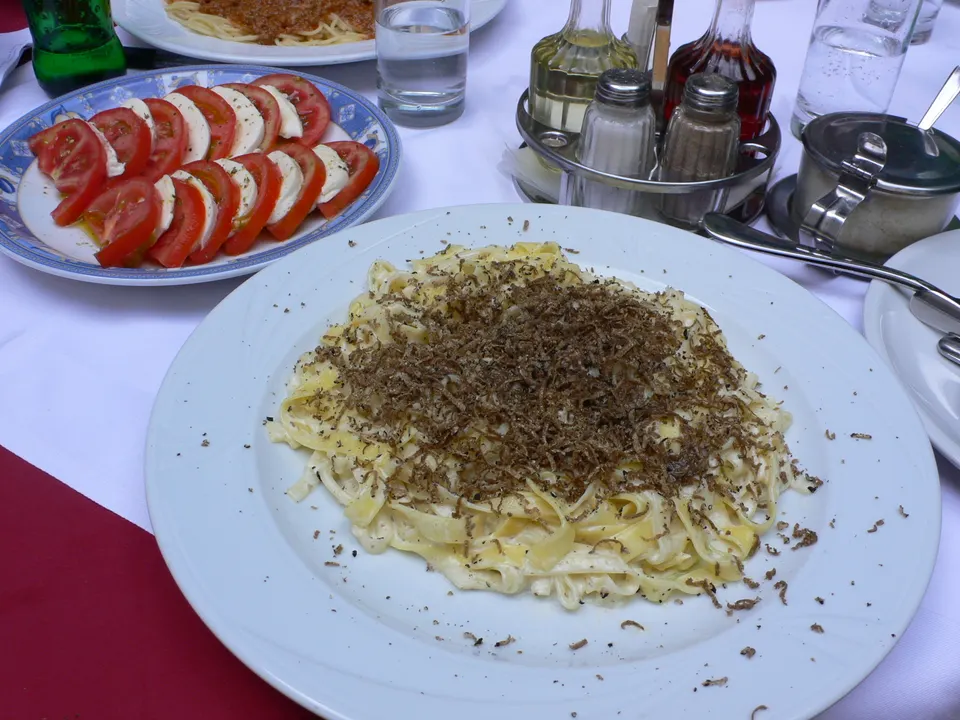
Pasta is the backbone of the Istrian table, and two hand-made shapes are worth knowing by name. Fuži are small squares of egg pasta rolled diagonally around a stick so they close into a quill. They hold sauce beautifully, which is why they are most often served with a slow goulash of chicken, beef or game, or simply with butter and shaved truffle in autumn.
Pljukanci are rolled by hand between the palms into short, thin twists, slightly thicker in the middle and tapered at the ends. They are traditionally made from flour and water, and they suit lighter sauces: wild asparagus, seafood, or a tomato sauce with sausage. Many cooks also make njoki (potato gnocchi) and fresh egg-pasta ribbons for the truffle season.
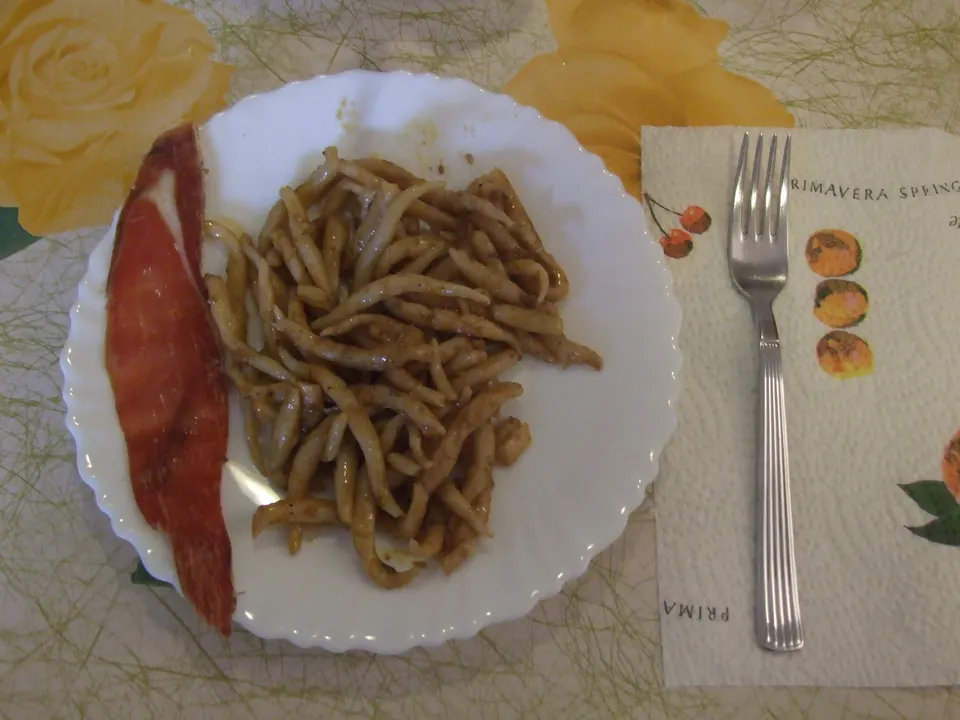
Maneštra and jota: the soups that fed the peninsula
Maneštra is a thick soup, almost a stew, built on dried beans and whatever the season offers: potatoes, maize, chickpeas, greens, sometimes a piece of smoked pork for depth. Each family has its own version. In late summer, a lighter version is made with fresh sweetcorn kernels, known as maneštra od bobići. In the north, closer to Trieste, you will also find jota, a bean soup with sauerkraut that tells you exactly where the Central European influence arrived.
These are winter and shoulder-season dishes, cooked slowly in a large pot and usually even better the next day. A bowl of maneštra with good bread and a glass of red is one of the most honest meals Istria has to offer.
Fritaja and the wild greens of spring
Fritaja is the Istrian omelette, and it changes with the calendar. In spring it is made with wild asparagus picked along the dry-stone walls; later in the year with other foraged shoots, with mushrooms, with sausage or with pršut. It is cooked in a pan with olive oil until the eggs just set and is eaten warm, often as a first course or a light supper. For more on the spring ritual, see our guide to wild asparagus season in Istria.
Istrian cooking is rustic rather than refined, seasonal rather than showy, and surprisingly easy to love.
Pršut, cheese and the cold plate
Almost every meal in an Istrian konoba begins with a plate of pršut, the local dry-cured ham, sliced thin, alongside sheep's or cow's milk cheese, olives and bread. Istrian pršut is made differently from most hams in the region: the skin and fat are removed before curing, and it is dried in the wind rather than smoked. We explain why that matters in our guide to Istrian pršut. You may also see ombolo (cured pork loin) and homemade sausages on the same board.
Truffles, olive oil and the inland larder
Inland Istria, around the Mirna valley, Motovun and Buzet, is truffle country. In autumn, white truffles are shaved over fuži, eggs and polenta; black truffles appear in other seasons. Olive oil runs through everything, from the cold plate to the finished soup, and Istrian oils are among the most respected in the Mediterranean. Our pieces on truffle season and Istrian olive oil go deeper.
Meat: boškarin, lamb and the peka
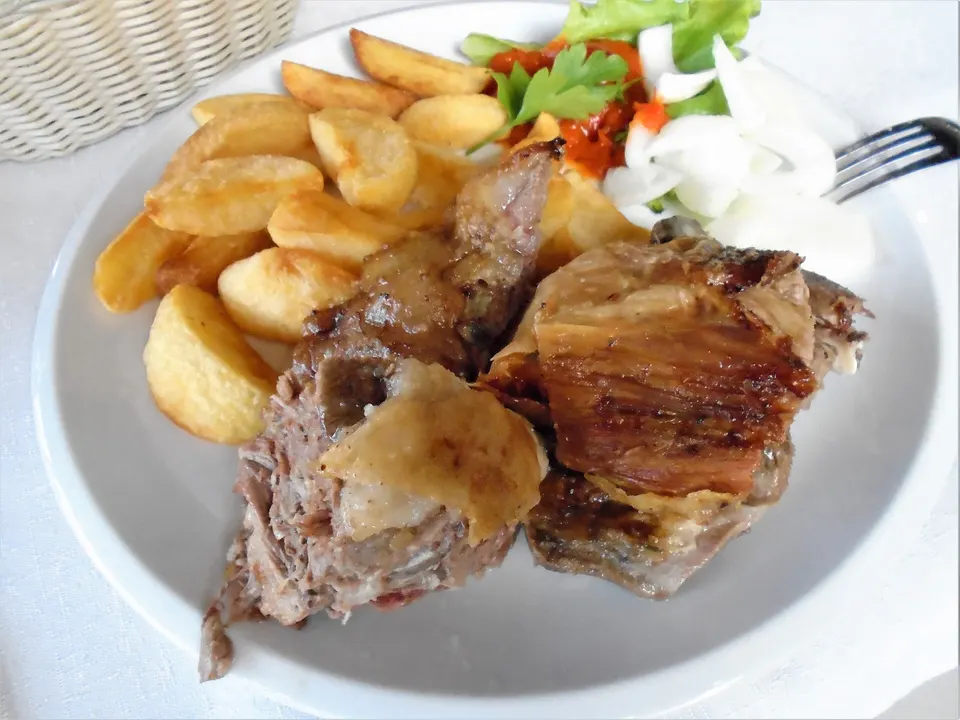
The boškarin, the grey long-horned Istrian ox, was once a working animal and is now a prized meat, served as carpaccio, slow-cooked in sauces or as a rich goulash with fuži. Lamb is roasted with potatoes and onions, and many kitchens still cook meat under a čripnja (an iron or clay bell, known elsewhere in Croatia as a peka) covered with embers on an open hearth. It takes hours and cannot be rushed, so it is usually ordered in advance.
What about seafood?
On the coast, the menu turns to the sea. Fish is usually grilled whole and served with blitva (chard and potatoes dressed with olive oil and garlic). Lim Bay, between Vrsar and Rovinj, is known for its oysters and mussels. Squid, cuttlefish, scampi and shellfish appear grilled, in risotto or na buzaru, a simple sauce of wine, garlic, parsley and breadcrumbs. Brodet, a fish stew, is served with polenta in the old way.
Sweet things and supa
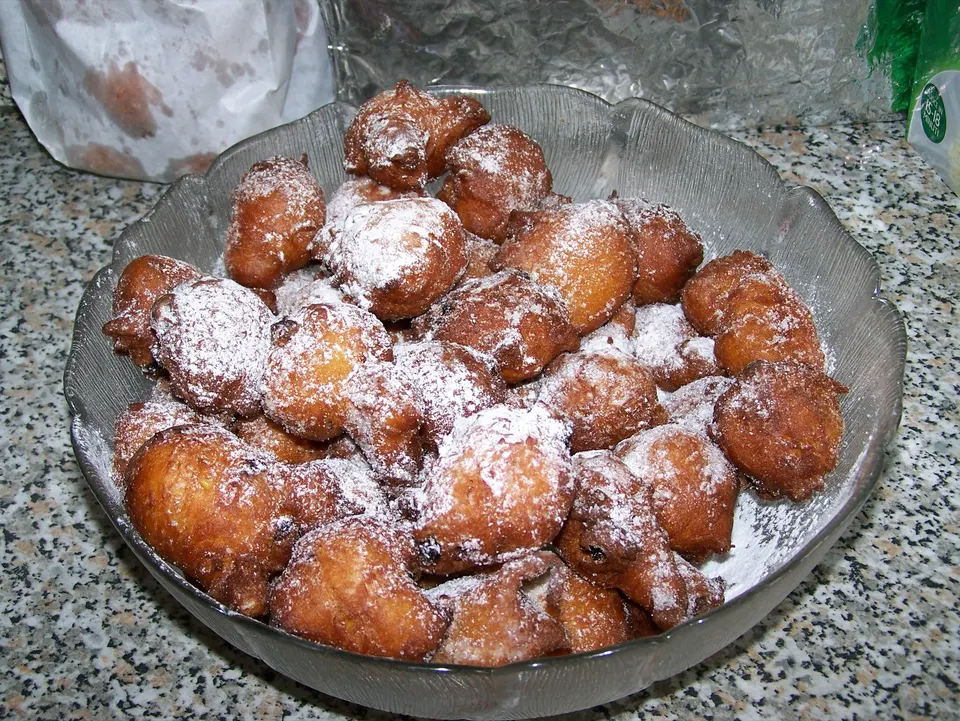
Desserts are home-style: fritule (small fried dough balls, often with raisins and a splash of brandy), kroštule (crisp fried pastry ribbons dusted with sugar), and in the north around Buzet, sweet krafi filled with cheese and raisins. And then there is supa, perhaps the most Istrian ritual of all: red Teran wine warmed with olive oil, a little sugar and pepper in a ceramic jug called a bukaleta, into which everyone at the table dips toasted bread, passing the jug around.
Good to know
- Eat with the season. Asparagus in spring, fish and fresh corn in summer, truffles and game in autumn, maneštra in winter. Seasonal dishes are almost always the best on the menu.
- Ask what is not on the menu. Many konobas cook a dish of the day or something that has to be ordered ahead, such as meat under the čripnja.
- Drink local. Malvazija with fish, pasta and the cold plate; Teran with meat, game and maneštra. See our guide to Istrian wines.
- Portions are generous. A cold plate, a pasta and a main course is a feast. Sharing is normal.
- Do not skip the bread and oil. Good bread with fresh local olive oil is a small course on its own.
Where to start
The best introduction is a long lunch in a family-run konoba in the interior, where the menu is short and the cooking is unhurried. Our guide to choosing a good konoba explains what to look for. And if you are staying in a house of your own, try cooking a few of these dishes yourself: fuži with a slow sauce, a fritaja, a cold plate of pršut and cheese. They are simple, forgiving and made for a long table.