No skin, no smoke, just sea salt, herbs and the bura wind. What makes Istria's dry-cured ham distinctive, and how to slice, plate and pair it at home.
Sit down in almost any konoba in Istria and the first thing to arrive will be a plate of thinly sliced ham, a few cubes of cheese, olives and bread. It looks like the start of a meal anywhere on the Adriatic. But Istrian pršut is made in its own way, and once you know what to look for, you can taste the difference.
What is pršut?
Pršut is the Croatian word for dry-cured ham, a relative of Italian prosciutto. A leg of pork is salted, rested, then hung to dry and mature for a long time, until the meat turns deep red, firm and fragrant. Along the eastern Adriatic, several regions have their own tradition: Istria, Dalmatia, the Slovenian Karst and others each produce ham with a distinct character.
Istarski pršut (Istrian pršut) is protected in the European Union with a designation of origin, which means that ham sold under that name has to be produced in Istria according to a defined, traditional method.
How is Istrian pršut different?
Three things set it apart.
- The skin and fat come off. Before curing, the skin and most of the outer fat are removed from the leg. Most other hams keep their skin. This exposes more of the meat to salt and air, so it dries more deeply and develops a firmer texture and more concentrated flavour.
- It is seasoned, not just salted. The leg is rubbed with coarse sea salt and spices, typically including pepper, garlic, laurel and rosemary. The seasoning is subtle in the finished ham, but it gives a recognisable aromatic note.
- It is not smoked. Dalmatian pršut is traditionally smoked over hardwood. Istrian ham is dried in the air only, helped by the cold, dry bura wind that blows down from the mountains in winter. The flavour is cleaner and sweeter, with no smoky edge.
The ham then matures slowly, over seasons rather than weeks, in cool, airy rooms. Traditionally these were the lofts and cellars of farmhouses; today producers use dedicated drying rooms, but the principle of patience is the same.
How does it taste?
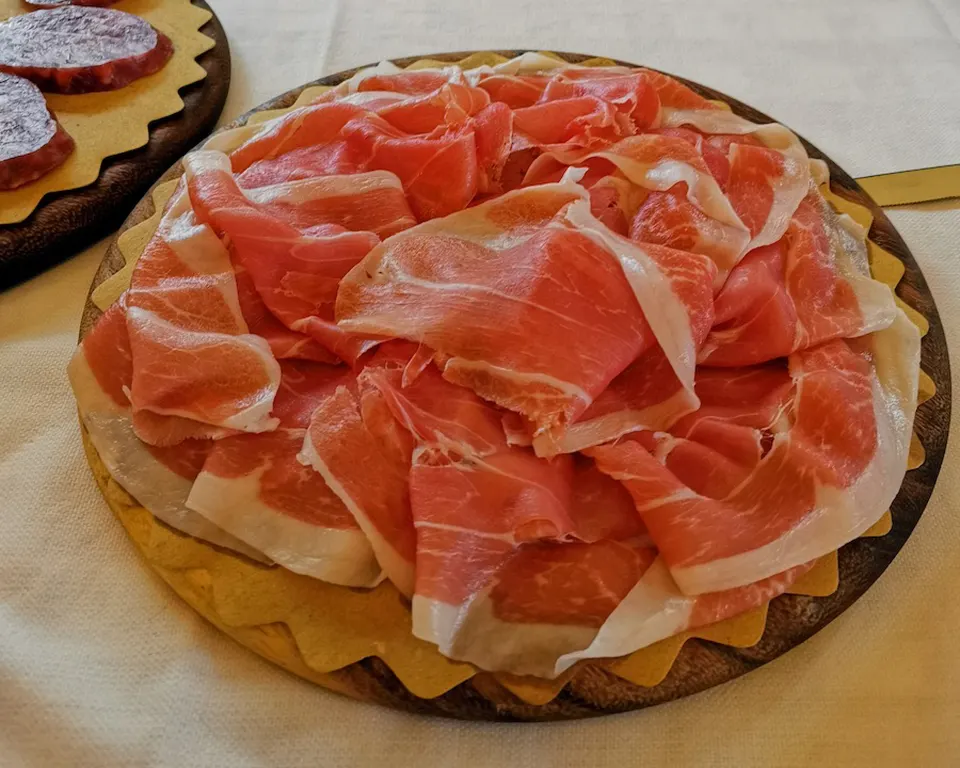
Good Istrian pršut is deep red with a narrow rim of fat where any remains. The texture is firm but not dry or stringy, and thin slices should almost melt on the tongue. The flavour is savoury and sweet at once, with a gentle saltiness and a faint aromatic note from the herbs and garlic. Because there is no smoke, the taste of the meat itself comes through clearly.
No skin, no smoke: just salt, herbs, wind and time.
How to slice pršut
Slicing is half the pleasure. In konobas and at home, pršut is often cut by hand with a long, very sharp, thin knife, which gives slices slightly thicker and more textured than a machine. A slicing machine produces the near-transparent sheets many people associate with prosciutto. Both are correct; it is a matter of taste.
- Use a stand. If you buy a whole or half leg, a ham stand holds it steady and makes slicing safer and more even.
- Cut against the grain, in long, even strokes, keeping the slices as thin as you can manage.
- Slice just before serving. Cut pršut dries and loses aroma quickly. Cover the cut face with a piece of its own fat or with clean cloth between uses.
- Serve at room temperature. Take pre-sliced pršut out of the fridge a little while before serving so the fat softens and the flavour opens up.
What to serve with it
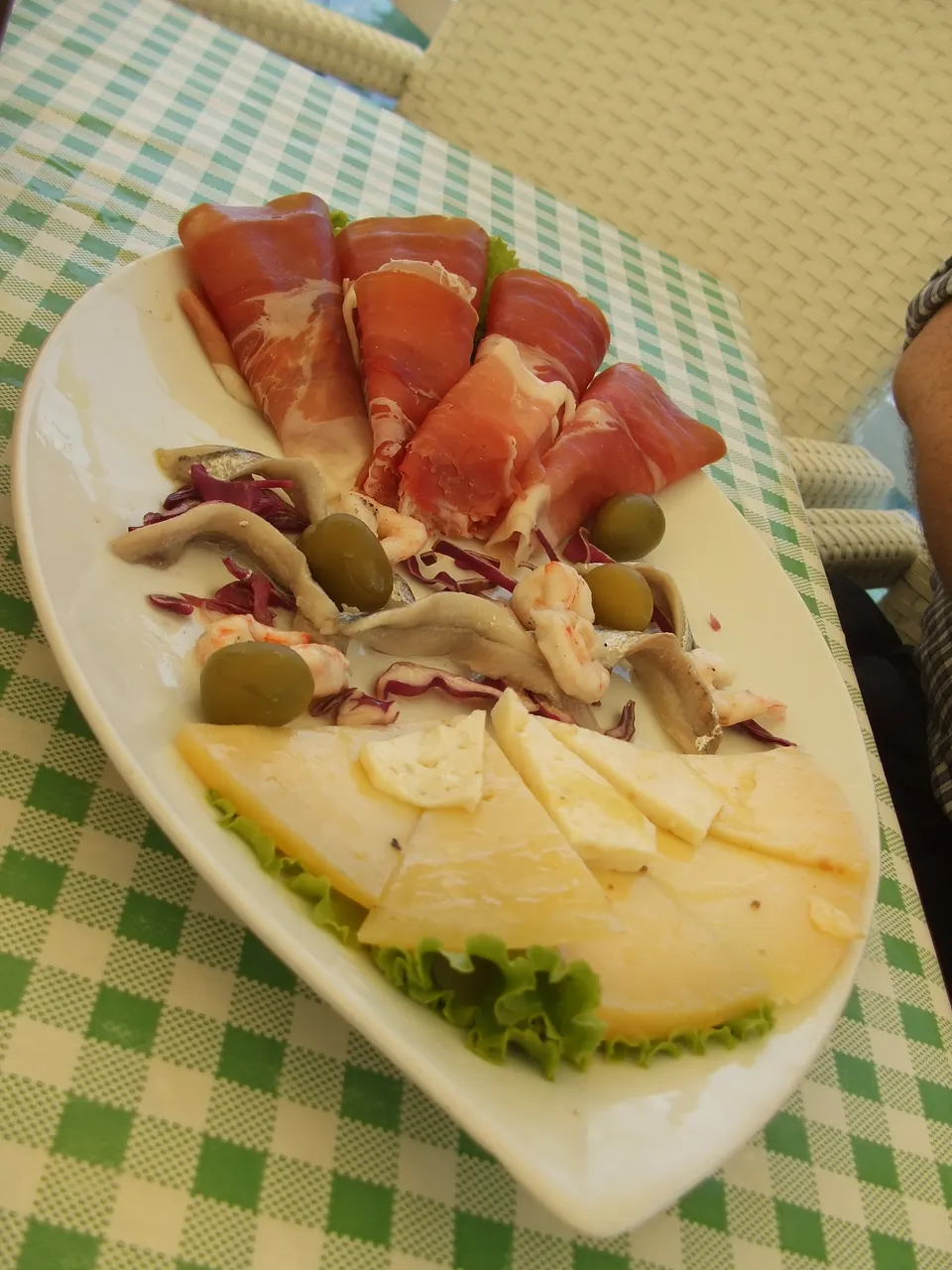
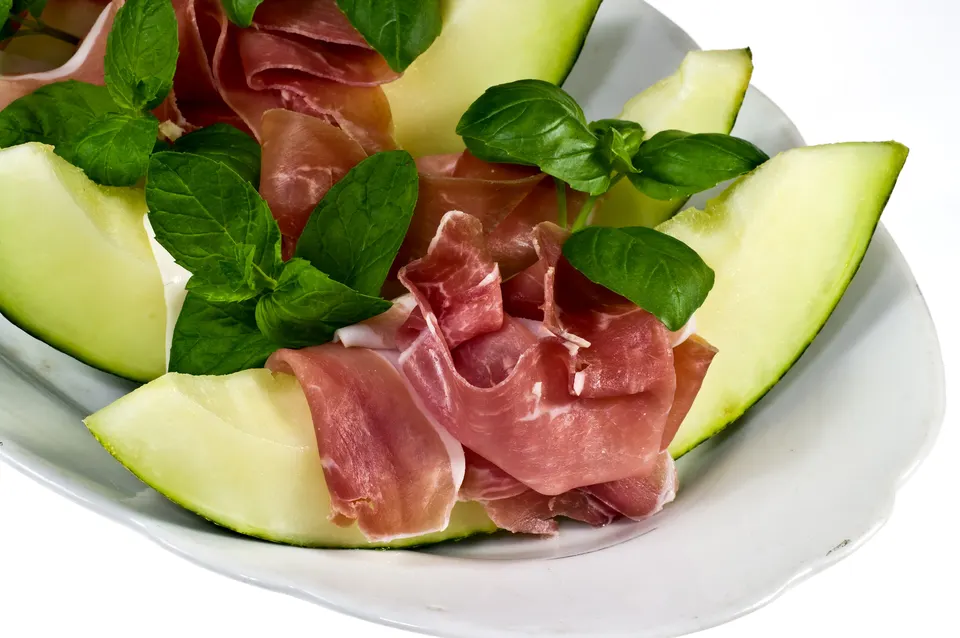
The Istrian way is simple: pršut, a firm local cheese, black or green olives, good bread and a little olive oil. Nothing should compete with the ham. In summer, ripe melon or fresh figs make a classic pairing, the sweetness balancing the salt. Some cooks add a few slices to a fritaja with wild asparagus, or lay pršut over warm fuži just before serving, so it softens without cooking.
What to drink with pršut
A chilled glass of Malvazija is the natural partner: fresh and lightly aromatic, it cuts through the fat and lifts the sweetness of the ham. If you prefer red, a lighter, fresh style of Teran works well, its acidity balancing the salt. For more, see our guide to Malvazija, Teran and the wines of Istria.
Buying and storing
You can buy Istrian pršut whole, in halves, in pieces or pre-sliced. Look for the protected-origin label when you want the real thing, and if possible buy from a producer or a counter that slices to order. A whole leg will keep for a long time in a cool, dry, airy place once you start slicing it, as long as the cut face is protected. Vacuum-packed pieces should be kept in the fridge and eaten soon after opening.
- Ask to taste. Good counters will happily cut a slice so you can compare.
- Travelling home? Vacuum-packed pieces travel best. Rules on bringing meat across borders differ by country, so check before you pack.
- Use the trimmings. The end pieces and bone add depth to maneštra and bean soups.
A plate worth slowing down for
Pršut is not a starter to rush through on the way to the main course. Ordered with cheese, olives and a jug of wine on a warm evening, it can easily become the meal itself. It belongs to the same slow, seasonal tradition as the rest of Istrian cuisine, and it is at its best on a long table among friends.