The traditional sweets of Istria are simple, festive and closely tied to the calendar. What they are, when they are made and what to drink with them.
Istrian cooking is not famous for its desserts in the way it is for truffles, olive oil and wine. Yet every family has its sweets, and most of them are tied to a particular moment in the year: Christmas, carnival, Easter, a wedding. They are made at home, in large quantities, and shared with neighbours. Many are close cousins of sweets made around Trieste, Friuli and the Venetian lagoon, a reminder of the long centuries Istria spent in the Venetian and Austrian worlds.
Here are the sweets you are most likely to meet, when to look for them and what to drink alongside. For the savoury side of the table, see our guide to Istrian cuisine.
What are fritule?
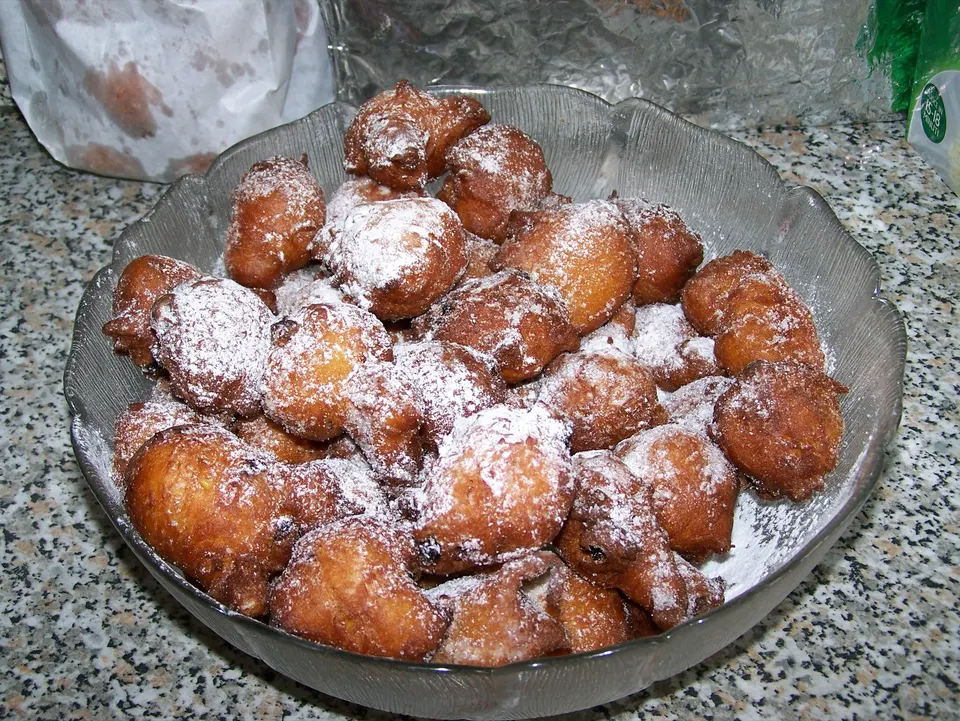
Fritule are small, irregular balls of sweet yeast or batter dough, fried until golden and dusted with sugar. They are the best-known sweet of the Croatian coast, and in Istria they are made above all at Christmas and during carnival. The dough is usually flavoured with grated lemon or orange zest, raisins soaked in rum or a local brandy, and sometimes a little grated apple or fresh cheese, which keeps them moist.
Good fritule are light and soft inside, crisp outside and never greasy. They are best eaten warm, within an hour or two of frying, which is why they are made at home and at festive stalls rather than sold in shops. In Advent, Christmas markets in Istrian towns often have a stall frying them to order.
A simple fritule recipe
Every family has its own version. This is a straightforward yeast-free one that makes about 30 fritule:
- 300 g plain flour
- 2 eggs
- 250 g plain yoghurt or fresh soft cheese
- 60 g sugar
- 1 tsp baking powder
- Grated zest of 1 lemon and 1 orange
- 50 g raisins, soaked for 30 minutes in 2 tbsp rum or brandy
- 1 pinch of salt
- Sunflower oil for frying, and icing sugar for dusting
- Whisk the eggs with the sugar until pale, then stir in the yoghurt or cheese, the zest, the salt and the raisins with their soaking liquid.
- Mix the flour with the baking powder and fold it in until you have a thick, sticky batter that holds its shape on a spoon. Leave it to rest for 15 minutes.
- Heat a deep layer of oil in a heavy pan to about 170 °C. Test with a drop of batter: it should rise and sizzle steadily, not violently.
- Drop teaspoons of batter into the oil, a few at a time, and fry for 3 to 4 minutes, turning, until deep golden all over.
- Lift out onto kitchen paper, then dust generously with icing sugar. Serve warm.
Kroštule: carnival ribbons
Kroštule are thin strips of sweet dough, often tied into a loose knot or cut with a fluted wheel, fried until crisp and showered with icing sugar. They are the classic sweet of carnival, the weeks before Lent, when they are piled high on plates in homes and bakeries. The dough is typically enriched with egg yolks, a little butter and a splash of brandy or wine, which helps it blister and crisp in the hot oil. They shatter when you bite them, and nobody manages to eat just one.
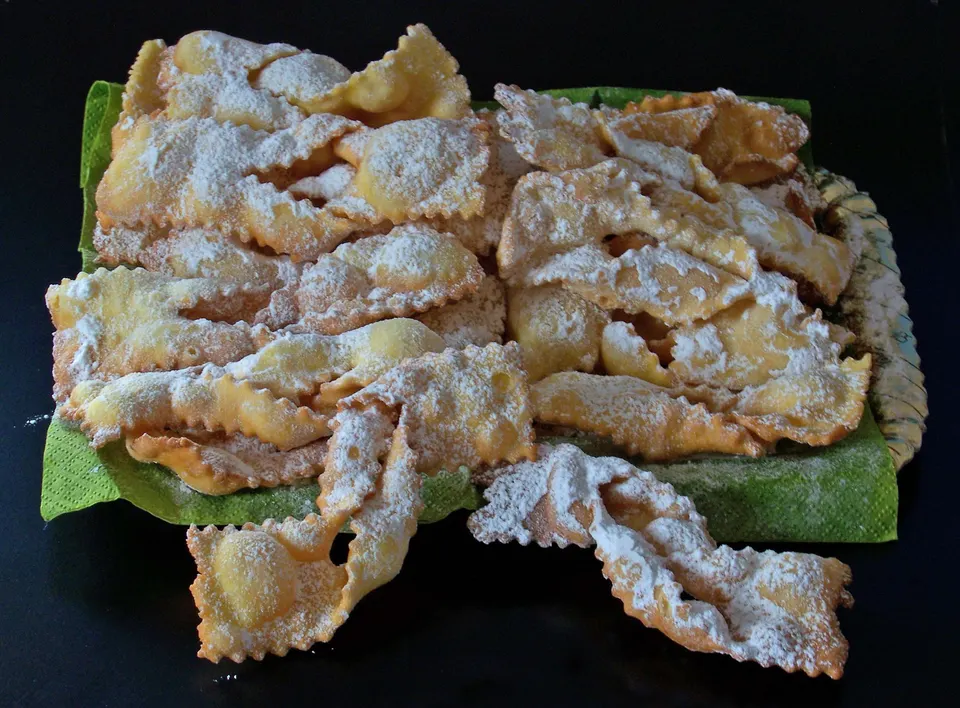
The same pastry is known by many names around the northern Adriatic, from crostoli in Trieste and Friuli to galani in Venice. If you have eaten them in Italy, you will recognise them at once.
Most Istrian sweets belong to a moment in the year: Christmas, carnival, Easter or a wedding.
Pinca: the Easter bread
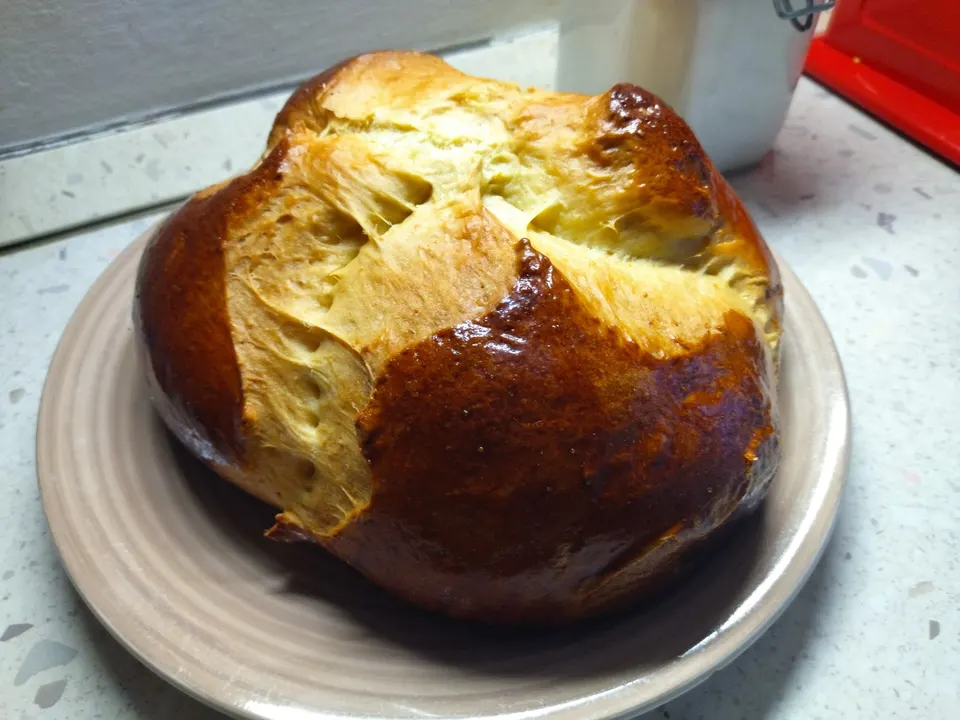
Pinca is a round, sweet yeast bread made for Easter, with a golden, glossy crust and a soft, slightly dense crumb flavoured with lemon zest and often a little rum. Before baking, the top is cut with a knife into three or four flaps, which open in the oven to give pinca its characteristic shape. On Holy Saturday or Easter morning, families take a basket with pinca, eggs, ham and spring onions to church to be blessed, and the bread is eaten at Easter breakfast. Around Trieste the same bread is called pinza.
Other Istrian sweets worth knowing
- Rafioli. Small crescent-shaped pastries filled with ground almonds and sugar, traditionally made for weddings and other celebrations in parts of Istria and the Kvarner coast.
- Dried figs. Figs grow everywhere in Istria, and many families still dry them in late summer for winter, sometimes with a bay leaf between the layers.
- Home-made preserves. Fig, plum and quince jams, often served with cheese or used to fill pastries.
- Gelato. Not traditional in the old sense, but the ice cream shops of coastal towns take it very seriously, and an evening walk with an ice cream is part of summer life.
- Supa. Not a dessert exactly, but an old Istrian habit: warm red wine with olive oil, pepper and sugar, served in a jug with toasted bread for dipping.
What to drink with Istrian sweets
Istria makes two wines that are perfect with dessert: the golden, orange-blossom-scented Muškat momjanski, and the rarer, rose-scented Muškat ruža. Both are made in sweet versions that go well with fritule, kroštule and almond pastries. Our guide to Istrian wine grapes explains them in more detail.
After a long meal, you may also be offered a small glass of rakija, the local fruit or grape brandy, or biska, a herbal brandy made with white mistletoe and associated with the inland town of Hum and the area around Buzet. It is a strong, aromatic digestif and worth trying once. See our piece on Hum for a visit to its home.
Good to know
- Timing matters. Fritule are easiest to find in Advent and at carnival, kroštule at carnival, pinca at Easter. In summer, restaurants may offer them, but they are less common.
- Ask in a konoba. Smaller family restaurants sometimes have a home-made sweet that is not on the menu.
- Bakeries and pastry shops in larger towns sell kroštule and pinca in season.
- Try making them. Fritule and kroštule need only basic ingredients and a pan of hot oil, and they are a lovely way to end a holiday cooking evening.
Istrian sweets are not about refinement but about occasion: a plate of fritule passed around at Christmas, kroštule at carnival, a basket of pinca carried to church at Easter. Taste them in their season, and you taste a little of the Istrian year.