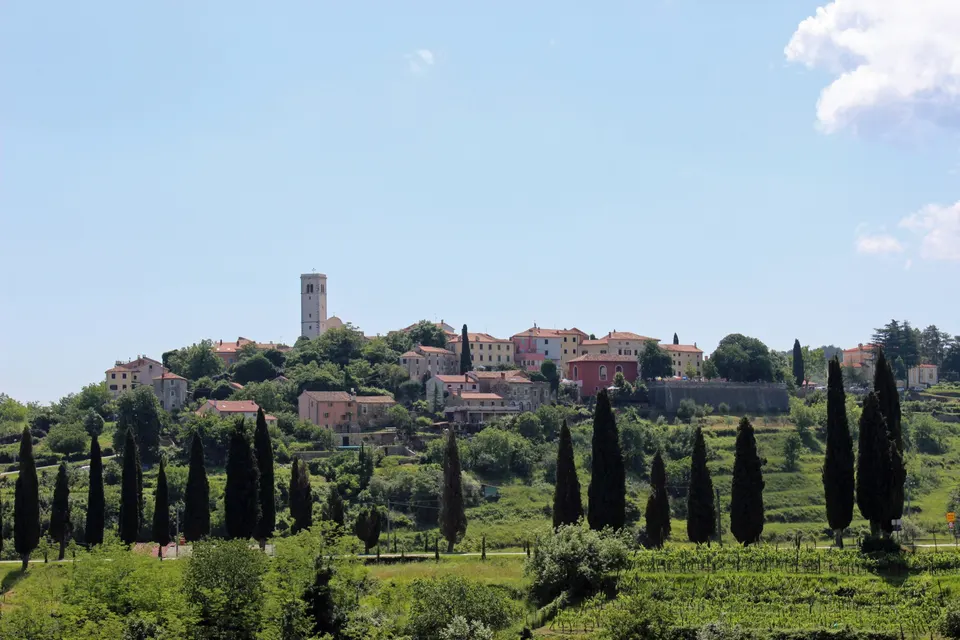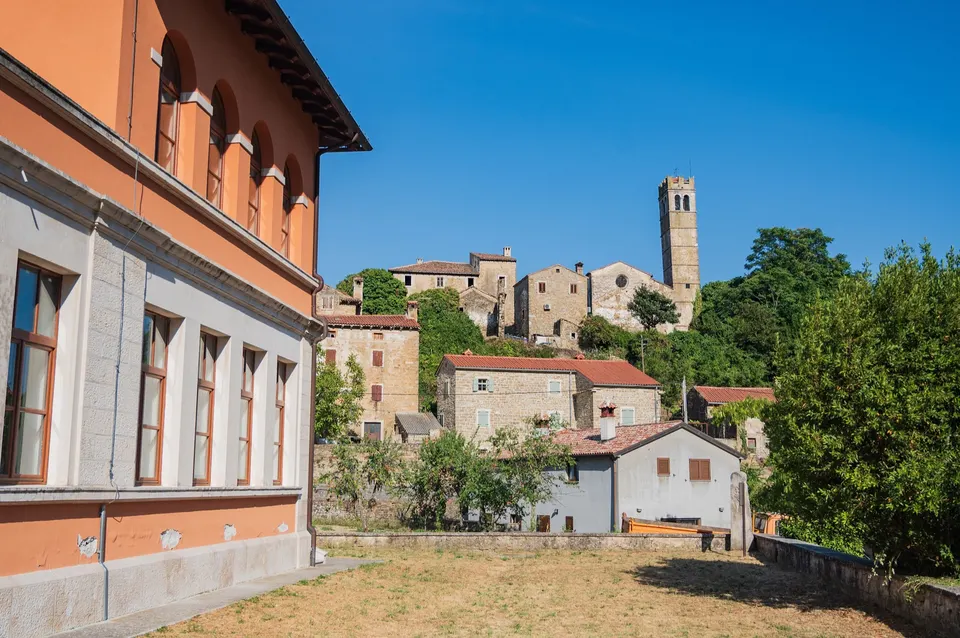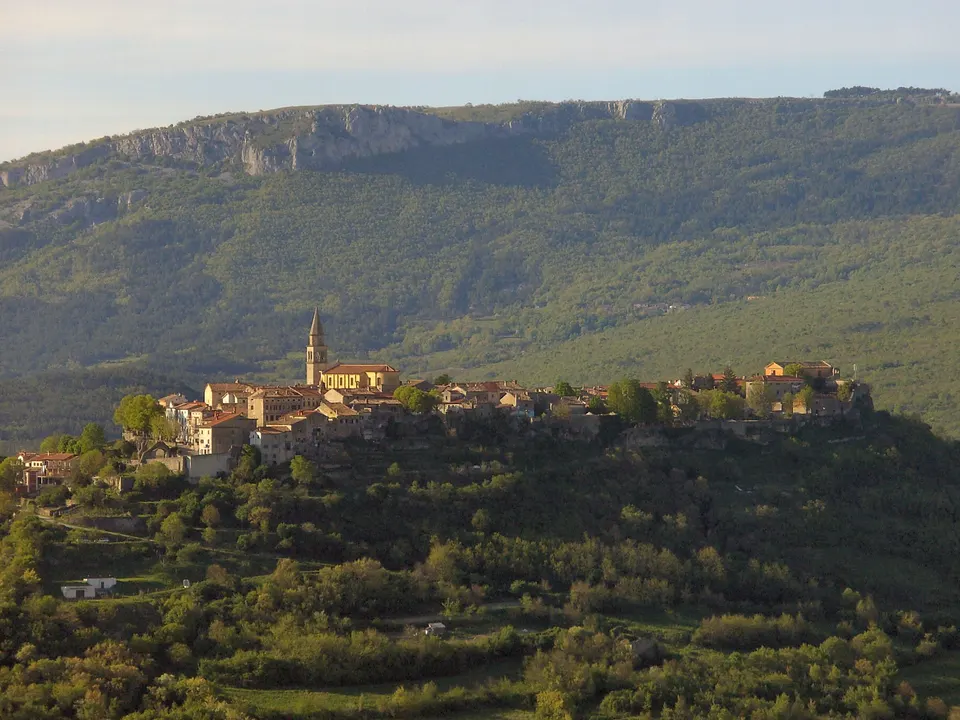
A former bishops' seat with a soaring bell tower, and a walled village with a Gothic palace. Two hill towns near Pazin that most visitors drive straight past.
Ask people to name an Istrian hill town and you will hear Motovun, Grožnjan and Hum. Few will mention Pićan or Gračišće, and that is exactly their appeal. They stand on neighbouring hills east of Pazin, a short drive apart, looking at each other across a green valley. Both are small, both are old, and both are far quieter than the famous towns of the north-west. If you like stone lanes, church bells and long views more than souvenir shops, they are worth a half day.
Where are Pićan and Gračišće?
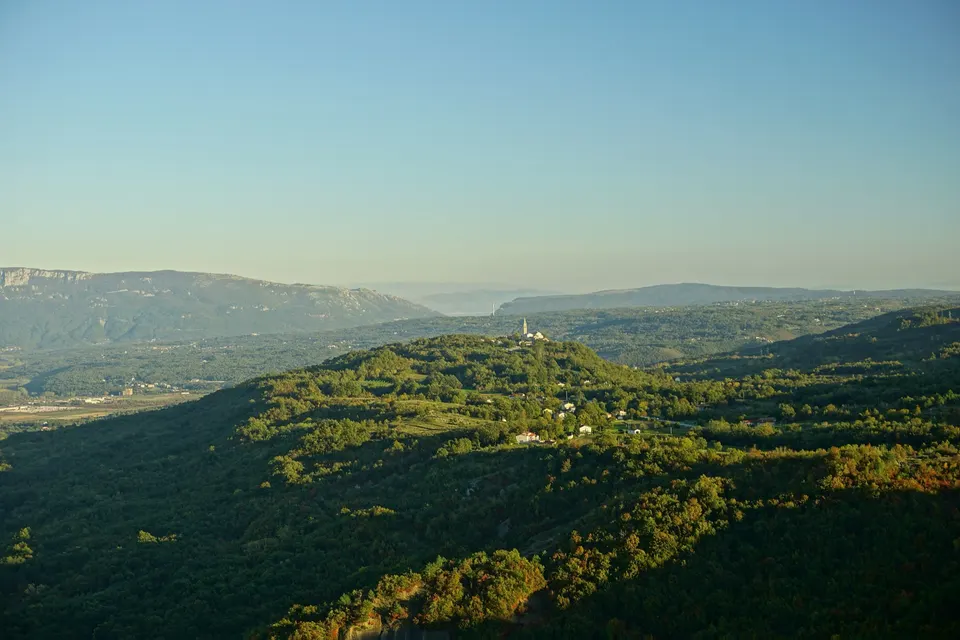
Both towns lie in the eastern part of central Istria, between Pazin and the slopes of Učka. Gračišće is the closer of the two, a few kilometres east of Pazin on a hilltop. Pićan sits further south-east, also on a hill, above the valleys that run down towards the east coast. On a clear day you can see one town from the other, and from both you look straight at the long ridge of Učka, the mountain that separates Istria from the Kvarner Gulf.
Pićan: the town of bishops
Pićan grew on the site of a Roman fortified settlement known as Petina. Its real moment in history came with the Church. From late antiquity until the end of the eighteenth century, Pićan was the seat of a bishopric, one of the oldest in Istria, and the bishops of Pićan gave this small town an importance out of all proportion to its size. The diocese was eventually abolished, but its memory survives in the stones: the former bishop's palace still stands, and the town is still proud of its long list of churchmen.
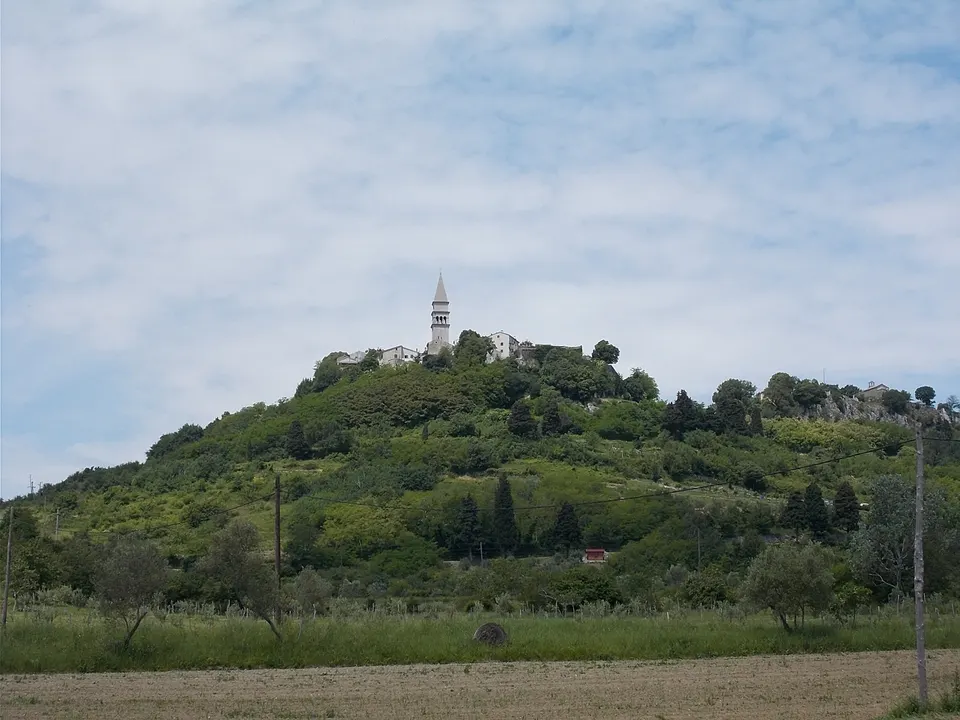
The first thing you notice, from far away, is the bell tower. It stands apart from the parish church of the Annunciation and is one of the tallest in Istria, a slim stone needle that marks the town from every road in the valley. Walk up into the old centre and you pass through a medieval town gate into a handful of lanes, small squares and stone houses. There are a few small chapels as well, including those of St Roch and St Michael. The church treasury is known for its old liturgical silver; ask locally whether it can be seen.
Pićan is not a place of museums. Its pleasure is the walk round the top of the hill, where the land falls away on several sides and the views open over fields, woods and scattered villages towards Učka. Come in the late afternoon, when the light turns gold and the swallows circle the tower.
Two small towns on neighbouring hills, looking at each other across a green valley.
Gračišće: a walled village with a Gothic palace
Gračišće is the better preserved of the two, and one of the most complete medieval villages in central Istria. The whole settlement is protected as a cultural monument, and many of its houses date back to the fifteenth century. Parts of the old defences survive, including one of the towers and the main gate, so you still enter the village much as travellers did centuries ago.
Just inside, the small square is framed by the church of St Mary, built in 1425, with a stone loggia beside it where the community once met. Nearby is the Salamon palace, a Gothic residence in the Venetian manner and the only example of its kind in this part of Istria. Further up is the church of St Euphemia, from the fourteenth century, known for a medieval crucifix and a gilded Baroque altar. The parish church of St Vitus, built in the eighteenth century, stands at the edge of the village, and the old cemetery in front of it is the best viewpoint in Gračišće: Učka and its highest peak, Vojak, fill the eastern horizon, and on very clear days the view reaches the Alps.
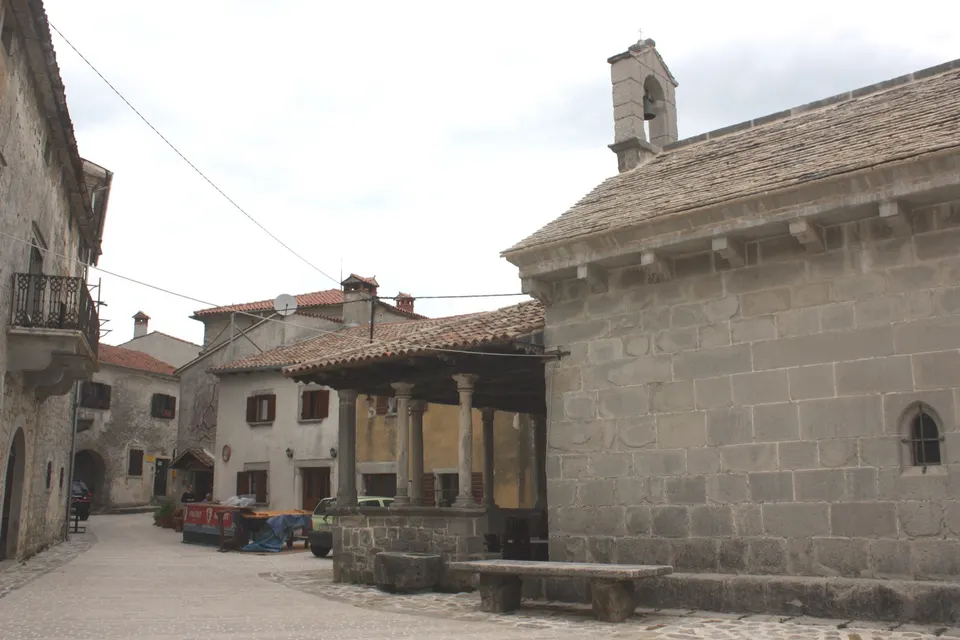
Like Pićan, Gračišće is lived in rather than staged. You will see washing on lines, gardens behind stone walls and the occasional abandoned house waiting for someone with patience and a good builder. It is a reminder of how most of inland Istria looked before tourism, and of why so many people now dream of restoring a stone house here.
How to combine them in a day
The two towns fit easily into a day based on Pazin. Start with the castle and the abyss in Pazin in the morning, drive to Gračišće for a walk and the view from St Vitus, then continue to Pićan for the late afternoon. If you have more time, add the frescoes of Beram, a few minutes from Pazin, or continue south to Žminj and Barban. Walkers can carry on towards Učka; our guide to hiking in Učka Nature Park has ideas.
For lunch, this is konoba country: hearty inland food, maneštra soup, home-made pasta and, in autumn, truffles from the nearby woods. Read our guide to the Istrian konoba before you go, and do not expect a long choice of restaurants in either town itself.
Good to know
- Getting there. You need a car or a bicycle. Both towns are a short drive from Pazin; public transport is limited.
- Parking. Leave the car at the edge of each village and walk in. The lanes are narrow and steep.
- Churches. Many are opened only for services or on request. Ask in the village or at the tourist office in Pazin.
- Shoes. Stone paving can be slippery after rain. Wear something with grip.
- When to go. Spring and autumn for clear views of Učka and comfortable walking; summer evenings for the light.
- Respect. These are living villages, not open-air museums. Keep voices down and do not wander into private courtyards.
If Pićan and Gračišće leave you wanting more, our guide to the hill towns of Istria suggests which others to visit and in what order.