Two quiet hilltop towns in the middle of the peninsula, once on opposite sides of a border. One is famous for a horseback ring race, the other for its late-summer fair.
Draw a line across Istria from Pula to Pazin and you pass through the green, slightly rolling country that locals simply call the middle of Istria. There is no sea view here and no famous old harbour, which is exactly why so few visitors stop. Yet two small towns in this landscape, Barban and Žminj, tell the story of the peninsula as well as any coastal resort: farming, stone, faith, festivals and, for centuries, a border that ran between neighbours.
Where are Barban and Žminj?
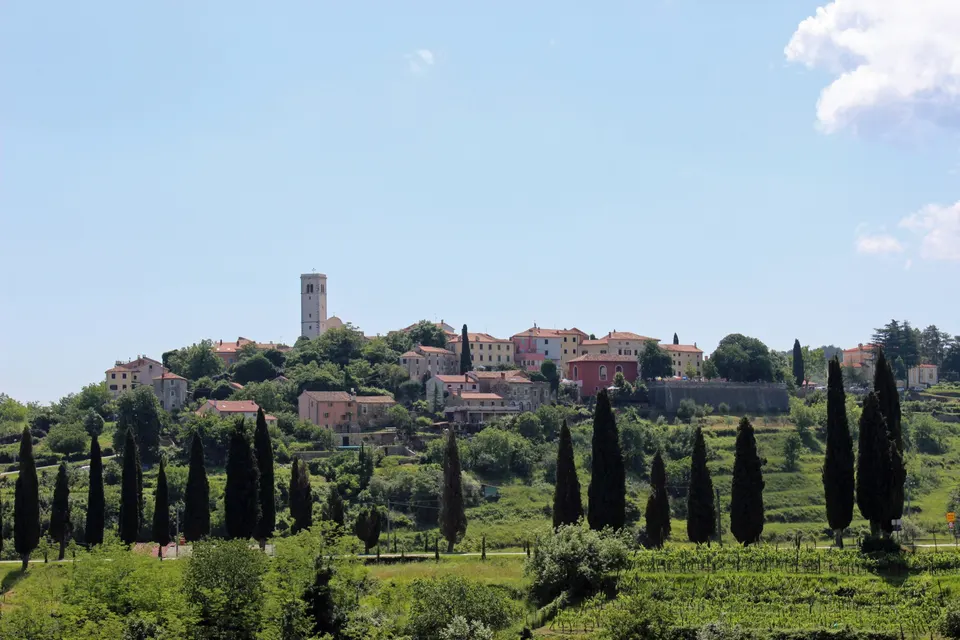
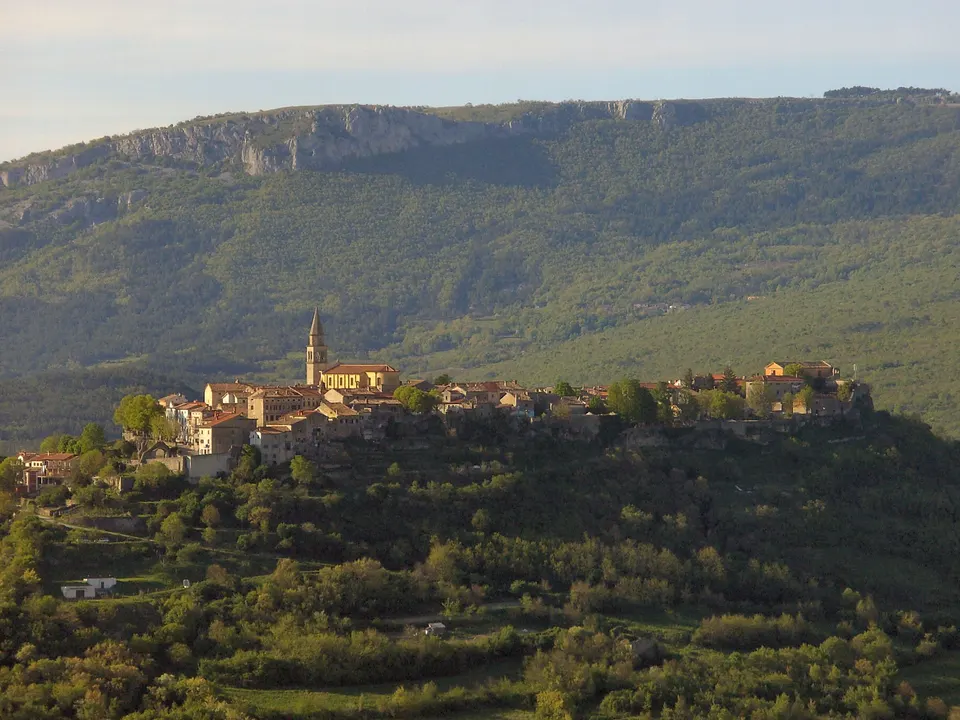
Barban sits on a ridge in the south-east of the peninsula, above the valley of the Raša river, roughly halfway between Pula and Labin. Žminj lies further north, in the very centre of Istria, between Kanfanar and Pazin. Both are a short detour from the main roads that cross the peninsula, and the drive between them takes you through fields, oak woods, dry-stone walls and small hamlets. With a car, it is easy to see both in a single unhurried day.
For much of their history the two towns looked in different directions. Barban belonged to the Venetian side of Istria, while Žminj was part of the Habsburg-ruled County of Pazin. The border has long since disappeared, but you can still sense it in the architecture: Venetian palaces and gates in Barban, a more rural, fortress-like character in Žminj.
Barban: a Venetian town on the ridge
Barban is small enough to walk around in half an hour, but it rewards a slower pace. In the sixteenth century the town passed to the Venetian noble family Loredan, and their influence is visible everywhere: in the palace that bears their name, in carved coats of arms, and in the town gates that once controlled the way into the old centre. Look out for the Great Gate, a simple arch in the old walls, and the stretch of ancient wall beside it.
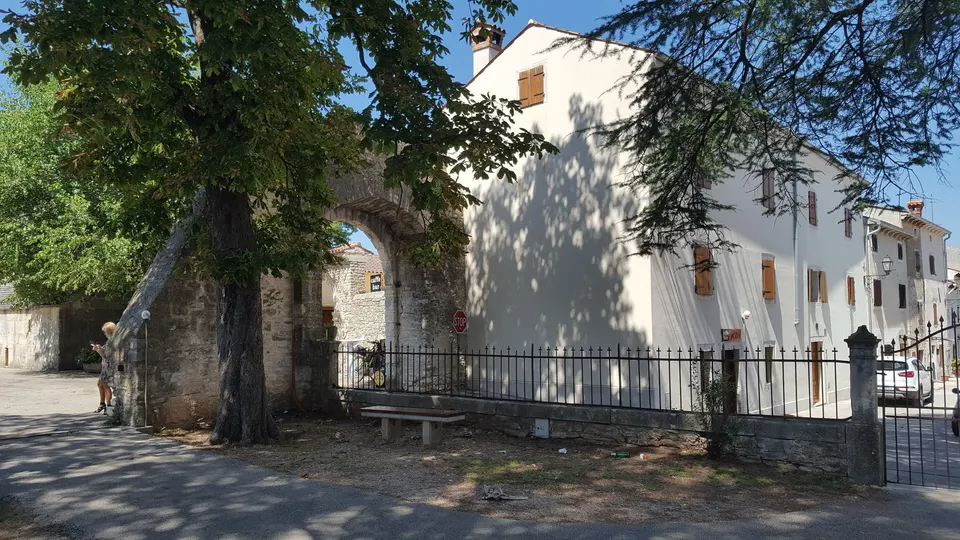
Inside, the parish church of St Nicholas dominates the small square, while the little church of St Anthony, near the entrance to the town, is one of several chapels in the area known for medieval wall paintings. From the edges of the ridge the views open over the Raša valley towards Učka and the east coast, a reminder of how close the Kvarner is, even here in the hills.
What is the Barban ring race?
Barban's name is known across Croatia for one event: the Trka na prstenac, or ring race. Riders in traditional costume gallop down a straight sandy track and try to spear a small metal ring hanging above it with a lance. The closer to the centre of the ring they strike, the more points they score. The tradition goes back to the end of the seventeenth century, was interrupted for a long period, and was revived in the second half of the twentieth century.
A gallop, a lance, a ring the size of a palm: for one weekend a year, the whole of Barban holds its breath.
Today the race is held every summer, usually in August, and it is more than a sporting contest. Brass bands play, the town fills with families from the surrounding villages, and the evening carries on long after the last rider has finished. If you are in southern Istria at the right time, it is one of the most authentic local events you can see. Check the exact date with the Barban tourist board before you plan your trip.
Žminj: the town in the middle of Istria
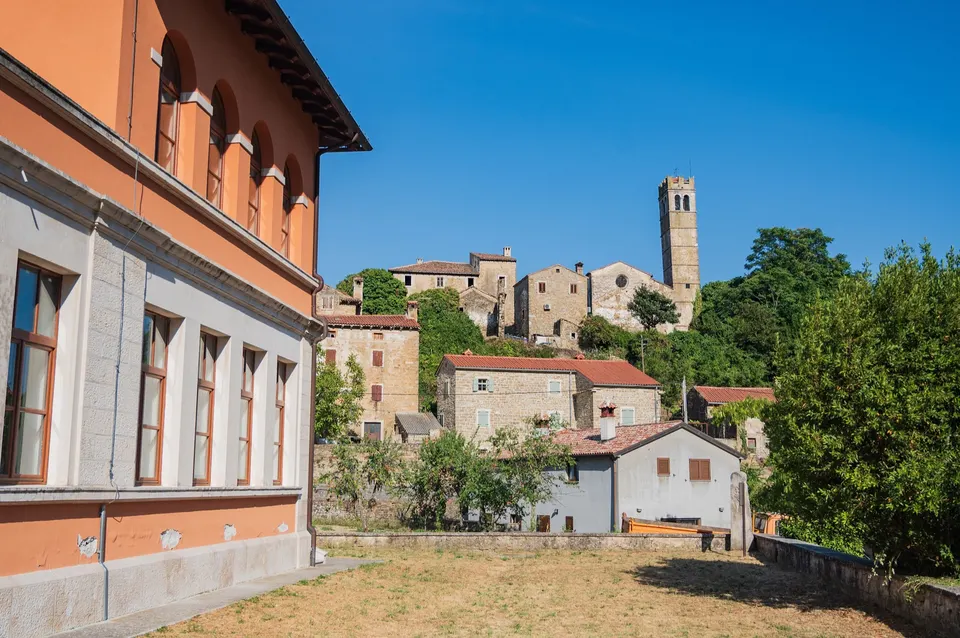
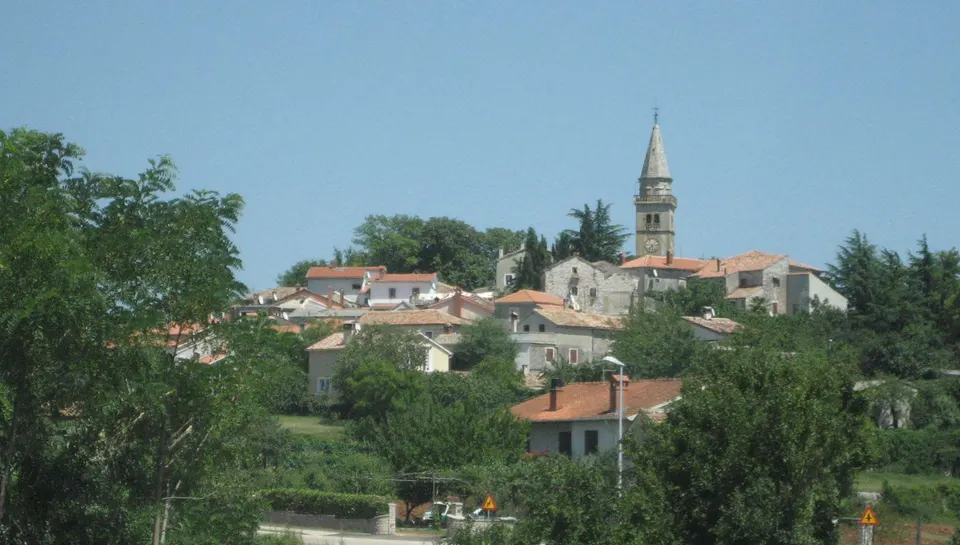
Žminj stands on a low hill at the geographical heart of the peninsula, and on a clear day you can see a surprising amount of Istria from its edges. In the Middle Ages it was a fortified settlement, and the remains of the castle walls and a round corner tower still stand at the edge of the old town. The houses grew up around the castle and the church, and the lanes between them are short, quiet and lined with grey stone.
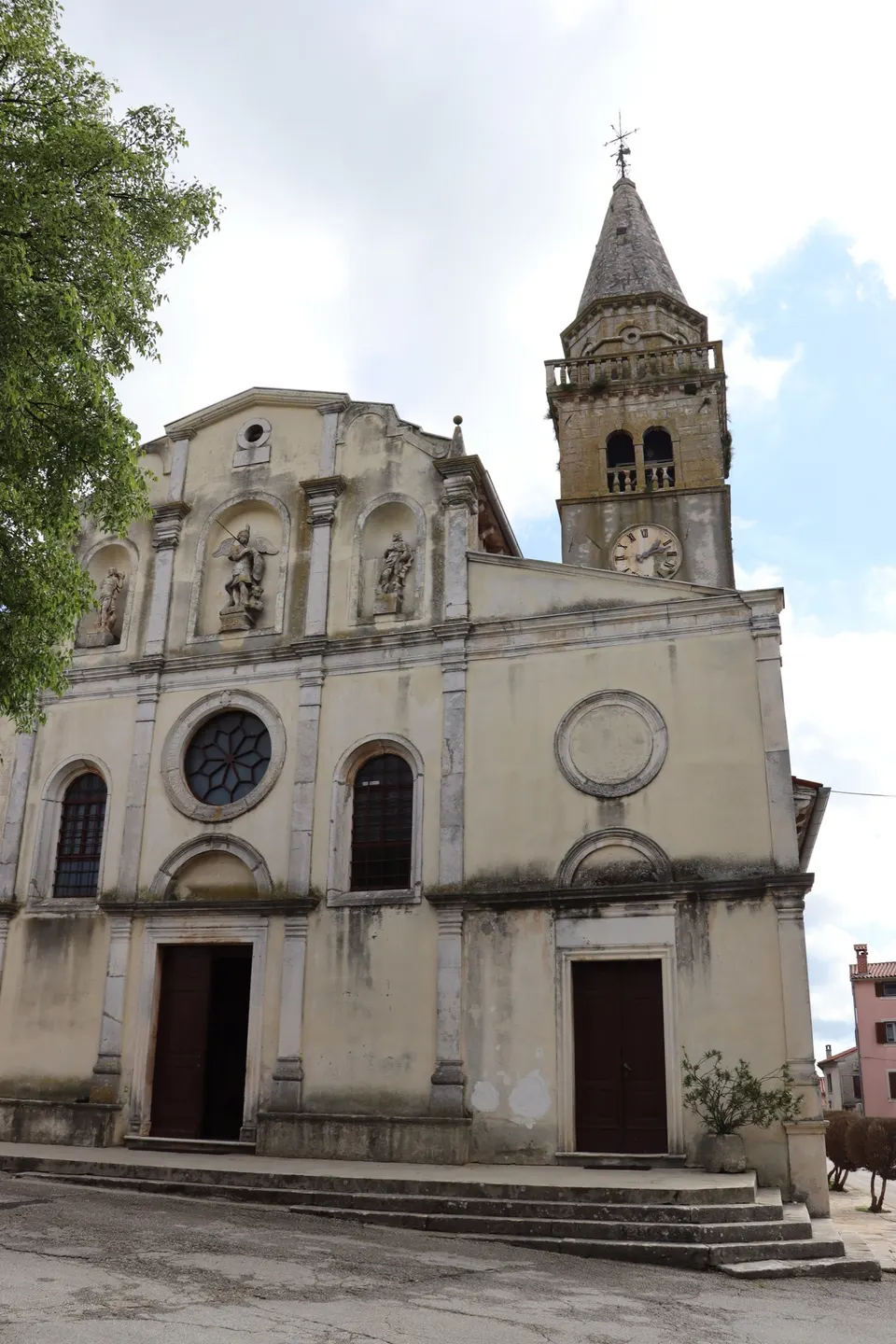
The parish church of St Michael the Archangel, with its pale baroque facade and slender bell tower, is the town's landmark and the first thing you see as you approach. Close by are much smaller and older chapels, including the chapel of the Holy Trinity, known for its late-medieval frescoes, and the chapel of St Anthony. Not all of them are open every day, so ask locally or come during a service or a festival. Žminj is also home to the Čakavian House, a small centre devoted to the Čakavian dialect spoken across much of Istria.
Bartulja and other reasons to visit
Žminj's great day is Bartulja, the feast of St Bartholomew at the end of August. For generations it was the biggest fair in central Istria, a day of livestock, trade, music and long tables, and it is still celebrated with food, dancing and crowds from all over the peninsula. Outside the festival season Žminj is a peaceful place for a coffee in the square and a walk around the old walls.
Both towns are good bases for exploring the interior. From Žminj it is a short drive to the abandoned medieval town of Dvigrad and to Kanfanar, and a little further to Pazin and its castle above the abyss. From Barban you can continue south to Svetvinčenat and its Renaissance square, or east towards Labin and the coast.
Good to know
- Getting there. A car is the practical choice. Barban is easiest to reach from Pula or Labin, Žminj from Kanfanar, Pazin or Rovinj.
- Combining both. Start in Žminj in the morning, drive south through the countryside and finish in Barban in the late afternoon, when the light over the Raša valley is softest.
- Festivals. The Barban ring race and Žminj's Bartulja both fall in late summer; dates change from year to year, so check with the local tourist boards.
- Churches and chapels. Many of the smaller chapels with frescoes are kept locked; ask at the parish or the tourist office about visits.
- Food. Central Istria is the place for home-style cooking: pasta with game or truffles, local cheese, pršut and Istrian wine. Look for family-run konobas in the surrounding villages.
- Pace. These are working towns, not open-air museums. Park outside the centre, walk in and greet people as you pass.
Why central Istria stays with you
Barban and Žminj will not fill a week, but they show the part of Istria that the coast hides: the villages where farming families have lived in the same stone houses for generations, where a church square is still the meeting point and where the year is marked by fairs and races rather than by the tourist season. Many people who fall for this landscape end up looking at old stone houses in the area, and it is easy to see why.