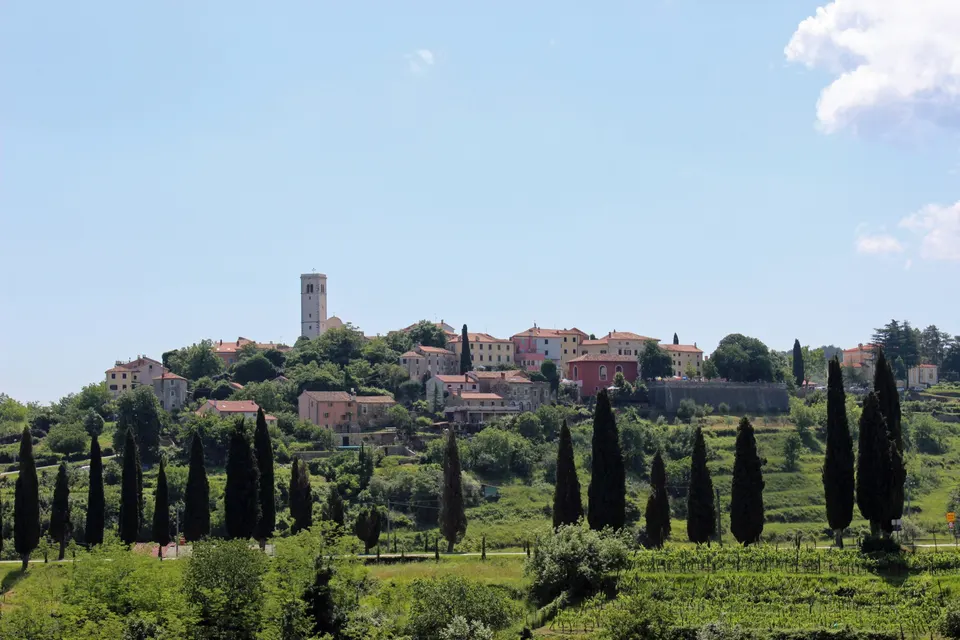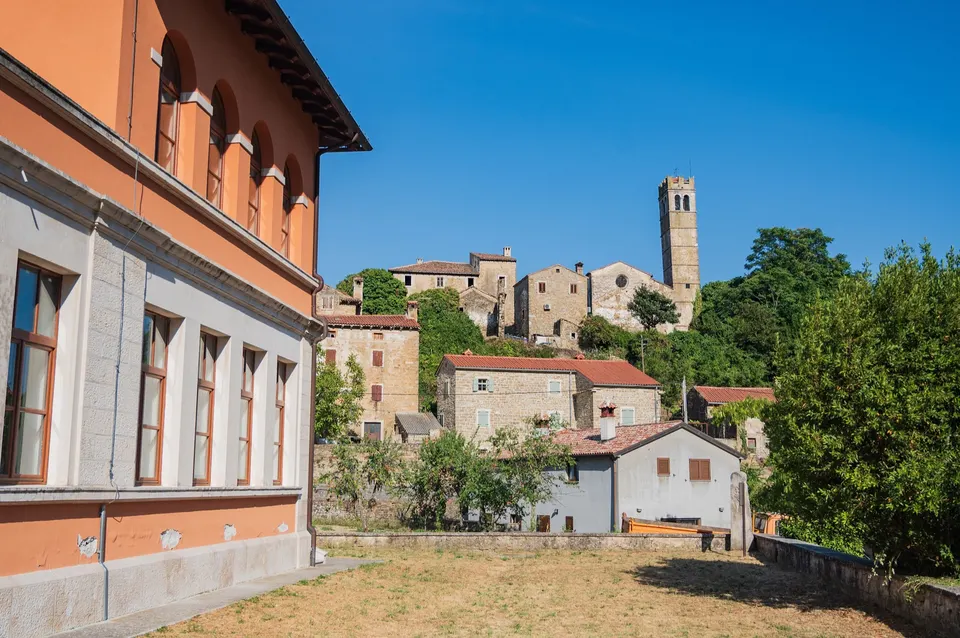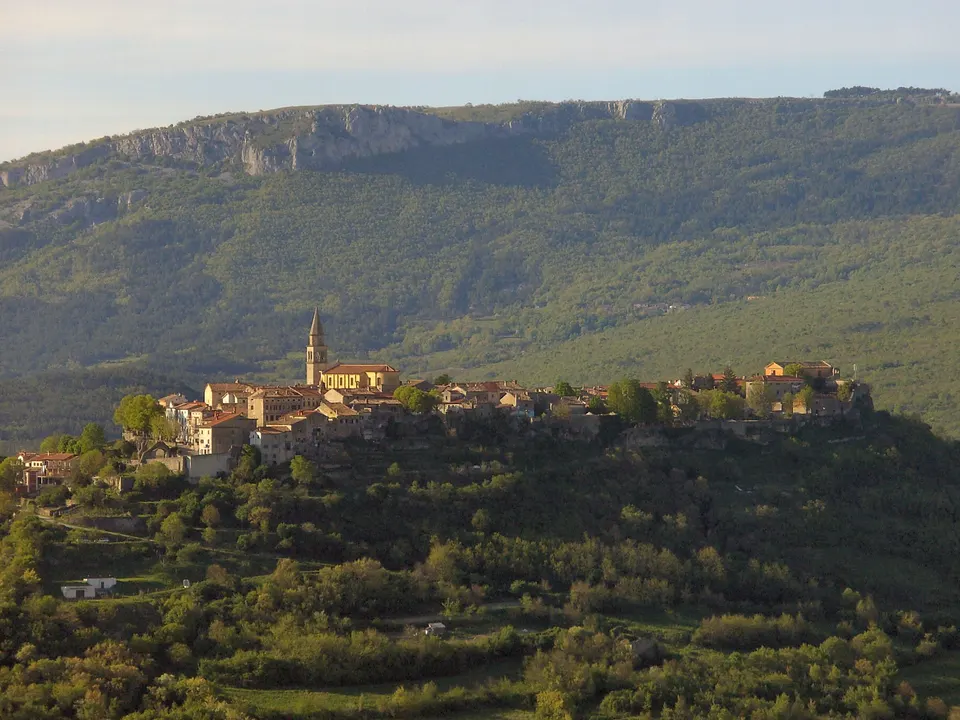
Beneath the vineyards of Istria lies a hidden world of stalactites, underground lakes and pale cave salamanders. A guide to Baredine, Mramornica, Feštini, Pazin and more.
Most of Istria stands on limestone, and limestone is a patient sculptor. Over hundreds of thousands of years, rainwater seeping through the rock has dissolved channels, shafts and chambers beneath the fields and olive groves. Locals have always known about the jame, the pits that open in the woods, and a few of these underground spaces are now open to visitors. On a hot August afternoon or a wet day in spring, a cave visit is one of the best things you can do in Istria.
Why does Istria have so many caves?
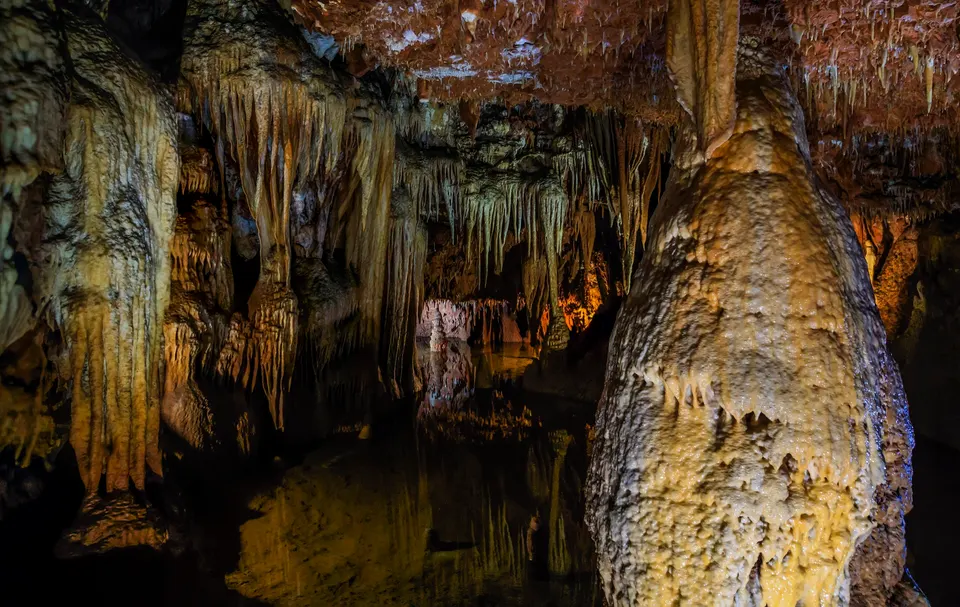
Istria is part of the karst, the limestone landscape that stretches along the eastern Adriatic and gave its name to geology textbooks around the world. Rain absorbs a little carbon dioxide from the air and soil, which makes it slightly acidic. As it trickles through cracks in the limestone, it dissolves the rock and carries it away. Over time the cracks widen into passages and caverns. Where the water later drips into an open chamber, it leaves the dissolved calcite behind, drop by drop, building stalactites from the ceiling, stalagmites from the floor and curtains of flowstone down the walls.
The same process explains the red soil on the surface, the terra rossa, and the way rivers in Istria sometimes vanish underground. Thousands of pits and caves have been recorded across the peninsula, but only a handful are equipped for ordinary visitors. The rest are for trained speleologists.
Baredine Cave: the classic visit
Baredine is the best-known cave in Istria and the easiest to fit into a holiday. It lies near the village of Nova Vas, inland from Poreč on the way to Višnjan, and has been open to the public since 1995. Visits are guided and lead down through a series of chambers to an underground lake at the bottom.
Along the way the guides point out the formations that generations of visitors have given names to, from animals and figures to shapes that recall religious images. There is also a local legend, the sad story of Milka, a young shepherdess said to have disappeared into the cave while searching for her lost love. Children usually love it.
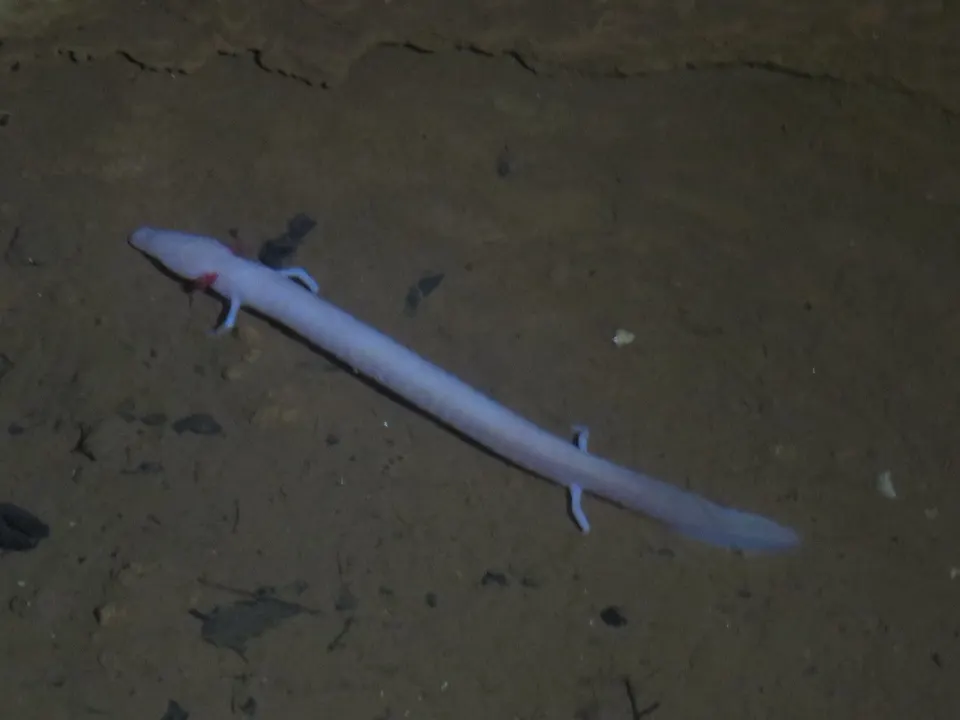
The real star, though, is the olm (Proteus anguinus), a blind, pale pink amphibian that lives only in the underground waters of the karst between Italy and the western Balkans. Locals call it the čovječja ribica, the human fish, because of its skin colour. It can live for many decades and survive long periods without food. In Baredine you can see olms up close, a rare chance to meet one of the strangest animals in Europe. It is a strictly protected species, so please follow the guides' instructions about light and noise.
On a hot August afternoon or a wet day in spring, a cave visit is one of the best things you can do in Istria.
Mramornica, near Brtonigla
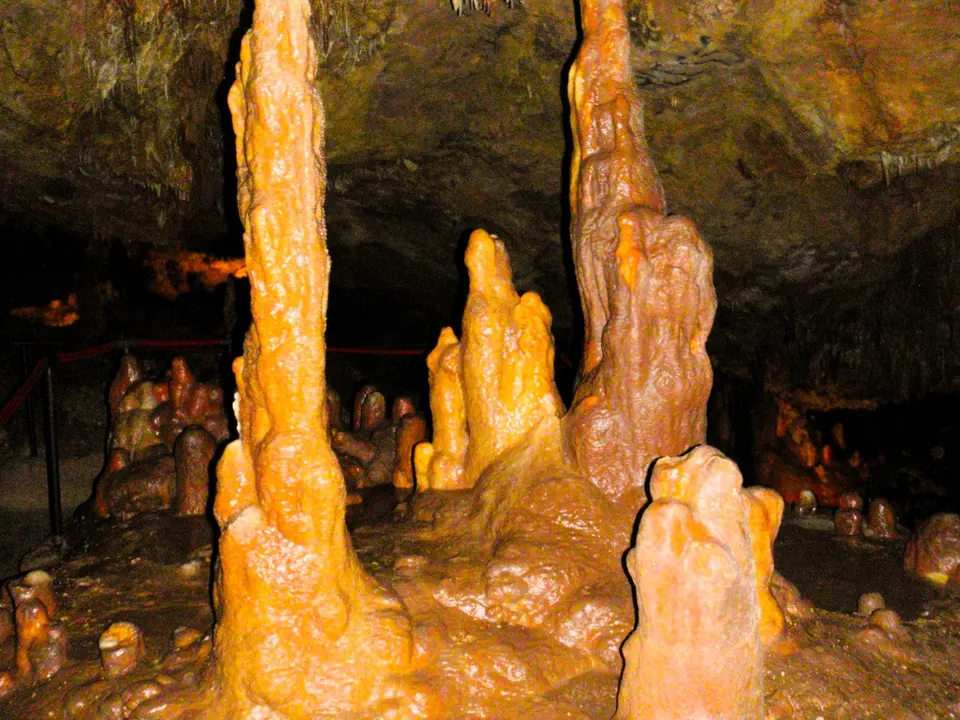
In the north-west, close to the wine village of Brtonigla, Mramornica cave contains one of the largest underground halls in Istria. Its name comes from mramor, marble, after the polished look of its flowstone, which ranges in colour from deep red to white. Tall stalagmites rise from the floor of the main chamber. The cave was described by travellers as early as the eighteenth century and is now visited on short guided tours. It makes a good pairing with a wine tasting in Brtonigla or Momjan.
The Kingdom of Feštini, near Žminj
Feštinsko kraljevstvo, the Kingdom of Feštini, is a small cave near the village of Feštini, close to Žminj in central Istria. The story goes that the local children who played here called it their kingdom, and the name stuck. The walkway is short and the visit is brief, but the formations are dense and colourful, with stalagmites that visitors compare to a magician's hat, a tower and the wings of a bat. It is a good choice with younger children, who may find a longer descent tiring.
The Pazin abyss and Romuald's cave
Two more underground places belong in any list, even though they are not show caves in the usual sense. In Pazin, the river Pazinčica flows into a deep gorge beneath the castle and disappears into the rock. A marked path leads down into the abyss, and there is a zip line across it for the brave. Jules Verne used the gorge in his novel Mathias Sandorf, and the castle above holds two museums.
On the slopes above Lim Bay, Romuald's cave is named after St Romuald, who is said to have lived there as a hermit in the eleventh century. It is also an archaeological site with traces of prehistoric people and Ice Age animals, and a shelter for protected bats. Access has been restricted in recent years to protect the cave, so check locally whether visits are possible before you plan around it.
Good to know before you go underground
- Bring a layer. Caves stay cool all year. A light jumper feels wonderful in August.
- Wear proper shoes. Paths are damp and there are steps. Leave flip-flops in the car.
- Check opening times. Most show caves open seasonally, with longer hours in summer. Confirm before you drive.
- Photography. Rules differ from cave to cave; ask before using a flash.
- Do not touch. Formations grow extremely slowly and the oils on your hands stop them growing.
- Never explore alone. Pits in the woods can be deep and unmarked. Leave wild caves to trained cavers with local clubs.
Fitting a cave into your trip
A cave visit takes an hour or two, so it combines easily with something else. Pair Baredine with an afternoon in Poreč or a tasting in the Višnjan hills; Mramornica with the wine villages of the north-west; Feštini with lunch in Žminj; Pazin with the frescoes at Beram. When the weather turns, our list of ideas for a rainy day in Istria has more, and families will find further suggestions in Istria with children.