The cheapest quote is often the one that leaves the most out. Scaffolding, waste removal, connections, making good: the items that go missing, and how to catch them before you sign.
Three quotes arrive for the same job and one is clearly the lowest. Before you celebrate, read it for what is not there. More often than not, the cheapest quote is cheaper because it describes less work. The missing items do not disappear; they come back during the build as extras, priced at a moment when you have already committed and there is no competition.
This is a checklist of what tends to go missing. It is general and not legal advice. A quick first pass on a quote you already have is the builder's quote check: upload it, in Croatian if that is how it came, and the free basic result gives a rating and up to three items furthest above the market; warnings, hidden costs and questions to ask are in the paid detailed check.
Why items go missing
It is not always bad faith. Builders price what they are asked to price, and a brief that says “renovate the bathroom” leaves a lot of room. Some items are traditionally the owner's responsibility. Others cannot be known until a wall is opened. The trouble is that a quote rarely says which of these applies, so the owner assumes everything is included and the builder assumes the opposite.
Then there are costs that belong to the project but never to the builder: the architect's and engineers' fees, surveys, the permit process and any contributions the municipality charges, supervision during the works, and the utility companies' own charges. They are rarely large surprises if you know about them, and painful ones if you do not. Ask your architect for a list of these owner-side costs at the start, next to the builder's quotes, so the budget covers the whole project rather than just the construction. Our guide to building permits in Croatia explains the permit side in general terms.
The usual suspects
- Site setup (organizacija gradilišta). Fencing, a site toilet, temporary electricity and water, storage for materials, signage.
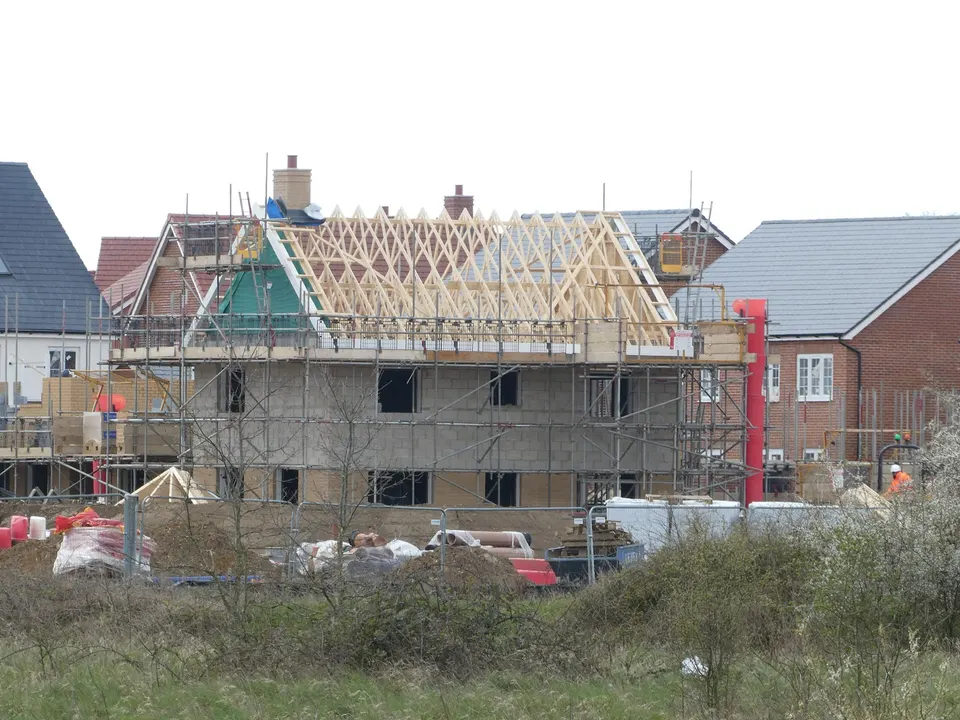
- Scaffolding (skela). Putting it up, hiring it for as long as the work takes, and taking it down. On a two-storey house this is a real cost, and the hire period tends to grow with any delay.
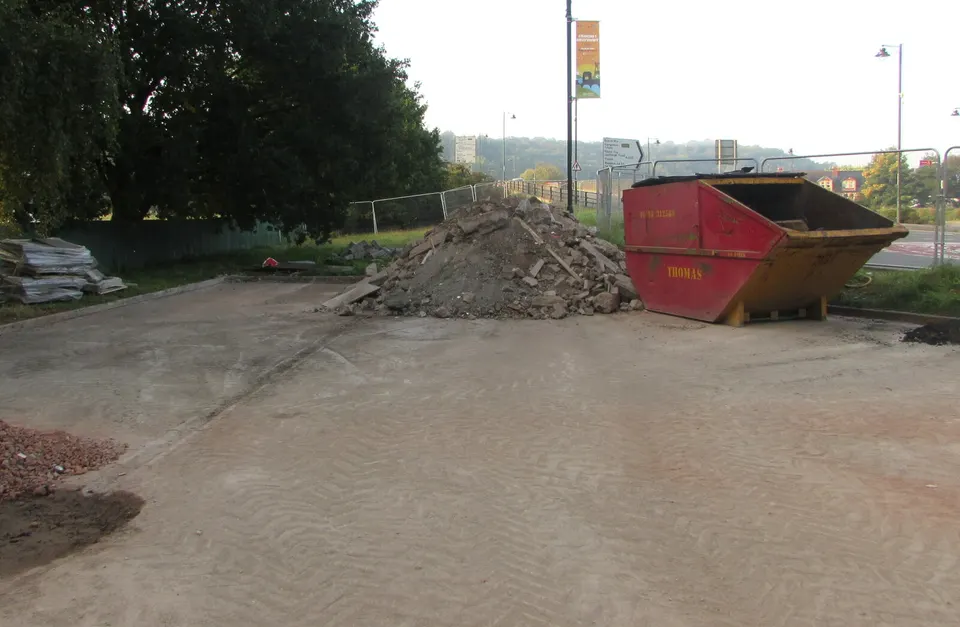
- Demolition and waste removal (rušenje, odvoz šute). Breaking out, loading, transport and disposal at an authorised site. A quote that prices demolition but not removal leaves you with a heap in the garden.
- Protecting what stays. Covering floors, windows, stairs and anything you are keeping, and protecting the neighbours' property.
- Making good. When the electrician and plumber cut channels in walls, someone has to fill and replaster them. If that is in nobody's quote, it is in yours.
- Connections to the mains. Water, electricity and drainage connections involve both work on site and fees to the utility companies. Ask who arranges and pays for each.
- Testing and documents. Pressure tests, electrical measurements and the certificates you need at handover.
- Final cleaning. Builders' cleaning is not the same as a house you can move into.
- VAT. Prices shown without VAT look lower. Check which applies.
Allowances: the gap that looks like a price
Some items are priced as an allowance: tiles “up to” a certain price per m², sanitaryware “to the owner's choice”, a kitchen as a round figure. That is a sensible way to quote things you have not chosen yet, but it means the line is a placeholder, not a price. If the tiles you fall in love with cost more, the difference is yours. Ask for the allowance to be stated per unit, and choose finishes early enough to replace placeholders with real prices before you sign.
What nobody can see yet
In an old house, especially a stone one, some work only becomes visible once the plaster comes off: rotten beam ends, damp walls, old wiring buried where nobody expected it. A good quote cannot price the unknown, but it can say how it will be priced, for example a unit price per running metre of beam replaced or per m² of wall treated. Our guide to what drives the cost of renovating a stone house covers the usual surprises.
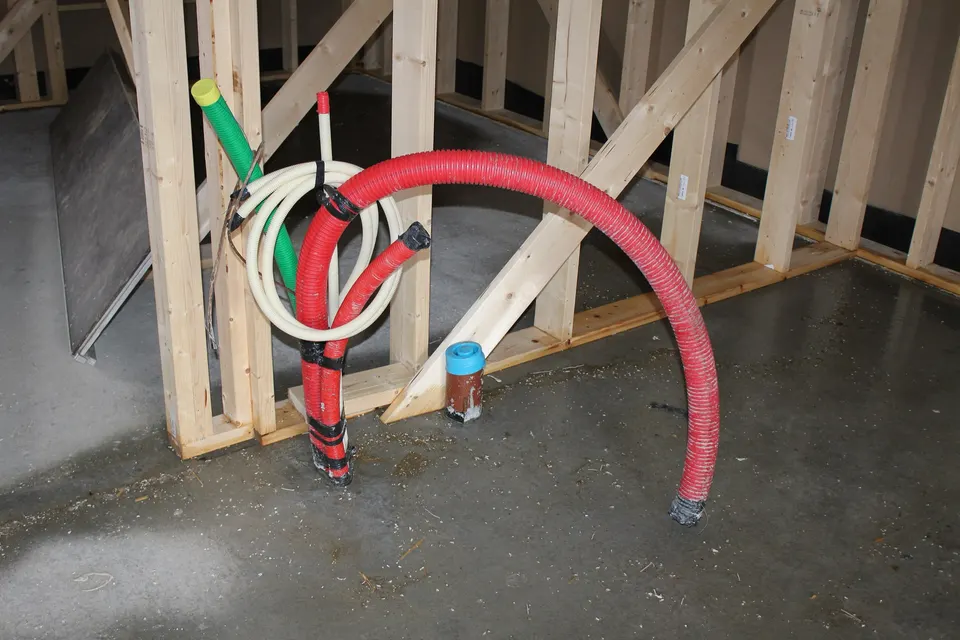
A missing item does not disappear. It comes back as an extra, priced when there is no competition left.
How to catch the gaps before you sign
- Give every builder the same brief. Ideally drawings and a bill of quantities prepared by your architect, so everyone prices the same thing.
- Ask for an itemised quote. One line per item, with units and quantities, not a single total.
- Ask for a written list of exclusions. “Not included” is as important as “included”.
- Compare line by line. Put the quotes side by side and mark every item that appears in one but not the others. Our guide on how to compare builder quotes fairly shows how.
- Ask how the unforeseen is priced. Unit prices for likely extras, agreed in advance.
- Get the quote checked. By your architect or supervising engineer, or with the quote check as a first pass.
What it costs you later
Missing items cost more than their price. Work added mid-build is quoted without competition, often in a hurry, and it can push everything else back. In Croatian contracts you will hear two terms: extra quantities of agreed work (višak radova) and additional work that was not in the contract at all (naknadni radovi). How each is handled should be written into your contract; see our contract checklist. Even with the best preparation, keep a reserve for the genuinely unforeseen. We explain how to think about it in why renovations go over budget.
One last gap: furniture. Most building quotes stop at bare, painted walls. Kitchens, wardrobes and built-in storage are often missing or appear as a round number. If you would rather plan them properly, from moodboard to render is how our partner atelier works: you bring the moodboard, it prepares a 3D render, you approve it and only then is the plywood furniture made and fitted.