Three quotes for the same job can look like three different projects. Here is how to line them up so you compare the work, not just the totals.
Ask three builders to price the same renovation and the totals will rarely sit close together. One is far lower, one is far higher, and one is somewhere in the middle. The natural reaction is to look at the bottom line and start negotiating. That is usually the wrong first move. Before you can say which quote is good value, you need to know whether the three builders have priced the same work at all.
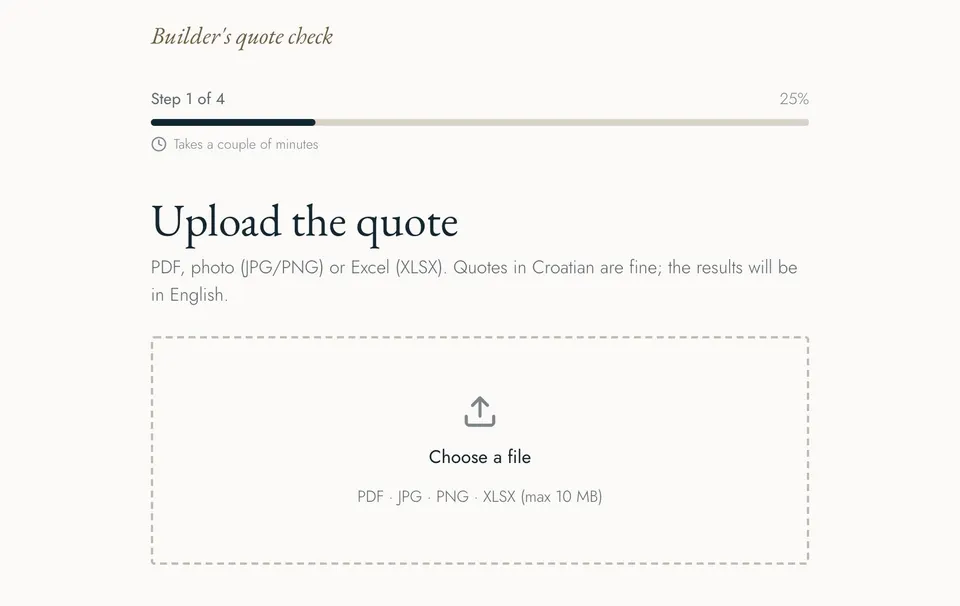
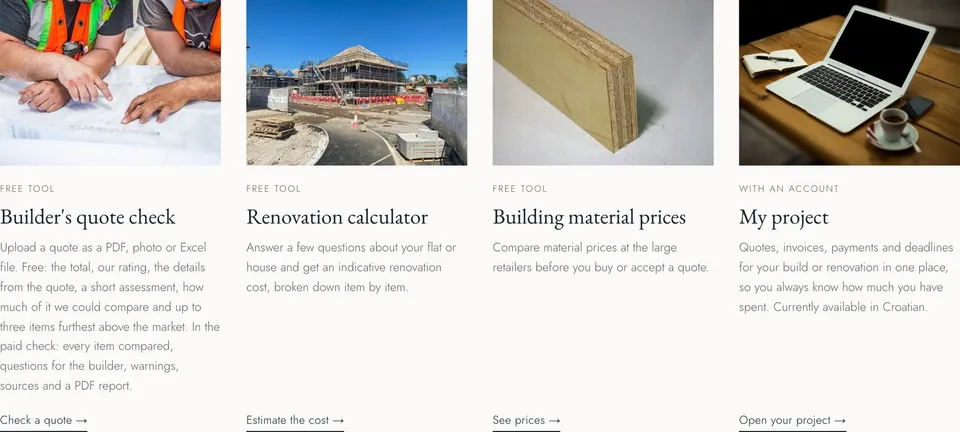
This guide sets out a simple method for comparing quotes side by side. It works for a bathroom, a flat or a whole stone house. If you want a second pair of eyes before you start, our free builder's quote check reads a quote, including one written in Croatian, and gives you a rating and up to three items that sit furthest above the market range. The basic result is free; every item compared, warnings and questions for the builder are in a more detailed check, a paid extra.
Why are the three totals so different?
Large gaps between quotes almost always come from one of four places. The scope is different: one builder has included the scaffolding, waste removal and final clean, another has not. The specification is different: one has priced the tiles, adhesive and waterproofing you asked for, another has assumed something cheaper. The quantities are different: one has measured the walls, another has guessed. Or the terms are different: one quote includes VAT and materials, another is labour only. Price for the same thing is the last question, not the first.
Step one: send all three the same brief
You cannot compare quotes that answer different questions. Give every builder the same drawings, the same written description of the work and, ideally, the same bill of quantities (troškovnik), with each item listed and measured. Ask them to price item by item rather than as one lump sum, and to say clearly what is excluded. If a builder suggests an alternative, ask for it as a separate option so the main price stays comparable.
For a larger project your architect usually prepares this package. For a smaller job, a clear list with room sizes, photos and the finishes you want is far better than a phone call and a site visit with nothing written down.
Step two: build a simple comparison table
Put the quotes into one spreadsheet, with a row for each item and a column for each builder. Line up the same items even if the builders have named or grouped them differently. Gaps will appear quickly: a row where one builder has a price and the other two have nothing is either an item they forgot or an item they quietly left out. Either way, it is a question to ask, not a saving.
Step three: check the exclusions first
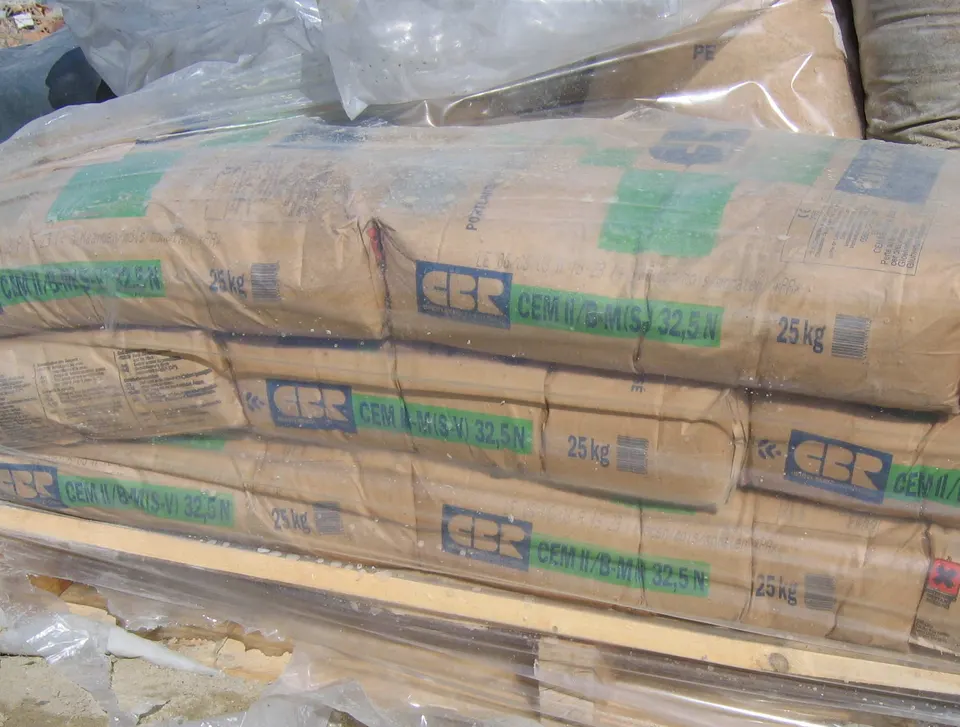
Before comparing a single price, read what each quote leaves out. Common gaps are site protection, scaffolding, temporary water and power, demolition, removal of rubble (odvoz šute), making good after other trades, and the final clean. Some quotes also leave out materials the client is expected to buy. Our article on what builders often leave out of a quote lists the usual suspects. Add a note of your own estimate for anything missing, so the totals become comparable.
A row where one builder has a price and the others have nothing is a question to ask, not a saving.
Step four: compare materials and quantities
Next, look at what each builder has actually priced. Is the waterproofing a proper system or a single coat? Is the screed the thickness the drawings ask for? Is the tile adhesive suitable for large-format tiles or underfloor heating? If one quote is vague, with lines such as tiling, complete, ask for the product and the quantity. Our building material prices tool lets you see what common materials cost at the large retailers, which helps you spot a material line that looks out of proportion.
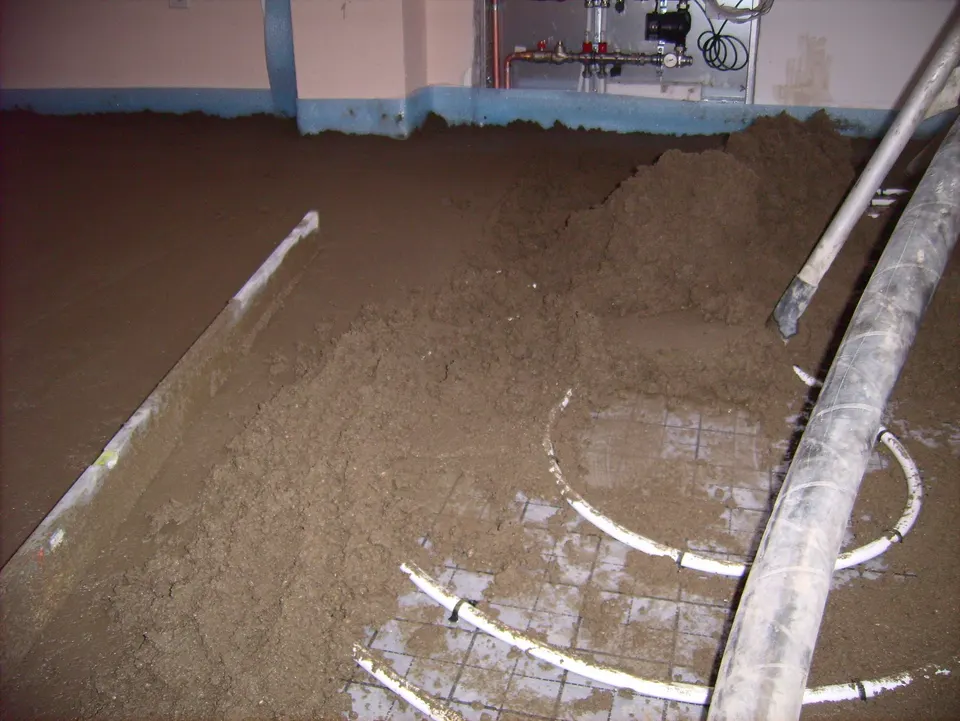
Then check quantities. If one builder has priced noticeably more square metres of plaster than the others, someone has measured differently. Ask each one how they arrived at the figure. A builder who has actually measured will be able to tell you.
Step five: compare the terms, not only the price
- VAT. Is the price with or without PDV (Croatian VAT)? Some small businesses are not in the VAT system; ask your accountant what that means for you.
- Materials. Are they included, or will you buy them separately?
- Pricing basis. Fixed lump sum (paušal), or measured on the quantities actually built? The second is fairer for unknowns, but the final bill can move.
- Payment schedule. How large is the advance, and are later payments tied to finished stages? See our guide to deposits and payment schedules.
- Timeline. When can they start, and how long will it take?
- Guarantee. What do they guarantee, for how long, and who fixes defects?
- Validity. How long does the quote stand before prices may change?
Step six: ask the same questions of every builder
Once the table is filled in, write down the open questions and send the same list to each builder. Their answers often tell you more than the price. A builder who replies clearly, in writing, and explains why an item costs what it does is likely to manage your site the same way. A builder who is offended by the questions is giving you useful information too.
Is the cheapest quote ever the right one?
Sometimes, yes. A builder may be lower because they are local, have a quiet month or run a lean team. But a quote that is far below the others usually means something is missing, the specification has been lowered, or the extras will come later. Choose the quote that covers the full scope, prices the materials you asked for and comes from a builder whose references you have checked. Our guide on choosing a builder in Croatia covers the checks worth doing before you shortlist.
If none of the quotes covers the full scope, go back to the brief rather than picking the least bad one. A clearer description of the work saves more money than any negotiation.
A short checklist before you decide
- All three builders priced the same drawings and the same written description.
- Every exclusion is listed and given a rough cost of your own.
- Materials are named, not just described as complete.
- Quantities are within reason of each other, or explained.
- VAT, materials and payment terms are clear on every quote.
- References have been called, and at least one finished job visited.
- You have a reserve for the unexpected, separate from the quote. See why renovations go over budget.
Before you sign, run your chosen quote through the quote check one more time, or ask your architect to read it. And once the walls are up, think about the furniture early: the Lampisa atelier makes made-to-measure plywood pieces for rooms that are rarely square, and it is easier to plan sockets, niches and lighting before the plasterer arrives.