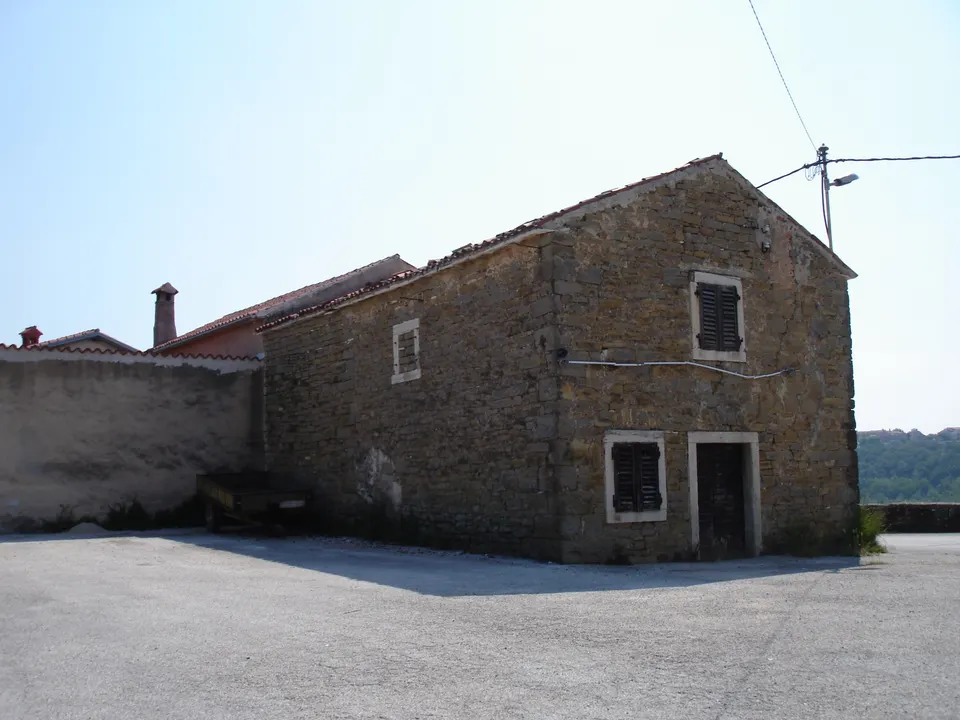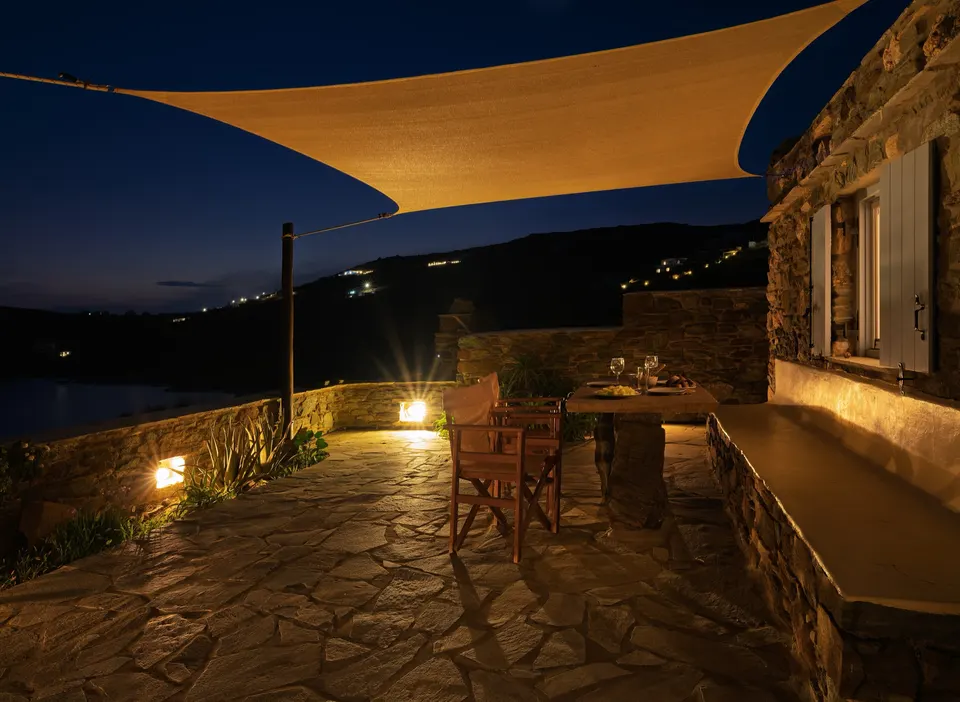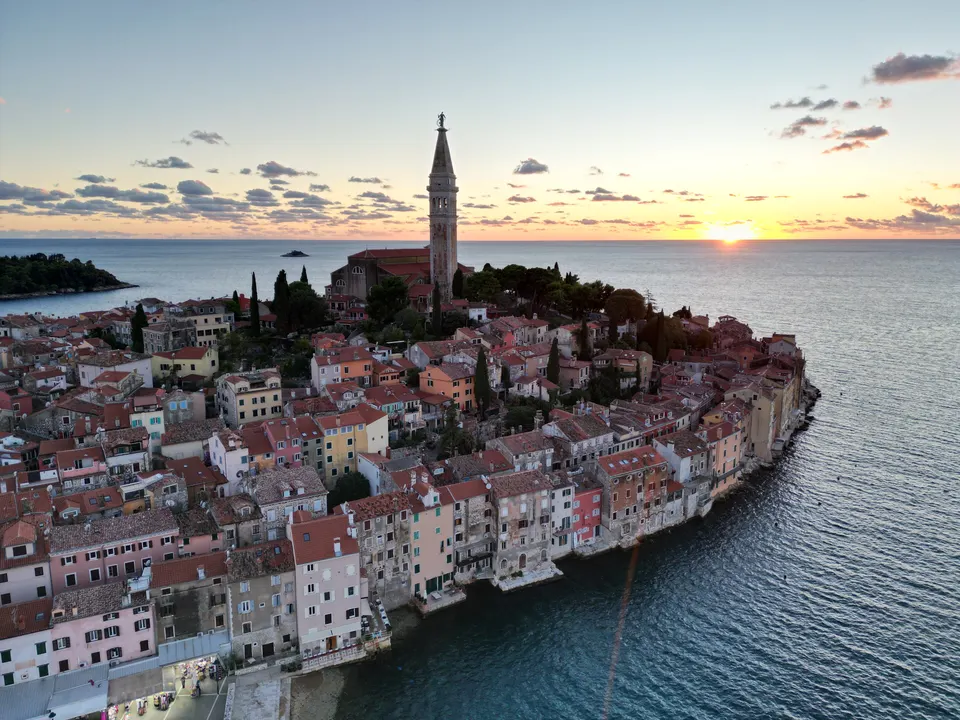
In Istria, summer life happens outside. An outdoor kitchen that is well placed and built from the right materials turns a terrace into the heart of the house.
For a few months a year, many houses in Istria are lived in back to front. The indoor kitchen becomes a storeroom and the real cooking happens on the terrace: fish on the grill, peppers charring, a pot of pasta that somebody has to carry out and back again. An outdoor kitchen stops that carrying. Done well, it also becomes the place where guests gather, because people always drift towards whoever is cooking.
Done badly, it is a grill in the wrong corner, a worktop that cracks in the first winter and cupboards that swell shut. The difference lies in a few decisions made early.
Where should an outdoor kitchen go?
Close to the house, but not against the bedroom windows. A short, level path to the indoor kitchen saves countless trips for plates, oil and ice. Think about the wind: in Istria the bura blows from the north-east and the jugo from the south-east, and smoke from a grill should be carried away from the table, not across it. Think about the sun as well. A cook who faces west at seven in the evening in July will not enjoy the job. Ideally the kitchen sits under a roof or a pergola, with the dining table a few steps away in the open or under light shade.
What does an outdoor kitchen need?
Less than people think. The core is a heat source, a sink, a worktop and somewhere to put things down. Everything else is optional.
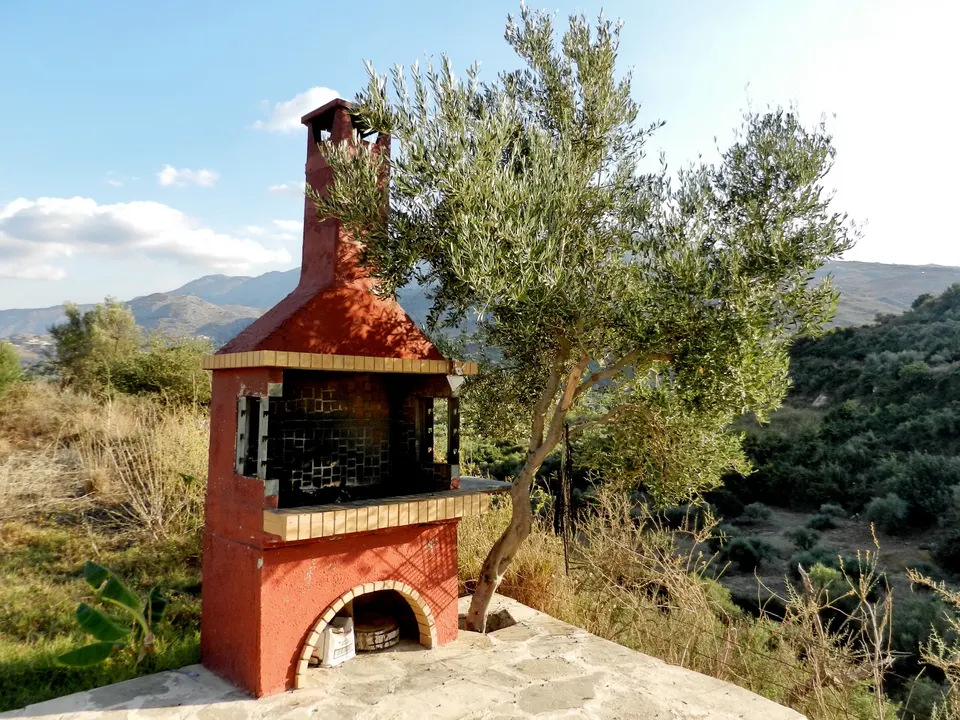
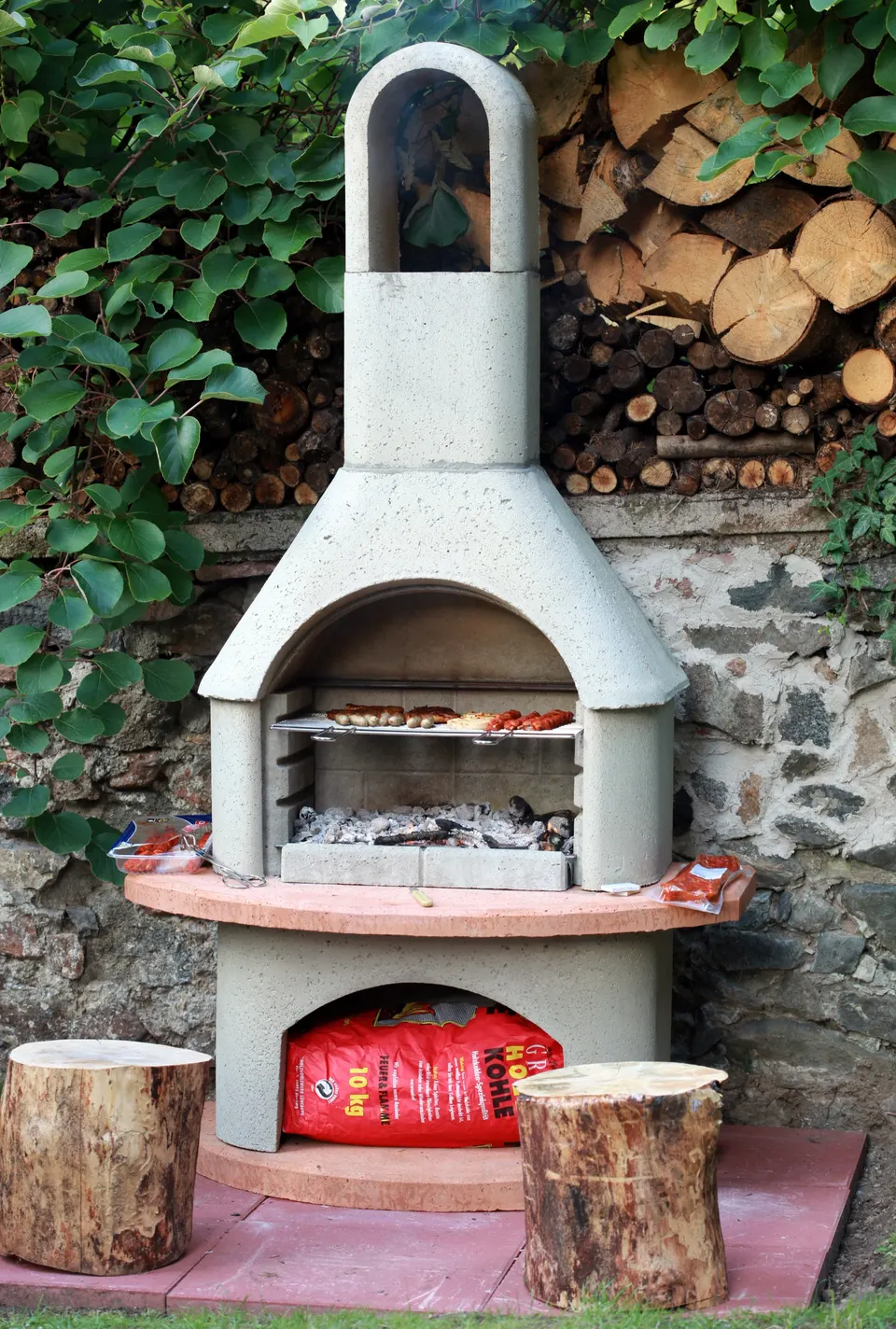
- A grill. Charcoal or wood for flavour, gas for speed. Many Istrian houses have a traditional built-in grill; it can often be kept and extended.
- A sink with running water. The single feature owners most often regret leaving out. It needs a supply and a proper drain, so plan it with the plumber early.
- Worktop space on both sides of the grill. One side for raw food, one for cooked.
- Power. Outdoor-rated sockets for a fridge, lights and small appliances, installed by an electrician.
- Closed storage. For tongs, boards, charcoal and cushions, so the kitchen looks calm when nobody is cooking.
- Optional extras. A wood-fired oven, a small fridge, a side burner for pots. Add them only if you will use them.
Materials that survive sun, salt and winter
An outdoor kitchen lives through strong sun, salty air near the sea, sudden storms and, inland, the occasional frost. Natural stone is the classic choice for the base and the worktop, and local stone sits naturally with an Istrian house. Choose a dense stone and ask about sealing, because oil and wine stain porous surfaces. Stainless steel of a good grade is practical and easy to clean. Concrete and tile both work if they are detailed for water and frost.
Cupboard fronts and carcasses are where most outdoor kitchens fail. Ordinary particleboard has no place outside: once water reaches an edge, it swells and does not recover. Under a roof, joinery in plywood made for exterior conditions, with sealed edges and a suitable finish, is far more durable. Our guide to materials that live with sea salt and sun goes through the options in more detail.
The sink is the feature owners most often regret leaving out.
Layout: the outdoor work triangle
The idea of a work triangle between cooking, washing and storage applies outside too, only stretched. A straight run along a wall is the simplest and suits most terraces. An L-shape gives more worktop and lets the cook face the guests. A freestanding island works on large terraces but needs services brought up through the floor, which is easier to plan during a renovation than afterwards. Whatever the shape, leave enough clear space behind the cook for someone to pass with a tray.
Light for long evenings
Most outdoor cooking happens at dusk. You need good working light over the grill and the worktop, and softer light at the table. Warm, low and shielded lights keep insects away from faces and do not glare across the terrace. Plan the circuits so the kitchen light can be off while the table stays lit. Our article on terrace lighting has more ideas.
Where you eat
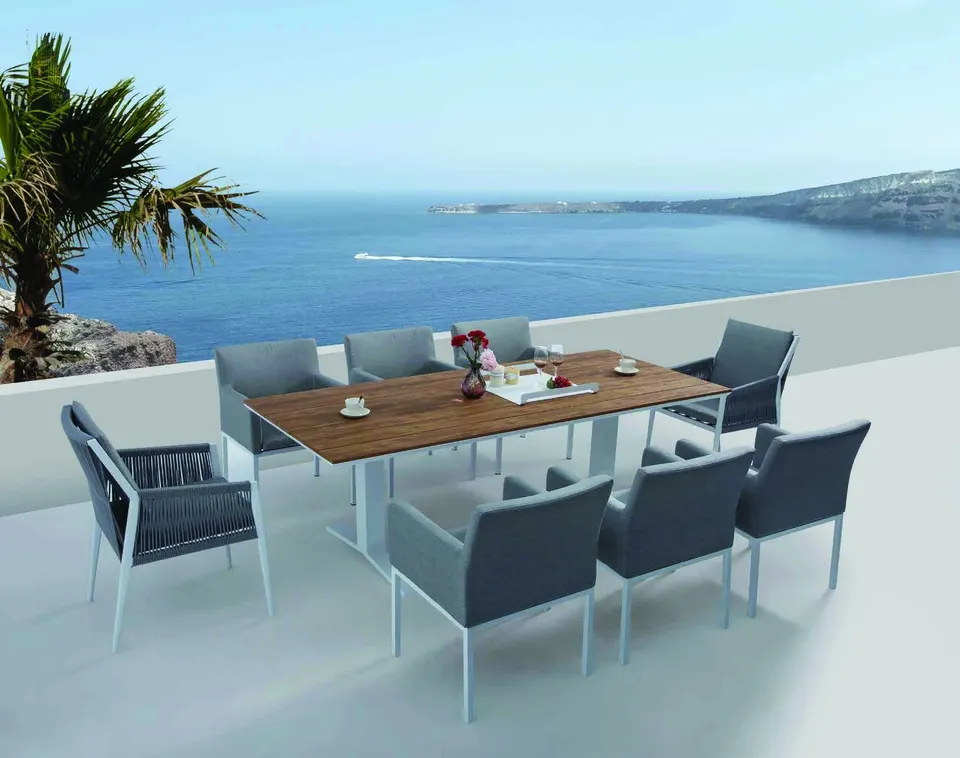
The kitchen is only half the picture. The table should be close enough that the cook is part of the conversation, but far enough that smoke and heat stay away. Allow generous space for chairs to be pushed back. Choose outdoor furniture that is comfortable for a long dinner, not just for a photograph, and that can be left out or stored easily at the end of the season.
Permits and practicalities
A built-in kitchen with a roof, new plumbing or electrical work may need approval, depending on its size and the rules for your plot. Ask your architect before building anything permanent, and use qualified installers for gas, water and electricity. It is also worth checking local rules on open fires in the dry season.
Design it with the rest of the house
The best outdoor kitchens look as if they belong to the house: the same stone, the same colours, a dining table that echoes the one inside. Lampisa, our partner atelier, can design outdoor storage, dining and lounge pieces together with the interior, starting from your moodboard and showing the whole terrace in a 3D render before anything is made. Read more about outdoor living and long evenings, or see how the from moodboard to render service works.