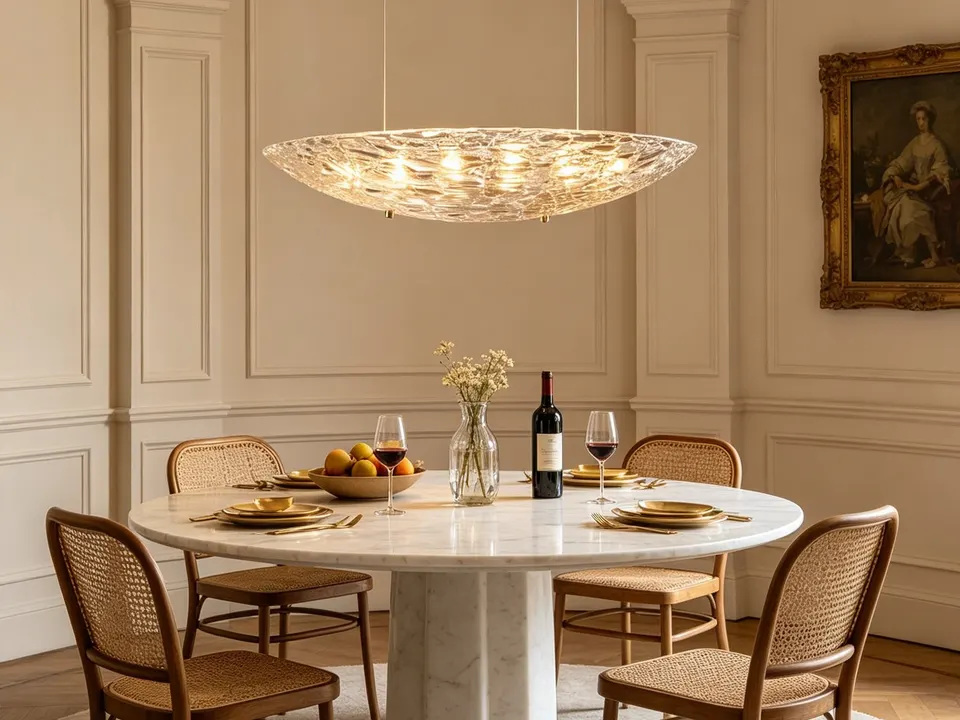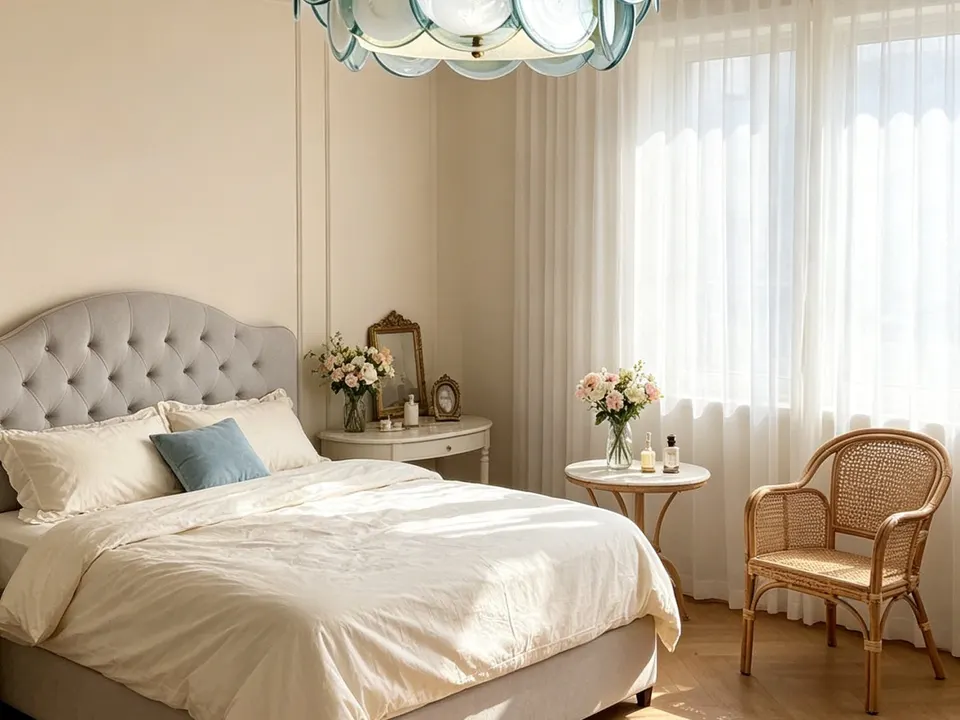
A bedroom by the sea has one job above all: to stay cool and quiet when the day outside is hot and bright. Colours, fabrics, light and furniture that help it do that.
The Mediterranean bedroom is easy to recognise and surprisingly hard to copy. Pictures show white walls, linen sheets and a window full of sea. What they do not show is why it works: the thick walls that keep the heat out, the shutters closed at noon, the furniture with nothing on it that does not need to be there. The style grew out of a climate, and it works best when it is designed with that climate in mind.
Here is how to plan a bedroom in a house in Istria, or anywhere along this coast, so that it is calm in July and still pleasant in February.
Start with temperature, not decoration
A bedroom by the sea is judged at night. If it holds the heat of the day, no amount of styling will help. Traditional stone houses solved this with thick walls, small windows on the sunny side and shutters, so the room stays dim and cool during the hottest hours. In a new house, the same principles apply: shade the windows from outside where you can, ventilate across the room in the evening, and choose materials that do not trap heat.
Air conditioning has its place, but a room that needs less of it sleeps better. Our guide to cooling a stone house covers shutters, cross-ventilation and thermal mass in more detail.
A palette taken from outside
The colours that work best come from the landscape around the house: lime-washed white, warm stone, sand, the grey-green of olive leaves, a faded blue. They reflect light without glare and stay restful when the sun is strong. Very bright white can feel harsh at midday; a slightly warm white or a pale stone tone is often kinder.
Keep strong colour for small things you can change: a cushion, a throw, a print. Our article on colour palettes from Istria has more combinations taken from the region.
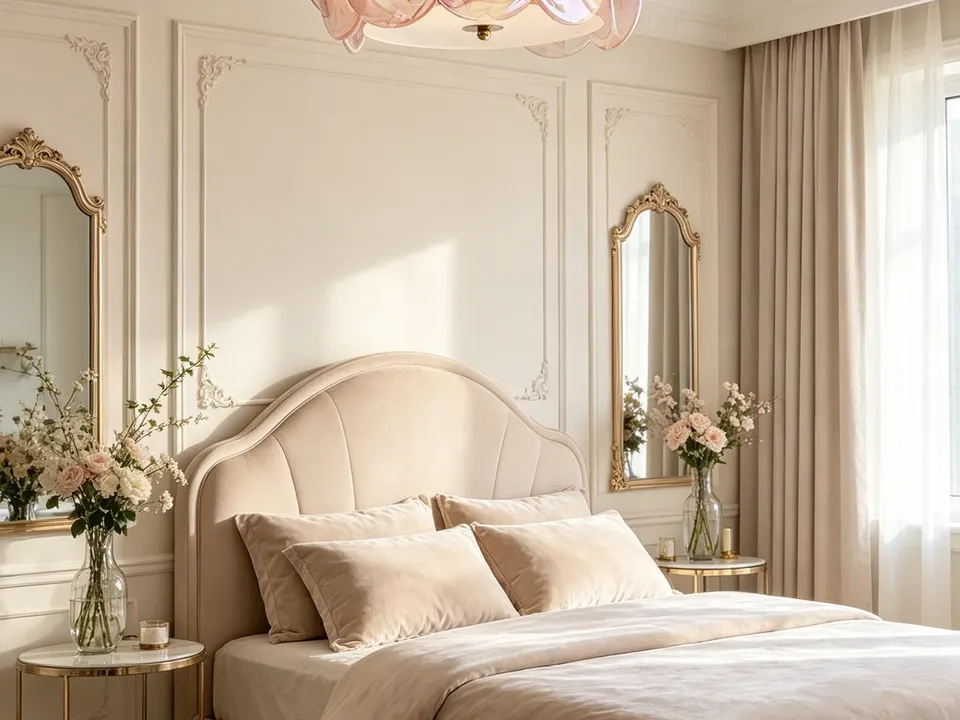
Fabrics that breathe
Natural fibres are the backbone of a Mediterranean bedroom. Linen and cotton sheets feel cool and dry in warm weather and soften with every wash. Curtains in light linen or cotton voile filter the sun without blocking the air. On the floor, a flat-woven cotton or jute rug is easier to live with in summer than a deep pile.
- Bedlinen. Linen or percale cotton; keep a lighter duvet for summer and a warmer one for winter.
- Curtains. A sheer layer for the day, and blackout lining or shutters for early summer mornings.
- Rugs. Flat-weave, washable, and small enough to take outside and shake.
- Upholstery. Removable, washable covers on headboards and chairs.
- Fewer cushions. Two good pillows each, and a single throw, rather than a pile to move every night.
For a closer look at what works in heat and humidity, see rugs and textiles for warm climates.
Furniture: fewer pieces, better made
A calm bedroom has little in it. A good bed, two bedside tables, somewhere to hang and fold clothes, a chair. Each piece is used every day, so each should be solid, quiet and easy to clean. Rattan and cane chairs suit the style and keep the room light. Bedside tables should be large enough for a lamp, a book and a glass of water, and no larger.
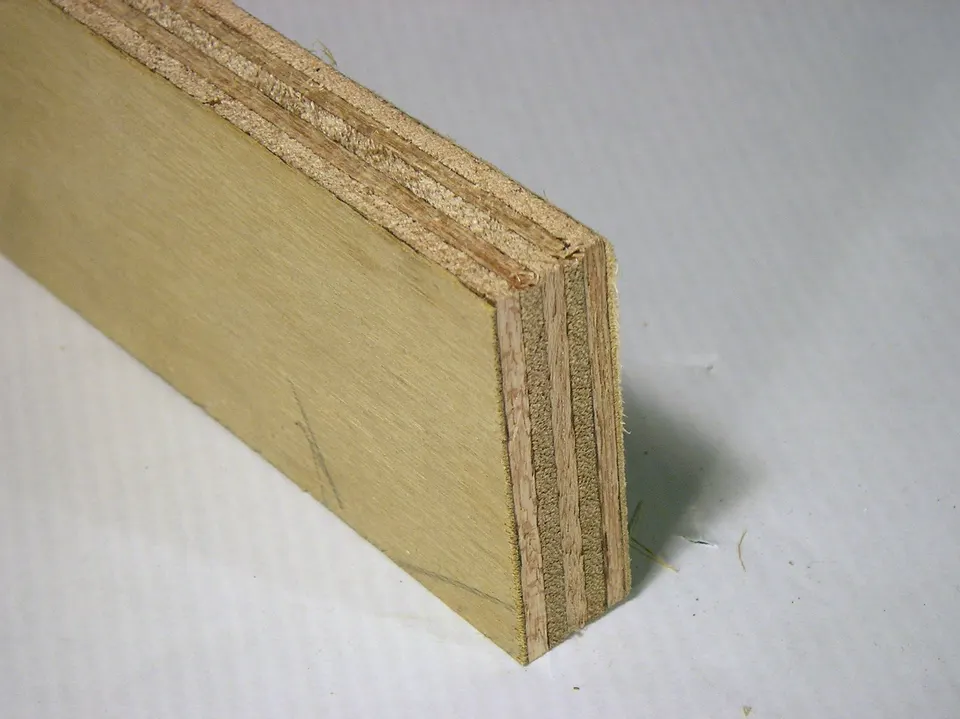
The material underneath matters more here than in a city flat. A house near the sea goes through humid summers and is often closed for months in winter. Furniture made from particleboard swells if moisture reaches it and loosens at the joints. Plywood keeps its shape, holds its screws and tolerates the changing seasons far better. Lampisa, our partner atelier in Istria, builds its furniture in plywood rather than particleboard, from bed bases and headboards to wardrobes and bedside tables.
A bedroom by the sea is judged at night, when the day's heat either stays outside or does not.
Storage that disappears
Clutter is the opposite of calm. The simplest way to keep a bedroom quiet is to give everything a closed place: a built-in wardrobe running the full height of the wall, drawers under the bed for spare linen, a bench at the foot of the bed with storage inside. Built-in wardrobes also hide the uneven walls of old houses. Our guide to built-in wardrobes explains how to plan one.
Light for evening, not for work
During the day a Mediterranean bedroom needs very little artificial light. In the evening it needs warm, low light at several points rather than one bright ceiling fitting: a lamp on each side of the bed that can be read by, a soft source near the wardrobe, perhaps a pendant or ceiling light with a dimmer for when the room is being tidied. Glass shades, including hand-blown Murano glass, give a soft glow that suits the style; Lampisa's catalogue includes Murano glass lighting, and the atelier page links to it.
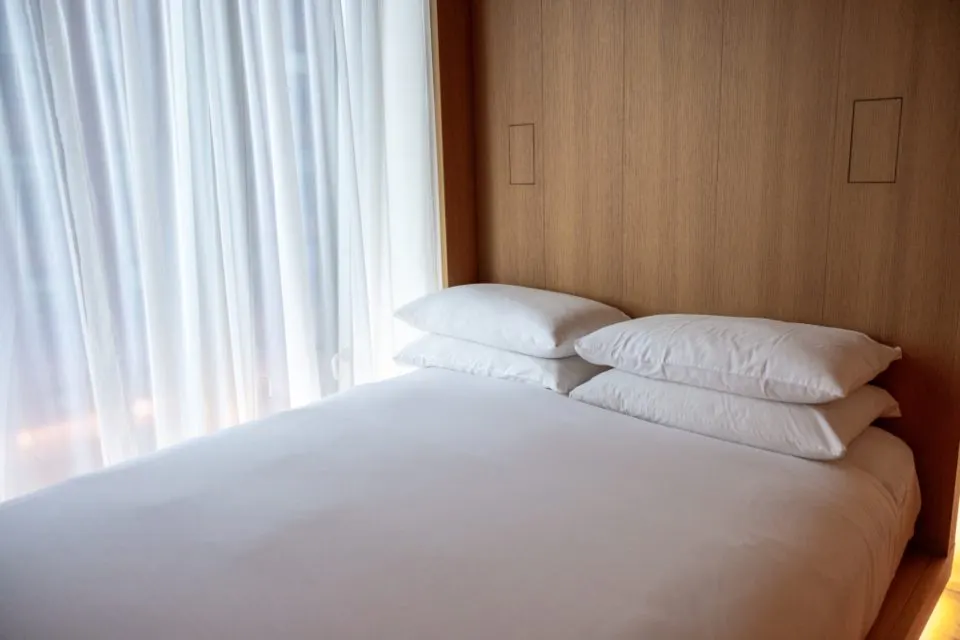
A guest bedroom is still a bedroom
In a holiday house or a rental, the guest bedroom matters as much as the main one. Guests compare it with their own bedroom at home, and the details they notice first are the mattress, the blackout, the reading light and somewhere to put a suitcase. We wrote more about this in guest bedrooms with hotel-level sleep.
Seeing it before it is built
If you are furnishing a bedroom from scratch, it helps to see the whole room before anything is ordered. With Lampisa's from moodboard to render service, you bring photos of bedrooms, fabrics and colours you like, the atelier prepares a 3D render of your own room with the furniture in place, and production begins only once you have approved it.