Two wardrobes can look identical on the day they arrive. What sits under the finish decides whether one is still standing straight in ten summers.
Most furniture is judged by its surface. The colour of the oak veneer, the feel of the lacquer, the way the doors close. That is natural, because the surface is what we see. But the surface is a few tenths of a millimetre thick. Everything else, the part that carries weight, holds screws and meets the humidity of an August night by the sea, is the board underneath. In most furniture sold today, that board is one of two things: particleboard or plywood.
They can look the same once they are finished. They do not behave the same, and in an Istrian house the difference shows sooner than most owners expect.
What each one is
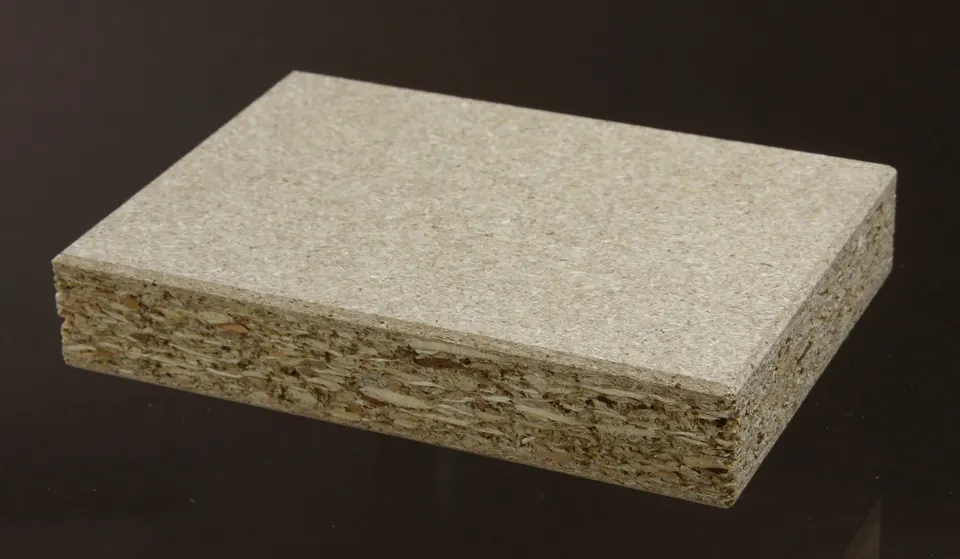
Particleboard, also called chipboard (in Croatian, iverica), is made from small wood chips and sawdust mixed with resin and pressed into a flat sheet. It is cheap, perfectly flat and easy to cover with a decorative layer. It is the material behind most flat-pack furniture and a great deal of fitted furniture too.
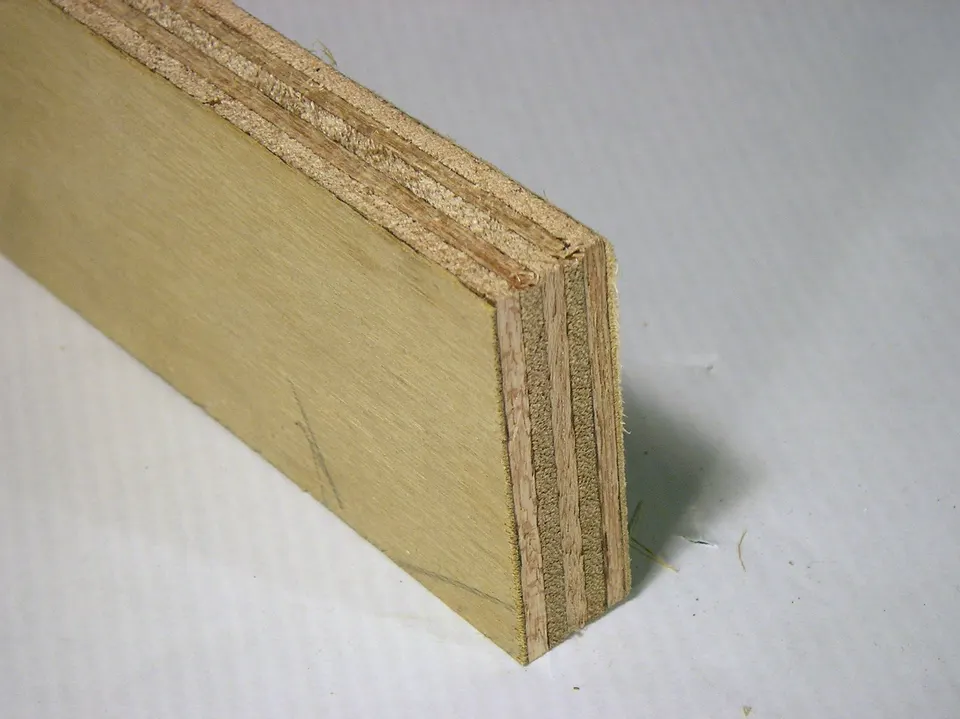
Plywood, often called multiplex in its higher grades, is built from thin sheets of real wood veneer glued on top of each other, each layer turned at a right angle to the one below. That cross-layering is the whole point. Wood moves along its grain; when the grain runs in alternating directions, the layers hold each other in place. The result is a board that is strong, keeps its shape and is lighter than particleboard for the same strength.
Our partner atelier, Lampisa, builds with plywood, not particleboard. It is the structural material of its furniture: carcasses, drawers, shelves and backs. The finish is chosen afterwards, room by room.
What the coast does to furniture
An Istrian house asks more of its furniture than a city flat. Humidity rises and falls with the seasons. Salt air reaches well inland on windy days. Holiday homes are often closed for months, then opened, aired and filled with people in a single afternoon. Guests move chairs onto the terrace, pull wardrobes away from the wall to find a lost charger, and put wet towels on surfaces that were never meant for them.
Particleboard does not like any of this. When water reaches it, through an unsealed edge, a drilled hole or a crack in the coating, it swells, and the swelling does not go back. The edges soften and start to crumble. Plywood is more resistant to moisture, provided it is made with the right glue and its edges are protected. It also moves far less than solid wood, so doors stay square and drawers keep running through a humid summer and a dry winter.
Screws, hinges and the second assembly
The real test of a board is not the first assembly. It is the second. Furniture in a villa gets moved, repainted around, taken apart for a renovation, or carried to another room when the layout changes. In particleboard, a screw holds by gripping compressed chips. Take it out and put it back, and much of that grip is gone. Hinges that are adjusted a few times begin to work loose.
In plywood, screws and fittings bite into layers of real wood and keep holding after the piece has been dismantled and reassembled. For a wardrobe door opened by a different guest every week, that is the difference between a hinge that stays put and one that needs a call to the handyman each spring.
Two pieces can look identical on the day they arrive. Ask what they will look like after ten seasons.
Edges, weight and repairs
Look at an edge. On particleboard, a thin strip of plastic or veneer is glued over the chips; once it is chipped or lifted, the core underneath is exposed and vulnerable. Plywood edges can be left visible as a design detail, or sealed and finished, and a knock can usually be sanded and touched up.
Weight matters too. A plywood wardrobe or bed base is lighter than the same piece in particleboard, which makes deliveries up stone staircases easier and puts less load on wall fixings. And plywood can be repaired: a damaged panel can be refinished or replaced without discarding the whole piece. Lampisa says replacement parts for its furniture remain available, so a piece can be repaired rather than replaced.
Why the prices differ
Plywood costs more than particleboard as a raw material, and it takes more care to cut, edge and finish. That is the honest reason a plywood piece costs more than a flat-pack equivalent. What closes much of the gap is how the furniture reaches you. When a local atelier builds and sells directly, you are not paying for a showroom, an import chain and several layers of distribution. The money goes into the material and the work.
To be fair to particleboard
Good particleboard is not a scandal. It is cheap, flat and stable in a dry room, and for low-stress uses it does its job: a shelf in a dry study, the back of a cupboard that will never be moved, furniture for a short-term project. The trouble starts when it is asked to do more than that: carry weight, survive humidity, be assembled twice, last for decades. In a coastal villa it is usually asked to do all of those at once.
How to tell what you are buying
The finish will not tell you. The parts nobody looks at will. Pull out a drawer and look at its sides and bottom. Turn a chair or a small table over. Look at the back panel of a wardrobe and inside the holes drilled for shelf pins. Find a cut edge. Plywood shows thin parallel layers, like the pages of a closed book. Particleboard shows a speckled mass of small chips. If you cannot see an edge, ask.
- What is the carcass made of? Not the doors, not the finish: the box itself.
- What are the drawer sides and bottoms made of? This is where cheaper boards often hide.
- How are the edges protected? Especially in kitchens, bathrooms and near the pool.
- Can the piece be taken apart and reassembled? And will the fittings still hold afterwards?
- If a panel is damaged, can it be replaced? Ask whether spare parts are kept.
- Who installs it? The people who made it, or a courier?
A good maker will answer all of these without hesitation, and will be happy to show you a cut sample. If you are furnishing a rental, our guide to furniture that survives the season goes further into what guests actually do to a house. For bathrooms, where moisture is the whole story, see bathroom furniture for premium villas.
The material you never see is the one you live with longest. It is worth asking about before the finish wins the argument.