A good dining chair disappears under you. A bad one ends dinner early. Height, depth, back, seat and frame: what to check before you buy a set.
In a house in Istria, dinner is rarely quick. Friends arrive at eight, the first bottle is opened at the table, and the last plate is cleared well after midnight. Through all of it, everyone is sitting on a dining chair. It is the piece of furniture people spend the longest continuous time on after their bed and sofa, and it is often chosen in a few minutes in a shop, on looks alone.
A good dining chair disappears under you: you do not think about it for three hours. A bad one makes guests shift, lean forward and start talking about going home. Here is what makes the difference.
Height: the chair and the table together
Chairs and tables have to be chosen as a pair. The space that matters is the gap between the top of the seat and the underside of the table top, where your thighs go. Most dining tables are about 75 centimetres high and most dining chairs have a seat about 45 centimetres high, which leaves a comfortable gap of around 30 centimetres. Check the underside of the table, though: a deep apron or frame below the top eats into that gap, and chairs with arms need to slide under it too.
Sit at the table, not just on the chair, before you decide. If your knees touch the frame, or your elbows sit too high on the table, the pair is wrong, however good each piece looks.
Seat depth and width
A seat that is too deep pushes you forward off the backrest; one that is too shallow leaves your thighs unsupported. A good test is to sit fully back: your feet should rest flat on the floor and there should be a little space between the front edge of the seat and the back of your knees. Width matters for comfort and for numbers. A generous chair is wonderful until you discover only six fit where you hoped for eight.
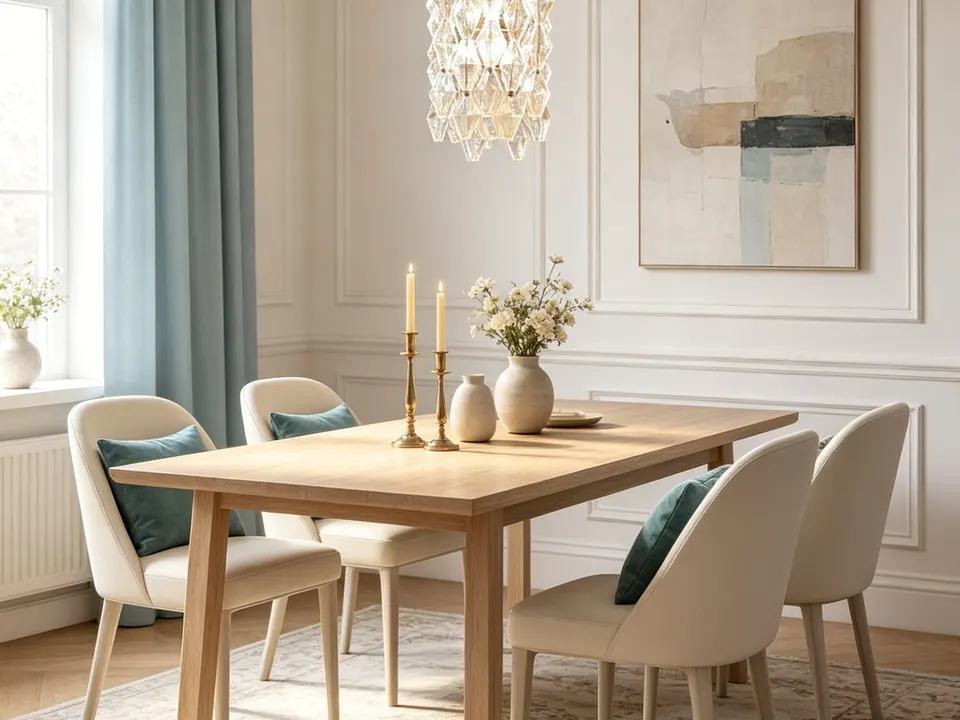
The back is where long dinners are won
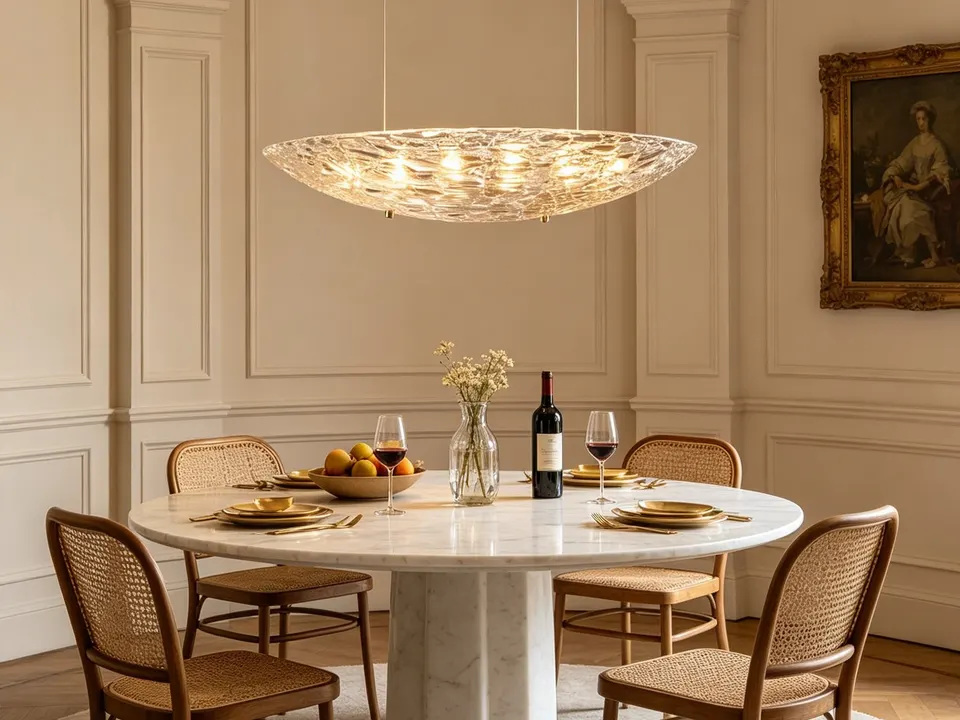
A low, upright back looks clean but gives little support after the first hour. A back that is slightly reclined and shaped to meet the lower back lets people lean back between courses, which is exactly what they do at a long dinner. Curved backs and those with a little give, such as cane or woven seats, are often more comfortable than a flat panel.
Arms add comfort and a sense of occasion, and make it easier to stand up. They also take more space and need to fit under the table. A common solution is armchairs at the two ends and armless chairs along the sides.
A good dining chair disappears under you. A bad one ends dinner early.
Seat materials: hard, woven or upholstered
- Shaped wood. Easy to clean and long-lasting; comfortable if the seat is properly shaped, less so for very long evenings. A loose seat cushion helps.
- Cane, rush or cord. Woven seats flex slightly and stay cool in summer; they suit Mediterranean houses well and can be rewoven when worn.
- Upholstered. The most comfortable for long dinners. Choose removable, washable covers or a performance fabric, because red wine and olive oil will find them.
- Leather. Durable and wipeable, warm to the touch in winter, but can feel sticky on bare legs in August.
In a house with guests, practicality wins over the first impression. A pale linen seat looks beautiful in a photograph; ask whether the cover comes off before you buy twelve of them.
Frames and joints: what makes a chair last
Chairs suffer more than any other furniture. People lean back on two legs, drag them across stone floors, carry them out to the terrace and stand on them to change a bulb. The joints between legs, rails and seat take all of it, and a chair that starts to wobble only gets worse.
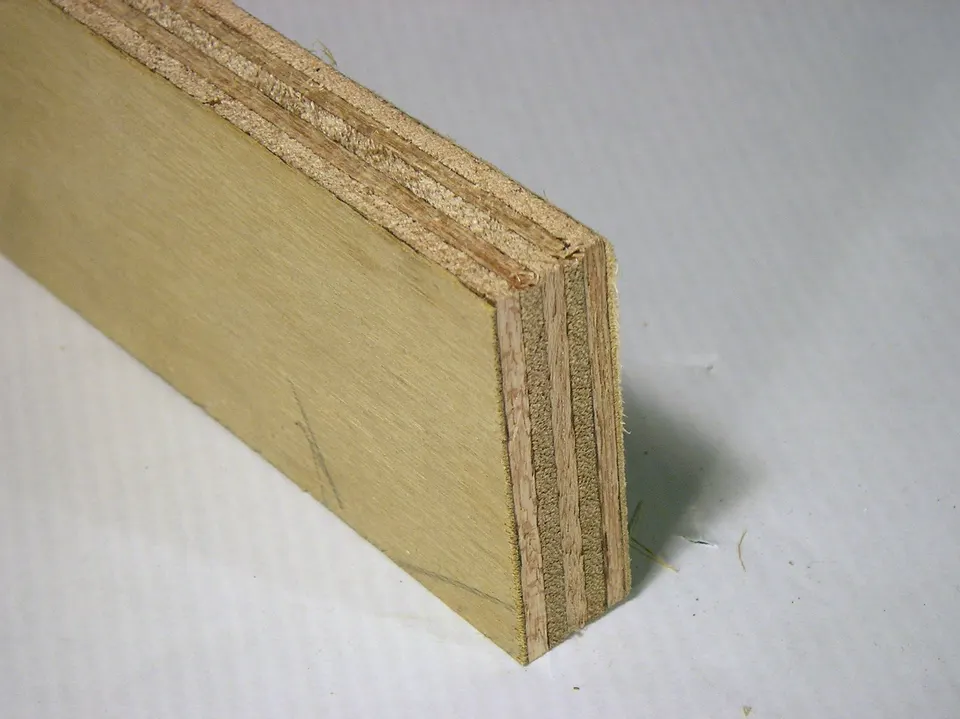
Look for frames with rails between the legs or under the seat, joints that are glued and screwed rather than simply bolted, and a seat that is fixed firmly to the frame. Turn a chair over in the shop: the underside tells you more than the front. Shaped plywood, used for seats and backs since the middle of the last century, is light, strong and holds its form, and is one reason so many classic dining chairs are made from it.
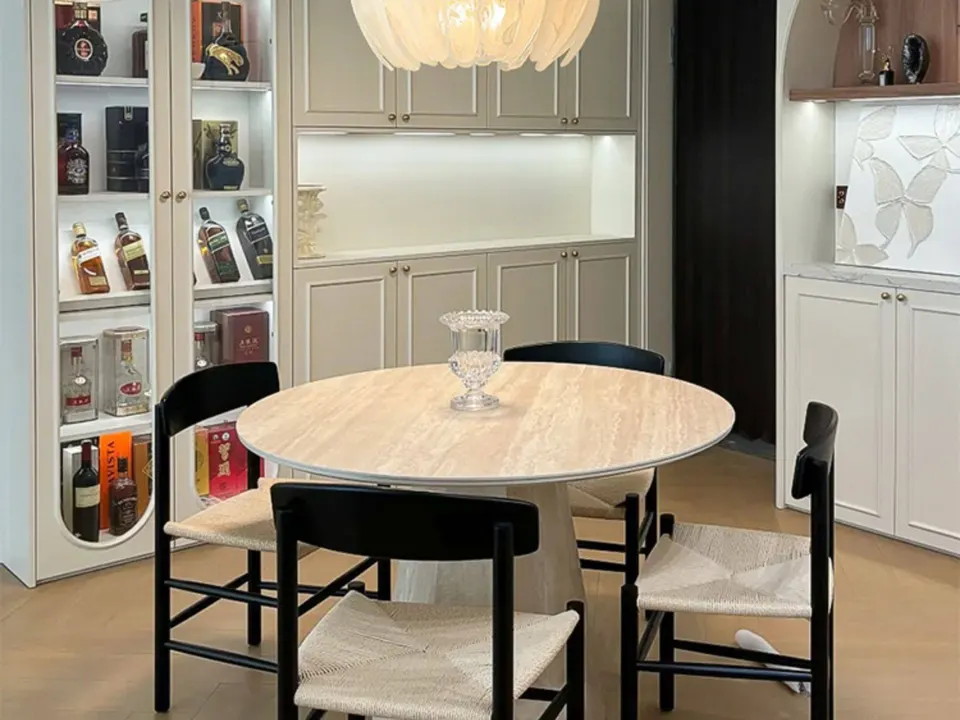
How many chairs fit?
Allow roughly 60 centimetres of table edge per person for comfortable eating, more for armchairs, and leave enough room behind each chair to pull it out and walk past. A round table seats people more sociably and fits extra guests more easily than a rectangular one. Our article on choosing a dining table covers shapes and sizes in more detail.
Chairs do not all have to match. A set along each side with two different chairs at the ends, or a mix of the same chair in two finishes, can make a long table look relaxed and lived in. What should match is the seat height.
Indoors and out
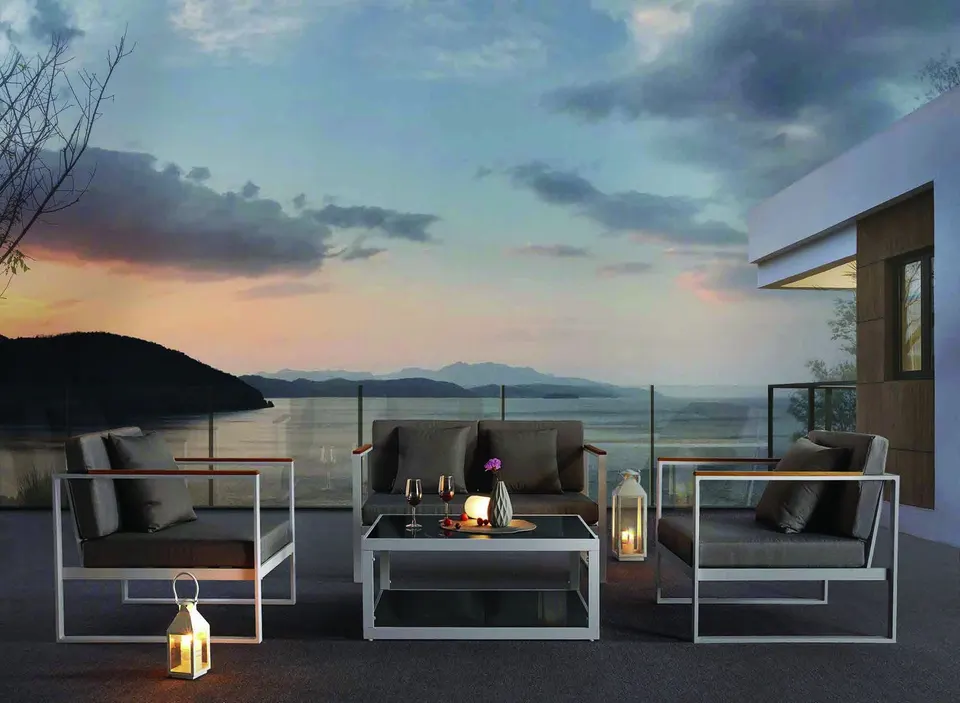
In summer, dining chairs often end up on the terrace, whether they were meant for it or not. If that is how your house works, either choose chairs that can cope with sun and the occasional shower, or buy a separate set for outside. Our guide to choosing outdoor furniture explains which materials survive the coast.
Try before you commit
The only real test of a dining chair is a long sit. Take a book, sit at a table of the right height for twenty minutes, lean back, turn sideways to talk, stand up and sit down again. If you are furnishing a whole dining room, it helps to see the table and chairs together in the room first. Lampisa, our partner atelier in Istria, can show the table and chairs in a 3D render of your own space through its from moodboard to render service, and builds its furniture in plywood rather than particleboard.