From grilled squid and scampi buzara to Lim Bay oysters and brodet with polenta: a practical guide to Adriatic seafood in Istria, with the seasons and the menu words you need.
Istria is surrounded by the sea on three sides, and its fishing towns, from Umag and Novigrad to Rovinj, Fažana and Pula, still send small boats out every night. The northern Adriatic is relatively shallow and cool, and many cooks will tell you that this gives its fish and shellfish a particularly clean, sweet flavour. Whatever the reason, eating seafood here is one of the great pleasures of a visit, as long as you know what to order and when.
How to read a seafood menu in Istria
Menus are usually in several languages, but a few local words help, especially on handwritten boards and in smaller konobas:
- Riba: fish. Bijela riba (white fish) means the prized species such as sea bass, sea bream and dentex. Plava riba (blue fish) means oily fish such as sardines, anchovies and mackerel.
- Lignje: squid. Sipa: cuttlefish. Hobotnica: octopus.
- Škampi: scampi, the Adriatic langoustine.
- Dagnje or mušule: mussels. Kamenice: oysters. Kapesante: scallops.
- Na žaru: grilled. Na buzaru: cooked in a pan with wine, garlic and parsley. Brudet or brodet: fish stew.
- Crni rižot: black risotto, coloured and flavoured with cuttlefish ink.
Why is fish priced per kilo?
In many Istrian restaurants, fresh whole fish and some shellfish are listed by weight rather than by portion. The waiter will often bring the fish to the table or show you the display so you can choose. This is normal and fair, but it can surprise visitors when the bill arrives. Simply ask how much the fish you have chosen weighs and what it will cost before it goes to the kitchen. One good-sized fish is often enough for two people.
What to order: the classics
Squid and cuttlefish
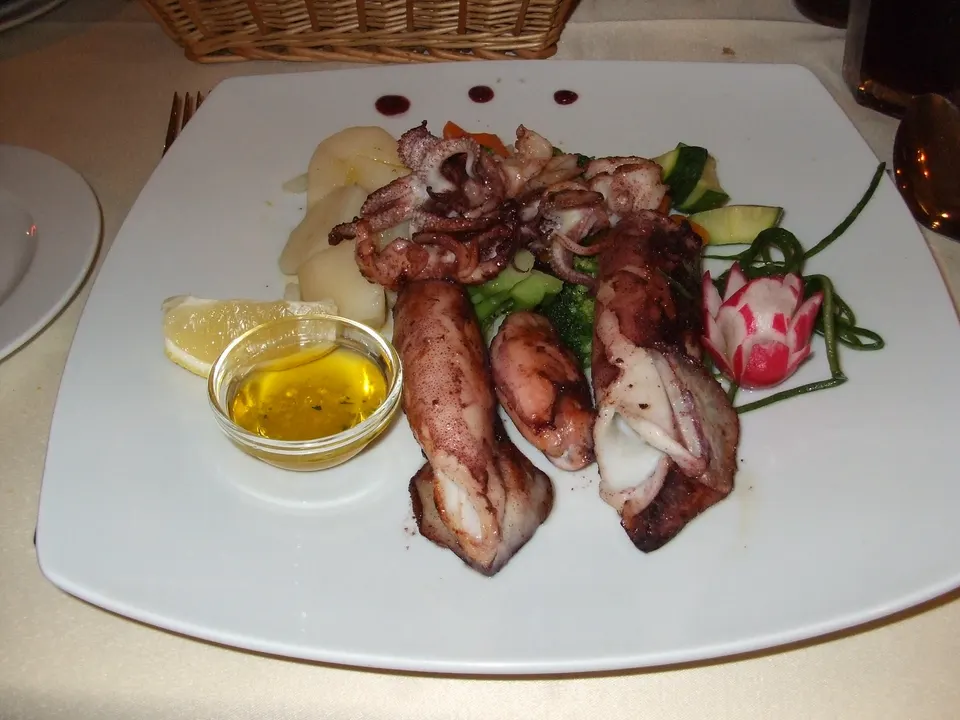
Grilled squid is perhaps the most ordered seafood dish in Istria, and with good reason. Small, local squid grilled quickly and dressed with olive oil, garlic and parsley are tender and sweet. Ask whether the squid are local or frozen; both appear on menus, and an honest konoba will tell you. Cuttlefish is used for black risotto, which is rich, glossy and best eaten with a glass of Malvazija.
Scampi buzara
Buzara is a way of cooking shellfish quickly in a pan with olive oil, garlic, white wine, parsley and often a spoonful of breadcrumbs to thicken the juices. The white version is the purest; the red version adds tomato. Scampi buzara is a dish to eat with your hands, with plenty of bread for the sauce. The langoustines of the nearby Kvarner Gulf are especially celebrated.
Mussels and oysters
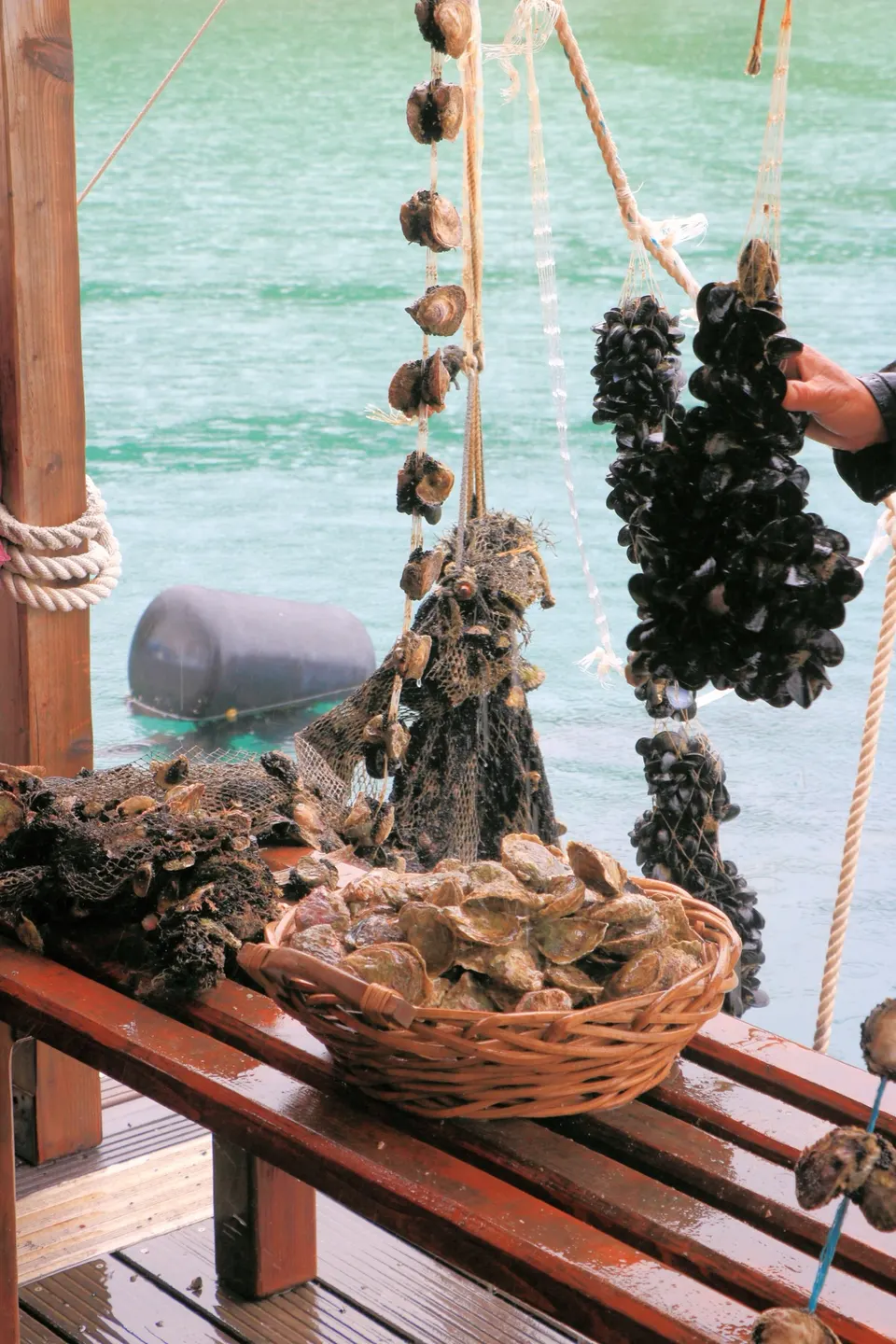
Mussels are farmed along the Istrian coast and in the sheltered waters of Lim Bay, and mussels na buzaru are one of the most affordable seafood dishes on the coast. Lim Bay is also known for its oysters, which are served raw with a little lemon in the restaurants along the fjord. For more about the area, see our guide to Lim Bay.
Whole fish from the grill
A whole sea bass or sea bream grilled over wood embers, served with blitva (chard and potatoes with olive oil and garlic), is the classic Adriatic meal. Many of these fish are farmed today, which is not a bad thing, but wild fish has a firmer texture and more flavour. If it matters to you, ask. Do not overlook blue fish either: grilled sardines or fresh anchovies are cheap, full of flavour and very much part of the local tradition.
Brodet with polenta
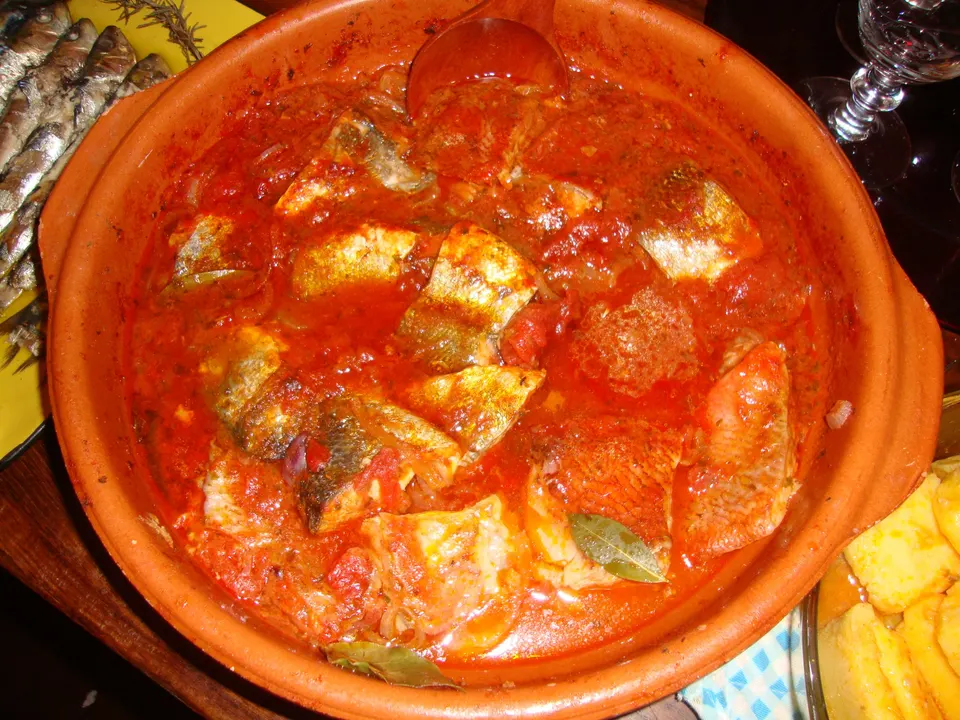
Brodet, also called brudet, is a slow-cooked fish stew with tomato, onion, wine and olive oil, traditionally made with several kinds of fish, including the bonier, less glamorous ones that give the sauce its depth. In Istria it is usually served with soft or grilled polenta. Many konobas cook it only to order or for groups, so it is worth asking a day ahead.
Ask what came in this morning. It is the best question you can ask in any seafood restaurant.
When is seafood in season?
Fish and shellfish are available all year, but the best choice changes with the seasons. Local fishermen and cooks follow a few broad patterns:
- Spring: a good time for spider crab, a northern Adriatic speciality usually served cold as a salad, and for cuttlefish, which come close to the shore.
- Summer: blue fish such as sardines and anchovies are plentiful. The busy season also means more imported and frozen seafood, so ask questions.
- Autumn and winter: the best months for squid, which many locals fish for themselves on calm evenings. Shellfish are at their best in the cooler months, which is why many people still follow the old rule of eating oysters and mussels in months with an R in their name.
- All year: farmed sea bass, sea bream and mussels.
Good to know
- Never order prstaci (date shells). Harvesting them destroys the rock they live in, and it is illegal in Croatia. A serious restaurant will never offer them.
- Ask what is fresh today. The day's catch is often not on the printed menu.
- Check the weight and price of whole fish before it is cooked.
- Visit a fish market. The market halls in Pula and Rovinj are good places to see what is being landed. Go early in the morning.
- Drink Malvazija. Fresh, local white wine is the natural partner for almost all Adriatic seafood. See our guide to Istrian wine grapes.
- Pour good oil. Fresh local extra virgin olive oil over grilled fish is half the dish.
The best seafood meals in Istria are rarely the most elaborate. A plate of grilled squid, a bowl of mussels, a whole fish with chard and a cold bottle of Malvazija, eaten on a terrace by the harbour as the boats come in: that is the meal most visitors remember. For more on where and how to eat, see our guide to the Istrian konoba.