Salt, sun, the bura and a summer of guests: which frames, woods, weaves, tabletops and cushions survive a coastal terrace, and which give up after one season.
A terrace by the sea is the hardest place in the house for furniture. It sits in full sun for months, takes salt carried on the wind, gets soaked by summer storms and battered by the bura in winter. Then there are the people: wet swimsuits, sun cream, spilt wine, chairs dragged across stone. Furniture that looked perfect in a showroom can be faded, rusty and wobbly after a single season.
The good news is that the materials that last are well known. This guide goes through them one by one, with the questions to ask before you buy. For the bigger picture of how to plan a terrace, see outdoor living, terraces and long evenings.
What does the coast do to outdoor furniture?
- UV light fades colours, dries out timber and makes cheap plastics brittle.
- Salt air attacks metal, especially unprotected steel and poor-quality fixings.
- Rain and humidity soak cushions, swell untreated wood and leave water standing in joints.
- Wind lifts light chairs, parasols and cushions, sometimes over the terrace wall.
- Heat makes dark metal and glass too hot to touch in the afternoon.
Frames: aluminium, stainless steel or iron?
Powder-coated aluminium is the most practical choice for most coastal terraces. Aluminium does not rust, it is light enough to move, and a good powder coating protects it from salt and UV. The quality of the coating and its pre-treatment matter: ask what is used, and check that welds and cut edges are covered too. Its lightness is also its weakness in wind, so choose heavier designs or pieces that can be stacked away.
Stainless steel looks crisp, but not all stainless steel is equal by the sea. Grade 316, often called marine grade, resists salt far better than the more common 304, which can show brown "tea staining" near the coast. Ask which grade you are buying, and ask the same of the screws and bolts. Wrought iron and ordinary steel are heavy and stable in wind, but they need constant attention against rust in salt air. They suit sheltered courtyards inland better than a terrace above the sea.
Wood outdoors: teak and other hardwoods
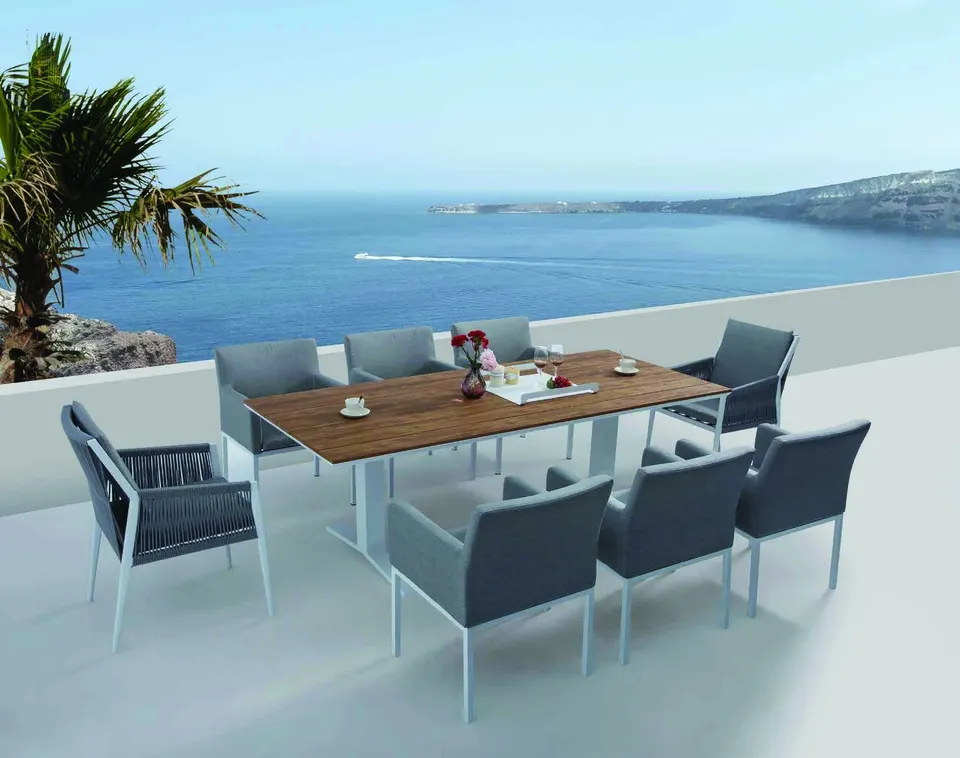
Dense, oily hardwoods, teak being the best known, cope with sun and rain for many years. Left alone, they weather to a silver grey, which many people love; if you prefer the honey colour, clean and oil the wood once or twice a year. Softer woods need far more care outdoors and are better kept under cover. Whatever the wood, check where it comes from and ask about certified, legally sourced timber.
Wood stays cooler in the sun than metal, which is why many designs combine an aluminium frame with timber armrests or tabletops.
Rope and woven furniture
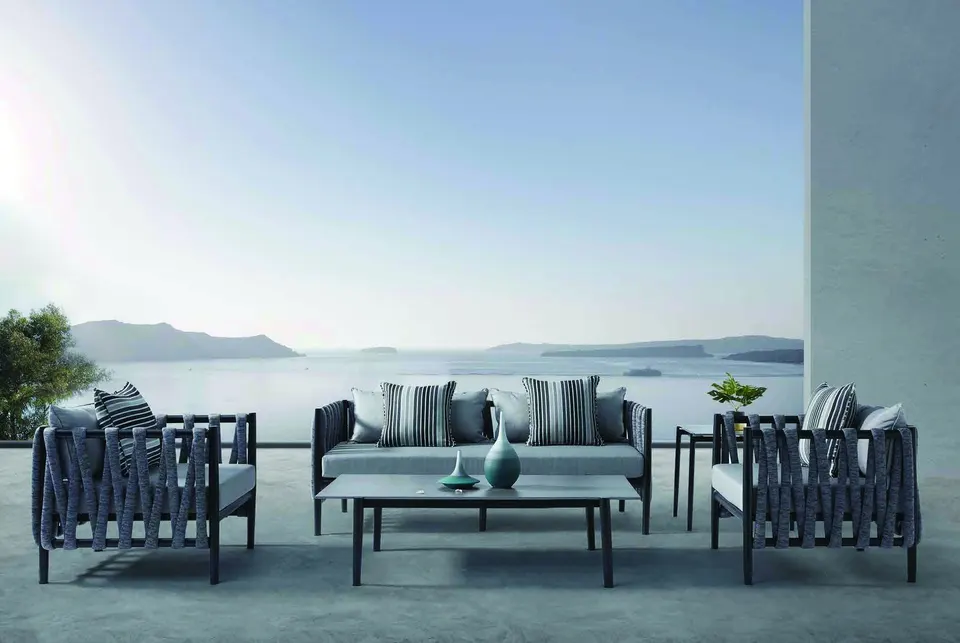
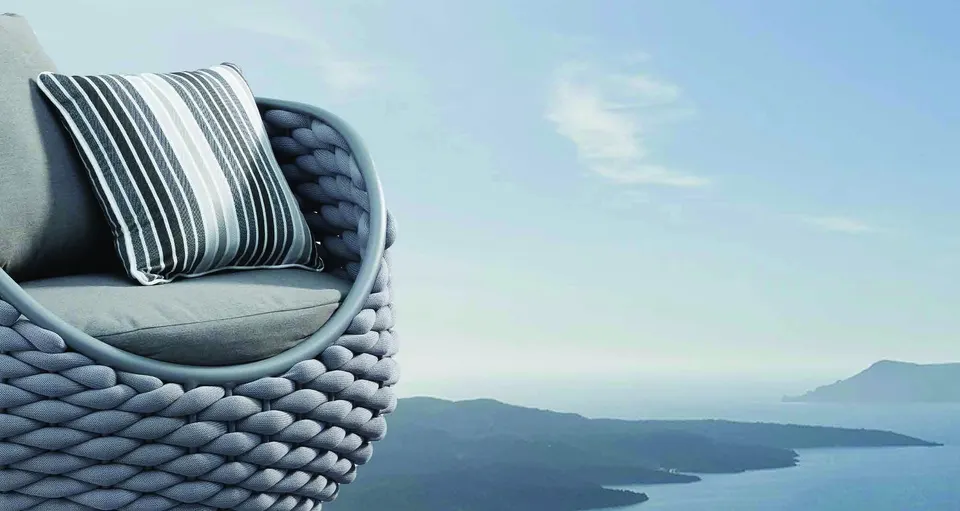
Woven outdoor furniture, in synthetic rope or synthetic wicker over an aluminium frame, has become popular for good reason: it is comfortable, looks soft and relaxed, and dries quickly. Quality varies enormously. Good synthetic weaves are made to resist UV and keep their colour and flexibility for years; cheap ones go brittle, crack and fade. Ask what the fibre is made of and whether it is UV-stabilised, and look at how the weave is finished and fixed to the frame.
Ask what the screws are made of. Rusting fixings ruin good furniture faster than the weather does.
Tabletops: stone, ceramic, glass or wood?
- Ceramic and sintered stone. Very resistant to sun, heat and stains; heavy, which helps in wind.
- Natural stone. Beautiful and at home in Istria, but most stones are porous and need sealing against wine, lemon and oil.
- Hardwood. Warm to the touch, needs oiling, and ages visibly.
- Glass. Shows every mark and drop of water, gets hot in the sun, and should always be safety glass.
Cushions and fabrics
Cushions decide whether outdoor furniture is comfortable and whether it looks tired by August. Look for outdoor fabrics where the colour runs through the fibre, often described as solution-dyed, because they resist fading far better than printed ones. Inside, quick-drying outdoor foam lets water drain through instead of holding it for days. Removable, washable covers are worth having, and so is somewhere dry to store cushions in bad weather and over winter.
Wind, weight and the bura
On exposed terraces, wind is the factor people forget. Light chairs and loose cushions blow around, and an open parasol in a sudden gust is dangerous. Choose heavier pieces or designs that can be stacked and stored, use weighted or fixed bases for parasols and close them when you leave, and consider a pergola or fixed shade for the most exposed spots. Built-in benches along a wall are the most wind-proof seating of all.
Winter and maintenance
- Rinse with fresh water now and then during summer to remove salt, especially from metal.
- Store cushions dry, indoors, out of season.
- Use breathable covers. Plastic sheets trap moisture and can cause mould and stains.
- Check fixings each spring and tighten or replace anything loose or rusty.
- Oil timber if you want to keep its original colour.
If the villa is rented
Guests use outdoor furniture harder than owners do. Choose fewer, sturdier pieces, avoid fragile glass and delicate weaves around the pool, and buy cushions in mid-tones that hide sun cream. Make sure there are enough loungers and dining seats for the full number of guests the villa sleeps, and somewhere obvious to put cushions when it rains. Our article on materials that live with sea, salt and sun goes deeper into individual materials.
Outdoor furniture from Lampisa
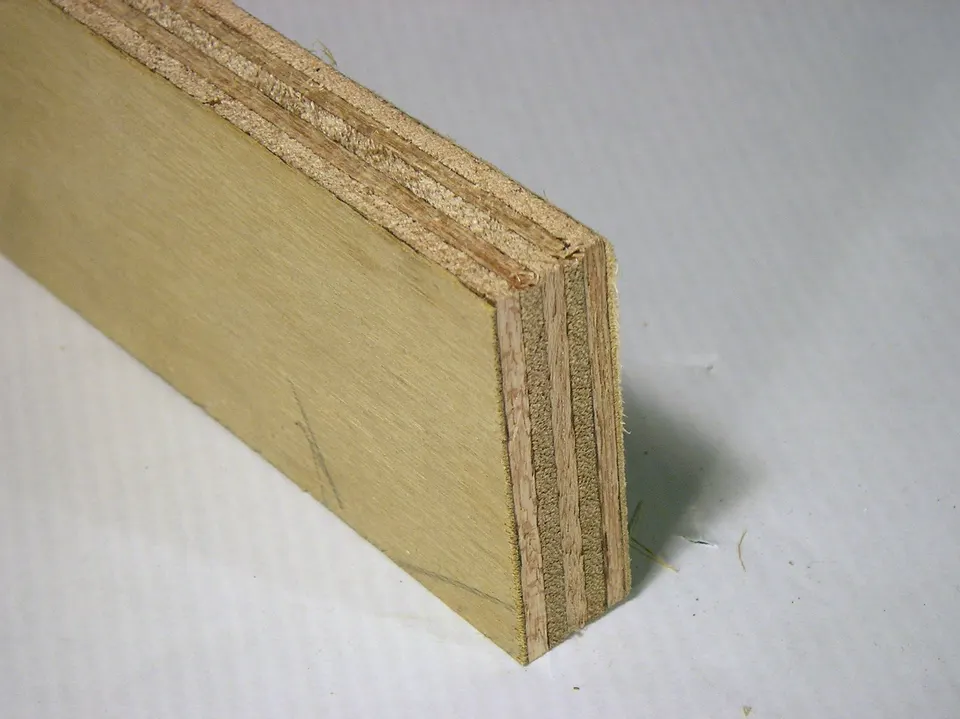
Lampisa, the Istrian atelier we work with, includes outdoor collections in its online catalogue, alongside the indoor furniture it builds in plywood and its lighting. Because it knows the Istrian coast, it can help you choose pieces for a particular terrace, its sun, its wind and its view, and show the terrace furnished in a 3D render before you decide.