Chairs dragged across stone, tables wiped a dozen times a service, terraces in salt air. Restaurant furniture has to look good and take a beating.
A good restaurant is remembered as an evening, not as a plate. The food matters most, but the room is what guests sit in for two or three hours: the height of the table, the angle of the chair back, how loud the room becomes when it fills, the light on the faces across the table. Furniture is the part of that experience a restaurateur can choose once and then live with for years.
It is also the part that works hardest. A dining chair in a busy konoba or terrace restaurant is moved, leaned on, dragged and stacked more in one season than a chair at home is in a lifetime. Hospitality furniture has to do two things at once: set the atmosphere and survive every night.
What a service does to furniture
- Chairs. Dragged across stone floors, tipped back on two legs, stacked at closing and unstacked at opening. Joints loosen first, then legs.
- Tables. Wiped many times a service with detergents and sanitisers, hit by trays and trolleys at the edges, and moved together for larger parties.
- Banquettes. Sat on by every guest, cleaned of spills, and expected to stay firm and tidy all season.
- Bar fronts. Kicked by shoes and bumped by stools all evening, and cleaned with the same strong products as the floor.
- Terraces. Sun, salt air, sudden storms, and furniture carried in and out at the start and end of each season.
Domestic furniture, however attractive, is not designed for this. It is designed to be used by a few people and treated with care. In a restaurant it fails quickly and always at the worst moment, on a Saturday in August when there is no time to deal with it.
Plywood or particleboard, under pressure
Much mass-produced furniture is built from particleboard: wood chips pressed with glue and covered with a decorative surface. In a restaurant its weaknesses appear fast. Every time a joint is loosened and tightened, the screw sits in softer material. Every chip in the edge of a table lets in water from cleaning, and once particleboard absorbs water it swells and does not recover.
Our partner atelier, Lampisa, does not use particleboard. It builds with plywood, also known as multiplex: thin layers of veneer glued with the grain of each layer crossing the one below. The result is strong for its weight, stable in shape, holds screws and fittings firmly even after repeated assembly, and copes with moisture far better when the edges are properly sealed. In a room where furniture is moved and cleaned all day, that is not a detail. It is the difference between a piece that is tightened once a season and a piece that is replaced. The wider comparison is in plywood or particleboard.
In a restaurant, the question is not whether furniture will be damaged. It is whether it can be repaired the next morning.
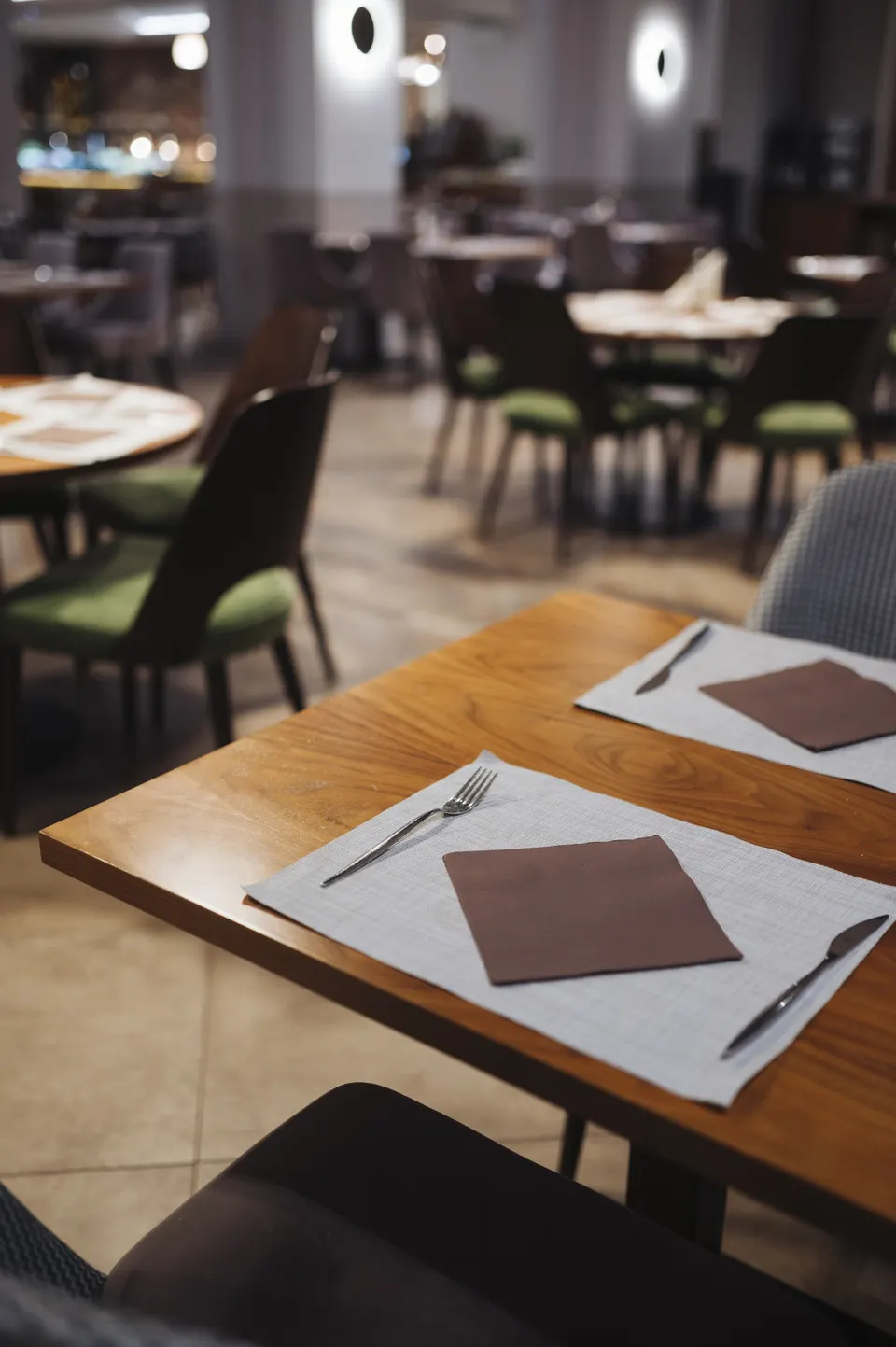
Repair instead of replace
Every restaurant furniture plan should assume that things will break. A chair will be dropped from a stack, a tabletop edge will be chipped by a trolley, a banquette cover will be torn. What matters is what happens next. Lampisa states that replacement parts remain available, allowing furniture to be repaired rather than replaced. For a restaurant this matters twice over: a damaged piece can be put right without buying a whole new set, and the room keeps its consistent look instead of slowly filling with odd replacements.
It is worth asking any supplier, before ordering, which parts can be replaced separately: seat pads, chair legs, tabletops, banquette upholstery, bar front panels. Removable and washable covers on banquettes, and tabletops that can be refinished, extend the life of a room for years.
Furniture sets the pace of the evening
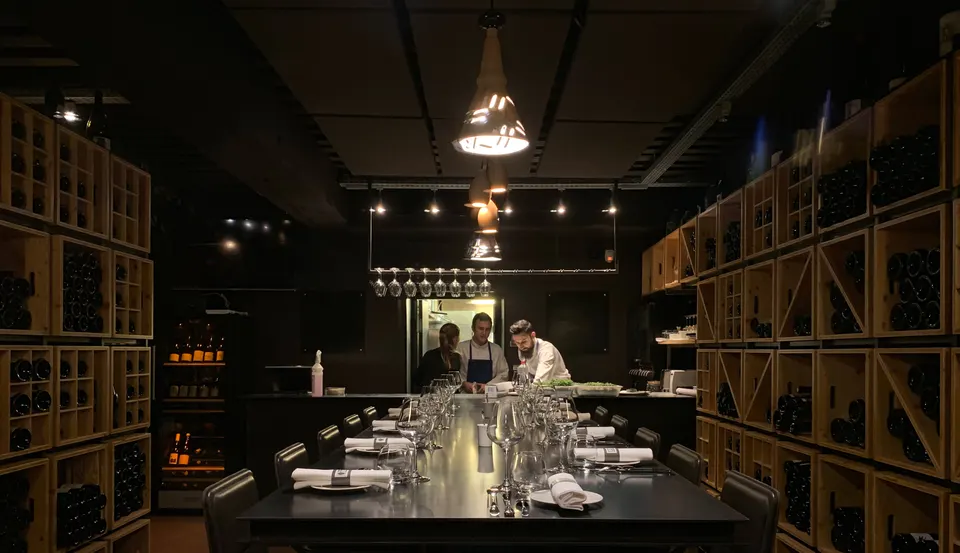
The shape of the room influences how guests behave. Deep, soft chairs and wide tables invite people to stay for another bottle, which suits a tasting menu or a wine bar. Upright chairs and compact tables suit a lunch service with two or three sittings. Neither is wrong; the furniture should simply match the kind of evening the restaurant wants to offer and the number of covers it needs to serve.
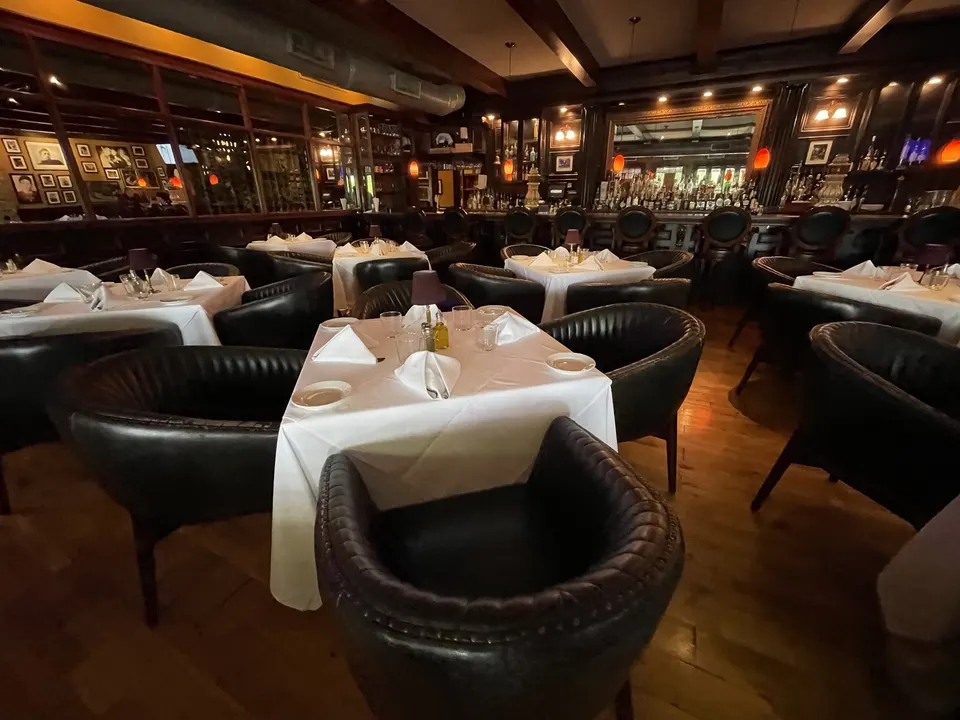
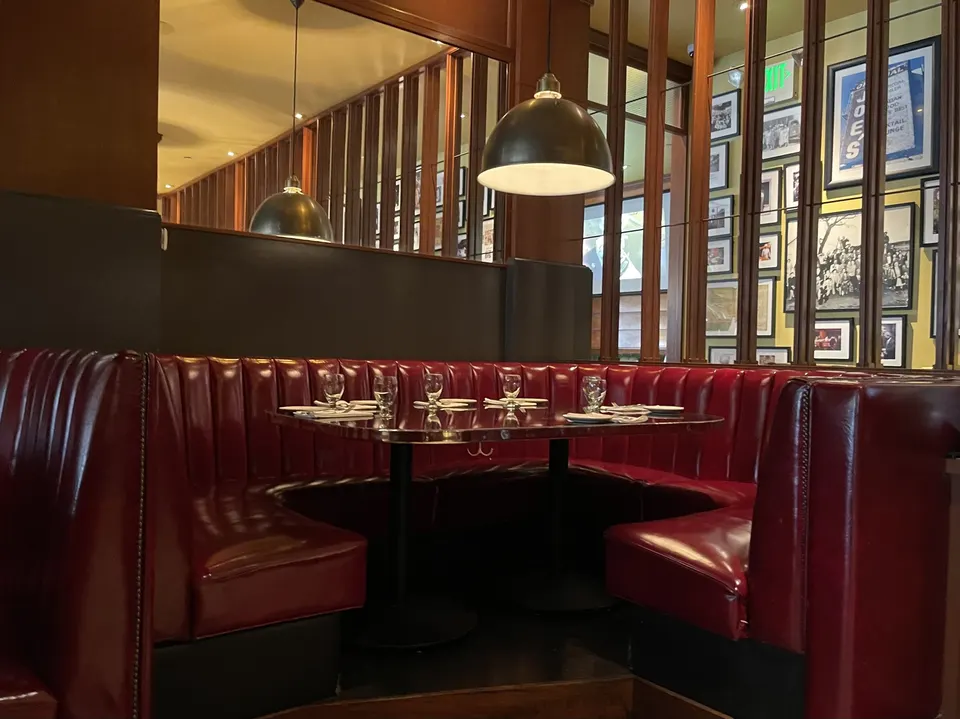
Table sizes matter more than most owners expect. A mix of two-tops that can be joined and fixed larger tables gives the floor staff flexibility. Banquettes along walls seat more people in less space and are often the most requested seats in the room. Chair widths decide how many guests fit around a table without elbows touching.
Acoustics are part of the furniture
Stone walls, tiled floors and glass are beautiful and almost entirely reflective. A full room becomes loud quickly, and guests raise their voices until conversation is tiring. Upholstered banquettes, fabric seat pads, panels behind seating and textiles under tables all absorb sound. Planned together with the furniture, they can make a room noticeably calmer without changing how it looks.
Terraces and the season
Many Istrian restaurants earn most of their summer on the terrace. Outdoor furniture should be chosen for sun, salt and rain, and also for how it will be stored. Pieces that stack neatly, cushions that can be taken in at night, and finishes that can be refreshed before the next season all save time and money. For more on materials outdoors, see materials that live with sea salt and sun.
Plan before the season, not during it
Made-to-measure furniture takes time to design, build and install, and the busiest workshops are busiest exactly when restaurants are preparing to open. Typical lead times should be confirmed with the atelier well in advance. The safest approach is to start design over the winter, approve drawings or a 3D render early in the year, and install in the quiet weeks before Easter. The atelier's service for restaurants is built around that rhythm.
Good hospitality furniture is not about spending the most. It is about choosing pieces that look right on the first night and still look right at the end of the fifth season, and knowing that when something breaks, it can be fixed.