From the front door to the pool at night: how to layer light in each room of a holiday villa so it feels warm in the evening, works for guests and flatters stone and timber.
Most villas are designed for daylight. The plans show the views, the sun path, the shade of the pergola. Then evening comes, which in summer is when people actually spend time in the house, and the lighting turns out to be a grid of ceiling spots and one fitting over the table. The rooms feel flat, the stone walls go grey, and guests sit in the glare or in the dark.
Good lighting is not about more fittings. It is about the right light in the right place, at the right height, and the ability to turn it down. Here is how to think about it, room by room.
The basics: layers, warmth and dimmers
Every room needs light in layers. General light fills the room. Task light falls where you cook, read or shave. Accent light picks out a stone wall, a painting or a niche. And decorative light, a chandelier, a beautiful lamp, is something you look at as well as by. A room that has only one of these layers will always feel unfinished.
- Warm white. Around 2700 K for living spaces and bedrooms; slightly cooler only where you need precision.
- Good colour rendering. A high CRI keeps food, skin, stone and timber looking natural.
- Dimmers on almost everything. The same room has to work for breakfast and for midnight.
- Light at different heights. Ceiling, eye level and low down. Evening light feels best below eye level.
- Plan before plastering. Wall lights, sockets for lamps and lighting in built-in furniture need wiring in the right place.
Entrance and hallways
The entrance sets the tone, and in a rental it is where guests arrive tired, often at night, with luggage. Light the path to the door, the door itself and the keypad or lock. Inside, a warm pendant or wall lights work better than a bright downlight. In hallways, low wall lights or lights set into the wall near the floor guide people to the bathroom at night without waking anyone.
Living room
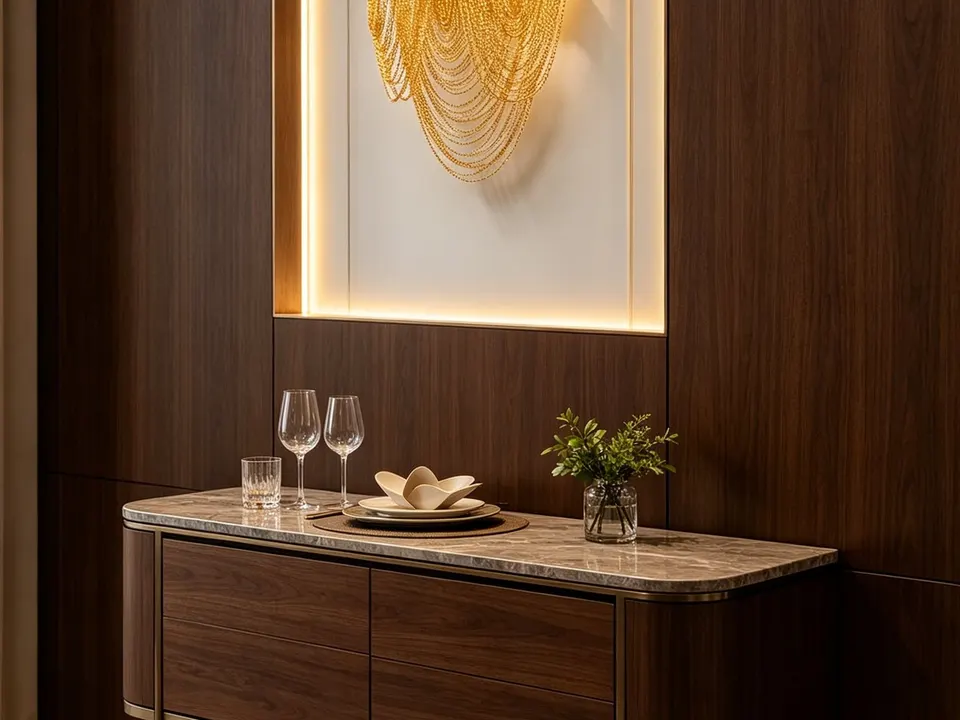
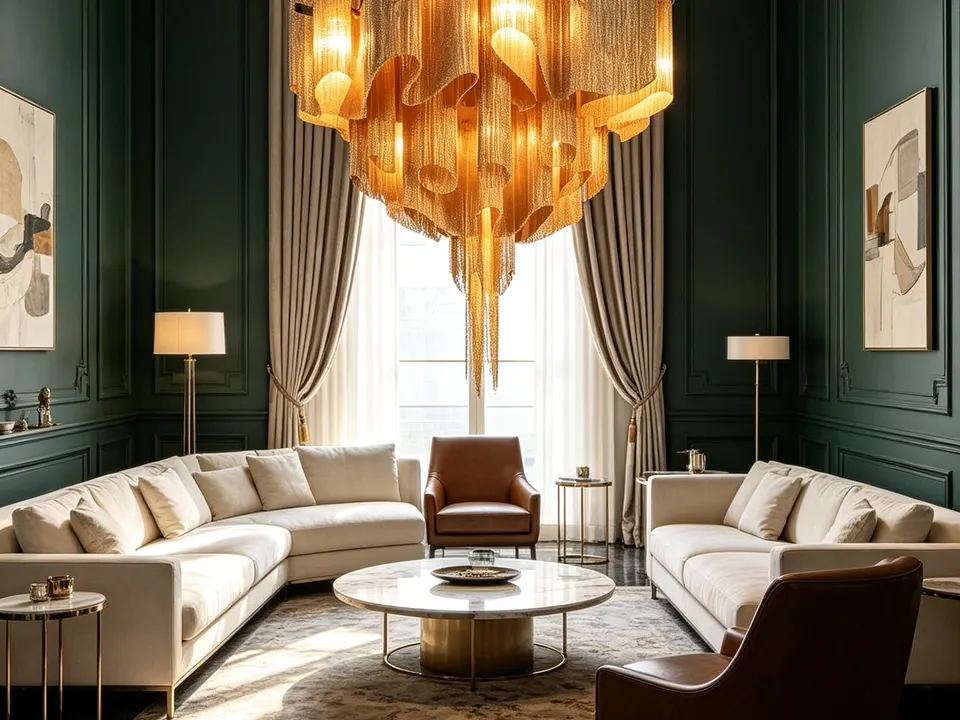
This is the room that most needs layers. Use the ceiling light, or a chandelier, as the decorative centre, but rely on lamps for the evening: floor lamps beside the sofa, table lamps on side tables, a reading light by a chair. Wall lights that wash a stone wall bring out its texture beautifully. Shelves and niches can carry discreet lighting, built into the furniture.
Dining room
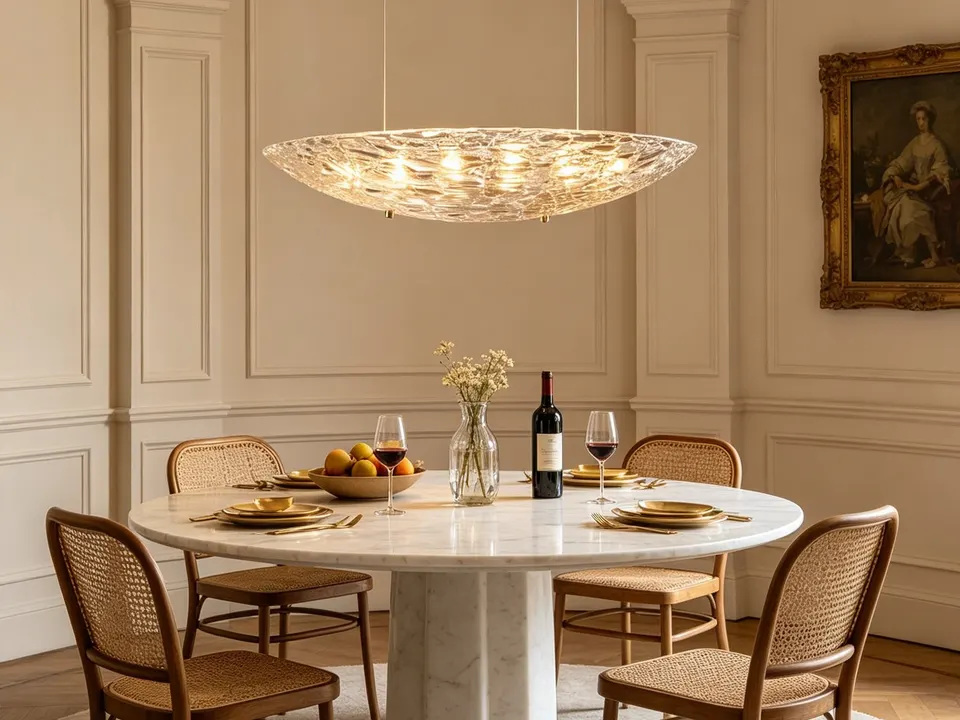
The table is the stage. Hang a chandelier or pendants centred on the table, not on the room, with the bottom roughly 75 to 90 cm above the tabletop, and put it on a dimmer. Add soft light around the edges of the room, wall lights or a lamp on a sideboard, so the table is not a bright island in the dark. Our guide to choosing a chandelier covers size and height in detail.
Kitchen
Kitchens need good task light: under the wall cabinets, over the island and over the hob, so that whoever is cooking is not working in their own shadow. Pendants over an island double as decoration. On a separate circuit, keep some soft light, a lit shelf or a glow under the cabinets, for the evening, when the kitchen is part of the living space and nobody wants a surgical glare.
Evening light feels best below eye level. Most villas put all of it on the ceiling.
Bedrooms
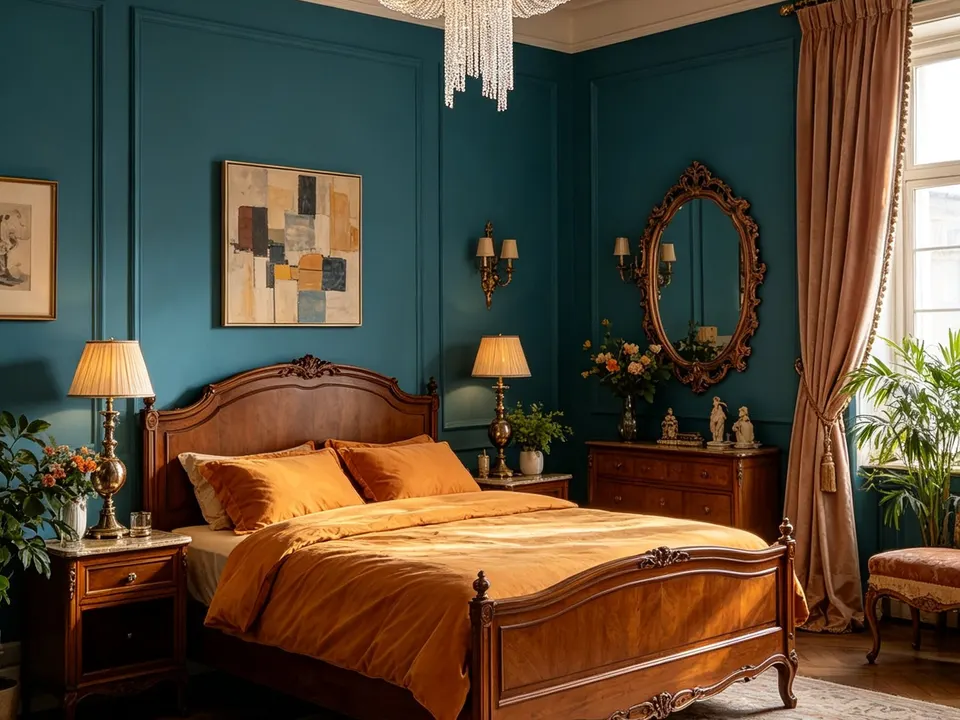
Bedrooms need less light than people think, but it must be in the right place. Every bed needs a reading light on each side, with a switch that can be reached lying down. A switch by the bed that turns off the main light is one of the details guests notice most. Wardrobes benefit from an internal light. Keep ceiling light soft and warm; a small chandelier with diffusing glass works well here. Blackout curtains or shutters matter as much as the lamps.
Bathrooms
In bathrooms, safety comes first. Fittings must be rated for the zone they are in, closer to water means a higher protection rating, and the installation should be done by a qualified electrician. Beyond that, the most important light is at the mirror: light from both sides, or from around the mirror, is far more flattering than a single downlight overhead. A dim night setting is welcome at 3 a.m.
Stairs
Stairs need even light with no dark treads. Low lights set into the wall beside the steps, or a continuous strip under a handrail, are safer than a single light at the top. In a tall stairwell, a cascading chandelier can be the house's main decorative piece, provided you plan how it will be cleaned.
Terrace, garden and pool
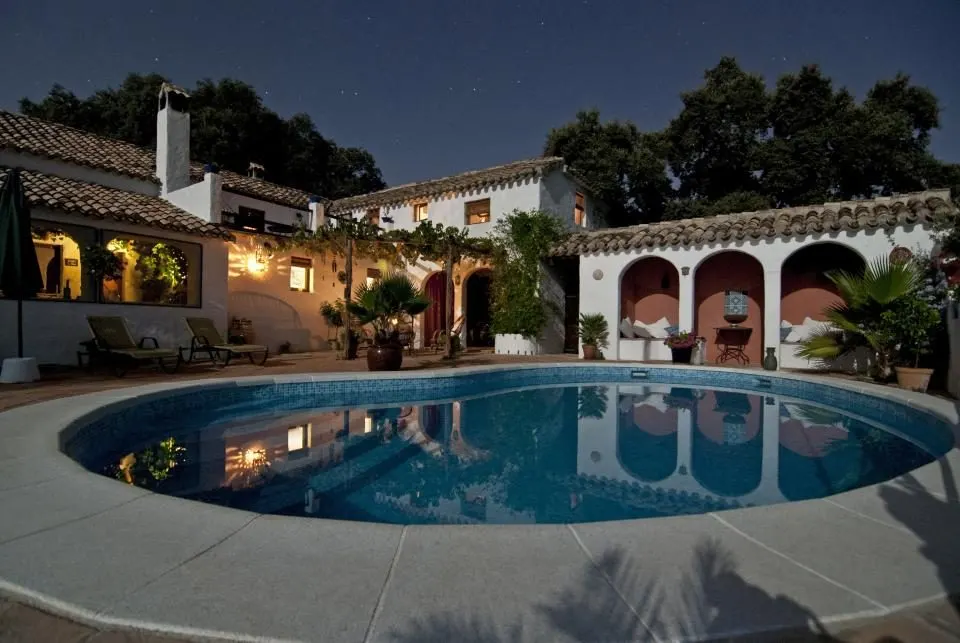
Outside, less is more. Light the paths, steps and changes of level for safety. Light the dining table on the terrace warmly, from a pergola or with lanterns. Pick out a few trees or a stone wall, and leave the rest dark so you can still see the stars and the coast. Warm, shielded light pointing downwards is kinder to neighbours and, many find, attracts fewer insects than bright white light. All outdoor fittings need a protection rating suitable for rain and salt air.
Pool lighting should be designed and installed by a specialist, but the principle is the same: a soft glow in the water and low light along the edge, not floodlights. For more on terraces, see outdoor living, terraces and long evenings.
If you rent the villa out
- Simple controls. Guests should understand every switch within a minute. Label them if needed.
- A switch by every bed and door. Nobody should cross a dark room to find one.
- Night lights. Low light in corridors and bathrooms prevents accidents.
- Robust fittings. Lamps that cannot be knocked over easily; glass that can be cleaned and replaced.
- Automatic outdoor lights. Timers or sensors so the garden is not lit all night.
Furniture and lighting, planned together
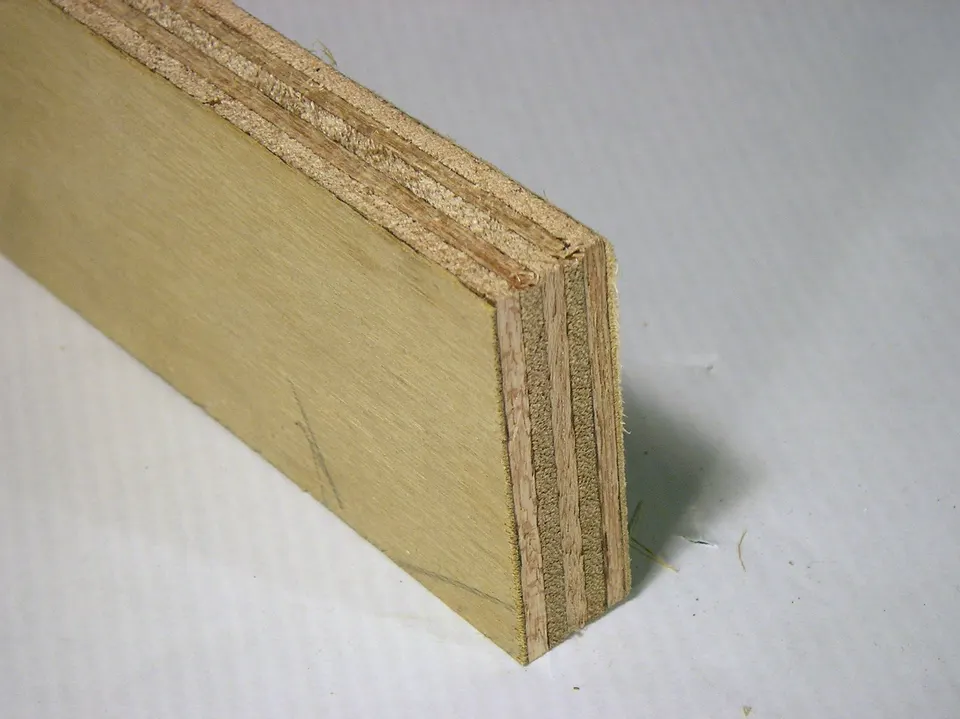
Many of the best lighting details live inside furniture: a lit niche, a glow under a bench, a light inside a wardrobe. They have to be planned before the pieces are made. Lampisa, the Istrian atelier we work with, builds furniture to measure in plywood and can plan integrated lighting into it, while its catalogue offers lighting, including Murano glass chandeliers. Through the moodboard to render service, you can see furniture and light together in a 3D render before anything is built. For the story behind the glass, read Murano glass lighting.