Price per running metre or per m², what raises it (carcass, hardware, fronts, installation) and why plywood costs more than particleboard but lasts.
The price of made-to-measure furniture is not taken from a price list; it is worked out from the project. For a first estimate, makers often quote it per running metre, for kitchens and wardrobes, or per square metre of front. The final figure, however, depends on four things: the carcass material, the hardware, the fronts and the installation. For built-in pieces such as wardrobes and kitchens, the exact price comes from the shop drawings and the quote. For free-standing pieces such as a chest of drawers or a bedside table, the catalogue is a good guide.
This guide explains how the two units are used, what sits behind each line of a quote, why a piece in plywood costs more than one in particleboard, and how to compare two quotes without comparing two different things.
Per running metre or per square metre?
A running metre measures length along the wall. A kitchen 3.6 metres long is 3.6 running metres, however many units it contains. In an L-shaped kitchen both arms are added together, and wall units are sometimes priced separately. The unit makes sense when height and depth are consistent, as with base kitchen units or a run of wardrobes of the same height.
A square metre measures the area of the front, width times height. It describes a floor-to-ceiling wardrobe, a wall of shelving or a walk-in wardrobe better, because the height changes from house to house. A wardrobe 2.5 metres wide and 2.6 metres high has 6.5 m² of front; the same wardrobe 2.2 metres high has 5.5 m². In both cases it is 2.5 running metres.
Both units are averages, and neither says what is inside: how many drawers, what kind of runners, whether the interior is the same board as the outer sides. That is why two prices “per metre” can describe entirely different furniture. They are useful for a first estimate and for checking against a budget, but they do not replace a quote.
The indicative price lists published on Croatian websites for tradespeople show this well. For a made-to-measure kitchen in veneered particleboard, supplied and installed, they give €400 to €630 per running metre, while the text on the same page calls that range a price per square metre. A kitchen with high-gloss fronts, in painted MDF or particleboard with acrylic, is listed there at €700 to €1,400 per metre. Two things follow: always check the unit, and the fronts and their finish can on their own double the price. All of these are prices for particleboard, so they should not be compared directly with a quote for plywood.
What the price is made of
Broken down into its parts, every quote for made-to-measure furniture consists of the same items. What differs is how much money goes into each of them.
Carcass
The carcass is the box: the sides, base, top, shelves and back. It carries the weight, holds the screws and hinges, and accounts for most of the material in a piece. At Lampisa the carcass is plywood, not particleboard. The thickness of the board, exposed or closed edges and the finish of the interior all change the price, even when none of it shows from the outside.
Hardware
Hinges, drawer runners, lift mechanisms for wall units, shelf supports and hanging rails. These are the parts that move every day and the first to wear. The difference between a basic runner and a full-extension, soft-close one shows in the quote and is felt in the hand, every day. That is why a kitchen with many drawers costs more than a kitchen of the same length with doors.
Fronts and worktops
The fronts are what you see: veneer, lacquer, paint, stone or metal, in the finish of your choice. Handles, recessed grips or push-to-open are a separate line. In kitchens the worktop is priced separately, and its price depends on the material and the number of cut-outs for the sink and hob. Fronts are also the easiest place to save: a simpler finish on the fronts does not touch the durability of the carcass, and fronts can be renewed later.
Survey, delivery and installation
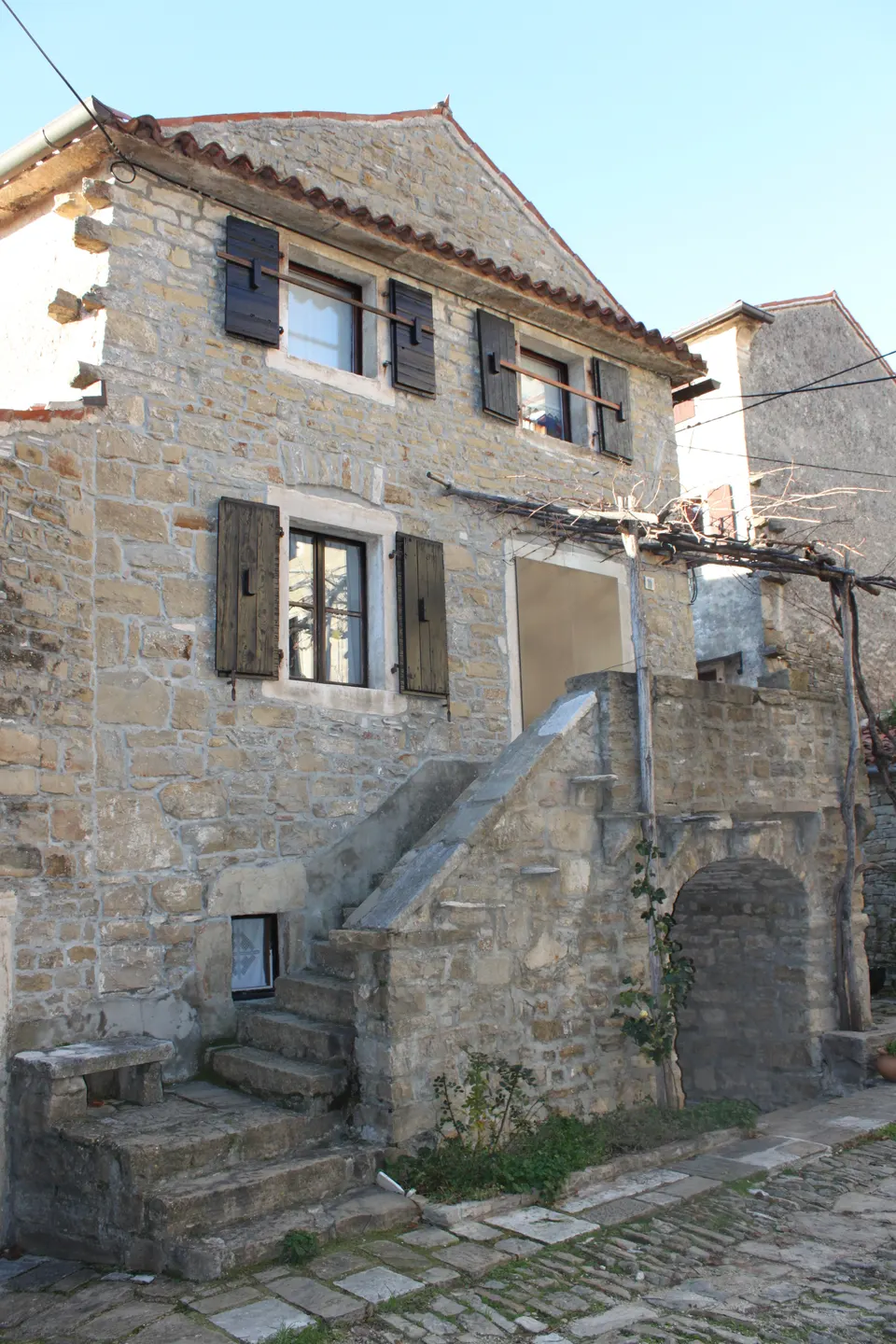
Measuring on site, transport, carrying in and installation. In a stone house with a narrow staircase, uneven walls and a sloping ceiling, installation takes longer than in a new build with straight walls, because the side panels are scribed to the wall. Some makers show installation separately, others include it in the price. Either way, the quote must say so.
Why plywood costs more but is not replaced after three seasons
As a raw material, plywood is more expensive than particleboard, and cutting, edging and finishing it take more work. That is an honest reason why a plywood wardrobe costs more than a particleboard wardrobe of the same size, and it shows in every quote.
The difference lies in what comes afterwards. Particleboard swells for good when water reaches an unprotected edge or a drilled hole, and a screw taken out and put back loses its grip. Plywood is made of thin layers of veneer glued crosswise: it keeps its shape, screws and fittings hold even after reassembly, and with the right glue and protected edges it is far more resistant to moisture. In a house by the sea that stands closed all winter and is full of guests all summer, that is the difference between a hinge adjusted once and doors that get replaced.
The price per metre tells you what a piece costs today. The material tells you how many times you will pay for it.
So the sum changes when you look at ten years instead of the day of purchase. If a particleboard wardrobe has to be replaced after three seasons, you pay for it twice, plus another delivery, another installation and a room that is not ready for guests. A plywood piece can be repaired: a damaged panel or front is replaced on its own, and Lampisa says spare parts remain available. The full comparison is in our article plywood or particleboard.
Built-in pieces: the price comes from the shop drawings and the quote
For wardrobes, kitchens, walk-in wardrobes, shelving in alcoves and bar counters there is no meaningful price list, because every piece is different. That is why the process is always the same. First the space is measured, then shop drawings are made with dimensions, materials, hardware and how everything opens, and Lampisa shows a 3D view before production. Only then is the quote drawn up, line by line, and only then is the price known.
That is not dodging the question. A 2.5-metre wardrobe with four hinged doors and hanging rails and a wardrobe of the same length with internal drawers, lighting and sliding doors are two different pieces, even though they have the same number of running metres. A good quote separates the lines so you can see where the money goes, and so you can choose: keep the carcass and hardware, and simplify the fronts. How to plan a wardrobe is covered in our guide to built-in wardrobes, and what the drawing stage looks like in from shop drawings to installation.
Free-standing pieces: a guide from the catalogue
For free-standing pieces, such as a chest of drawers, a bedside table or a dining room sideboard, there is a better starting point than a price per metre: the catalogue. Lampisa’s catalogue has more than 2,400 pieces, and most can be made in other dimensions, fabrics and finishes. The table shows the ranges of the partner atelier’s catalogue prices for the basic version, by the levels the furnishing cost calculator also uses.
| Piece | Selected | Premium | Exceptional |
|---|---|---|---|
| Bedside table | €660 | €770 | €890 |
| Chest of drawers | €1,800 | €2,000 | €2,300 |
| Dining room sideboard | €2,500 | €3,000 | €4,000 |
| TV unit | €2,600 | €2,900 | €3,400 |
| Bar cabinet | €2,400 | €2,800 | €3,000 |
These figures are not a price per metre and should not be converted into one. They show where the middle of the collection lies: half of the chests of drawers in the catalogue cost between €1,800 and €2,300. A piece made in another size or with another front gets its own price in the quote. The same data sits behind the calculator for whole rooms, from the living room to the bedroom. It counts only furniture and lighting pieces, without mattresses, textiles, curtains, kitchens, bathrooms and appliances, and without delivery, installation, building work or design fees.
How to compare two quotes
Before comparing two quotes, check that they use the same unit and describe the same piece. What is the carcass made of, and what about the back and the drawer bottoms? Which hardware is used, and do the runners have soft close? Is the worktop included? Are the survey, delivery and installation in the price or separate? Is there a drawing or 3D view you approve before production? And what happens if one front is damaged in five years: can just that front be replaced?
A quote that answers all of these questions can look more expensive than one with a single figure per metre. Often it is simply showing what the other one leaves out. When flat-pack is a sensible choice and when made to measure pays off is something we compare honestly in made to measure or flat-pack.
How the process works through Atrij
Atrij is an intermediary. We help you choose the pieces, arrange the proposal and quote with our partner atelier Lampisa, and follow the order until delivery. Lampisa makes, delivers and installs. You send us a floor plan, photos and rough measurements, Lampisa prepares a proposal and a 3D view, you refine it until it is right, and you know the price before anything is cut. If you would rather talk first, book a consultation.
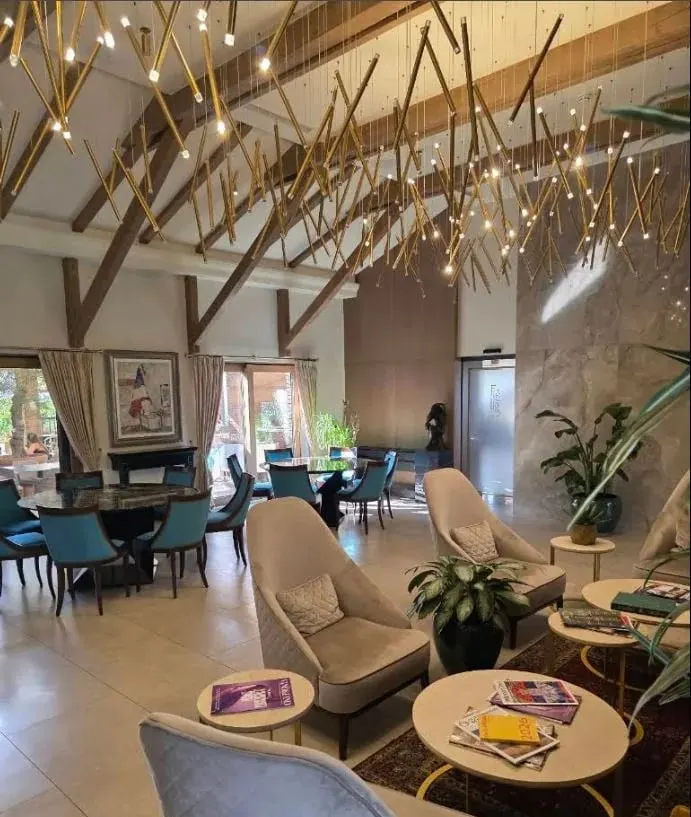
The calmest time to order is outside the season. For a rental property that means measuring in autumn, approving the drawings over the winter and installing before the first spring guests. Projects Lampisa has furnished include Atelje vina Šapat, Primošten Resort and The Bristol hotel in Belgrade.
Made-to-measure furniture is not reserved for large budgets; it is for spaces where standard pieces do not fit and for houses where the furniture has to last. There is more on this in made to measure, not made for millionaires, and you can see how the workshop works on the atelier page.