Grey, long-horned and once nearly forgotten, the boškarin pulled Istria's ploughs for centuries. Today it is a symbol of the peninsula and one of its most prized meats.
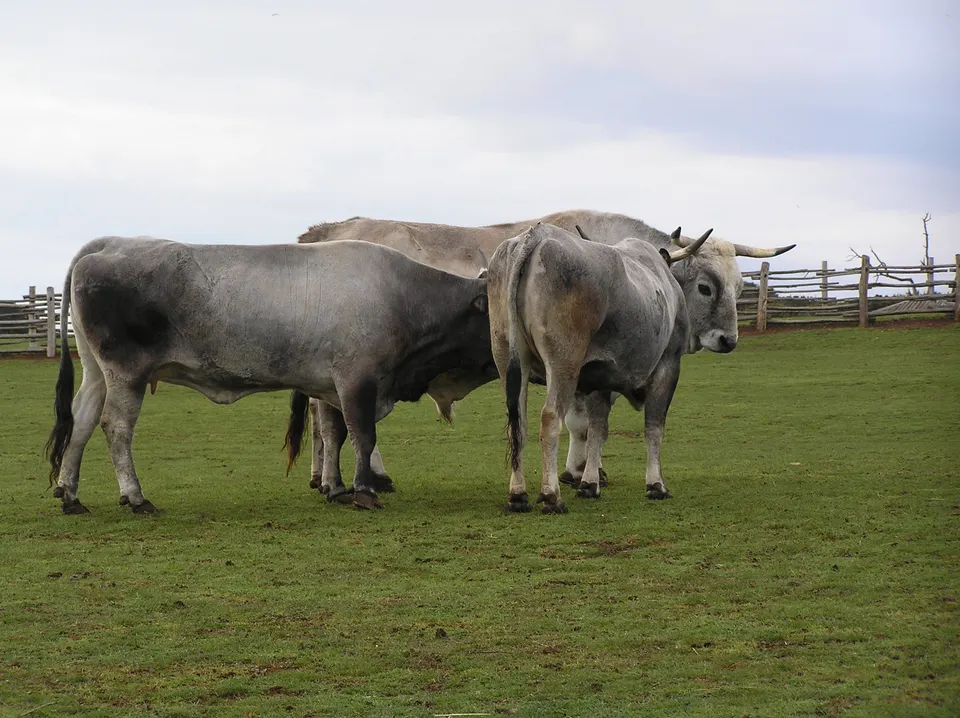
If you drive through inland Istria and see a herd of large, pale grey cattle with horns sweeping outwards and upwards like a lyre, you are looking at the boškarin. It is the native ox of the peninsula, and few animals are so closely tied to a region's identity. For centuries it ploughed the fields, hauled stone and wine barrels, and carried families to market. Today it appears on menus, on festival posters and in the hearts of Istrians who remember it as part of village life.
What is a boškarin?
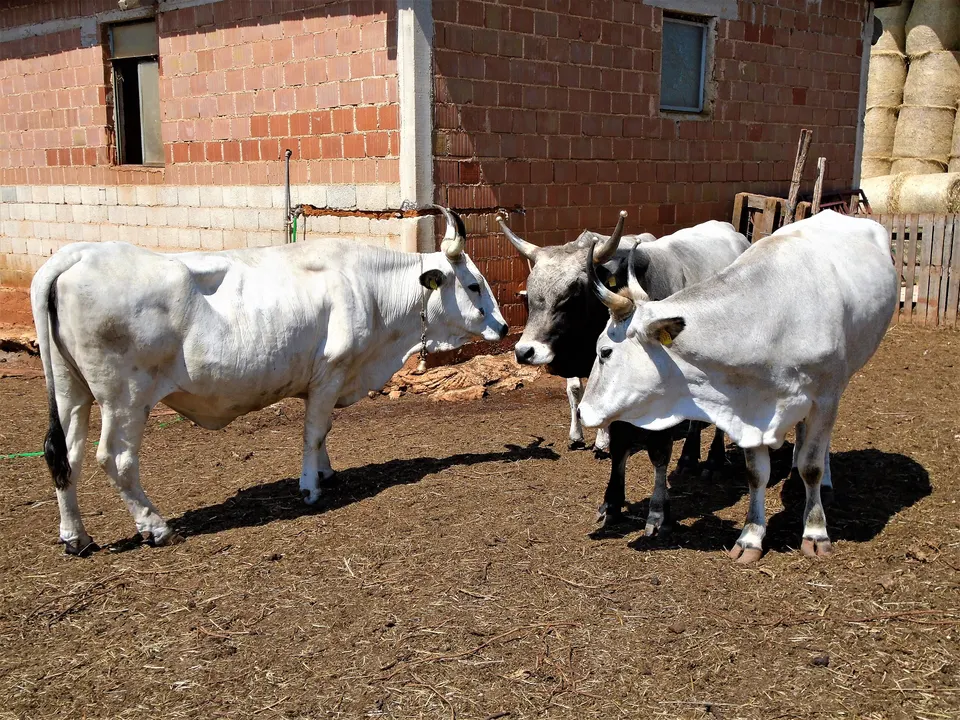
The boškarin, or istarsko govedo (Istrian cattle), is an old breed belonging to the family of grey, long-horned cattle known as Podolian, which are found in various forms across south-eastern Europe and Italy. These are large, powerful animals with a light grey to almost white coat, darker shading around the head and neck, and impressive horns, especially in the oxen. Calves are born a reddish, sandy colour and turn grey as they grow.
The breed is known for its strength, endurance and calm temperament, and for thriving on the simple pasture and rough grazing of the Istrian karst. Those qualities made it the ideal working animal for a farming region of small fields, stone walls and steep tracks.
From the plough to near-extinction
For generations, a pair of oxen was one of the most valuable things an Istrian family could own. Boškarins were raised mainly for work rather than for meat or milk. They pulled ploughs and carts, turned the soil in vineyards and olive groves, and were treated with a mixture of pride and affection. Villages held fairs where oxen were shown and judged, and a well-matched pair was a matter of local prestige.
In the second half of the twentieth century, tractors replaced oxen, and the reason for keeping them disappeared. Many families moved to towns or abroad, small farms were abandoned, and numbers fell dramatically. By the late twentieth century the breed was considered endangered, with only a small population left.
For generations, a pair of oxen was one of the most valuable things an Istrian family could own.
How the boškarin was saved
From the 1990s, a conservation effort supported by the regional authorities, breeders' associations and farmers set out to protect the breed. Breeders received support for keeping animals, herds were recorded, and the remaining genetic stock was carefully managed. Crucially, the programme also gave the boškarin a new economic purpose: as a source of high-quality meat for Istrian restaurants and producers. An animal that people eat, the thinking went, is an animal that farmers will keep.
The approach worked. The population recovered substantially, and the boškarin is now a familiar sight on farms, in agricultural shows and in the pastures of Brijuni National Park, where visitors can see the animals grazing near the sea.
What does boškarin taste like?
Boškarin meat is darker and leaner than most beef, with a fine grain and a deep, clean flavour. Because the animals grow slowly and graze outdoors, the meat has a character closer to traditional, old-breed beef than to the mild beef of supermarket counters. It rewards both very simple treatment and long, slow cooking.
Dishes to look for
- Carpaccio. Thin slices of raw boškarin, dressed with olive oil, lemon and often shaved truffle or hard cheese. The purest way to taste the meat.
- Goulash with fuži. A slow-cooked, rich sauce served over hand-rolled Istrian fuži. A classic of inland konobas, especially in the cooler months.
- Tartare. Finely chopped raw meat, seasoned at the table or in the kitchen.
- Steaks and roasts. Grilled or roasted, often served with seasonal vegetables or, in autumn, truffles.
- Cured and preserved. Some producers make boškarin salami, pršut-style cured meat and pâté, good for a cold plate or to take home.
Because boškarin is not available everywhere, and some dishes take time, it is worth asking ahead or checking the menu when you book. In season it pairs naturally with Teran, the region's deep red wine; see our guide to Istrian wines. For the wider picture of the local table, read our guide to Istrian cuisine.
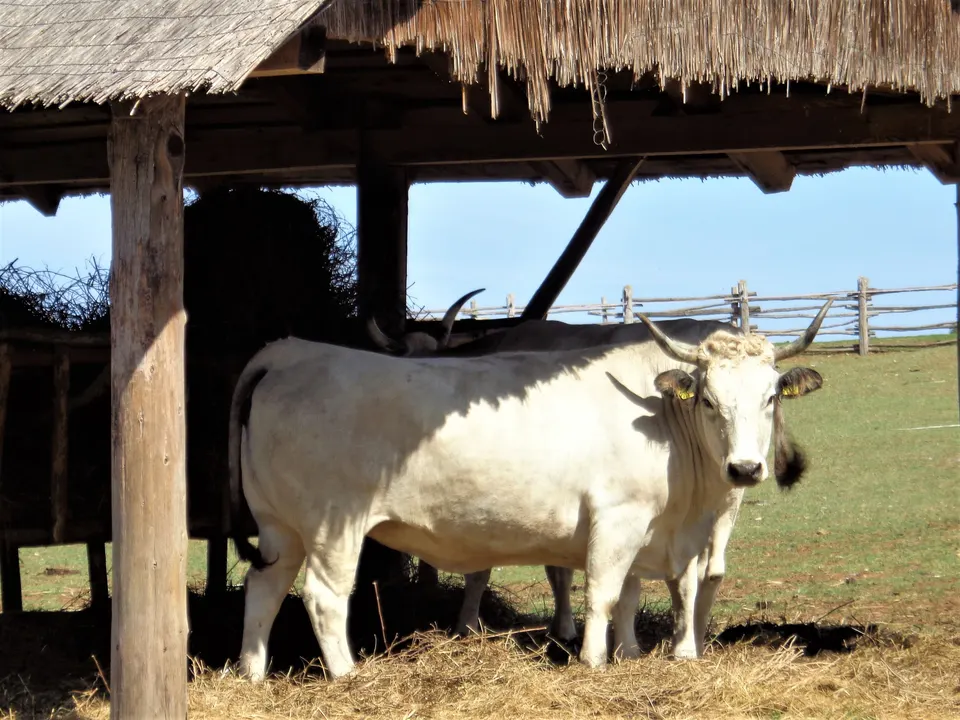
Where to see the boškarin
You do not have to eat boškarin to enjoy it. Herds graze on farms throughout inland Istria, and you may spot them from the road around the central plateau. On Brijuni, the animals are part of the islands' landscape and can be seen during a visit to the national park. Agricultural fairs and traditional village festivals sometimes feature oxen shows, where the animals are presented in decorated harnesses. Dates vary from year to year, so check local listings before you travel.
Good to know
- Pronunciation. Say BOSH-ka-rin. The plural in Croatian is boškarini.
- Look for the name. Restaurants that serve genuine boškarin are proud of it and will name it on the menu.
- Ask about the dish of the day. Slow-cooked dishes are often made in limited quantities.
- Respect the animals. If you stop to see a herd, stay on the road or path, keep children and dogs back, and do not enter fenced pastures.
A symbol of a way of life
The boškarin's story is, in a way, the story of rural Istria: a long tradition, a sudden decline as the old way of life emptied the villages, and a revival built on pride, good food and visitors who care where their dinner comes from. When you order a plate of fuži with boškarin goulash in a stone konoba, you are tasting a piece of that story.