Spain and Italy set the standard for Mediterranean houses long ago. Istria can reach it, but only by being more Istrian, not less.
Ask a well-travelled guest to name the Mediterranean regions where a rented house is reliably beautiful, and the same names come up: Mallorca, Tuscany, Puglia, perhaps Provence. These places did not become synonymous with a certain kind of stay by accident. Over several decades, owners, architects and craftspeople there built a shared idea of what a good house looks like, and held to it.
Istria has everything those regions have: stone villages, olive groves, vineyards, the sea, a long building tradition and, by an estimate from within the trade, around seven thousand villas. What it does not yet have, consistently, is the reputation. Closing that gap is not a matter of importing someone else's style. It is a matter of learning what they did well, and doing it here.
What they got right
Respect for the vernacular
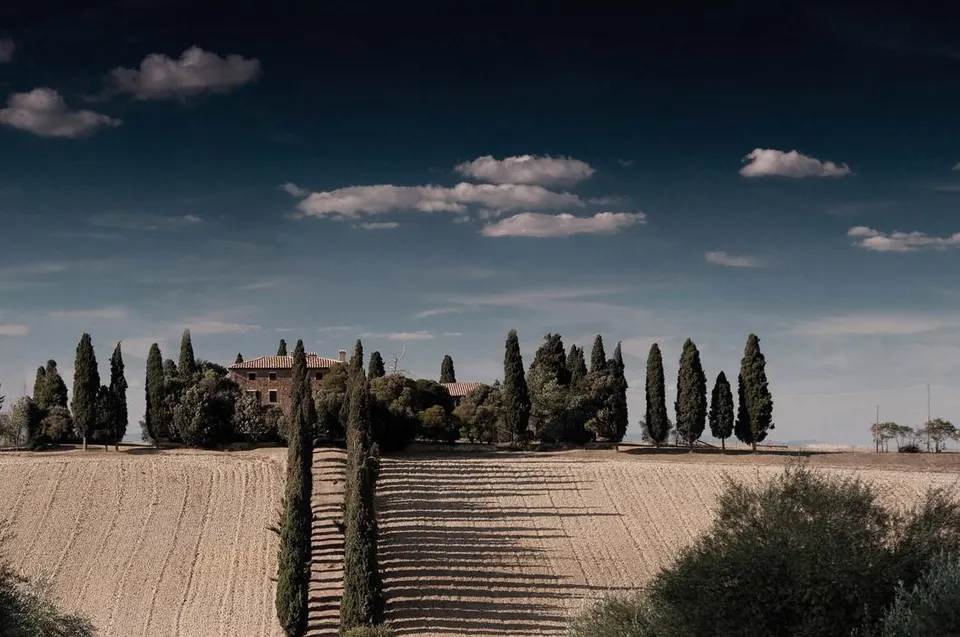
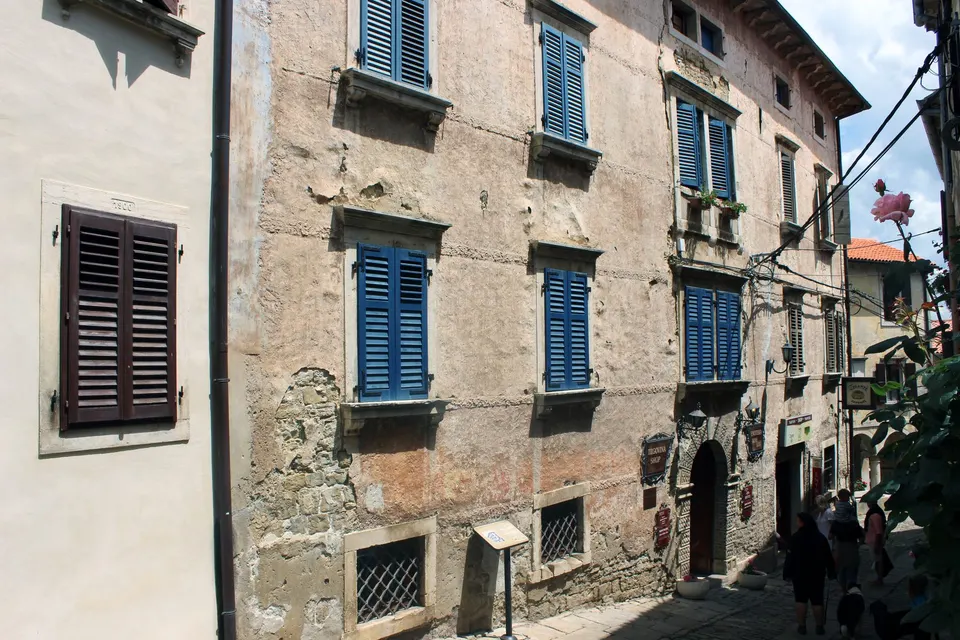
The best houses in Mallorca and Tuscany start from what was already there. Old farmhouses were restored rather than replaced; new buildings borrowed their proportions, thick walls, small deep windows, local stone and pitched tile roofs. The new house belonged to the landscape because it spoke the same language as the old ones around it.
Local craft
Those regions kept their workshops busy. Stonemasons, carpenters, ironworkers and weavers were part of every serious renovation, and their work became a selling point rather than a cost to be minimised. A table made in the next valley carries a story that a container from abroad never will.
Restraint
The houses people remember are rarely crowded. Limewashed walls, a few good pieces of furniture, natural fabrics, light doing most of the decorating. Restraint is cheaper than excess in materials, but it is less forgiving: when there are only a few pieces in a room, each one has to be right.
Consistency across the whole house
This is perhaps the most important lesson, and the least glamorous. In a good villa, the quality does not stop at the living room. The third bedroom, the second bathroom, the kitchen drawers and the terrace chairs are all built to the same standard. Guests feel this even when they cannot name it.
The goal is not to look like Tuscany. It is to be as good as Tuscany, and unmistakably Istrian.
What not to copy
The danger in admiring another region is imitating its surface. Terracotta everything, distressed 'rustic' furniture, wrought-iron chandeliers, faux-aged beams, ochre walls under a grey Istrian sky. A 'Tuscan' interior in a house near Labin is pastiche, and well-travelled guests recognise it instantly. It also dates quickly, because it was never rooted in the place to begin with.
Nor should Istria copy what went wrong elsewhere: overdevelopment, identical villas repeated across a hillside, and interiors furnished from the same catalogue in every house. A region becomes a brand when its houses feel specific, not when they feel interchangeable.
What an authentically Istrian premium interior looks like
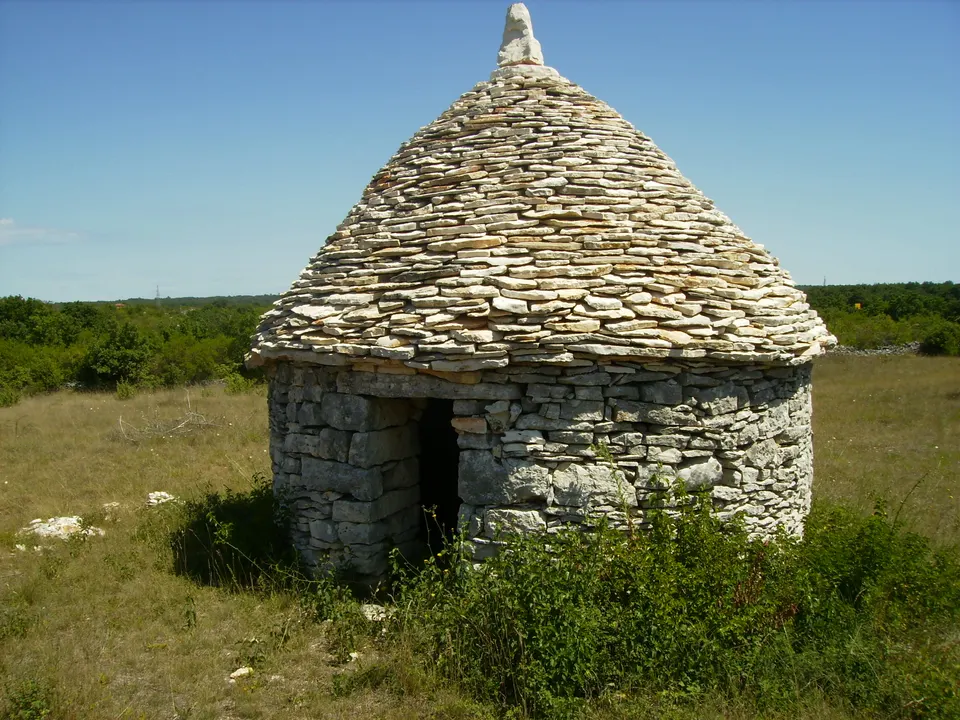
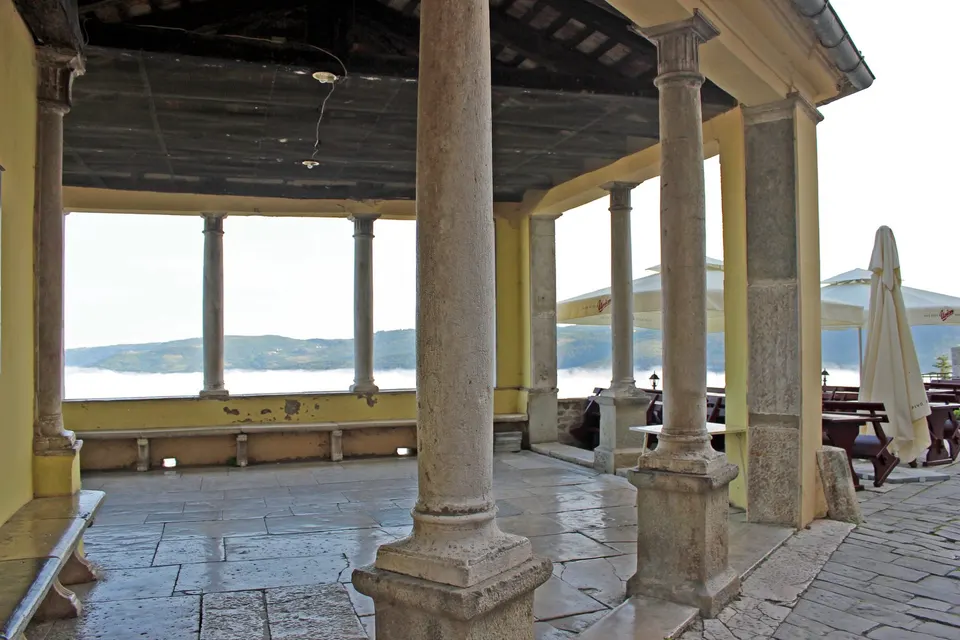
Istria has its own vocabulary, and it is strong enough to carry a premium house. Pale limestone, from rough walls to smooth thresholds. Wood with a natural, honest finish. Linen and wool rather than synthetic shine. The deep shade of a loggia, the long table under a pergola, the small window framing a single view of olive trees or the sea. Our piece on Istrian stone and wood explores this palette in more detail.
- Stone and light first. Let the walls, floors and windows set the tone; furniture should sit calmly against them.
- Fewer, better pieces. A dining table built for the room, beds that are silent, storage that disappears into the walls.
- Made nearby. Furniture drawn and built in Istria, for the specific house, by people who know its climate.
- Honest construction. Materials that keep their shape through humid summers and closed winters.
The part nobody sees
Consistency across a whole house depends on what furniture is built from, not only on how it looks. Particleboard can carry a beautiful finish, but in a coastal climate it swells when moisture reaches it and loses its grip on screws when pieces are moved. That is why our partner atelier, Lampisa, builds with plywood rather than particleboard: cross-layered wood veneers that stay stable, hold their fittings and can be repaired. It is the kind of decision that does not appear in a photograph, and the kind that decides whether a house still looks right in its tenth season. For the full comparison, see plywood or particleboard.
For investors and developers
If you are building or buying several villas, the lesson from Mallorca and Tuscany is that the market eventually rewards places with a recognisable standard. A development where every house is furnished properly, in a style that belongs to Istria, is easier to describe, easier to photograph and easier to remember than one that looks like everywhere else. Our article on furnishing for investors looks at this from the owner's side of the ledger.
None of this requires a luxury budget. It requires choosing local makers, building fewer and better pieces, and paying for materials and work rather than for a showroom margin. Istria does not need to become Tuscany. It needs to show what it already is, at its best.