A small old town on the water, the oldest working lighthouse on the Adriatic and flat white rocks that catch the sunset. Umag and Savudrija are the first stop in Croatia for many travellers, and worth more than a passing glance.
For many people driving down from Slovenia, Austria or Germany, Umag is the first town they meet in Croatian Istria. It is easy to treat it as a gateway and keep driving south. That would be a mistake. The northwest corner of the peninsula, from Umag to the cape at Savudrija, has a calm, open character of its own: low coast, wide skies, olive groves and vineyards running almost to the sea, and some of the best sunsets on the Adriatic.
This is also the most accessible part of Istria. The border with Slovenia is only a short drive away, Trieste is close, and since Croatia joined the Schengen area and the euro, crossing into the region has become simpler than ever. For a long weekend or a first taste of Istria, the northwest makes a lot of sense.
What is there to see in Umag?
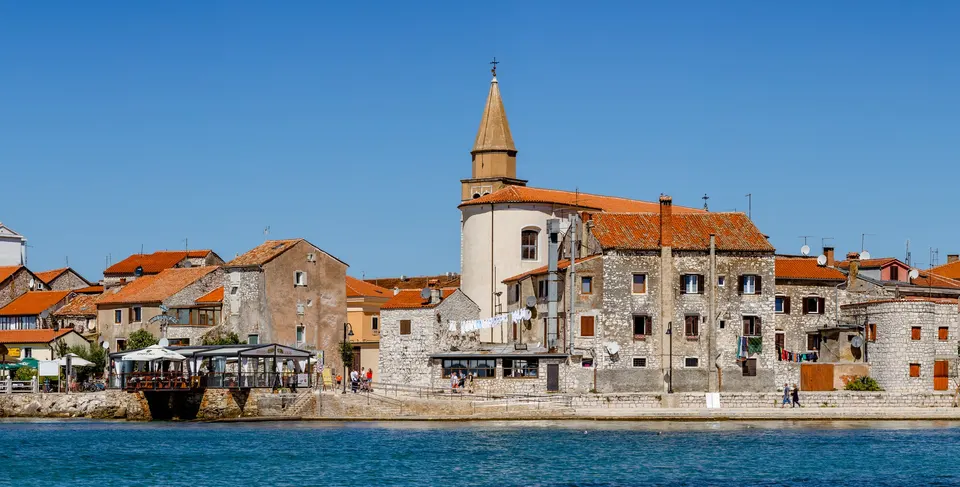
Umag (in Italian, Umago) grew up on a small peninsula that was once an island, and the old town still sits on that compact tongue of land surrounded by water on three sides. Like the rest of the west coast, it spent centuries under Venetian rule, and the street plan, the stone houses and the remains of the old walls all date from that long chapter.
The centre is small enough to walk around in half an hour, which is part of its charm. The main landmark is the Church of the Assumption of the Virgin Mary, a baroque parish church whose bell tower rises above the rooftops and is visible from far along the coast. Around it, narrow streets lead between houses of rough Istrian stone, some with carved details, coats of arms and old inscriptions above their doors. On the seaward side, a promenade runs along the waterfront, lined with cafés and restaurants that face west towards the open sea.
- The old town. Walk the lanes between the parish church and the sea, and look up: the best details are on the upper floors.
- The town museum. A small local museum in the old town tells the story of Umag from prehistory to the present.
- Sipar. North of the town, on the Katoro peninsula, lie the remains of a late antique settlement, partly under the sea. It is a quiet place for a walk and a swim.
- The harbour. The marina and the fishing harbour give the town a working, maritime feel, especially in the morning.
Umag is also known for tennis. The town has hosted an international ATP tournament for decades, usually in summer, and in that week it is busier and more expensive than usual. If you prefer a quiet visit, check the tournament dates before booking.
Savudrija and its lighthouse
A few kilometres north of Umag, the coast turns at Savudrija (Salvore), close to the westernmost point of mainland Croatia. Here the landscape opens up: pine woods, meadows, low limestone shelves stepping down into the sea, and across the bay the silhouette of Piran on the Slovenian coast.
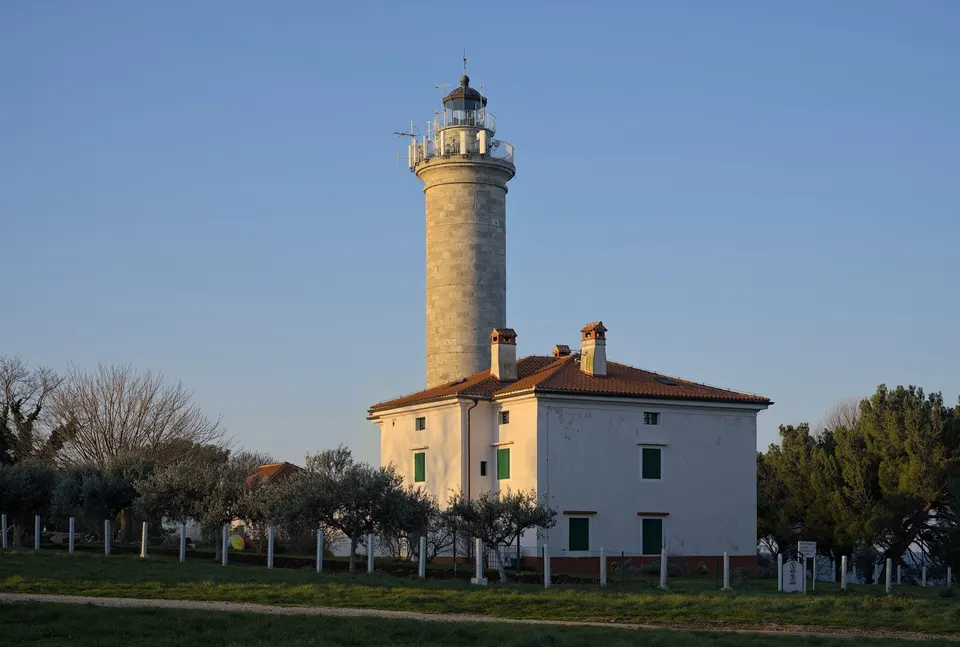
The landmark is the lighthouse. Built in 1818, in the Austrian period, it is generally described as the oldest active lighthouse on the Adriatic. The slender tower of pale stone stands beside the keeper's house on the very edge of the peninsula, and the grassy ground around it is one of the most popular places in the region to watch the sun go down. For more lights along the coast, see our piece on the lighthouses of Istria.
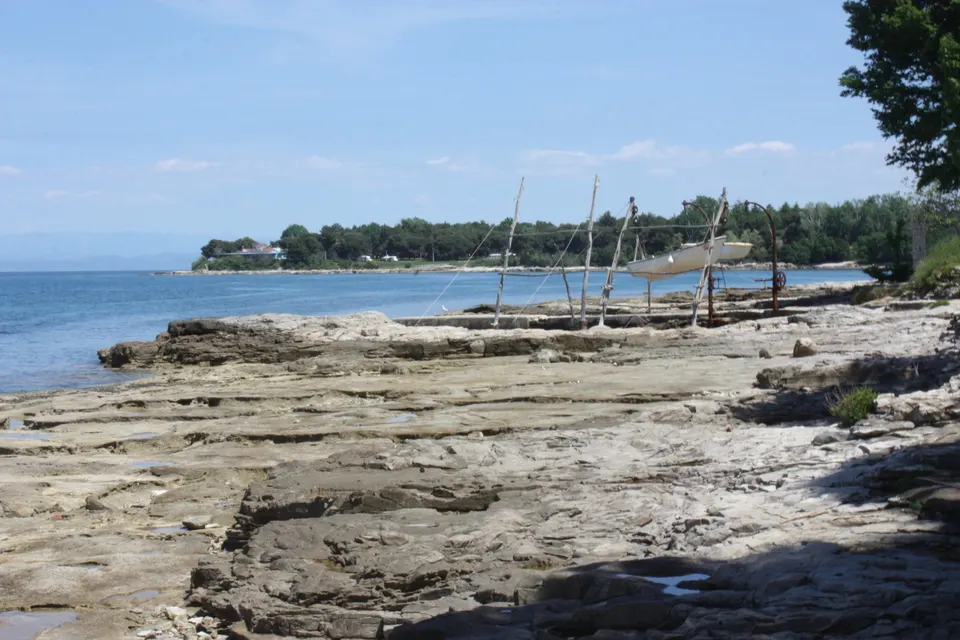
At Savudrija the coast flattens into white stone shelves, and the sunset has nothing in its way.
Where to swim around Umag and Savudrija
Do not expect long sandy beaches. The northwest coast is mostly rock and pebble, with concrete platforms and ladders near the towns and natural limestone shelves further out. The good news is that the shore is long and varied, so even in August it is usually possible to find a quieter stretch.
- Around Umag. Promenades north and south of the old town have easy access points, showers and shade, which suits families.
- Katoro and Sipar. Rocky coves and pine shade north of town, with the ruins of Sipar as a backdrop.
- Savudrija. Flat rocks and clear water along the cape, with traditional boat hoists still standing on the shore. Bring water shoes.
- Sunset swims. The whole coast faces west; the last hour of light is the best time to be in the water.
What to do inland
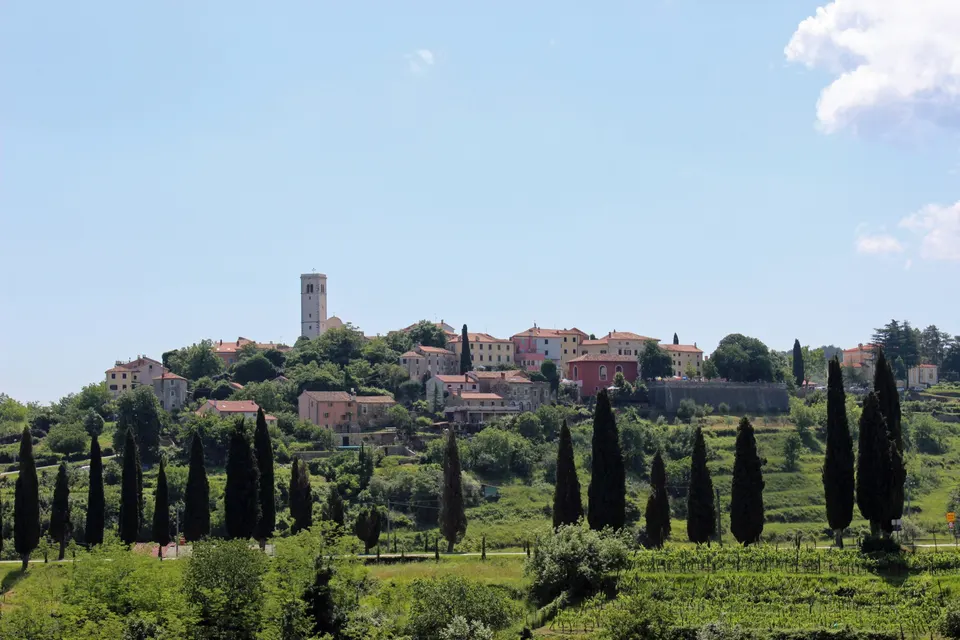
The real reward of staying in the northwest is how close the countryside is. Within a short drive of the coast, the land rises into the gentle hills of the Buje area, one of the best-known wine districts in Istria. Momjan is famous for its sweet Muškat, Brtonigla and the surrounding villages for Malvazija, and many family wineries welcome visitors by appointment. Read more in our guide to Istrian wines.
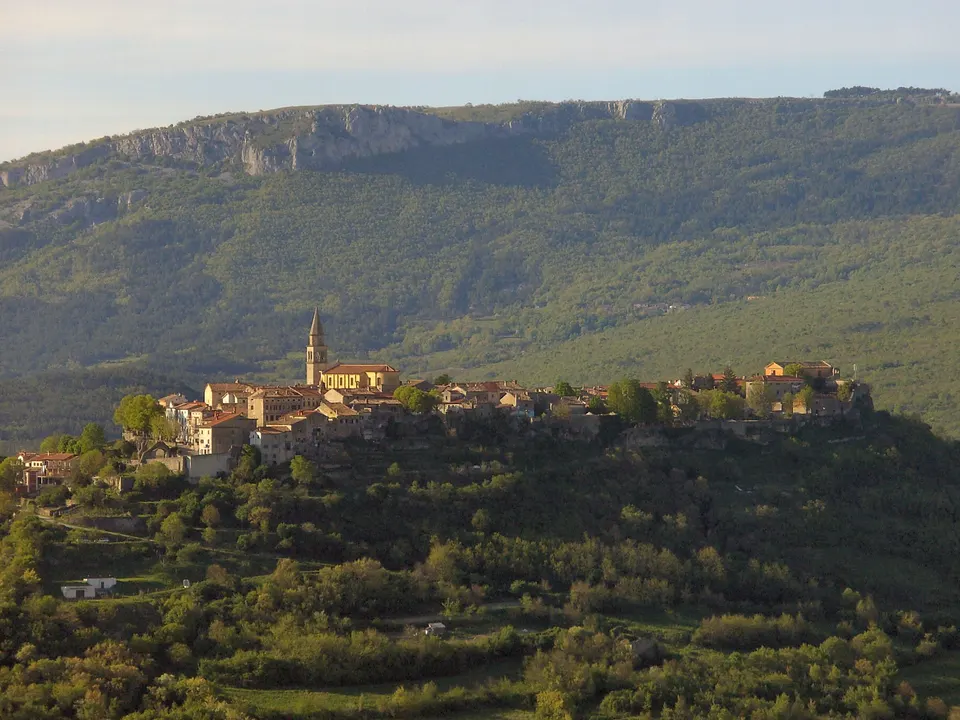
- Buje. A hilltop town on the ridge above the coast, often called the watchtower of Istria for its views.
- Grožnjan. The village of artists and music, with galleries in old stone houses. See our guide to Grožnjan.
- Novigrad. A walled town on the sea, just south of Umag, at the mouth of the Mirna.
- Piran and the Slovenian coast. Easy to combine with a day across the border.
Good to know
- Getting there. The northwest is the first part of Istria reached by road from Slovenia and Trieste. Trieste and Pula airports are the most practical, with Ljubljana and Venice also within driving distance.
- When to come. May, June and September are ideal: a warm sea, open restaurants and fewer people. July and August are busy, especially during the tennis tournament.
- Getting around. A car is the easiest option, but the flat coast between Umag and Savudrija is also good for cycling.
- Food. Look for fresh fish and shellfish on the coast, and for truffles, pršut and homemade pasta in the inland villages.
Umag and Savudrija will never be the most famous names in Istria, and that is a large part of their appeal. The light is wide and soft, the countryside is close, and the evenings belong to the sunset. Many people who first passed through on the way south end up coming back to stay, and some end up looking for a stone house of their own among the vineyards.