A village with a Venetian bell tower, a fishing settlement on the sea, a long wooded peninsula and a quiet bay where the Mirna meets the Adriatic. What to see and how to enjoy it.
Between Poreč and Novigrad, the west coast of Istria flattens out into a gentle landscape of olive groves, vineyards, pine woods and low rocky shores. This is Tar-Vabriga, Torre-Abrega in Italian, a small bilingual municipality that many people pass through on their way somewhere else. Most of them know only one name: Lanterna, the long peninsula with its campsites and holiday villages. But there is more here, and it is worth slowing down for.
Where is Tar-Vabriga?
The municipality sits on the coast north of Poreč, stretching up to Tarska vala, the bay at the mouth of the river Mirna, across which lies Novigrad. It is made up of several settlements: Tar, the main village, a little inland on a low rise; Vabriga, closer to the sea; the Lanterna peninsula; and a number of smaller hamlets scattered among the fields. It is an easy base for exploring the west coast, with Poreč, Novigrad and the hill towns of the interior all within a short drive.
Tar: the village and the church of St Martin
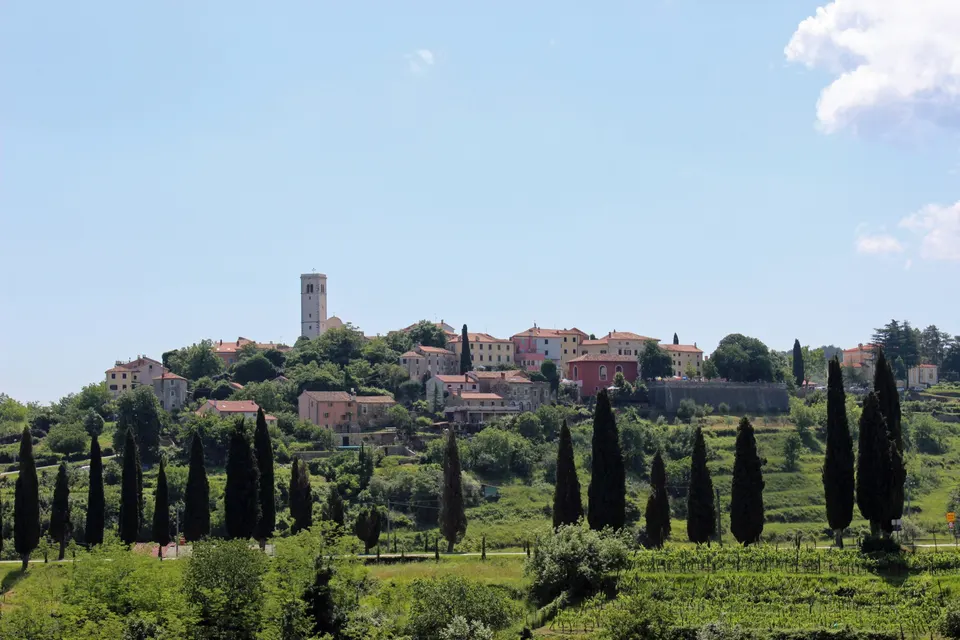
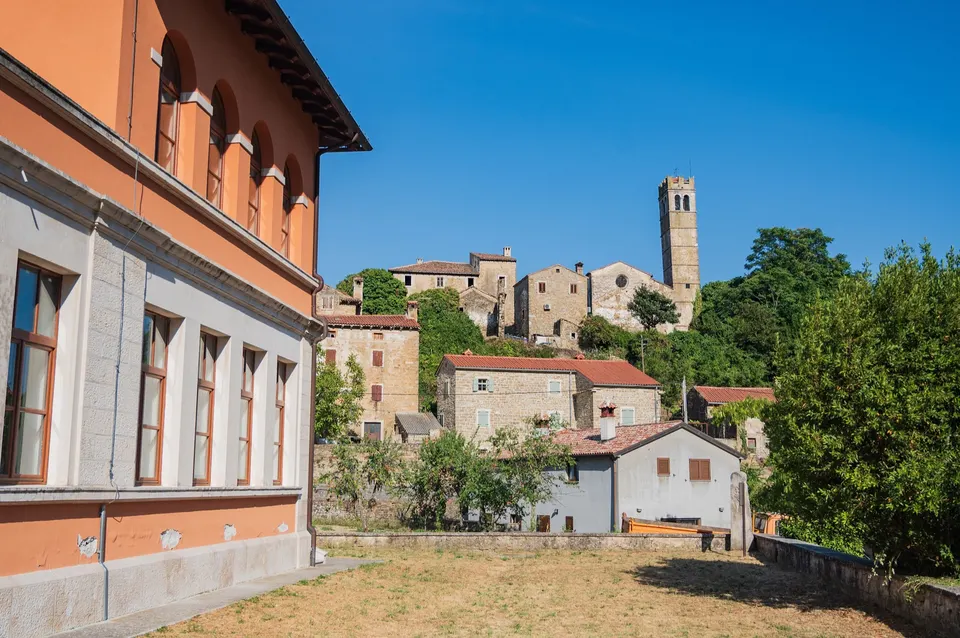
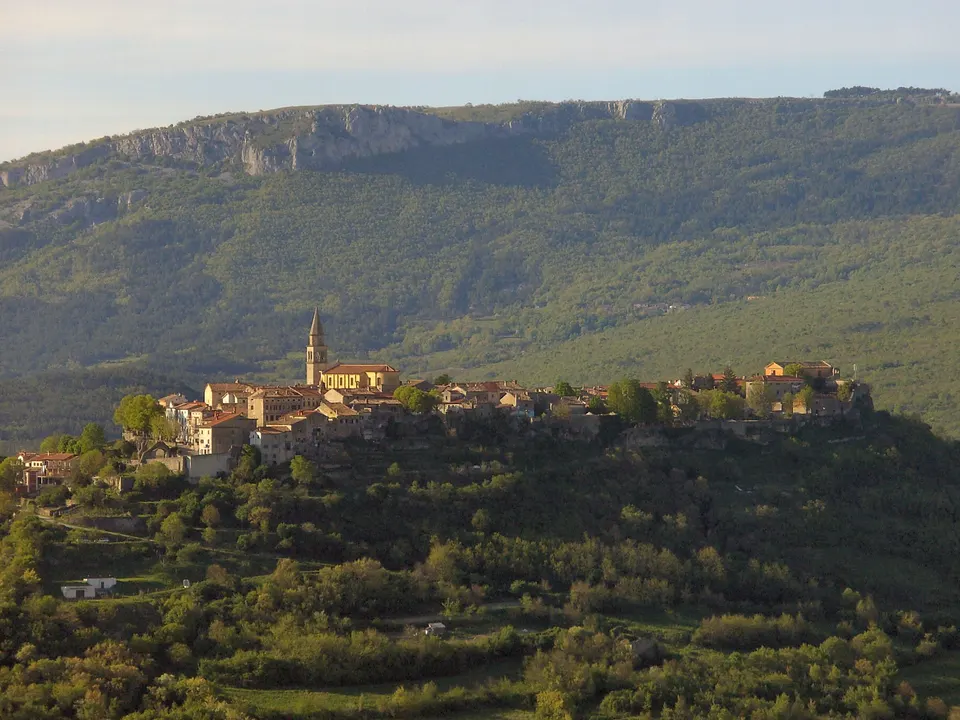
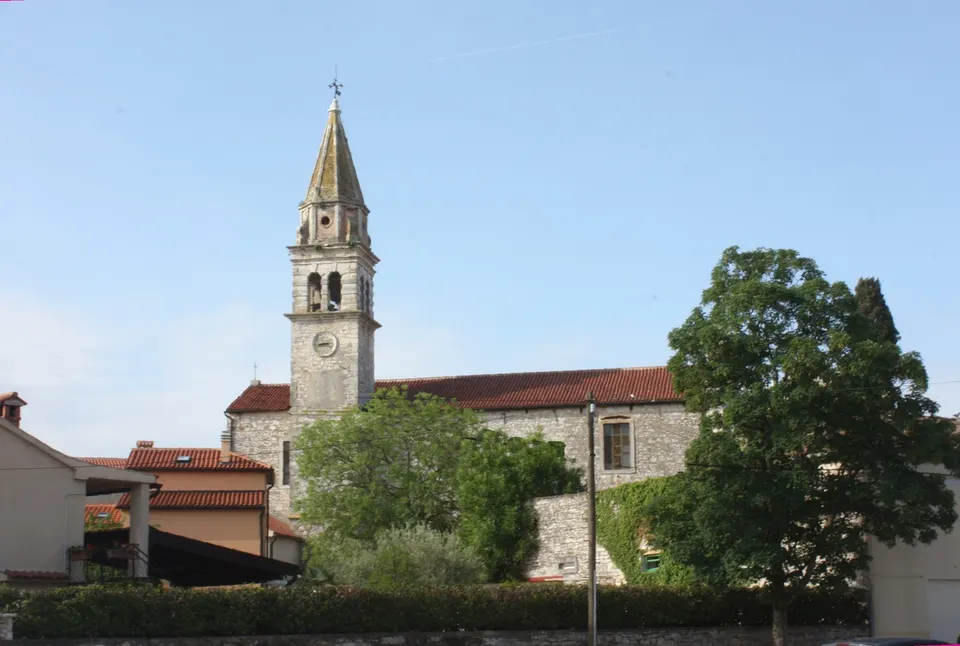
Tar is a compact stone village built around its parish church of St Martin, whose tall, slender bell tower is visible from far across the flat countryside. The bell tower follows the Venetian model you see all along the west coast of Istria, and it makes Tar easy to find from any direction. Around the church, old stone houses and courtyards sit beside newer homes, and the village keeps a quiet, everyday life outside the busiest weeks of summer.
The countryside around Tar is classic western Istria: red earth, olive trees, vineyards and dry-stone walls. Small producers of olive oil and wine are part of the local economy, and in season you will see signs for home-made oil and wine at farm gates. If olive oil interests you, our guide to Istrian olive oil explains what to look for.
Vabriga and the coast
Vabriga is the settlement closer to the sea, and the coast below it is low and rocky, with small coves, flat rocks for sunbathing and shallow water in places. It is a good stretch for families and for anyone who likes an easy swim from the rocks with a view along the coast. Paths and quiet roads follow the shore, which makes it pleasant for walking and cycling, especially in the morning and evening.
What is the Lanterna peninsula like?
Lanterna is a long, low peninsula pointing into the Adriatic, covered in pine and holm oak and edged with rocky shores. Since the second half of the twentieth century it has been one of the largest tourist areas on the Istrian coast, with big campsites, holiday apartments and hotels set among the trees. In high summer it is busy and full of families; outside the season it becomes very quiet, and the shoreline paths are a lovely place to walk.
What Lanterna does well is space and shade. The pines come almost to the water, the sea is clean, and the long coastline means there is always another cove a short walk away. It is not a place for historic architecture, but it is an easy, relaxed place to swim, cycle and spend time outdoors.
Tarska vala: where the Mirna meets the sea
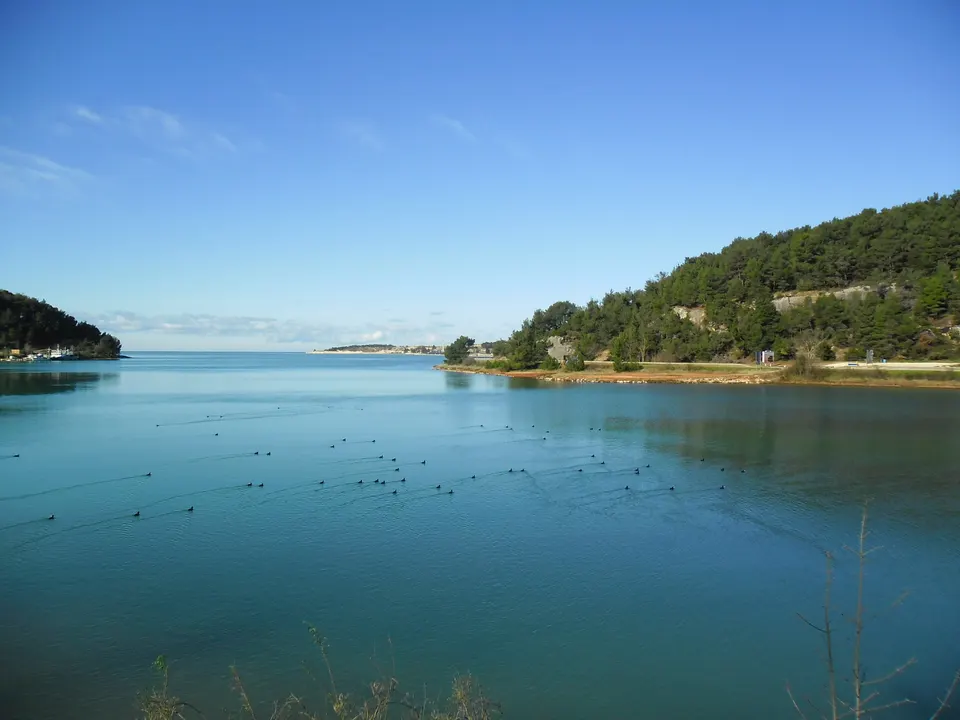
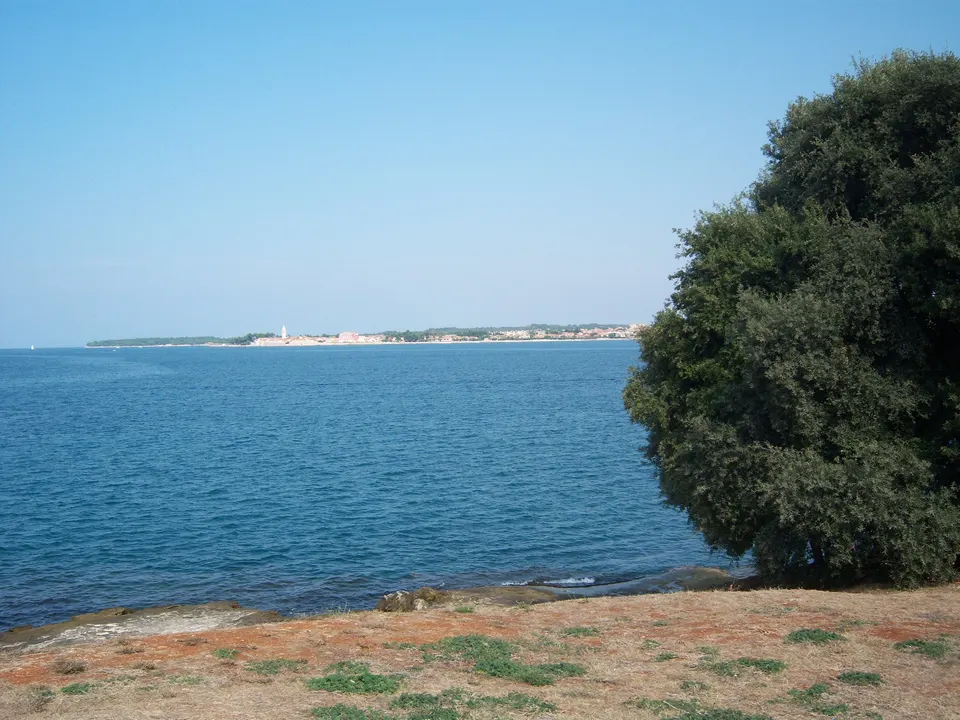
North of Lanterna, the coast curves into Tarska vala, a sheltered bay at the mouth of the river Mirna. Here fresh water mixes with the sea, and the shores turn into reeds, mudflats and salt marsh. It is one of the most interesting natural corners of the west coast, especially for birdwatching: herons, egrets, cormorants and many migrating birds use the bay and the wetland behind it. The water is calm, and the view across to Novigrad is beautiful in the evening.
Here fresh water mixes with the sea, and the coast turns into reeds and salt marsh.
The bay is also the end of a long journey. The Mirna rises in the hills of northern Istria and flows through the Motovun forest and the Mirna valley before it reaches the sea here. Following the river from its source to Tarska vala is a fine way to understand how varied this small peninsula is.
Loron: a Roman site by the sea
On the coast between Tar-Vabriga and Červar, archaeologists have studied the remains of a Roman estate at Loron, where amphorae were produced for transporting olive oil and wine. Like many villas along the west coast of Istria, it shows how important this fertile shoreline was in Roman times, and how long olive oil and wine have been made here. The site is in an open landscape by the sea, and it is a reminder that the Roman heritage of Istria extends far beyond the Arena in Pula.
Good to know
- Getting there. Tar-Vabriga lies just off the coastal road between Poreč and Novigrad; a car or bike is the easiest way to get around.
- Cycling. The terrain is flat and the roads between the villages are quiet outside high season, so it is good cycling country for all ages.
- Swimming. The shore is mostly rocky, with some shallow, gently sloping spots. Water shoes help.
- Season. Lanterna is very lively in July and August and much quieter in spring and autumn, when it is at its most pleasant for walking.
- Birdwatching. Bring binoculars to Tarska vala, and go early in the morning or late in the afternoon.
- Nearby. Poreč and Novigrad are both a short drive away.
A quieter base on the west coast
Tar-Vabriga is not a postcard town, and that is part of its charm. It offers easy access to the sea, flat land for cycling, a beautiful bay at the mouth of the Mirna and short drives to Poreč, Novigrad and the hill towns. For many families it is the ideal base: practical, green and close to everything. It is also an area where holiday homes and stone houses in the villages are popular, and where a well-planned house can be lived in comfortably far beyond the summer months.