Below the hilltop towns lies a damp, green valley of oak, ash and poplar, where white truffles grow and the river Mirna winds towards the sea. A guide to walking, cycling and tasting it.
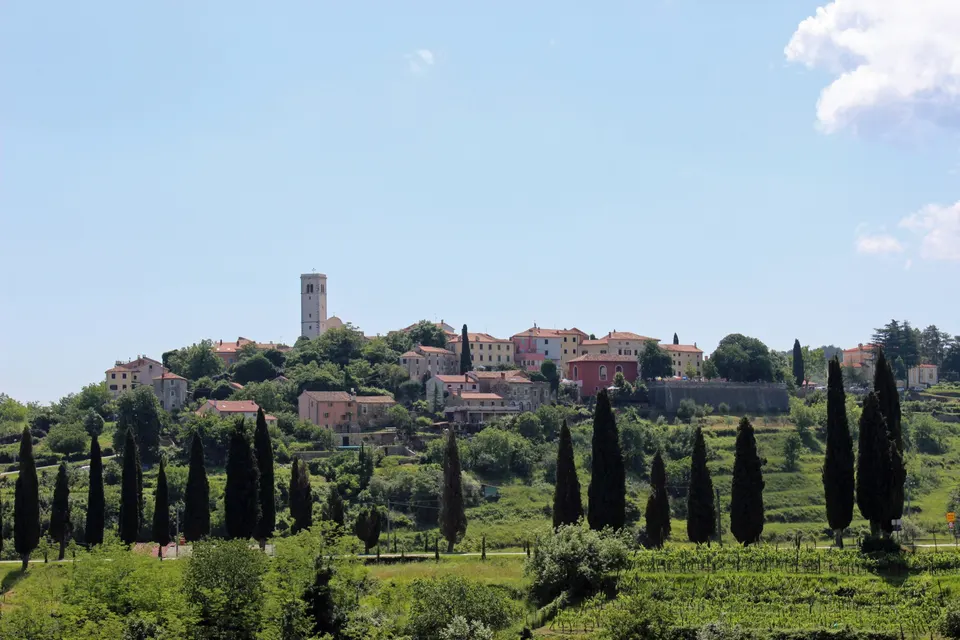
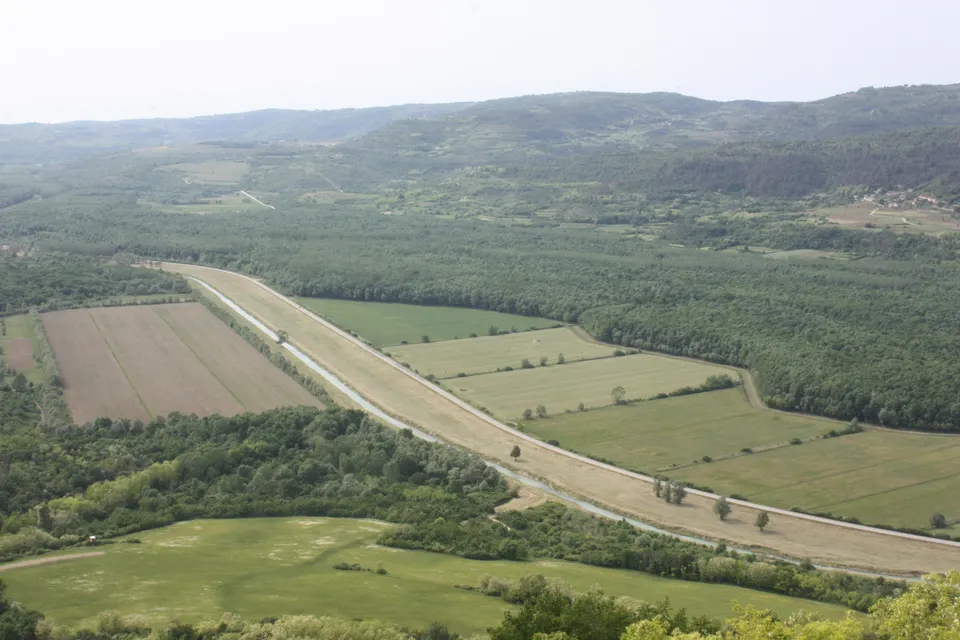
Most people see the Motovun forest from above. They stand on the walls of Motovun, look down, and see a broad, flat valley of fields and dark trees with a river running through it. It is one of the classic views of Istria. But the forest is worth more than a glance from the ramparts. Walk or cycle into it, and you find a landscape quite unlike the dry, stony Istria of the coast: tall trees, damp soil, morning mist and, in autumn, the famous smell of truffles.
What is the Motovun forest?
The Motovun forest is a lowland forest that grows along the river Mirna, the longest river in Istria, in the valley below Motovun and the neighbouring hill towns. Unlike most Istrian woods, which are made of holm oak, pine and scrub on dry limestone, this is a wet, fertile valley forest. Its trees are those of river plains: pedunculate oak, narrow-leaved ash, elm and poplar, with a dense understorey and damp ground that floods in places after heavy rain.
For centuries the forest had real economic value. Under Venetian rule, its oaks were carefully protected and used as timber for shipbuilding, and the trunks were floated down the Mirna towards the sea. That long history of management is one of the reasons the forest survived when so much of Istria was cleared for farming and grazing. Today a large part of it is protected, and it remains one of the most important forests in the region.
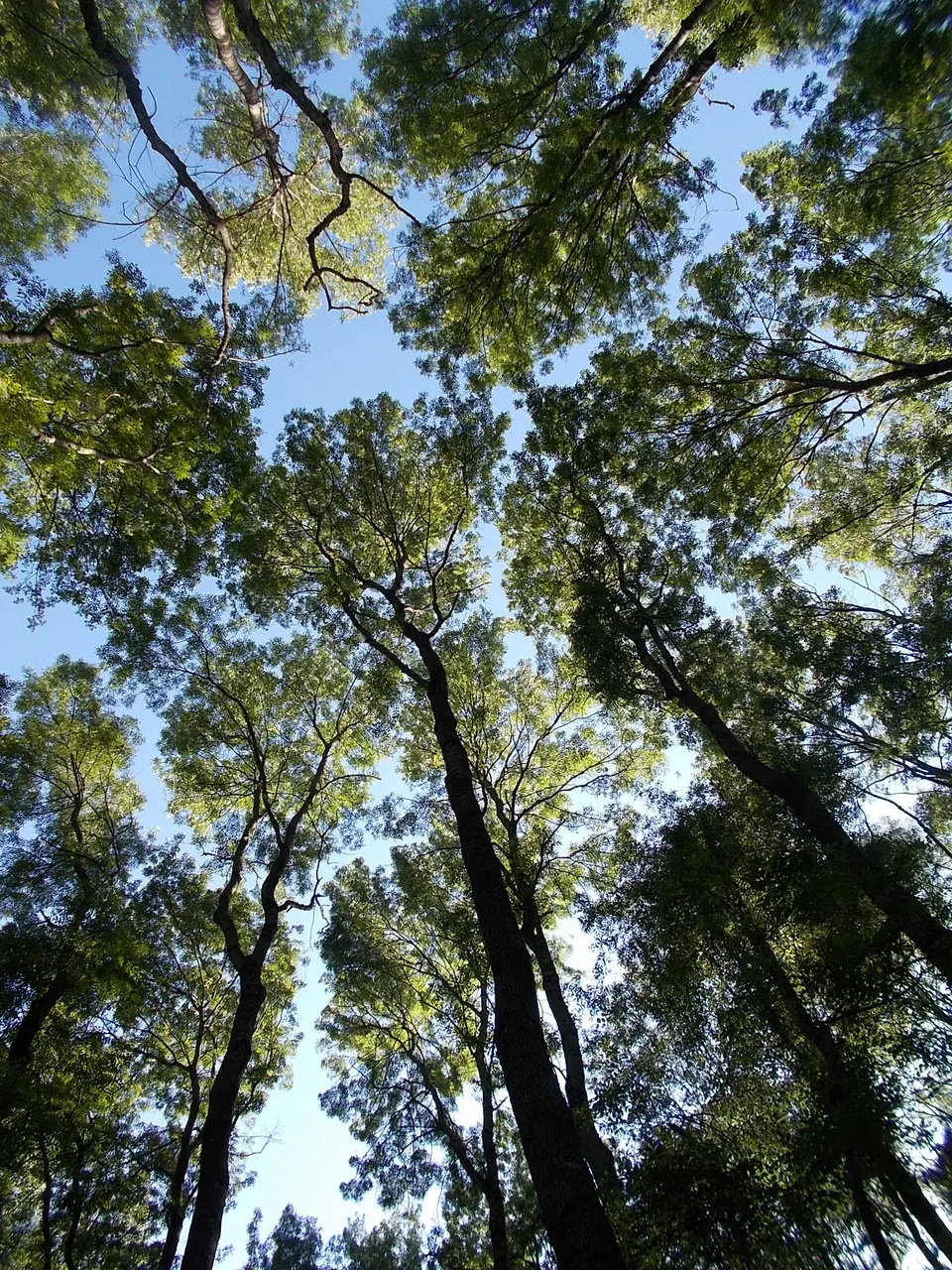
Why is the Motovun forest famous for truffles?
The damp, loose soils and the particular mix of trees in the Mirna valley make it one of the best places in Europe for truffles, including the prized white truffle. Truffle hunters work the forest with their dogs, mostly in autumn and early winter, and the villages around the valley, especially Livade, have built much of their reputation on it. Our guide to truffle season in Istria explains the different kinds and how to taste them.
If you want to see a hunt, several families and local businesses offer truffle-hunting walks, usually in the morning. It is the most rewarding way to enter the forest with someone who knows it, and to understand why the paths look so ordinary while the ground beneath them is so valuable.
The paths look ordinary. The ground beneath them is not.
The river Mirna
The Mirna rises in the hills of northern Istria, near Buzet, and flows west across the peninsula before reaching the sea near Novigrad. In its upper course it runs through a narrow valley between steep slopes; below Motovun the valley opens into a wide, flat plain. In the past the river flooded regularly, and over the centuries it was straightened and given embankments so that the land could be farmed. Today you can follow those embankments on foot or by bike, with the forest on one side and fields on the other.
Near the river's mouth, the valley turns into wetland and the bay known as Tarska vala, rich in birdlife. That end of the river belongs to a different landscape, which we describe in our guide to Tar-Vabriga and the Lanterna peninsula.
Istarske Toplice: a spa in the valley
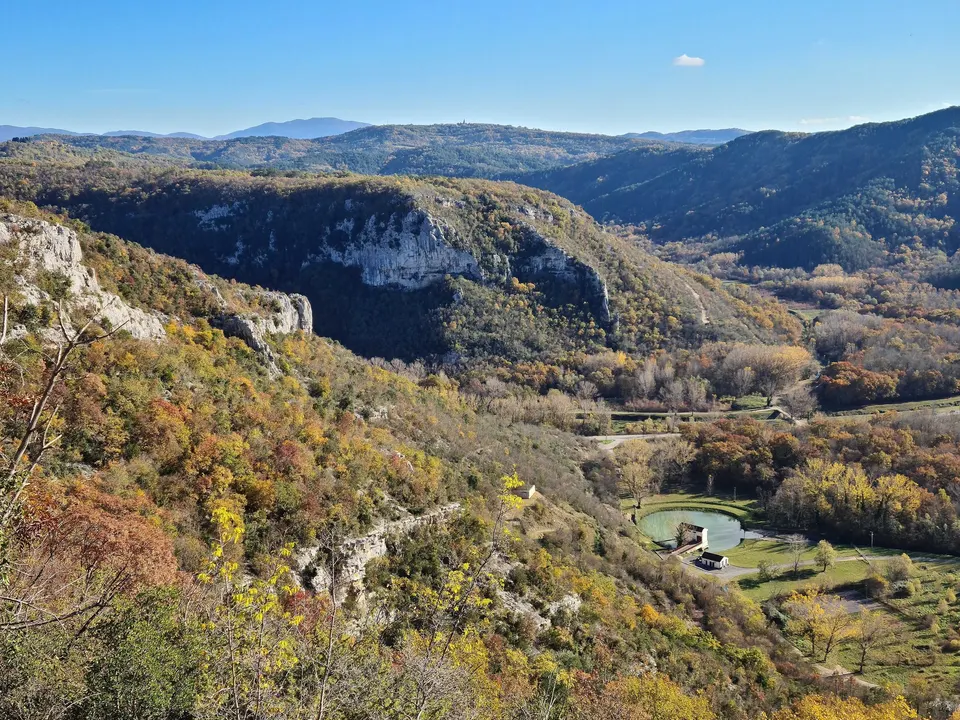
Upstream from Motovun, where the valley narrows between high limestone cliffs, lies Istarske Toplice, a spa built around a natural thermal spring rich in sulphur. Its waters have been used for bathing and healing for a very long time, and the setting, with a dramatic rock face rising above the spa buildings and the wooded gorge around it, is one of the most striking in inland Istria. Even if you do not stay, it is worth stopping to see the cliffs and the valley.
How to explore the forest and the valley
The valley is flat, which makes it ideal for easy walking and cycling. The old Parenzana railway route passes along the edge of the valley near Livade and Motovun, and there are farm tracks and embankment paths through the plain. A good half-day plan is to cycle or walk in the valley in the morning, have lunch in Livade or one of the hill towns, and then drive up to Motovun for the evening light.
- On foot. Embankment paths and forest tracks are flat and easy; pick a short loop and go early, when the forest is cool.
- By bike. The valley is excellent for relaxed cycling. Combine the flat plain with a short section of the Parenzana.
- With a truffle hunter. The best way to see the inside of the forest, in season.
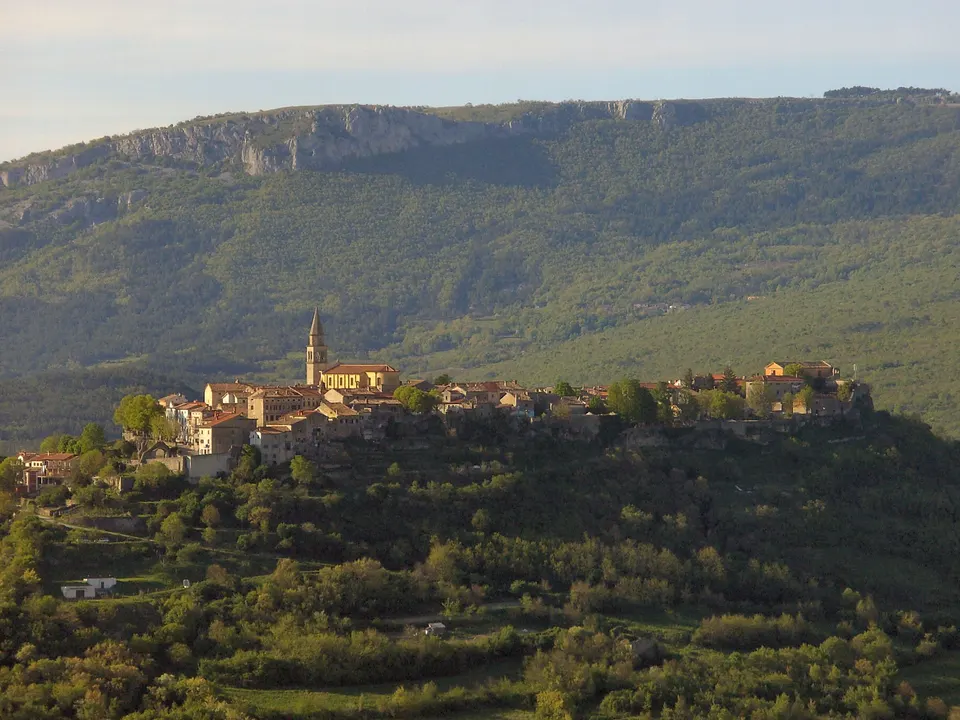
- From above. The walls of Motovun, and the roads up to Oprtalj and Grožnjan, give the classic views over the valley.
When to go
Autumn is the valley's great season: misty mornings, changing leaves, truffles and new wine in the hill towns above. Spring is also lovely, with fresh green leaves and wildflowers along the paths. In high summer the forest offers welcome shade, but it can be humid, and mosquitoes are part of life near the river. Winter is quiet, often foggy in the mornings, and very atmospheric.
Good to know
- Stay on the paths. Truffle grounds are someone's livelihood. Do not dig, and do not let dogs roam off the lead in the forest.
- After rain. Low parts of the valley can be muddy or flooded; wear proper shoes and check conditions locally.
- Insects. Bring insect repellent in the warmer months, especially in the evening.
- Hunting. Parts of the forest may be used for hunting in season; keep to marked routes.
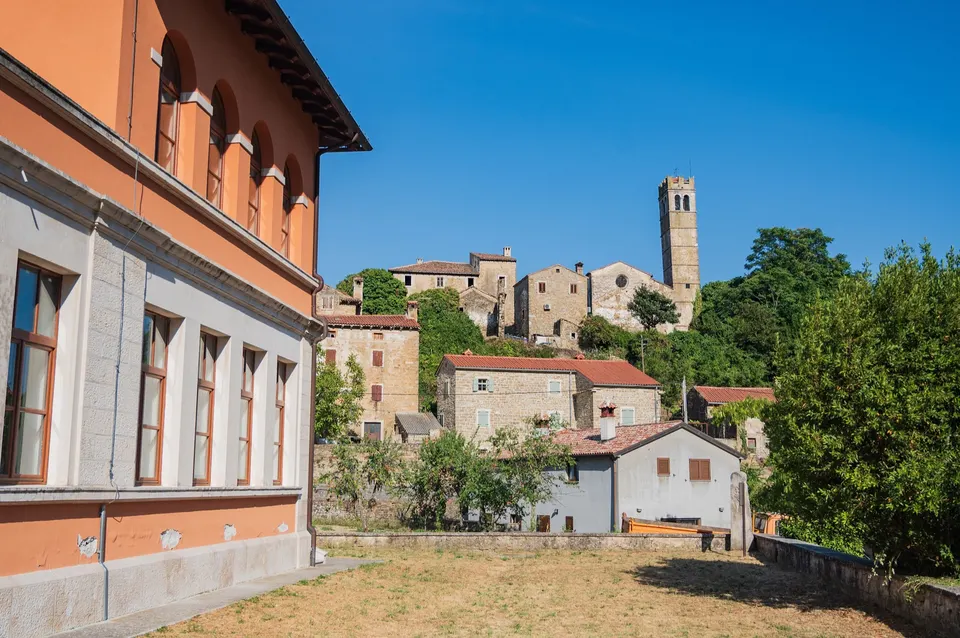
- Combine it. The valley pairs naturally with a weekend in Motovun and a visit to Oprtalj and Draguć.
A landscape worth living near
The Mirna valley explains a lot about inland Istria: why the towns sit on hills, why the food here is so rooted in the seasons, and why so many people who discover it end up looking at stone houses in the villages above. Mornings in the mist, evenings with a view over the forest: it is a place that changes how you think about the peninsula.