Damp patches, flaking paint and a musty smell often start with the wrong plaster. Why old stone walls need lime, and how to get it right.
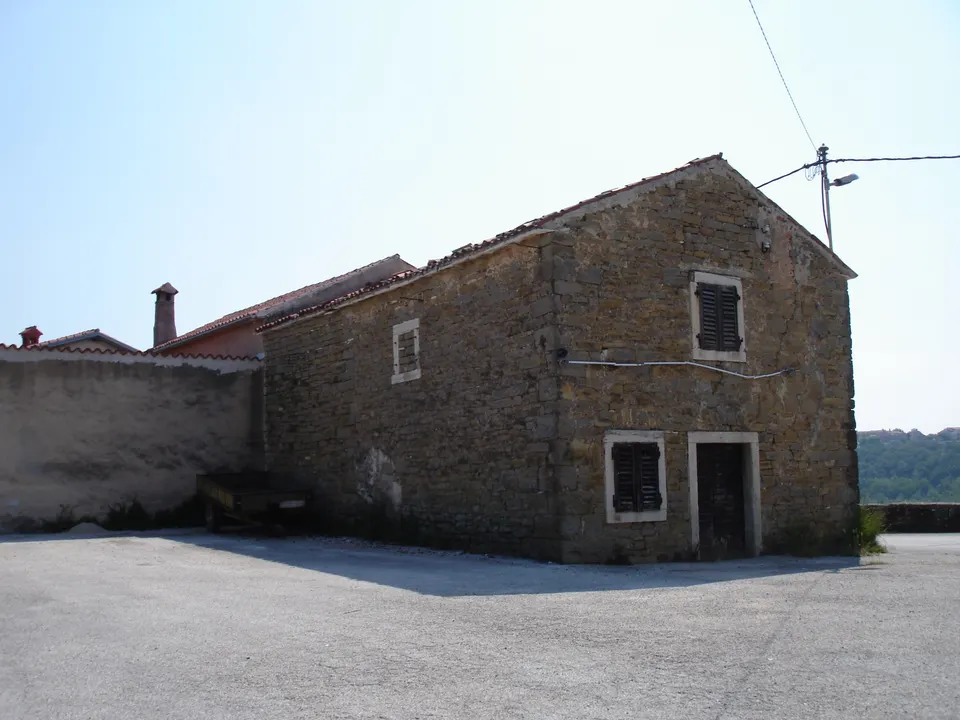
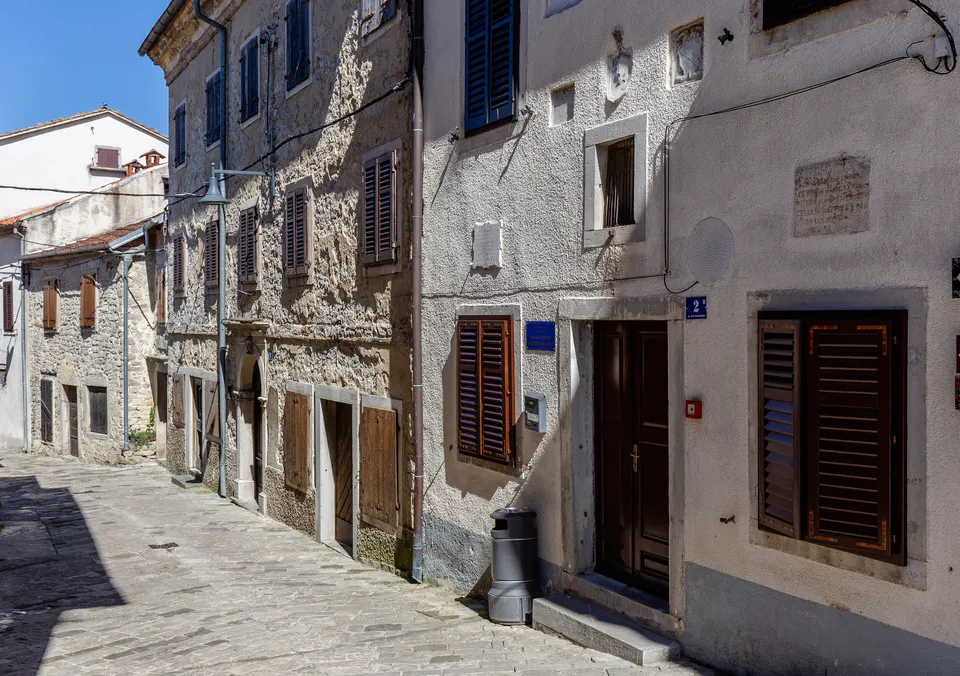
Walk through any inland Istrian village and you will see two kinds of old house. Some have walls that look tired but sound: soft, slightly uneven plaster in a faded ochre or grey, worn at the corners. Others have smooth, hard renders that looked crisp a few years ago and are now cracked, stained at the base and blistering under the paint. Very often the difference is not age or money. It is what the walls were covered with.
Traditional stone houses were built to deal with moisture by letting it pass through. Understanding that one idea will save you more trouble in a renovation than almost any other decision.
Why do old stone walls need to breathe?
An old stone wall is not a sealed barrier. It is stone laid in a lime or earth mortar, often with a rubble core, standing directly on the ground with no damp-proof course. Moisture enters it all the time: from the soil, from driving rain, from the air inside the house. That was never a problem, because the same moisture could leave again. The mortar, the plaster and the limewash on the surface were all porous, so water vapour moved out through the wall and evaporated from its face.
Builders call this vapour permeability, and the everyday shorthand is a "breathable" wall. It does not mean air blows through it. It means the wall can dry out as fast as it gets wet.
What goes wrong with cement render
During the twentieth century, many stone houses were re-rendered with cement, inside and out, and finished with plastic-based paints. Cement is strong and quick, but it is far less permeable than lime and much more rigid. On a stone wall it behaves like a raincoat worn the wrong way round: water still gets in through the ground and through fine cracks, but it can no longer escape through the face.
The moisture then looks for another way out, usually at the weakest point. You see it as a damp band at the bottom of an inside wall, salt crystals pushing the paint off, mould behind wardrobes, or plaster that sounds hollow when you knock on it. Outside, a cement render that has cracked lets rain in behind it and keeps it there. In winter the trapped water can freeze, and pieces of render, sometimes with the face of the stone attached, come away.
A stone wall was never meant to stay dry. It was meant to dry out.
How lime plaster works
Lime is made by burning limestone, the same rock Istria is built from, and then slaking it with water. A lime plaster hardens slowly by taking carbon dioxide back from the air, gradually turning into something close to the stone it came from. The result is softer and more porous than cement. That is exactly its value: it lets vapour through, it moves a little with the wall instead of cracking, and if anything has to fail, it is the plaster that gives way, not the stone. A lime plaster can be patched and renewed; a stone face damaged by frost cannot.
Lime is also naturally alkaline, which makes it an unfriendly surface for mould. Finished with a traditional limewash rather than a modern acrylic paint, the wall keeps its breathability all the way to the surface and takes on that soft, chalky depth that no factory paint quite imitates.
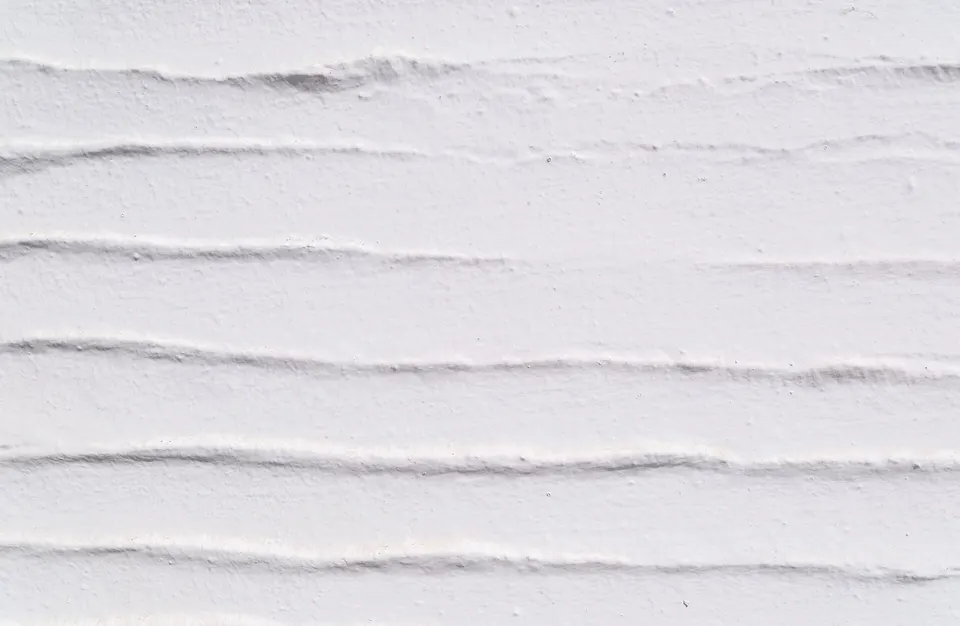
Air lime or hydraulic lime?
There are two broad families. Air lime, often used as lime putty, sets only by contact with air. It is the most breathable and the most flexible, but it is slow and needs patience and protection while it cures. Natural hydraulic lime (usually labelled NHL, with a number for its strength class) also sets with water, so it is quicker and better suited to exposed or damp positions. It is a little less permeable than air lime, but still far more forgiving than cement.
Which one suits your house depends on the wall, its exposure and the season of the work. This is a question for a builder or restorer with real experience of lime, not something to settle from a product catalogue. Be wary of renders that call themselves lime but contain cement or synthetic binders; ask for the full composition.
What a good lime job looks like
Lime is applied in several thin coats rather than one thick one, each allowed to firm up before the next. It must not dry too fast: in summer the walls are shaded and lightly misted, and work stops in frost and in the hottest part of the day. That slower rhythm is why a lime renovation is best planned around the season, not squeezed into a week before guests arrive.
- Remove what traps moisture. Cement render and plastic paints usually have to come off first, carefully, so the stone is not damaged.
- Deal with the source. Check gutters, downpipes, ground levels against the wall and leaking pipes before blaming the plaster.
- Keep the whole system open. Lime plaster under an acrylic paint or a vinyl wallpaper loses most of its benefit.
- Insulate with care. If the walls need insulation, choose vapour-open materials such as lime-hemp or wood-fibre systems, and get advice on where condensation could form.
- Allow time. Lime needs weeks to cure properly. Plan furniture deliveries and fitting afterwards, not during.
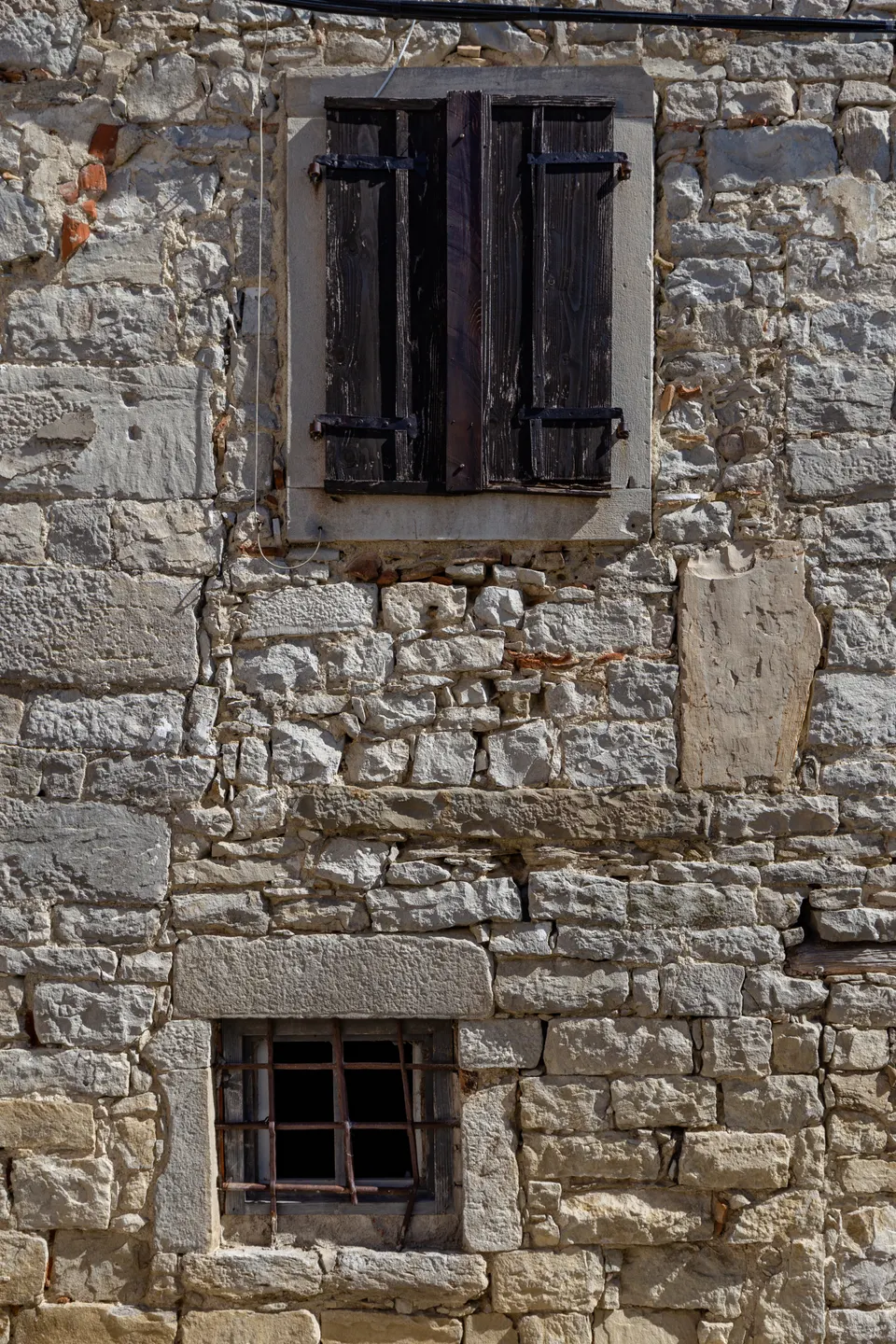
Inside the house: floors, furniture and air
Breathable walls work best as part of a breathable house. A new concrete floor slab laid straight onto the ground can push moisture sideways into the base of the walls, so the floor build-up deserves the same thought as the plaster. Rooms that are closed for months need some airflow, even if it is only regular airing when the house is opened.
Furniture plays a part too. Large pieces pushed tight against a cold external wall create a pocket of still, damp air behind them. Leaving a small gap, raising pieces on legs or plinths and choosing materials that cope with humidity all help. This is one reason our partner atelier, Lampisa, builds its fitted wardrobes and cabinets in plywood rather than particleboard: plywood is far more tolerant of the moisture that old houses live with, and a well-made built-in can be designed with ventilation behind it from the start. The difference between the two boards matters more in a stone house than almost anywhere else.
Before you start
If you are buying or restoring an old house, ask early what the walls are covered with and how the house has behaved through a winter. A specialist survey of damp is money well spent. In protected historic centres, the choice of plaster and colour may also be subject to conservation rules, so involve your architect from the beginning. Our guide to restoring a stone house covers the wider process.
Lime is not a nostalgic choice. It is the material these walls were designed around, and it is still the one that lets them do their job.