Istria has one of the longest camping traditions on the Adriatic. Big seaside campsites, quiet rural pitches, camper vans and tents: how to choose, and what to pack.
For generations of families from Germany, Austria, Slovenia, Italy and the Netherlands, a summer in Istria meant a tent or a caravan under the pines, a few metres from the sea. Camping has been part of the peninsula's tourism for decades, and the western coast in particular is lined with campsites, from vast resorts with pools and restaurants to small family places with a few dozen pitches.
This guide does not recommend individual campsites. It explains the kinds of camping you will find, how coast and countryside differ, and the practical things that make the difference between a good stay and a frustrating one. For current campsites, facilities and opening dates, the official Istria tourist board and the local tourist boards are the best places to start.
Coastal campsites: what are they like?
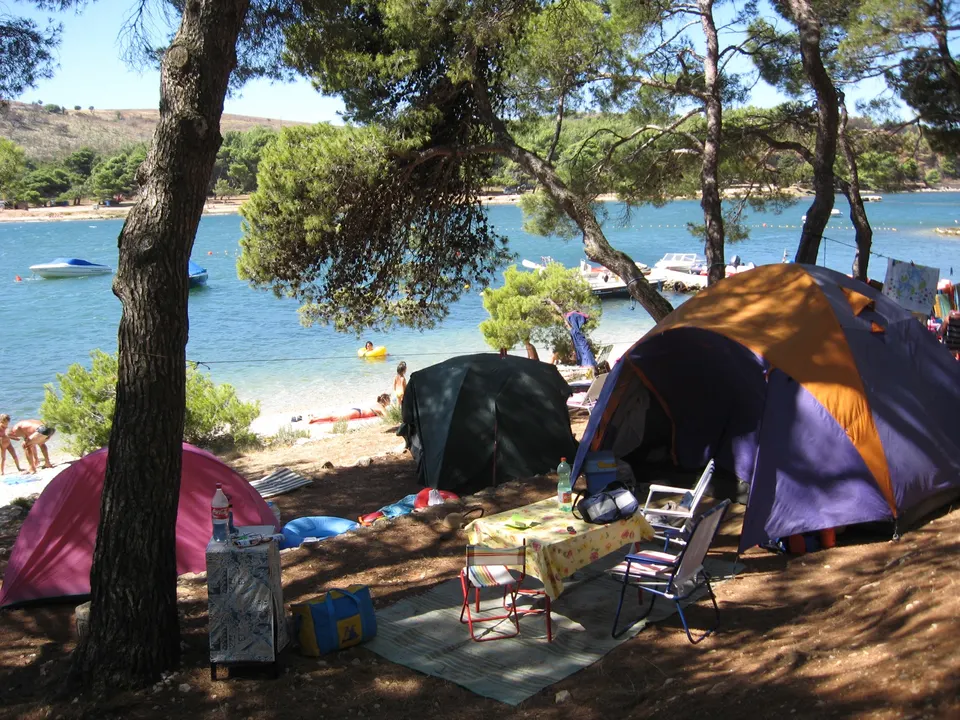
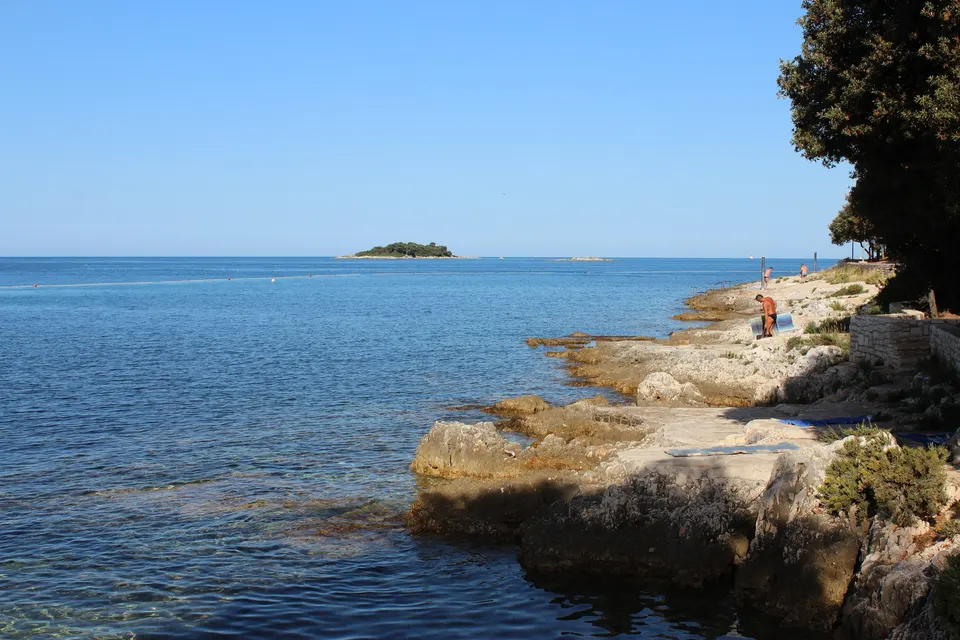
Most of Istria's campsites are on the coast, especially on the western side between Umag and Pula, and around Medulin and Premantura in the south. Many sit on low peninsulas or in bays, with pine woods for shade and a rocky or pebbly shoreline for swimming. If you have not been to Istria before, it helps to know that sandy beaches are rare; see our guide to the best beaches in Istria for what the coast is really like.
The larger campsites are almost small towns, with shops, restaurants, sports facilities, children's programmes and rows of mobile homes alongside the pitches. Smaller ones are simpler and quieter. Istria also has a long tradition of naturist camping, and several campsites are wholly or partly naturist; they are clearly marked as such.
Camping inland: quieter, greener, simpler
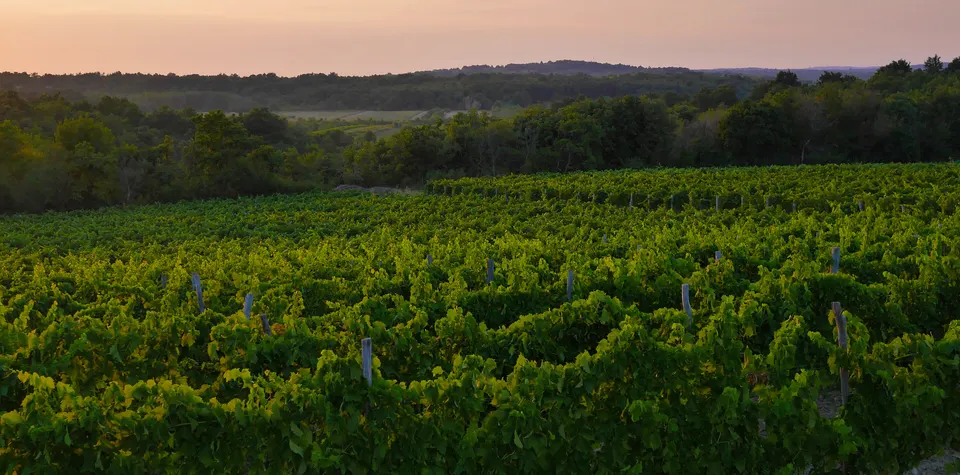
Inland Istria has far fewer campsites, and most of them are small: a meadow beside a farmhouse, a few pitches next to an agritourism, a site near a river or a forest. What you lose in sea views you gain in silence, cooler nights and the chance to wake up near a hill town before the day visitors arrive. The inland is also the better base for cycling, walking and food: truffles, olive oil, wine and the konobas that serve them.
Because inland Istria is small, you are never far from the sea. A country pitch near Motovun or Buzet still lets you reach a beach for an afternoon swim.
Tent, camper van or mobile home?
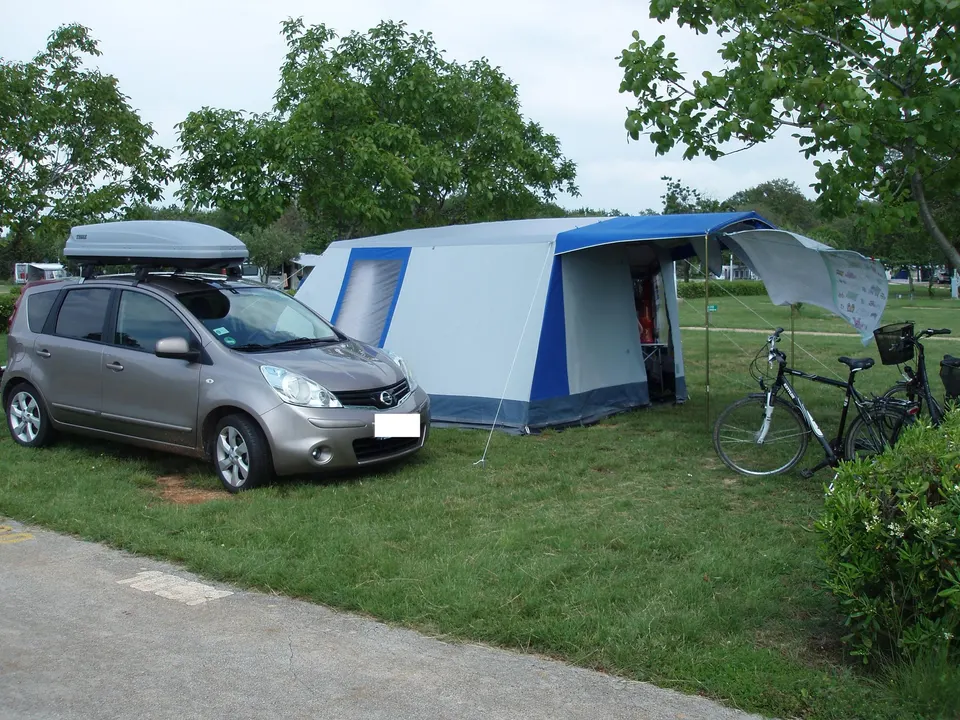
- Tent. The classic way, and still welcome on most sites. The ground on the coast is often hard and stony, so bring strong pegs and a mallet.
- Caravan or camper van. Most coastal sites have pitches with electricity and water nearby. Ask about the size and slope of the pitch if your vehicle is large.
- Mobile home or glamping tent. Many campsites now rent ready-made accommodation, from simple cabins to tents with real beds. A good choice if you want the campsite atmosphere without carrying equipment.
- Pitch choice. In summer, shade matters more than a sea view. A pitch under pines or oaks stays far more comfortable in the afternoon heat.
Is wild camping allowed in Istria?
No. In Croatia, camping is permitted only in registered campsites, and that includes sleeping overnight in a camper van in a car park, by a beach or at a viewpoint. Local authorities do enforce this, especially in summer. Apart from the rules, there is a good reason for it: Istria's pine woods and dry meadows are at high risk of fire in summer, and open fires are dangerous. Use campsites, and use only the barbecue areas the site provides.
In summer, shade matters more than a sea view. Choose the pines first and the panorama second.
When to go camping in Istria
Most campsites open in spring and close in autumn, and a few stay open longer. July and August are the busiest months: the best pitches are booked well in advance, the sites are lively and the sea is at its warmest. May, June and September are, for many people, the ideal time: warm days, cooler nights, a calmer atmosphere and a sea that is already pleasant for swimming by June. Our month-by-month guide, Istria month by month, helps you pick your dates.
Good to know before you pitch
- Book ahead in summer. For July and August, and for any specific pitch, booking well in advance is wise. Outside the peak, there is usually more choice.
- Bring your ID. Campsites, like all accommodation in Croatia, register their guests with the authorities on arrival.
- Tourist tax. A tourist tax is charged per person per night; it is usually added to your bill.
- Wind and storms. Summer storms can arrive quickly, and the bura, a strong north-easterly wind, can blow hard at any time of year. Peg everything down and do not leave awnings unattended.
- Mosquitoes. Near wetlands and on still evenings they can be a nuisance. Bring repellent and a net if you are sensitive.
- Water shoes. Rocky shores mean sea urchins in places. Light shoes for swimming make the coast far more comfortable, especially for children.
- Dogs. Many campsites accept pets, often with rules about leads and beaches. See our guide to dog-friendly beaches.
- Shopping. Large sites have shops, but prices and choice are better at a supermarket in town or at a local market.
Camping with children
Campsites are one of the easiest ways to holiday in Istria with children: space to run around, other families nearby and the sea a short walk away. Choose a site with a gently sloping shoreline or a shallow bay, and check whether there is shade near the water. For more ideas, see our guide to Istria with children.
Many people who first came to Istria with a tent eventually return in other ways: renting a stone house in the hills, or one day buying one. The pines, the sea and the slow evenings stay the same.