Rock shelves, pebble coves, pine shade and the odd stretch of sand. Where to swim in Istria, from Savudrija in the north to Rabac in the east.
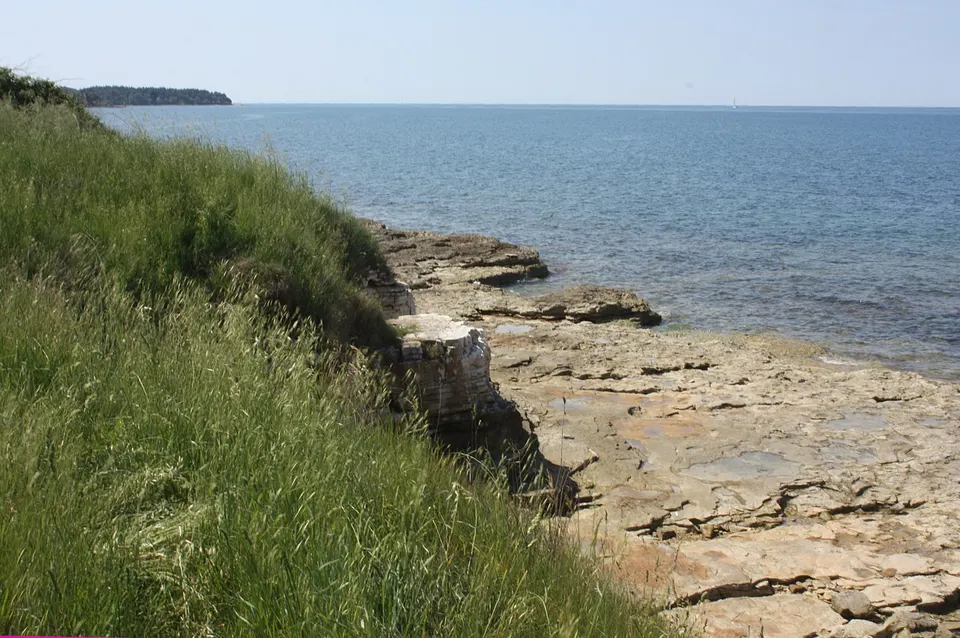
If you come to Istria expecting long sandy beaches, you will be surprised. The coast here is limestone, and most of it meets the sea as flat rock shelves, small pebble coves and concrete bathing platforms built into the shore. What you get in return is water of remarkable clarity, the shade of pine woods that run right down to the sea, and the chance to find a corner of your own even in August. This guide goes around the peninsula from north to south and then up the east coast, with the places worth knowing on each stretch.
What are Istrian beaches like?
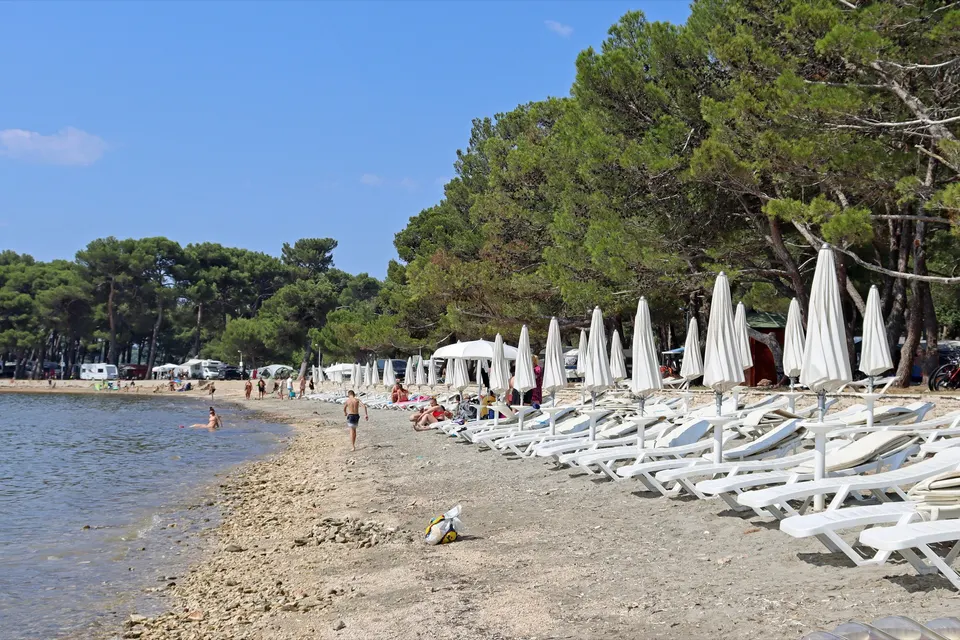
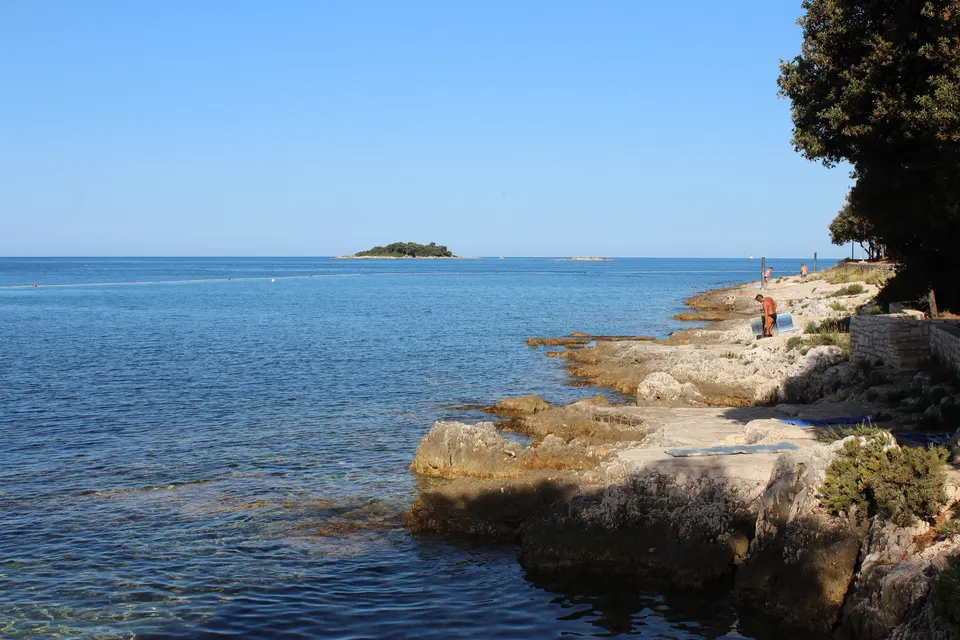
Expect three kinds of shore. The first is natural rock: smooth slabs and ledges, sometimes with ladders into the water, perfect for snorkelling. The second is pebble, from fine gravel to fist-sized stones, usually in small bays. The third is the town beach, often a mix of rock, gravel and paved terraces, with showers, cafés and sunbeds. Real sand is rare. Many Istrian beaches carry the Blue Flag for water quality and services, and the sea is generally very clean, but the bottom is rocky almost everywhere, so water shoes make a real difference, especially for children.
The north: Savudrija and Umag
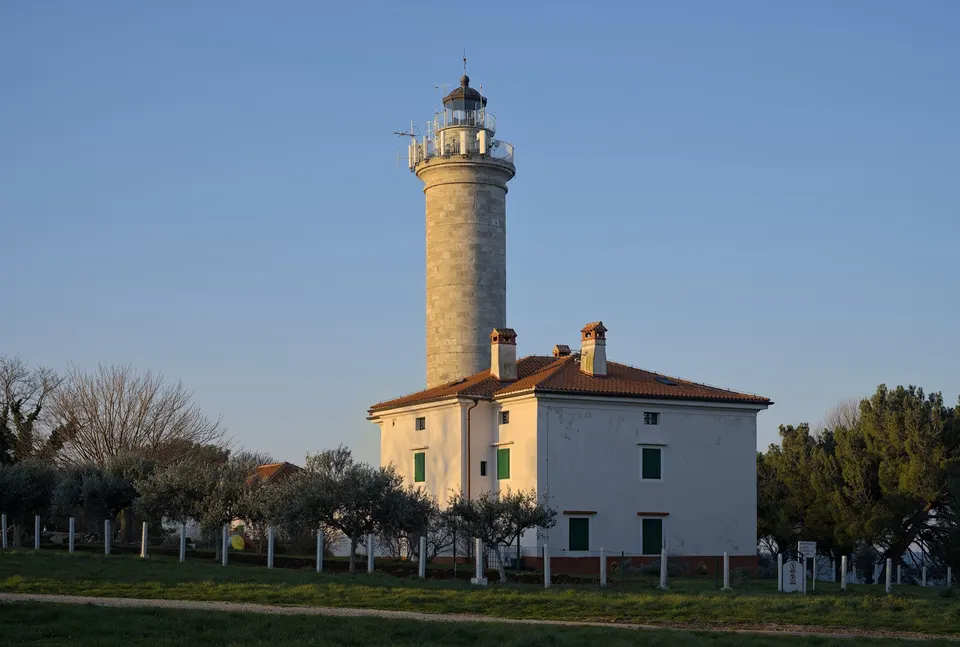
The north-west corner of Istria is low and green, with long stretches of rocky coast between Savudrija and Umag. Savudrija, with its old lighthouse, has quiet natural shores and a relaxed, residential feel. Around Umag the coast is lined with campsites and resort beaches, many of them well equipped and shallow, which makes them easy for families. The water here is often calm, and the views at sunset, straight out to the west, are some of the best in Istria.
Novigrad, Poreč and the lagoons
Novigrad has a pleasant town beach and walks along the shore in both directions. South of Poreč, the coastline known as Plava Laguna and Zelena Laguna, the Blue and Green Lagoons, is one of the most developed beach areas in Istria: a long sequence of coves, pine shade and resort facilities. It is busy in high season but very practical, with everything within walking distance. For something quieter, look for the smaller coves between the larger beaches, or swim early in the morning.
Vrsar and the mouth of Lim Bay
Vrsar sits on a hill above a small harbour, with a scatter of islets offshore and rocky shores on both sides of town. It is a good base for swimmers who prefer natural rock to organised beaches. Just south of Vrsar opens Lim Bay, the long, steep-sided inlet best explored by boat rather than for swimming.
Rovinj and the Golden Cape
Rovinj has the most beautiful town setting of any beach area in Istria. South of the old town, the Golden Cape forest park runs along the sea with paths under tall pines and cedars, and its coves range from organised beaches near the hotels to quiet rocks a little further on. North of the town and on the islands of Sveta Katarina and Crveni otok there are more places to swim, reached by short boat rides. We have a separate guide to Rovinj's beaches and the Golden Cape.
Fažana and Pula
Fažana, the fishing village opposite the Brijuni islands, has small pebble beaches and a long promenade, with the islands on the horizon. Pula itself is surrounded by water on three sides, and its peninsulas, Stoja, Verudela and Punta Verudela, are full of rocky coves under the pines. They are among the best town swimming spots in Croatia: you can walk from a Roman amphitheatre to a quiet rock in less time than it takes to find parking in many resorts.
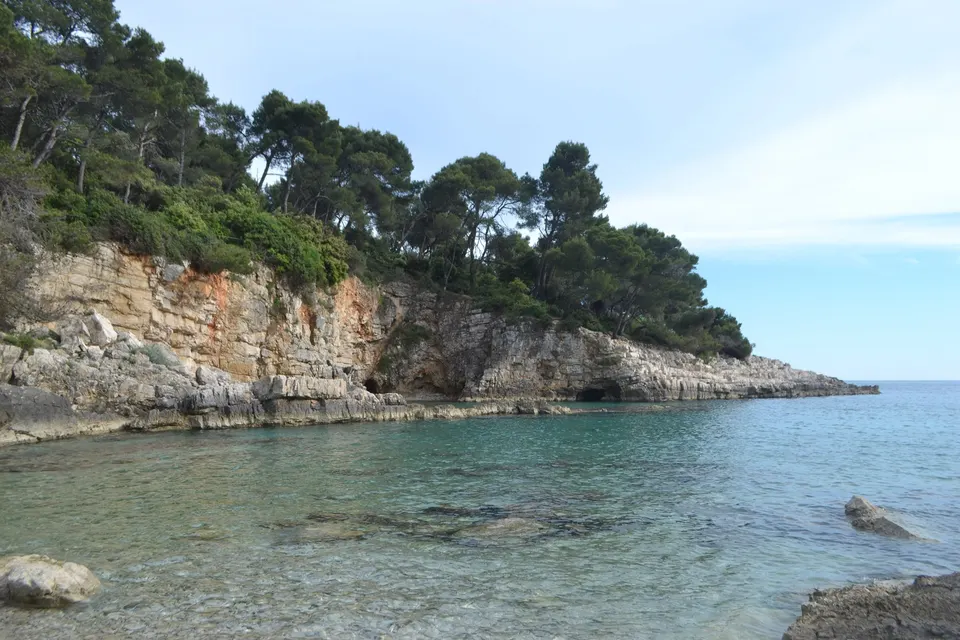
What you get in return is water of remarkable clarity and the shade of pine woods that run right down to the sea.
Medulin, Premantura and Kamenjak
Medulin is one of the few places in Istria with long, shallow, partly sandy beaches, which makes it a favourite for families with small children. Bijeca is the best known. Further south, past Premantura, the protected cape of Kamenjak is the wildest stretch of coast on the peninsula, with dozens of coves, cliffs and no development at all. It deserves a day of its own; see our guide to Cape Kamenjak and Premantura.
The east coast: Rabac and beyond
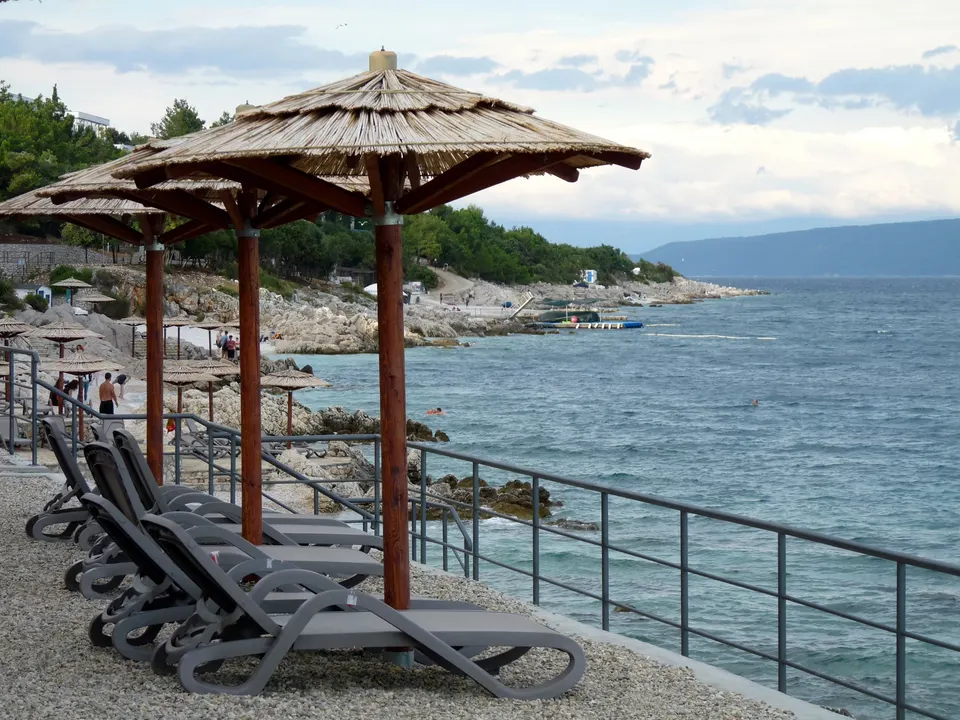
The east coast of Istria faces the Kvarner Gulf and the islands, with the mountain of Učka rising behind. The coast is steeper and the views are wider. Rabac, below the hilltop town of Labin, has pebble beaches backed by pine woods, with Girandella and the bays around it the best known. The light here is different: this is a coast for mornings, when the sun rises over the islands.
Which beach for whom?
- Families with small children. Medulin, the resort beaches around Umag and Poreč, and the organised beaches near Rovinj. Look for shallow, gradual entries.
- Snorkelling. Natural rocky shores: Kamenjak, the Pula peninsulas, Vrsar and the coves of the Golden Cape.
- Quiet and nature. Kamenjak, Savudrija and the smaller coves between larger resort beaches, early or late in the day.
- A beach with a town. Rovinj, Pula and Novigrad, where you can swim in the morning and walk into the old town for lunch.
- Sunrise rather than sunset. Rabac and the east coast.
Good to know
- Water shoes. Rocky bottoms and the occasional sea urchin make them worth packing.
- Shade. Pine woods give natural shade on much of the west coast, but not everywhere. Kamenjak has very little.
- Parking. Popular beaches fill early in July and August. A bicycle is often the easiest way to reach the coves.
- Wind. The bura and the jugo can change the sea in a few hours. Choose a sheltered side of the peninsula on windy days.
- Season. June and September are the sweet spots: warm sea, fewer people.
The best beach in Istria is often the one nobody tells you about: a rock with a ladder below a pine wood, reached by a path that looks as if it goes nowhere. Start with the places above, then follow the paths.