A few square metres, steam every morning and a different guest every week. How to make a small bathroom in a coastal apartment feel larger, work harder and last longer.
In most coastal apartments, the bathroom is the smallest room and the hardest working one. It is where the day starts and ends, where sand and salt are washed off, and where guests form a quick opinion of the whole place. In a rental, it is also the room most often mentioned in reviews, for good or bad.
A small bathroom does not have to feel small. With the right layout, fittings and storage, two or three square metres can feel calm, clean and generous. These are the ideas that make the biggest difference.
Start with the layout
Before choosing tiles or taps, decide where everything goes. The position of the WC, basin and shower is usually set by the drains, so changes cost the most here, and pay back the most. The aim is a clear line of floor from the door to the window or the far wall. Put the tallest element, usually the shower, at the far end, and keep the basin and WC along one wall if you can.
Look at the door, too. An inward-opening door can take a surprising share of a small room. A door that opens outwards, or a sliding or pocket door, frees the space behind it; our guide to interior doors and joinery explains what pocket doors need in the wall.
Walk-in shower or bath?
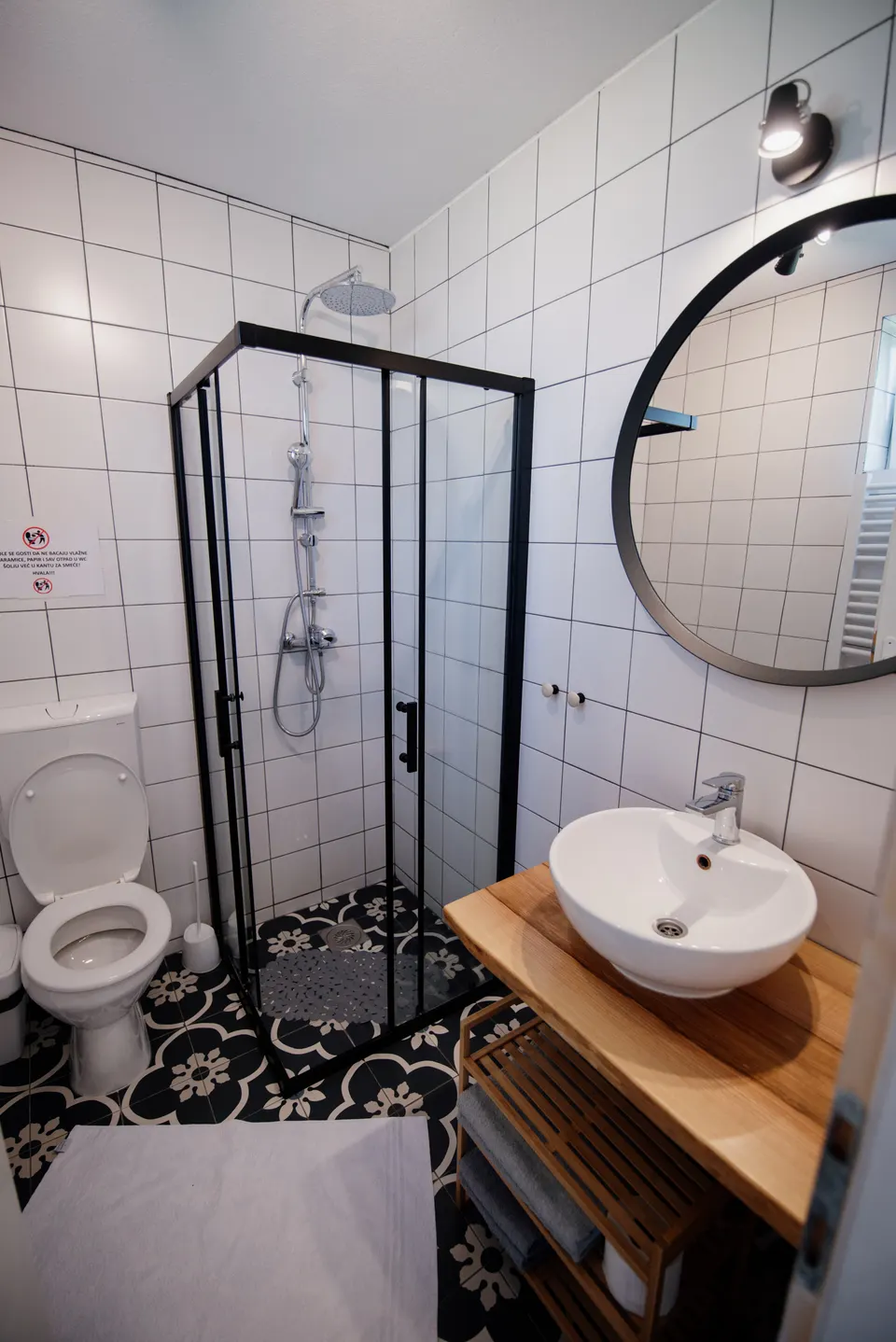
In a small apartment bathroom, a walk-in shower is usually the better choice. A floor-level shower with a single fixed glass panel lets the floor run through, with no tray edge or curtain to break the room. Use a linear drain and a slight fall in the floor so water goes where it should. If a bath is needed, for families with small children, for example, a bath with a fixed glass screen is tidier than a curtain and easier to keep clean.
Lift everything off the floor
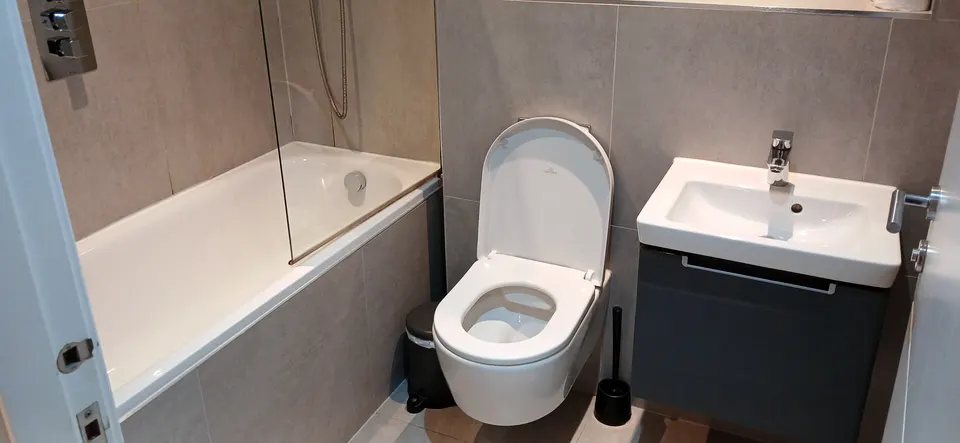
The more floor you can see, the larger a room feels. Wall-hung WCs and vanity units show the floor underneath and make cleaning much faster, which matters when there are a few hours between guests. A wall-hung WC needs a frame and cistern built into the wall, which also gives a useful ledge above it for a shelf or a niche.
Choose a vanity that fits the room rather than a standard width that almost fits. A narrower, deeper basin, or a basin set to one side of a longer counter, can leave room for a drawer where guests can unpack.
Storage that guests actually use
Guests arrive with toiletries and nowhere to put them. Within a day, every edge of the basin is covered. Plan simple storage they can see and reach: a drawer or two under the basin, a shelf or recessed niche in the shower, a mirror cabinet, and hooks for two towels per guest rather than one rail for four.
- Niches in the wall instead of shelves that stick out, especially in the shower.
- A mirror cabinet that doubles the storage without taking floor space.
- Drawers, not doors, under the basin; they use the depth better.
- A shelf above the WC, on the ledge of the built-in cistern.
- Hooks by the shower and on the back of the door.
- A heated towel rail, which also helps the room dry out.
The more floor you can see, the larger a bathroom feels. The more surfaces guests can use, the tidier it stays.
Mirrors, light and colour
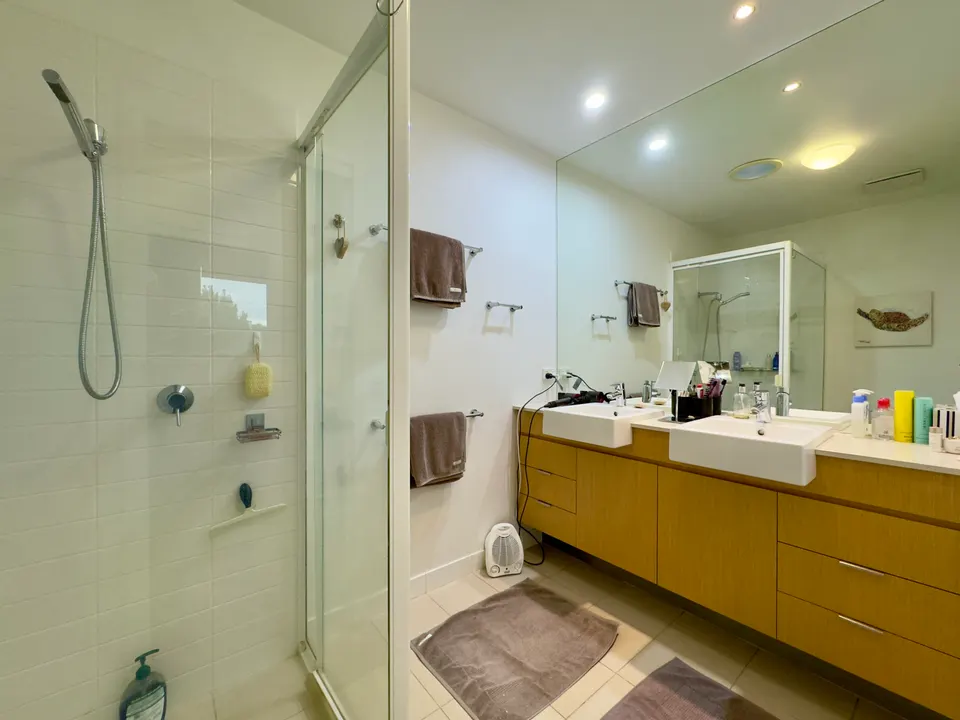
A large mirror is the oldest trick for a small room, and it still works. Run it the full width of the vanity, or higher than usual, so it reflects the window or the light. Light the face from the front or the sides, not only from above, so the mirror is useful for shaving and make-up. Add a soft light for night: a guest who gets up at three in the morning does not want the full brightness.
Large-format tiles mean fewer grout lines, which look calmer and are easier to clean. Light, warm colours, natural stone or a lime-based finish suit coastal apartments; one tile or colour used on floor and walls makes the room read as one surface. A single accent, such as a patterned floor or a coloured wall in the shower, gives character without clutter.
Ventilation and humidity
Many small bathrooms in older coastal buildings have no window, or a very small one. Steam has nowhere to go, and the bathroom stays damp for hours. A quiet extractor fan, ideally one that runs on after the light is switched off or responds to humidity, is not optional. Leave a small gap under the door so fresh air can come in. In an apartment closed for winter, a bathroom without ventilation is where mould starts.
Furniture that survives the steam
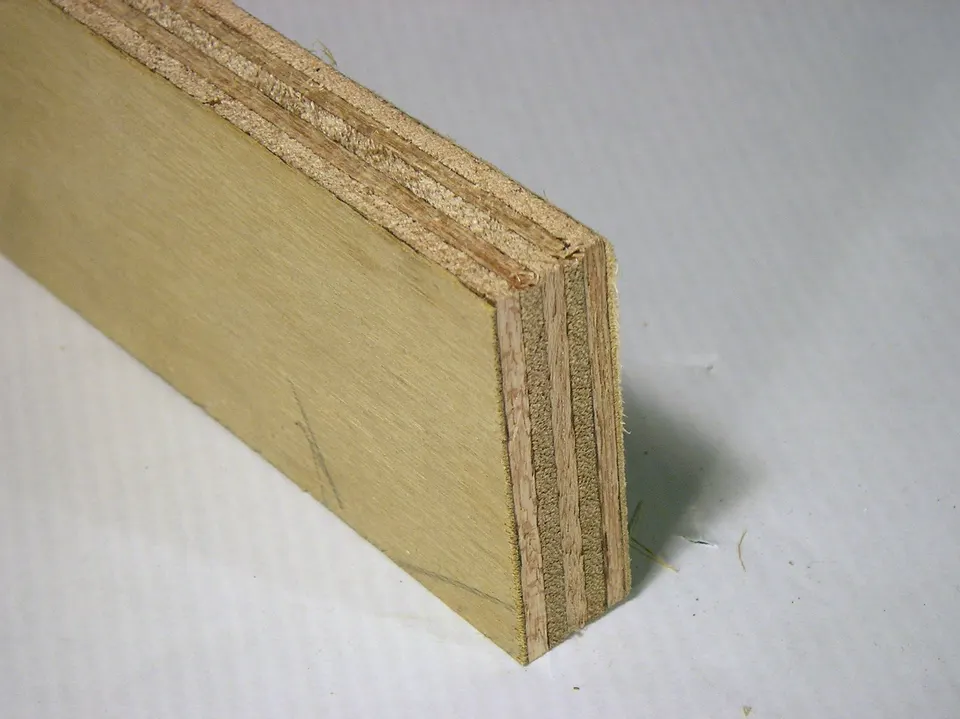
Bathroom furniture fails before anything else in a coastal apartment. Most cheap vanity units are particleboard with a thin coating; when water gets into an edge or a screw hole, the board swells and does not recover. Plywood, with the right glue and every edge sealed, is far more resistant to moisture and holds its hinges and runners through years of use. Lampisa builds bathroom furniture in plywood, never particleboard, and makes it to fit the room, so a vanity can use every centimetre of an awkward wall. For a deeper look, read bathroom furniture for premium villas.
Small bathroom checklist
- A clear line of floor from the door to the far wall.
- A walk-in shower with a fixed glass panel and a linear drain.
- Wall-hung WC and vanity; drawers rather than doors.
- Niches, a mirror cabinet and hooks for every guest.
- A large mirror lit from the front, and a soft night light.
- Large tiles, light colours, few grout lines.
- A quiet extractor fan and a gap under the door.
- Furniture in plywood with sealed edges.
If you are upgrading a rental, our guides to the small apartment on the coast and the investors' page show how the bathroom fits into the rest of the plan.