You open them dozens of times a day and rarely think about them. Interior doors, frames and fitted joinery decide how a house feels, sounds and ages.
Doors are the most handled objects in any house. They are opened by every guest, pushed by children, slammed by the bora and leaned on with a full tray. Yet in most renovations they are chosen last, from a catalogue, once the budget is nearly gone. The result is familiar: hollow doors that rattle, frames that do not meet an uneven stone wall, and a house that sounds cheaper than it looks.
Interior doors and fitted joinery, meaning the wardrobes, panelling, built-in shelves and window seats that are made for a specific wall, are what ties the rooms of a house together. Planned early, they cost less to get right than to fix later.
Stone house or modern villa: what is the difference?
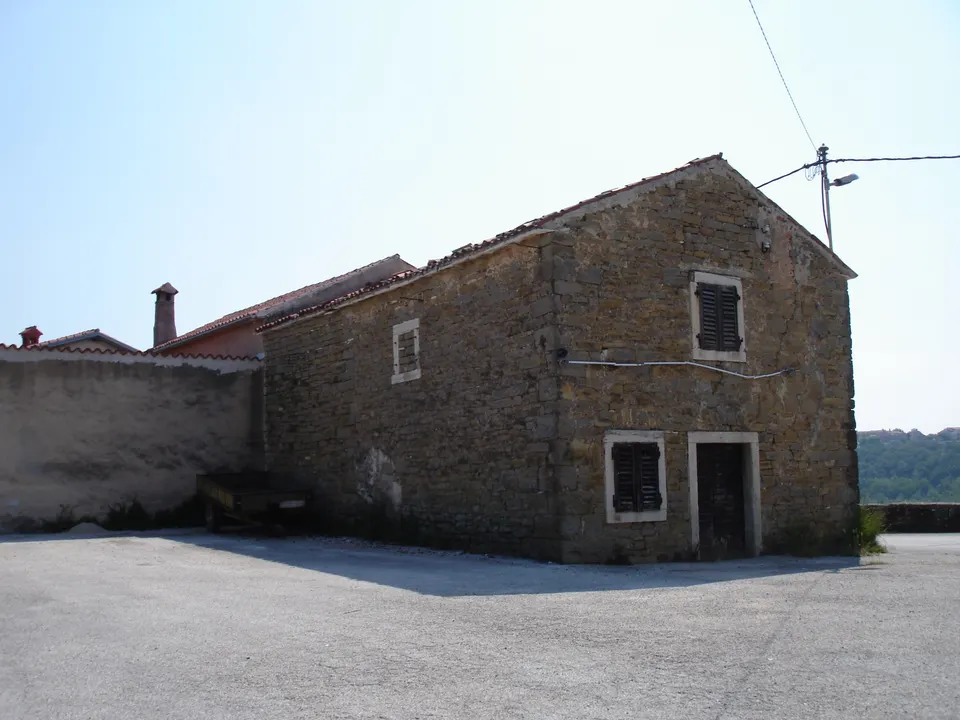
In an old Istrian stone house, nothing is quite straight. Walls are thick and rarely plumb, openings vary from room to room, and many of the original doorways are lower than modern standards. A standard door in a standard frame will leave gaps that have to be filled with trim and silicone. Here, made-to-measure doors and frames earn their cost: the frame is scribed to the wall, the door is sized to the opening, and the deep reveal of the stone becomes part of the design rather than a problem to hide.
In a new villa, the challenge is the opposite. Walls are straight and plastered, ceilings are often high, and the architecture is usually minimal. Doors that run from floor to ceiling, frames that sit flush with the wall, and concealed hinges keep the lines clean. The door almost disappears, which only works if it is made precisely.
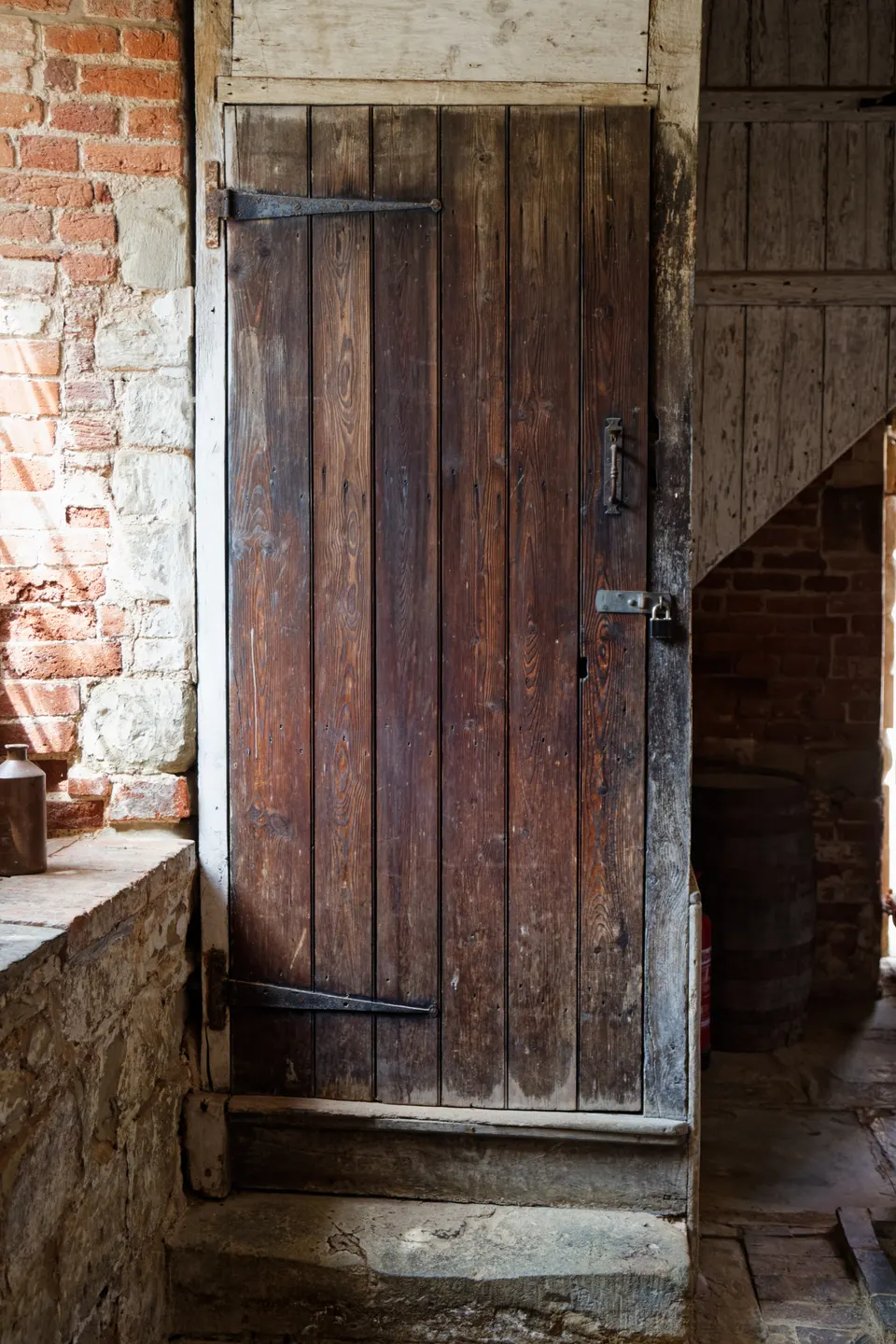
Which door styles suit an Istrian house?
- Plank doors. Vertical boards with horizontal ledges on the back. Traditional in rural houses and konobas, and a natural fit for stone, though they need a stable construction underneath to stay flat.
- Panelled doors. A frame with recessed panels. Classic in town houses of the Venetian period and in later villas; works in both painted and natural finishes.
- Flush doors. A smooth, flat leaf. The modern default; elegant when the edges are crisp and the finish is good, anonymous when it is not.
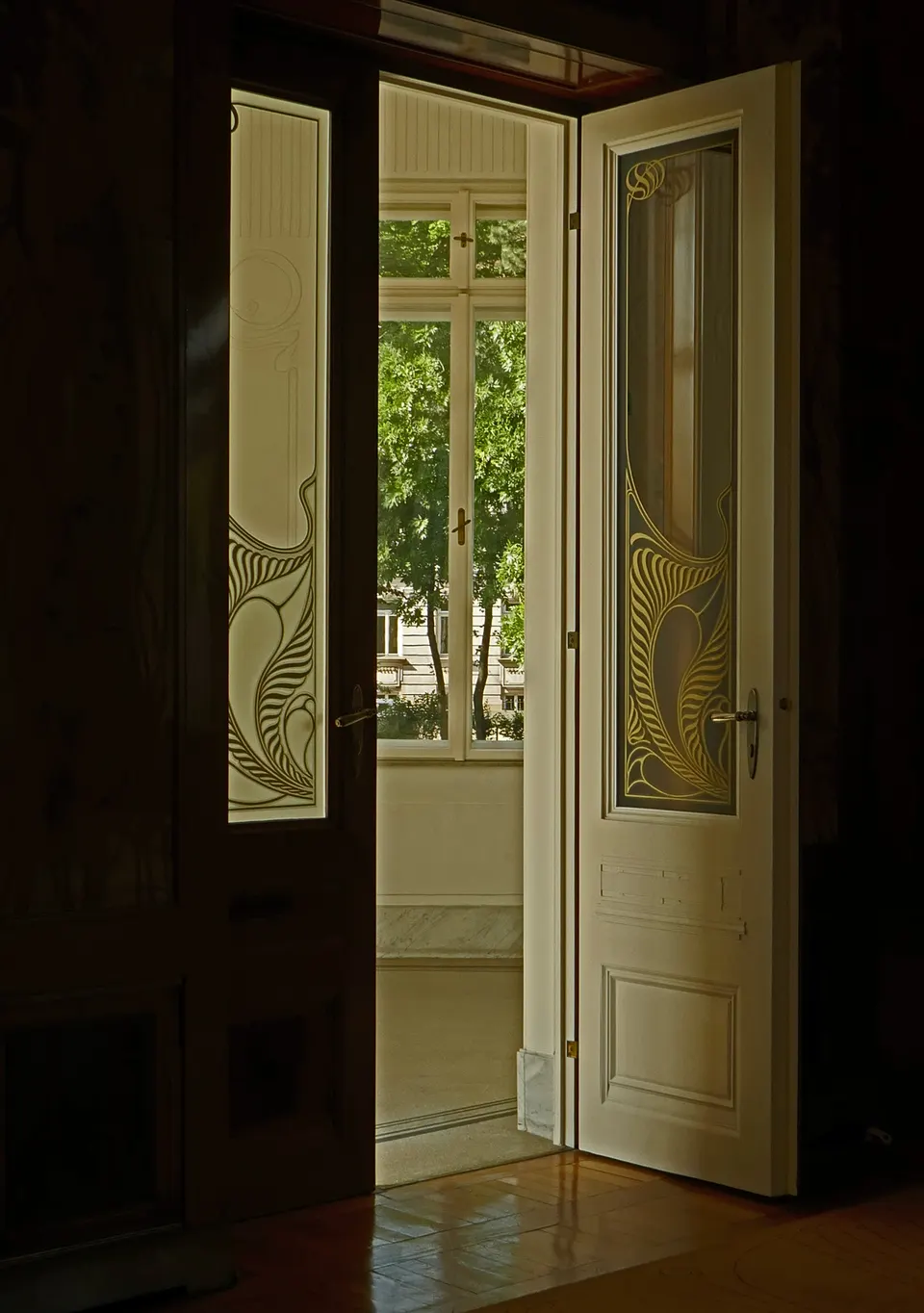
- Glazed doors. Glass panels borrow light from one room to the next, useful in deep stone houses with small windows.
- Sliding and pocket doors. Save the swing space of a door in a tight hallway or bathroom.
The rule of thumb is to follow the house, not the trend. In a restored stone house, a simple plank or panelled door in a muted colour feels right; a glossy white flush door rarely does. In a modern villa, a flush door in the same finish as the walls or the fitted wardrobes keeps the space calm. Our guide to restoring a stone house goes further into keeping the character of an old building.
What is inside the door?
Most inexpensive interior doors are hollow: two thin skins over a cardboard honeycomb, with a frame of narrow timber or board around the edge. They are light and cheap, but they carry sound easily, dent at the first knock and give hinges and handles very little to hold on to.
A solid-core door is heavier, quieter and far more durable. Plywood is a good material for this kind of work: built from layers of wood veneer glued with the grain crossing, it stays flat and holds screws and fittings well, which is exactly what a door and its hinges need. A thick door also closes with a better sound, and that small detail is one guests remember.
A good door is the one you never have to think about: it closes quietly, stays square and still fits its frame after ten summers.
Humidity, salt and a house closed for winter
Doors in a coastal house live through the same cycle as the rest of the furniture: a humid summer, a dry, heated winter and, in holiday homes, months with the shutters closed. Solid timber doors can swell and stick in August and shrink in January. Doors with a stable core and properly sealed edges, top and bottom included, move far less. Leave a small gap under each door so air can circulate when the house is closed; it helps the whole house, not just the door. For more on materials near the sea, see materials that live with sea salt and sun.
Sliding and pocket doors
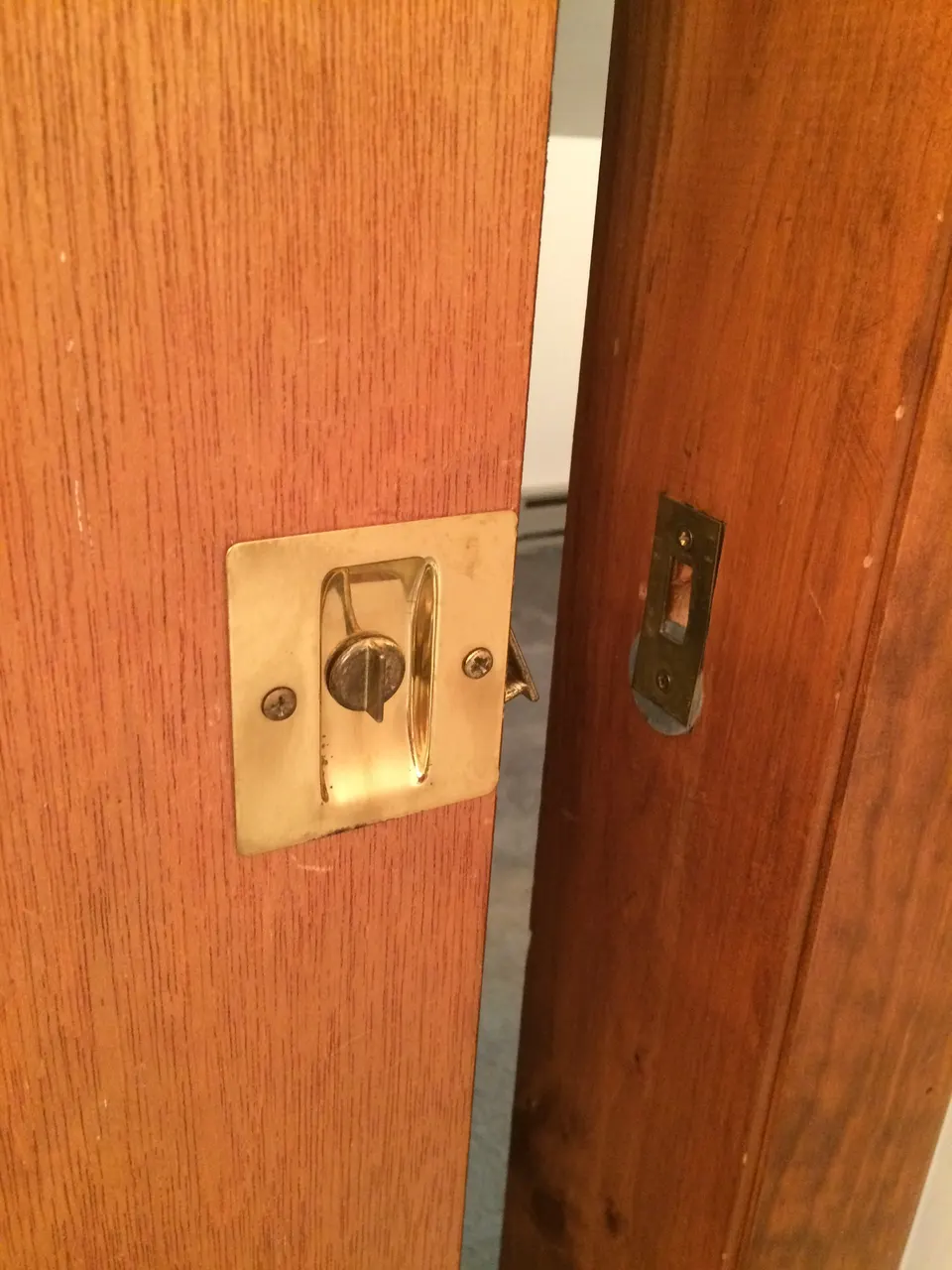
A pocket door slides into the wall and disappears. It is the best answer for a small bathroom, a walk-in wardrobe or a corridor where a swinging door would block another. It does need a cavity in the wall, which is easy in a new stud partition and harder in a thick stone wall, so plan it with the builder before the walls are closed. A barn-style door that slides along the face of the wall is simpler to fit, but it needs clear wall space beside the opening and does not seal as well for sound.
Handles, hinges and the details you touch
Choose hardware once for the whole house: the same handle family on doors, wardrobes and windows makes even a simple house feel considered. Brass and bronze age well and suit stone; stainless steel and matt black suit modern villas. Near the sea, avoid cheap plated metals that pit and peel. Good hinges matter as much as handles. Three hinges on a tall or heavy door, soft stops so doors do not hit walls, and a magnetic or quiet latch in bedrooms make a difference you hear every night.
Doors and joinery as one design
The best interiors treat doors, wardrobes and panelling as one family: the same material, the same edge detail, the same handle. A wardrobe door that matches the bedroom door beside it makes a wall look built rather than furnished. This is where an atelier helps. Lampisa builds fitted furniture in plywood, never particleboard, and can design wardrobes, shelving and panelling to sit with your doors. Read our guide to built-in wardrobes for the storage side of the story.
Checklist before you order doors
- Measure every opening separately, especially in a stone house.
- Decide the swing of each door against light switches, furniture and other doors.
- Ask what the core is made of, not just the finish.
- Plan pocket doors before the walls are built or plastered.
- Seal all edges, top and bottom included, in a coastal house.
- Choose one handle and hinge family for the whole house.
- Match doors and fitted joinery in material and finish.
With the from moodboard to render process, you can see doors, wardrobes and panelling together in a 3D render of your rooms before anything is made.