Around twenty islands and islets lie off Rovinj. A few are an easy boat ride from the harbour; the rest are best seen from the water. Here is how to choose.
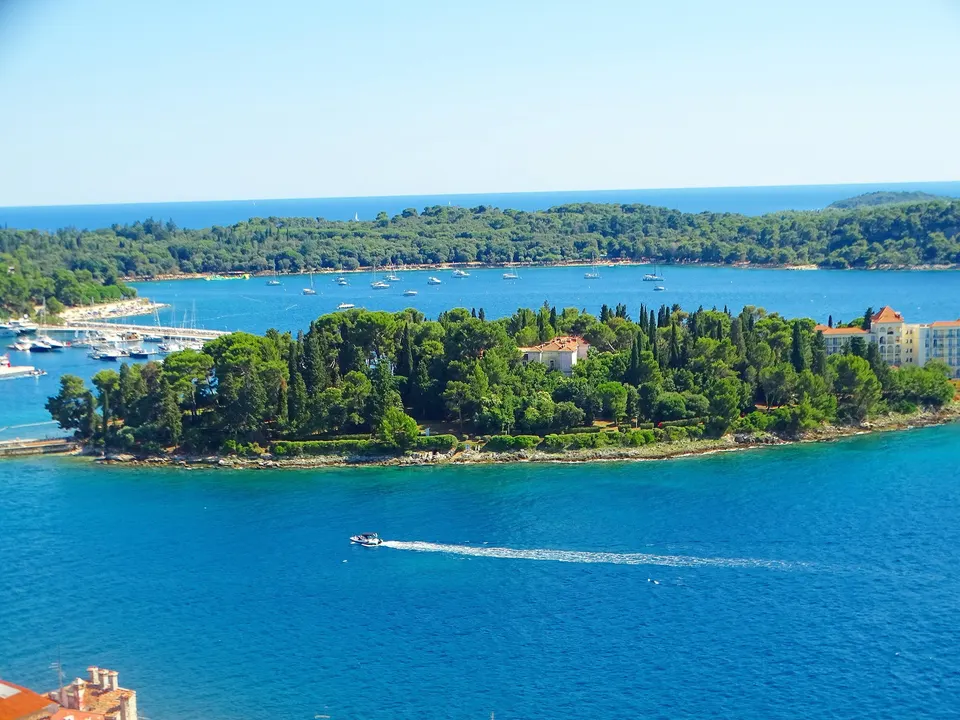
Climb the bell tower of St Euphemia in Rovinj and look south and west, and you will see the sea scattered with green islands. There are around twenty of them, from wooded islands with old villas and gardens to bare rocks that are home only to seabirds. Together they form the Rovinj archipelago, one of the most beautiful stretches of the Istrian coast and one of the main reasons people come back to the town year after year.
Most visitors see only one or two of them, usually Sveta Katarina and Crveni otok, the Red Island. That is a perfectly good start. But it helps to know what each island is like before you get on a boat, because a morning on the right island can be the best part of a Rovinj holiday.
What is the Rovinj archipelago?
The archipelago runs along the coast from just north of the old town down towards Barbariga, with most of the islands lying within a few kilometres of the shore. They are low, made of the same pale limestone as the mainland, and covered, where there is enough soil, with pine, holm oak and Mediterranean scrub. Only a handful have buildings. Much of the archipelago and the coast around it is protected as a landscape, which is why the islands still look so green and undeveloped from the town.
The larger islands near the town have been shaped by people for centuries: monasteries, quarries, gardens, and in the nineteenth and twentieth centuries, private estates that were later turned into hotels. The smaller, outer islands are wilder, and their main inhabitants are gulls, cormorants and the occasional lighthouse keeper of the past.
Sveta Katarina: the island in front of the harbour
Sveta Katarina, St Catherine's Island, sits directly in front of Rovinj harbour, so close that it feels like part of the town. In the early twentieth century it was bought by a Polish aristocrat who planted it with trees and exotic plants, and the island is still largely a park, with a hotel among the pines. Paths run around the shore, and there are rocky spots and small platforms for swimming, with a view straight back to the old town and St Euphemia.
Because it is so close, Sveta Katarina is the easiest island to visit for a couple of hours. Boats leave from the harbour regularly in season, and the crossing takes only a few minutes. It is a good choice for families with small children and for anyone who wants a swim and a shady walk without committing to a whole day.
Crveni otok: why is it called the Red Island?
Crveni otok lies a little further south, roughly opposite the Golden Cape forest park. Despite the name, it is not one island but two: Sveti Andrija, the larger, and Maškin, the smaller, joined by a narrow man-made causeway. The name is usually explained by the reddish colour of the rocks and soil in places, which is especially visible from the sea in the evening light.
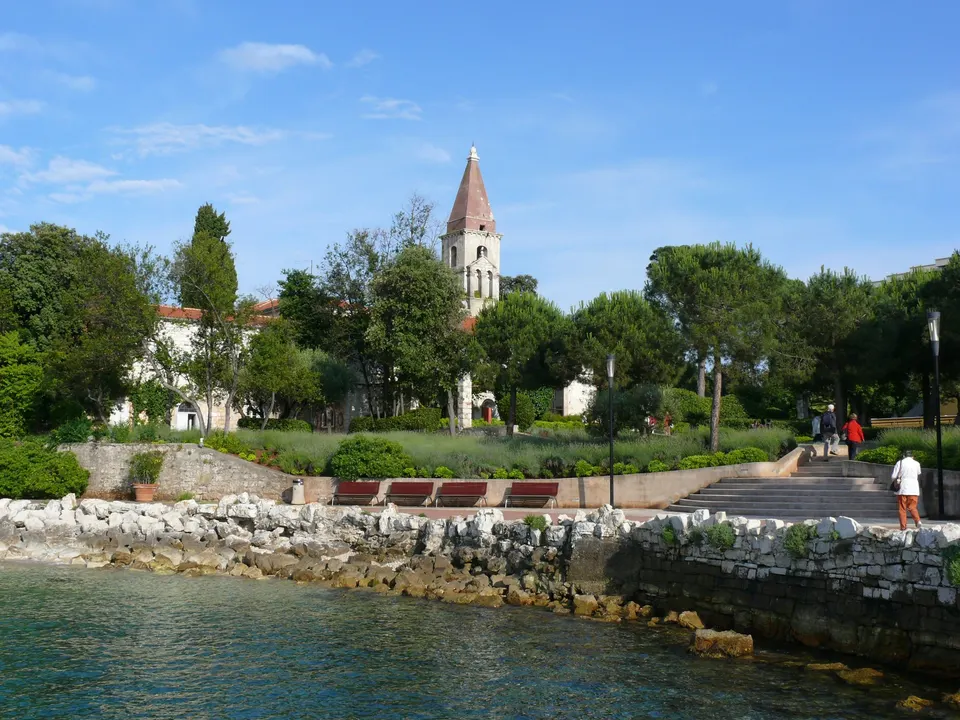
Sveti Andrija has the longest history. A monastery stood here from the early Middle Ages, and its church and bell tower still rise above the trees. In the late nineteenth century the island was bought by an industrialist family from Trieste, who turned the monastery into a summer residence and planted the park that still covers much of the island. Today there is a hotel, but the park, the shoreline and the paths are open to day visitors.
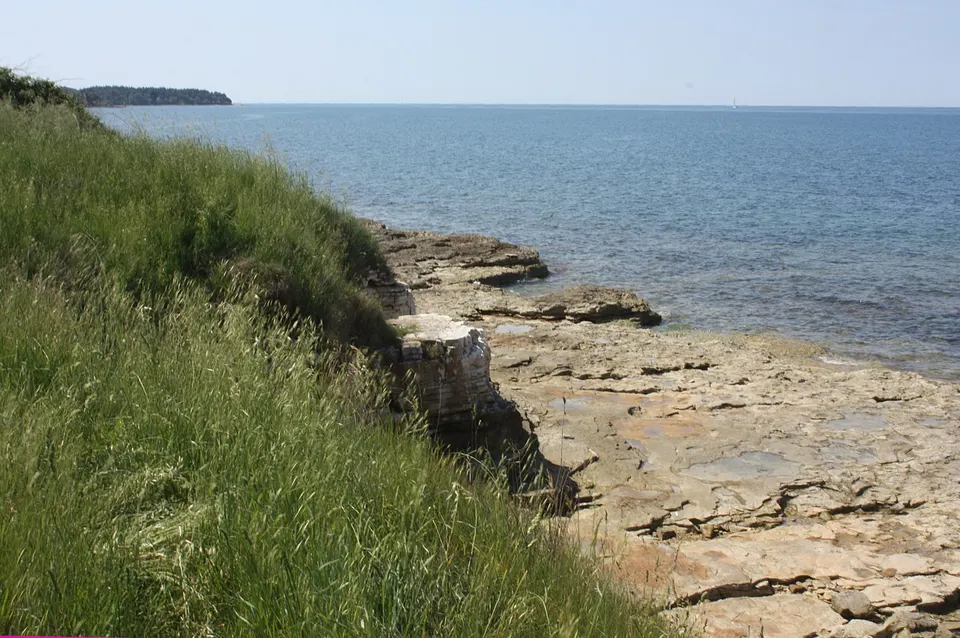
Maškin, connected by the causeway, is quieter and more natural: pine woods, rocky coves and small pebble bays facing the open sea. Many people walk across to Maškin to find a spot of their own, especially in the morning, before the boats from town have brought the bulk of the day's visitors.
A morning on the right island can be the best part of a Rovinj holiday.
The outer islands and the Sveti Ivan lighthouse
Further out, the islands become smaller and wilder. Some are bare limestone with a fringe of scrub; others have a few pines and a tiny cove. They have no regular boat service, so you see them from a hired boat, an organised trip or a kayak with a guide. Snorkelling around them can be very good, with clear water, rocky seabed and plenty of fish.
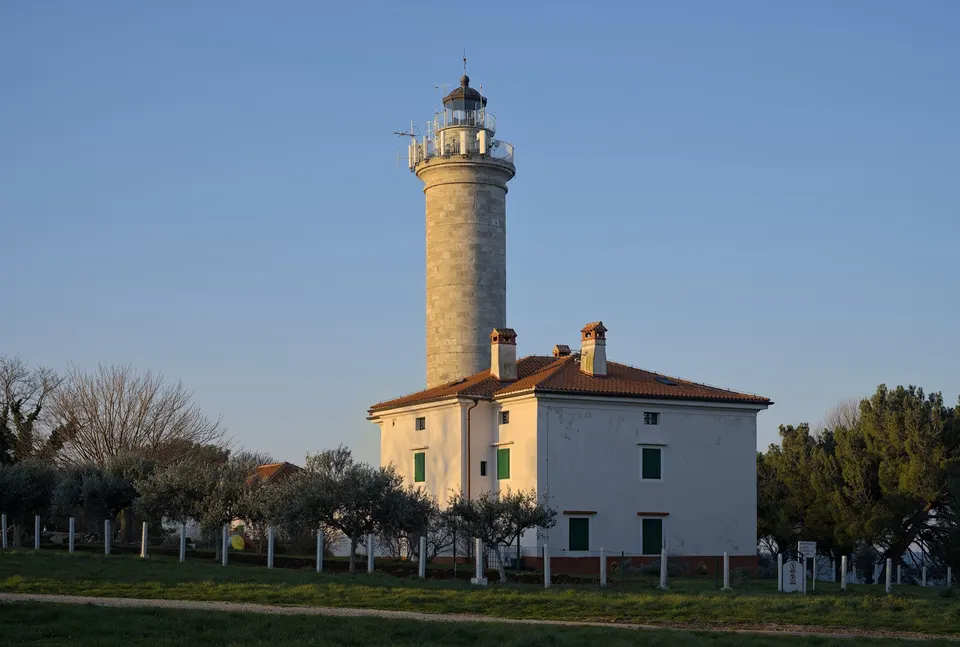
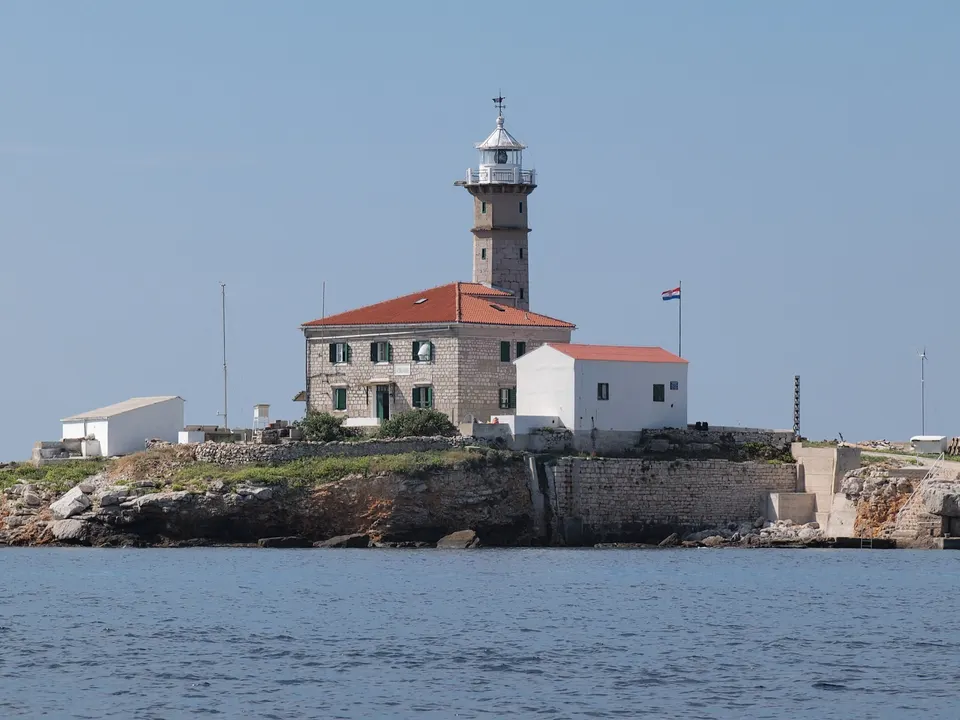
The most striking of the outer islets is Sveti Ivan na pučini, St John on the open sea, with its stone lighthouse built in the nineteenth century. It stands on a small rock at the edge of the archipelago, and for sailors it marks the approach to Rovinj. It is one of the best-known of the lighthouses of Istria and is usually seen from a boat rather than visited.
How to get to the islands
In the summer season, regular boats run from Rovinj harbour to Sveta Katarina and Crveni otok, and you simply buy a ticket at the quay. Outside the main season, services are reduced or stop altogether, so check before you plan. Many people also go by water taxi, which is flexible and convenient for a small group.
For the outer islands, the options are a skippered boat, a self-drive boat if you have the right licence and experience, a sailing trip, or a guided sea kayak tour. Organised half-day and sunset trips often combine the archipelago with Lim Bay to the north. If you are planning a longer stay, our guide to boat trips in Istria covers the wider coast.
Which island should you choose?
- Short on time. Sveta Katarina: a few minutes by boat, a shady walk and a swim, back in town for lunch.
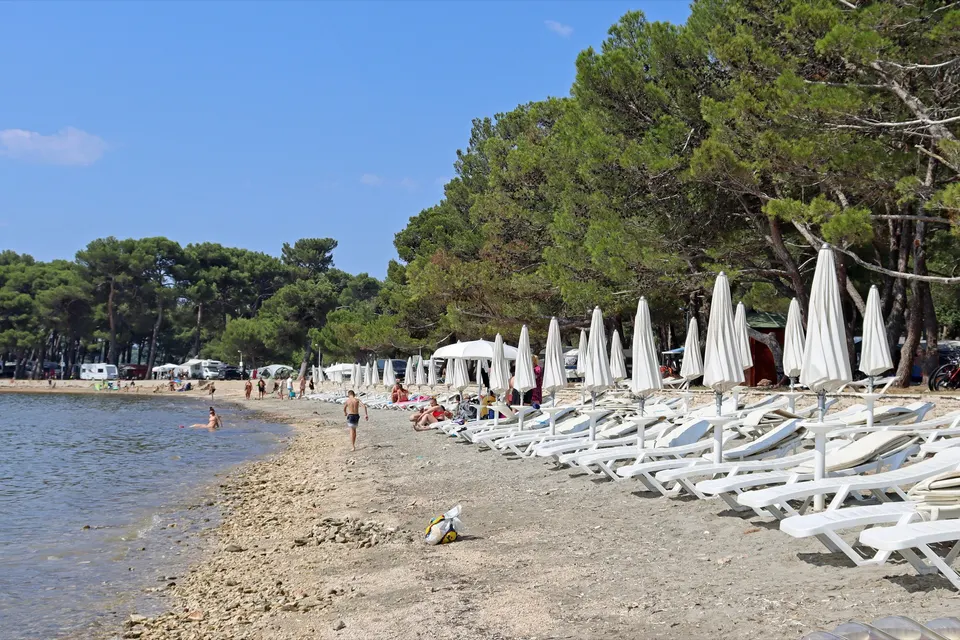
- A full beach day. Crveni otok: walk across the causeway to Maškin for quieter coves, and spend the hottest hours in the pines.
- History and gardens. Sveti Andrija, for the old monastery buildings and the park.
- Snorkelling and solitude. The outer islets, by boat or kayak with someone who knows the waters.
- Photography. A late-afternoon boat trip around the archipelago, ending with Rovinj in the evening light.
Good to know
- Season. Regular boats run in the warmer months; in spring and autumn, check services locally before you go.
- Shade. The island parks are shady, but the rocks by the water are not. Bring a hat and plenty of water.
- Footwear. Most swimming spots are rocky or pebbly; water shoes make life much easier.
- Respect the islands. Some islets are important for nesting birds. Do not land where you are asked not to, and take all rubbish back with you.
- Wind and weather. The sea can change quickly, especially when the wind picks up in the afternoon. If you are on a small boat or kayak, go early and listen to local advice.
- Combine it. An island morning pairs well with an afternoon in the Golden Cape forest park and an evening in the old town.
Seeing Rovinj from the water
The real reward of the islands is the view back. From the deck of a boat, Rovinj rises out of the sea like a single building, its houses stacked up the hill towards the bell tower, and you understand why painters and photographers have loved it for so long. It is also the view that makes many visitors start to wonder what it would be like to have a house somewhere on this coast, with the islands on the horizon every morning.