Wet feet on the stairs, towels on the sofa, chlorine in the bedroom. A pool house and a good outdoor shower keep the summer by the water, and the house clean.
In an Istrian summer, the pool is where the day happens. People swim before breakfast, read in the shade at noon and come back for a last swim after dinner. Every one of those trips leaves a trail of water, sun cream and wet towels through the house. A pool house and an outdoor shower are the simplest way to keep the pool life by the pool.
Neither has to be large. A well-planned pool house can be a single room with a shower, a WC and good storage. An outdoor shower can be a wall, a tap and a drain. What matters is that they are planned with the same care as the house, not added as an afterthought.
What should a pool house include?
Start with what happens around the pool, not with the building. Who swims, how often, and do guests come and go from the garden without passing through the house? For most villas, the answer leads to a short list.
- A WC and washbasin, so wet swimmers do not walk through the house.
- A shower, inside, outside or both.
- A changing space with hooks and a bench.
- Storage for towels, cushions, inflatables and pool equipment, dry and ventilated.
- A small kitchen or bar, even just a fridge and a sink, so drinks do not have to come from the house.
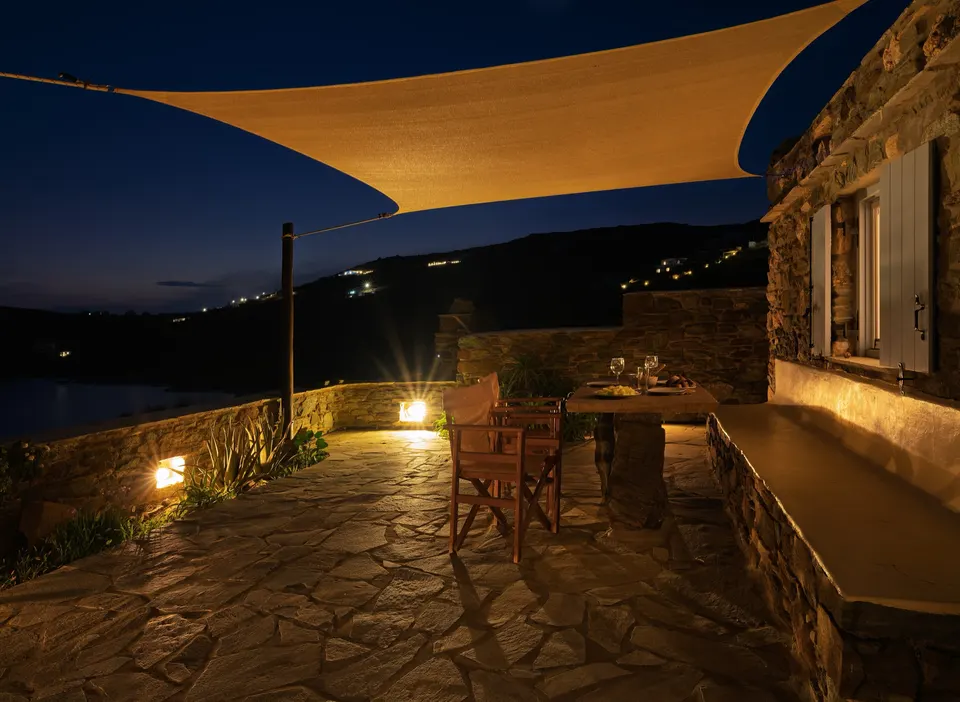
- Shade, a covered terrace or pergola where people can sit out of the sun.
Pool equipment, such as pumps and filters, often needs a technical room of its own. Keep it separate from the guest spaces, with good access for maintenance and ventilation. If you are still at the stage of planning the pool itself, our guide to designing a pool for a villa covers position, size and finishes.
Where should it go?
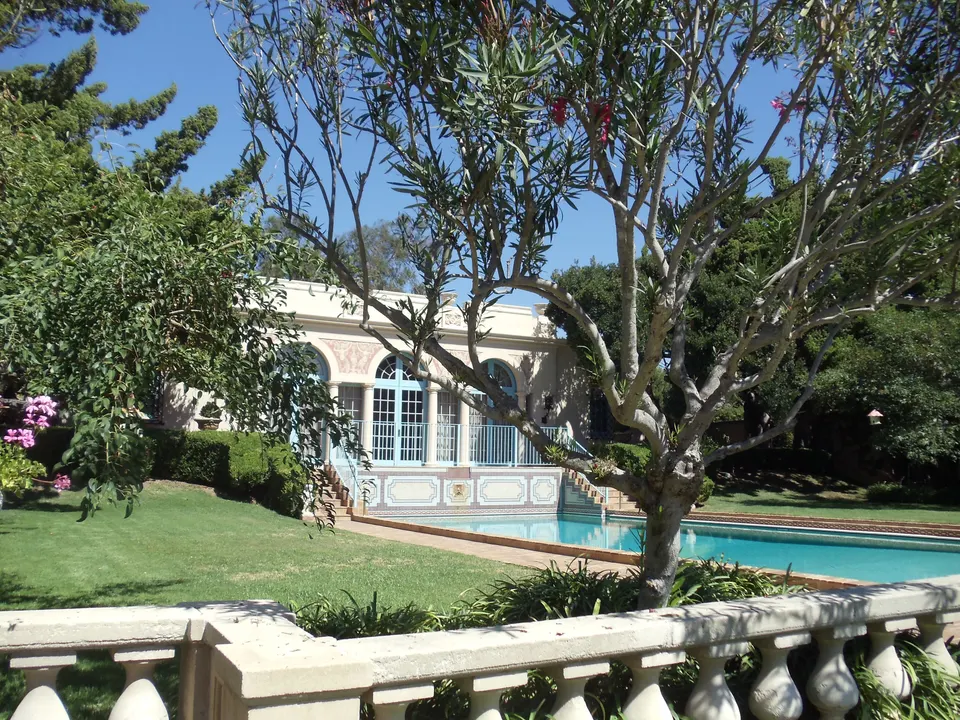
Close enough to the pool to be useful, far enough not to block the view. A pool house works best on the side of the pool away from the main view of the sea or the landscape, where it can also shelter the terrace from the prevailing wind. Think about the afternoon sun: a covered terrace facing west becomes the best seat for the sunset and the hottest spot at four o'clock.
A pool house is a building, and in Croatia building work is regulated. Whether yours needs a permit, and what size and position are allowed on your plot, depends on local planning rules. Ask your architect or the local planning office before you design anything; our overview of building permits in Croatia explains the general framework.
Outdoor showers: simple, but not careless
An outdoor shower is one of the small pleasures of a Mediterranean house: rinsing off salt or chlorine under the open sky, with the warm stone underfoot. It is also easy to get wrong. The four things that matter are water, drainage, floor and privacy.
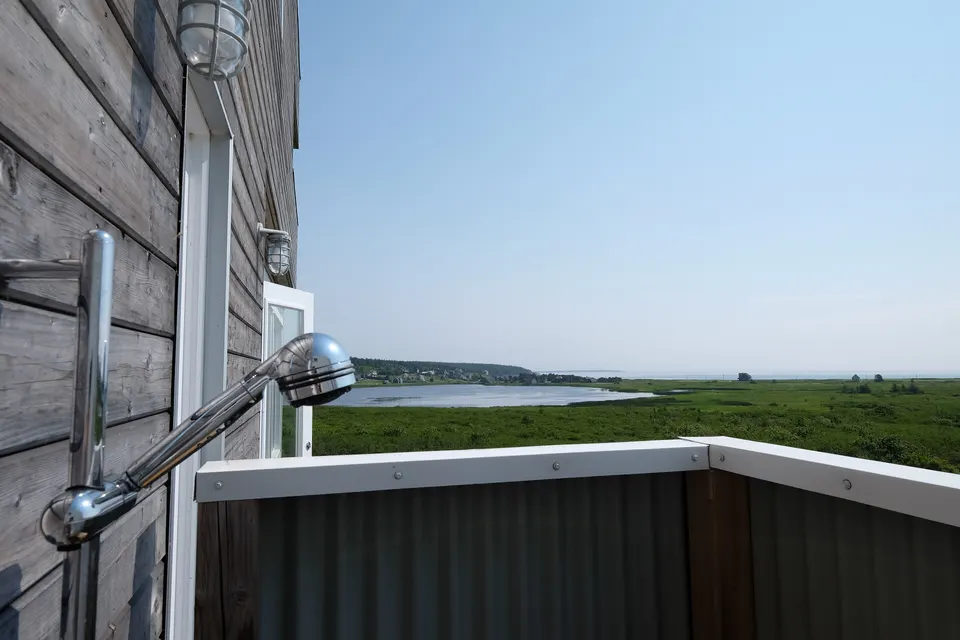
- Water. Cold-only is enough for a quick rinse after the pool; a mixer with warm water makes it a real shower. Plan for draining the pipes before winter so they do not freeze.
- Drainage. Water must go somewhere: a proper drain, a gravel soakaway or a channel, and never towards the house walls or into the pool.
- Floor. Textured stone, slatted timber or non-slip tiles. Smooth polished stone becomes dangerous when wet.
- Privacy. A wall, a screen of timber slats or planting. The view is part of the pleasure, but neighbours and the street should not be.
- Light. A low, warm light for the evening swim, rated for wet locations.
- Details. A hook for a towel, a shelf for soap, a bench for children.
Many owners place a simple rinse shower at the edge of the pool, and a more private one by the pool house. Guests use the first without thinking, and the second when they want a proper wash before dinner.
A good outdoor shower is a wall, a tap and a drain. Getting those three right is the whole difference between a pleasure and a puddle.
Materials that survive sun, water and salt
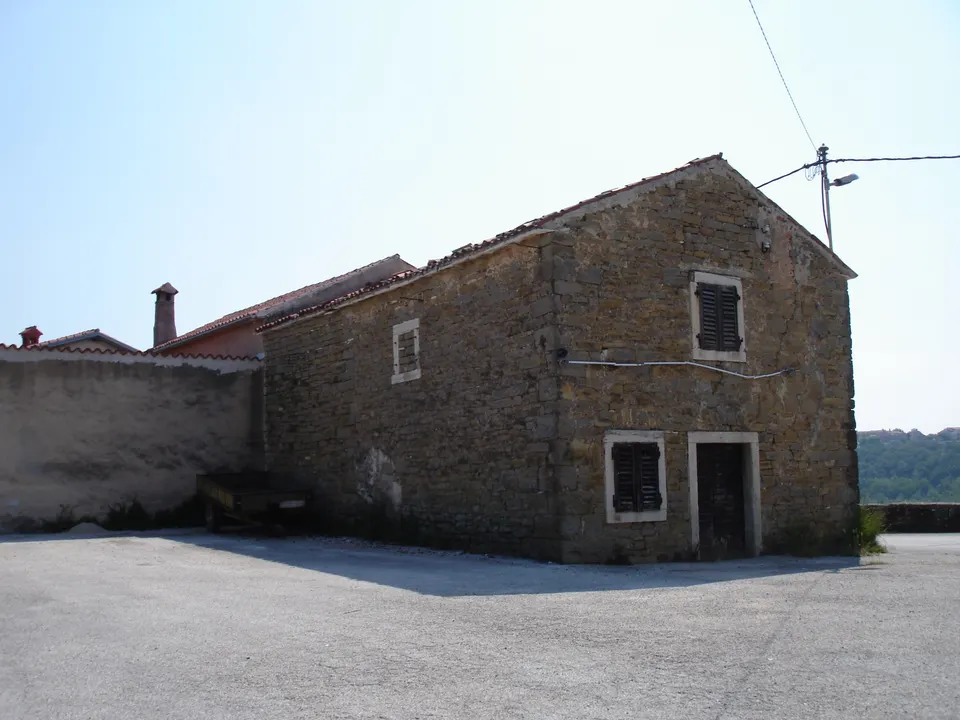
A pool house lives through harder conditions than the main house: wet swimsuits, chlorinated water, strong sun on one side and shade on the other, and months closed in winter. Local stone, lime plaster and clay tiles suit the Istrian landscape and age well. Inside, choose surfaces that dry quickly and can be cleaned with a hose if necessary.
Furniture in a pool house has to cope with damp more than anything else. Particleboard is the wrong material here: once water reaches an edge, it swells and does not recover. Plywood made with the right glue and with every edge sealed is far more resistant, and holds its screws and hinges after seasons of use. Lampisa builds its cabinets, benches and storage in plywood, never particleboard; for a pool house, ask about the right board and finish for wet areas. Our guide to materials that live with sea salt and sun goes into finishes and hardware.
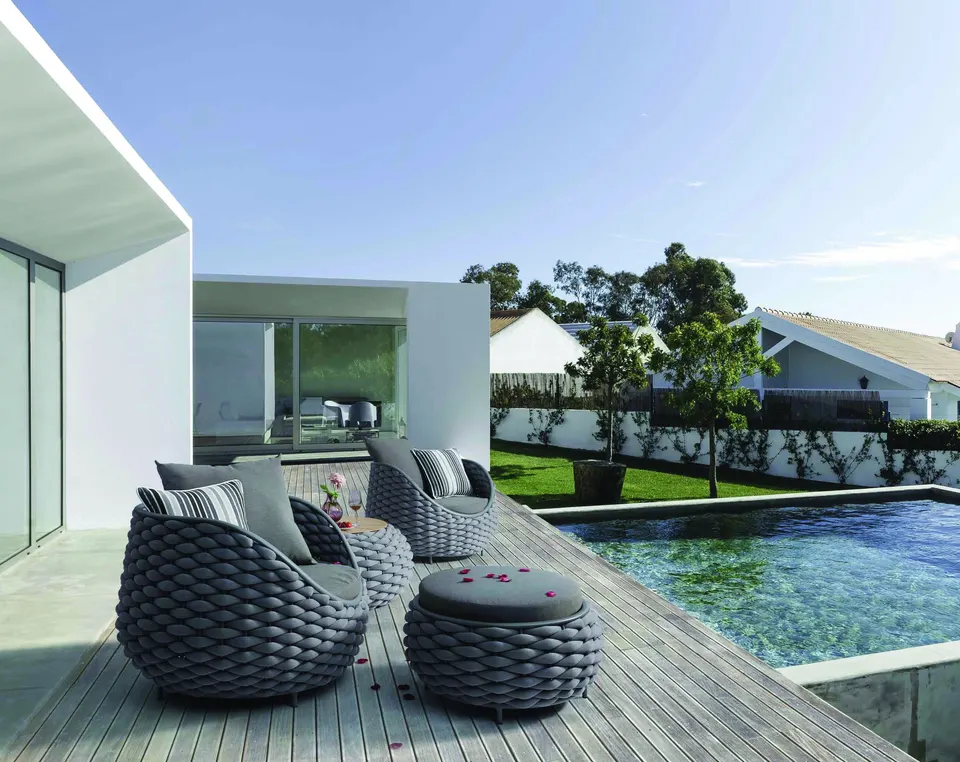
Furnishing the terrace around it
The space around the pool house is often the most used outdoor room of the villa. It needs loungers, a table in the shade, somewhere to put a drink and somewhere to leave a towel. Choose outdoor furniture with quick-drying cushions, and give those cushions a dry place in the pool house at night. Lampisa's outdoor collection includes lounge and dining pieces for terraces and pool decks; see the atelier for more. For shade, see pergolas and shade for terraces.
Pool house checklist
- Check with your architect and the local office what can be built on your plot.
- WC, washbasin and shower, so swimmers stay out of the house.
- Dry, ventilated storage for cushions, towels and pool toys.
- Pool equipment in its own technical room, with access for maintenance.
- A drain for every shower, falling away from walls and the pool.
- Non-slip floors wherever feet are wet.
- Furniture in plywood with sealed edges, never particleboard.
- Pipes that can be drained before winter.