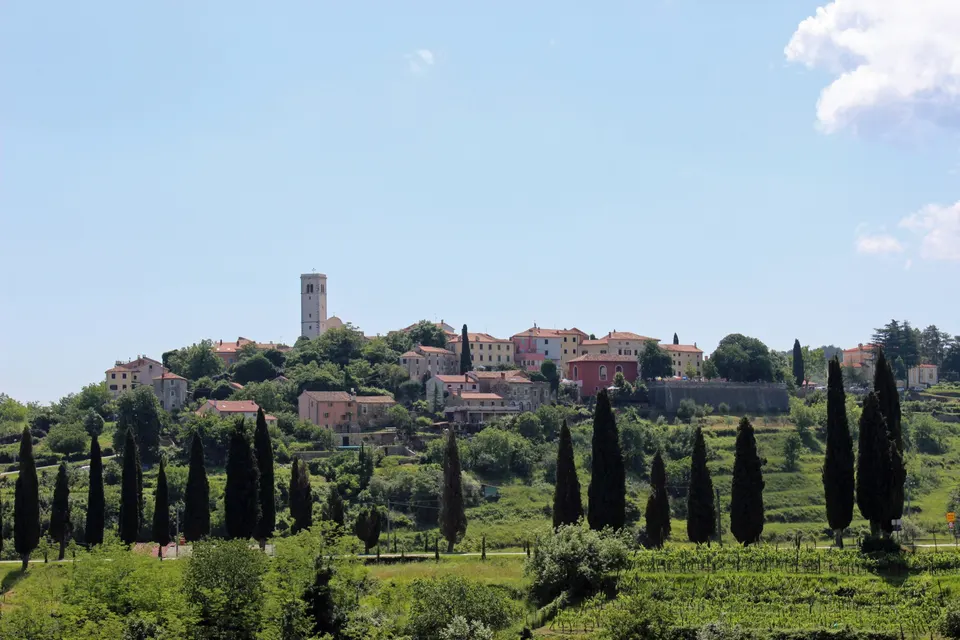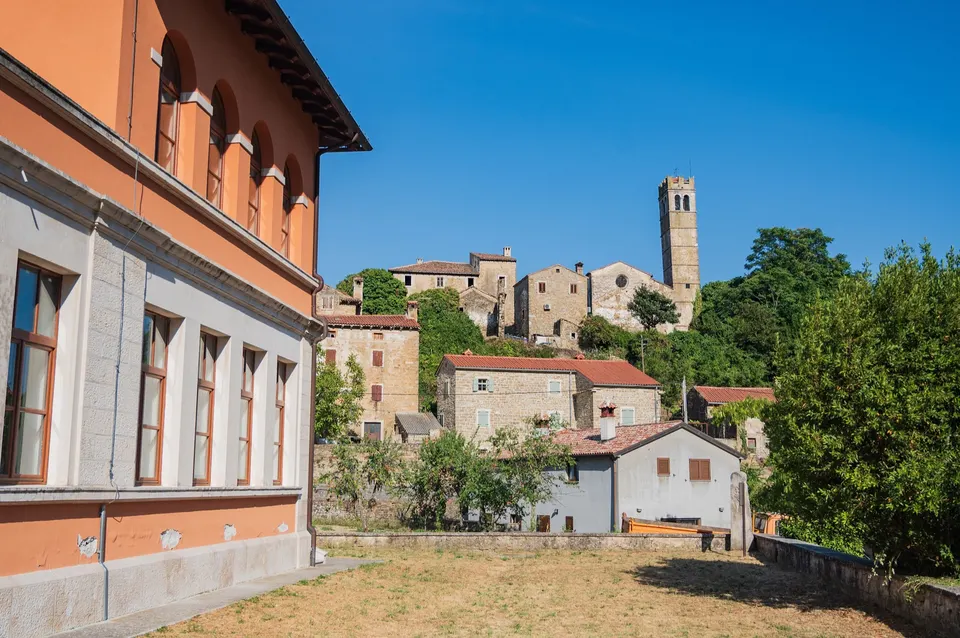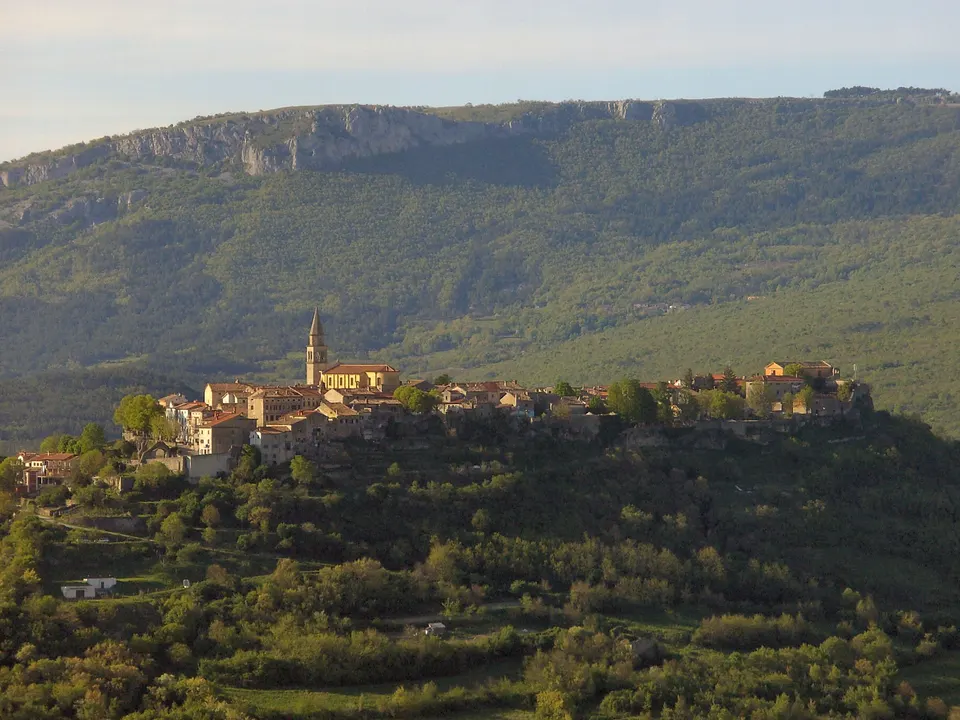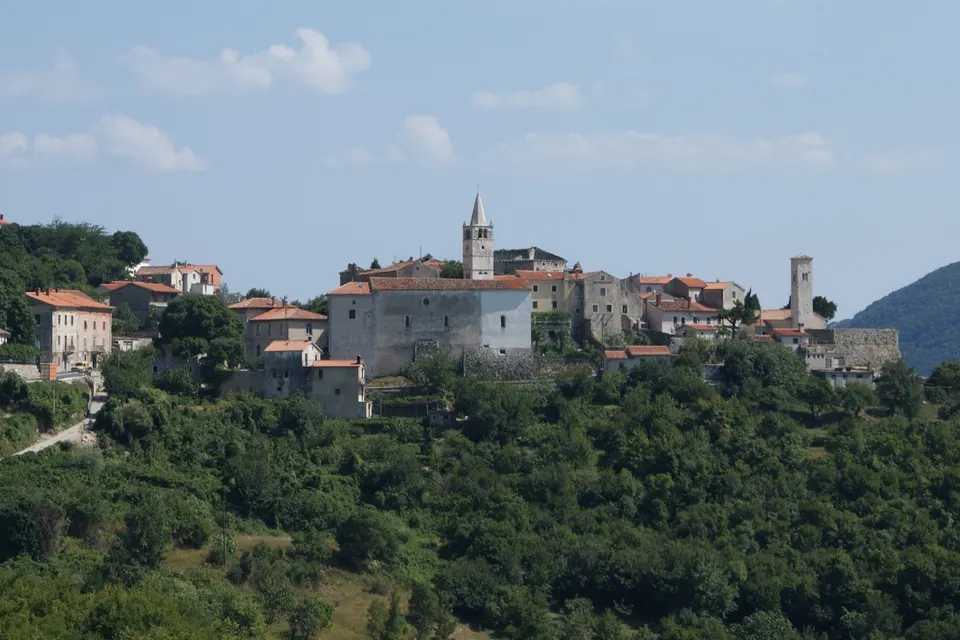
A stone village above a narrow green bay, a Glagolitic inscription in a church wall, and a coastal road with the Kvarner islands on the horizon. The east coast is Istria at its wildest.
Istria's west coast is all gentle shores, pine woods and Venetian harbours. Cross the peninsula to the east and the mood changes. Here the land rises steeply from the sea, the mountain of Učka fills the sky, and the coast faces the Kvarner Gulf and the long shapes of the islands of Cres and Lošinj. Villages cling to the hillsides, the bura wind blows hard in winter, and there are far fewer visitors. At the centre of this coast is Plomin, one of the most striking small villages in Istria.
Where is Plomin?
Plomin lies on the main road along the east coast, between Labin to the south and the Učka tunnel and Opatija to the north. The old village stands on a ridge high above Plomin Bay, a long, narrow inlet that cuts deep into the land and looks almost like a fjord. Down by the water is the newer settlement of Plomin Luka, the harbour. Most people pass through on the way to somewhere else; it is worth stopping.
The old village
Old Plomin is tiny, a few lanes of stone houses wrapped around the parish church, with gaps between the buildings that frame views straight down to the bay. Its history goes back to antiquity: there was a settlement here in Roman times, known as Flanona, which also gave its name to the Flanatic Gulf, as the Romans called the Kvarner. In later centuries Plomin belonged to the Patriarchate of Aquileia and then to Venice, and parts of its old walls can still be traced at the edges of the village.
Today many houses are empty or used only in summer, which gives the village a quiet, slightly melancholy air. Walk slowly, look at the carved doorways and window frames, and you will find the weathered details of a place that was once far more important than it is now.
What is the Plomin tablet?
The great treasure of Plomin is set into the wall of the small church of St George the Elder. Here, beside a much older carved relief of a human figure, is one of the oldest Glagolitic inscriptions in Croatia, usually dated to the eleventh century. Glagolitic was the old Slavic script used in Istria and along the Kvarner for church books and inscriptions for centuries, and the Plomin tablet is one of its earliest stone records.
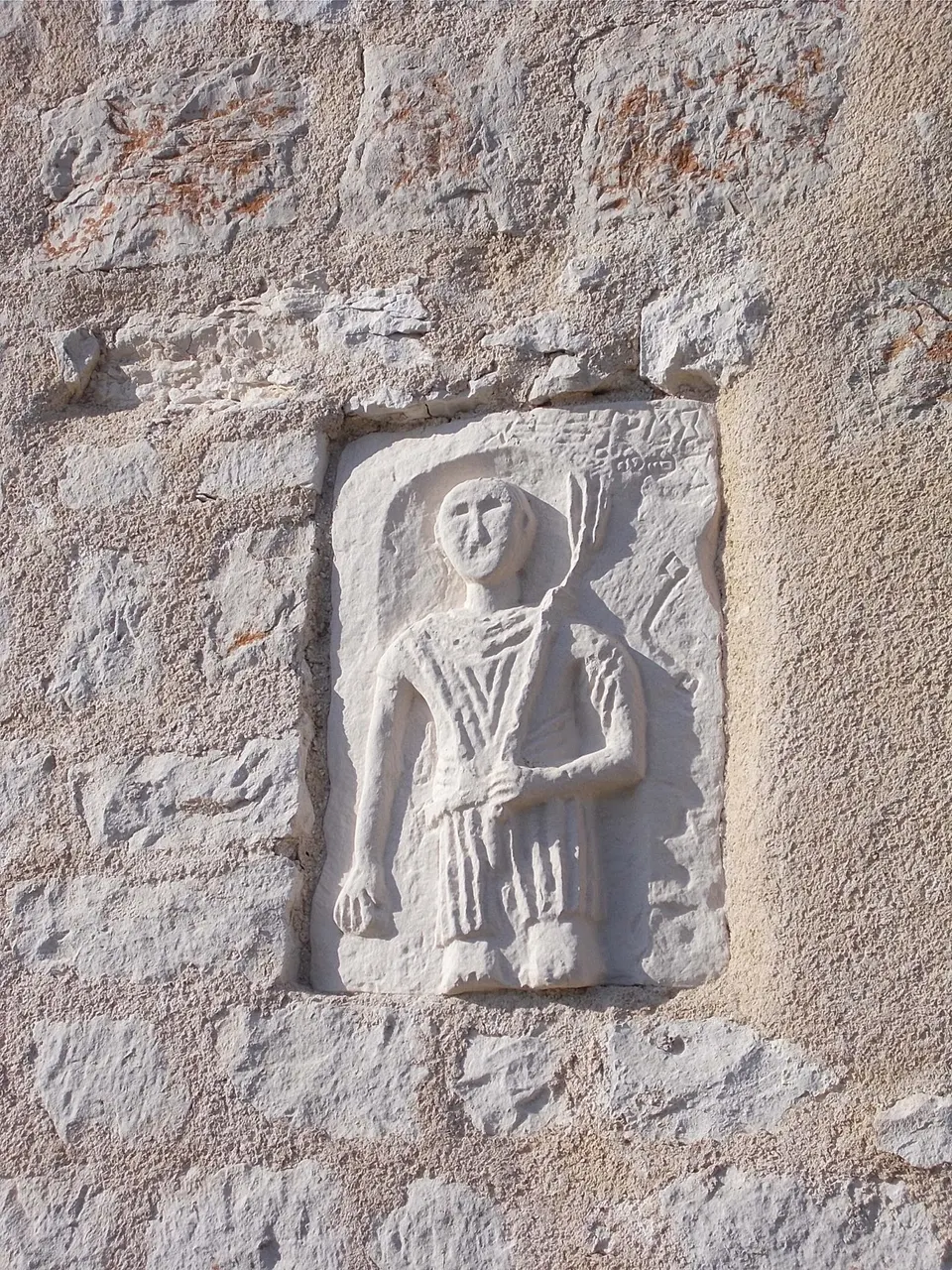
The relief itself is older still and is generally thought to be from antiquity; it is often interpreted as a depiction of the god Silvanus. Seeing the two together, an ancient figure and an early Slavic inscription on the same small wall, is a quiet lesson in how many layers of history Istria carries. If the theme interests you, the Glagolitic Alley near Roč and Hum in northern Istria continues the story.
Plomin Bay
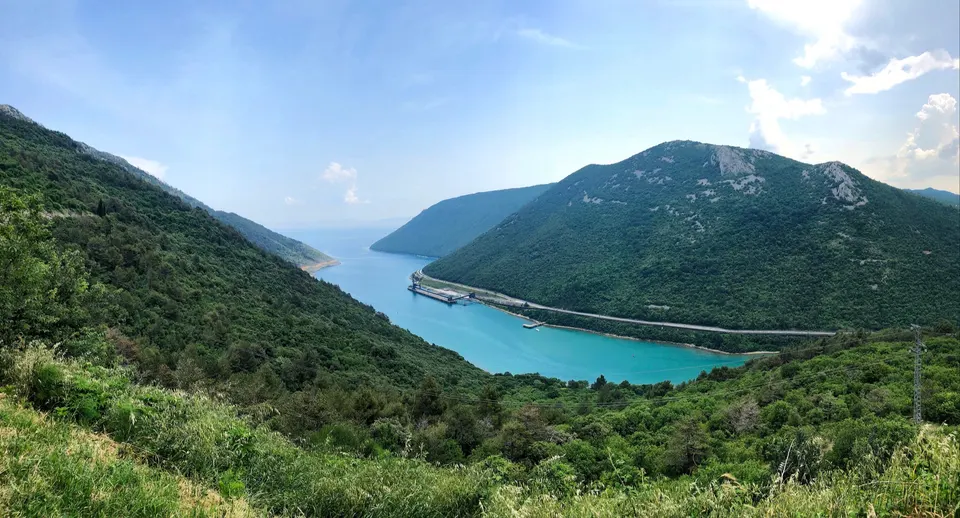
From the edge of the old village and from the road above it, the view over Plomin Bay is one of the most dramatic on the peninsula: a slim ribbon of turquoise water between steep, wooded slopes. At the head of the bay stands a coal-fired power station with a very tall chimney, which divides opinion. Some find it a scar on the landscape, others see it as part of the industrial history of this coast, which was shaped by coal mining for much of the twentieth century. Either way, the bay itself remains beautiful, especially in the soft light of evening.
On the east coast, the mountains come right down to the water, and every bend in the road opens another view of the islands.
What else to see on the east coast
- Brestova. North of Plomin, the small ferry port of Brestova connects Istria with Porozina on the island of Cres. Even if you are not crossing, the road down to the harbour gives fine views over the Kvarner.
- Labin and Rabac. South of Plomin, the hilltop old town of Labin and the seaside resort of Rabac make the best base on this coast. See our guide to Labin and Rabac.
- Raša. A small town built in the 1930s for coal miners, with planned streets and a striking church of St Barbara, the patron saint of miners. It is an unusual example of modern architecture in rural Istria.
- Učka. The mountain behind the coast is a nature park with walking trails and wide views over the whole peninsula and the Kvarner. See hiking in Učka Nature Park.
- Kršan and the Čepić field. Inland from Plomin, the villages below Učka look over a broad plain that was once a lake, with old castles and churches scattered on the slopes.
Good to know
- Driving. The coastal road is scenic but winding, with few places to stop. Take your time and use the marked lay-bys for photos.
- Parking in Plomin. Park along the main road at the foot of the old village and walk up; the lanes are too narrow for cars.
- The bura. In winter and spring the north-easterly bura can blow very strongly along this coast. Check the forecast if you plan to drive or take the ferry.
- Swimming. The east coast has pebble beaches and coves, especially around Rabac. Plomin Bay itself is not the best place for a swim.
- Churches. The church of St George the Elder may be locked; the inscription and relief are on the wall, so ask locally or look for the signs.
- Combining. Plomin fits easily into a day trip that also includes Labin, or into the scenic route north to Opatija.
Why the east coast is worth the detour
The east coast of Istria is not for everyone. It is steeper, windier and less polished than the west, with fewer sandy coves and fewer cafés on the waterfront. But for travellers who like dramatic landscapes, small stone villages and quiet evenings, it has a wild beauty that the rest of the peninsula cannot match. The houses here, with thick walls and small windows facing away from the bura, are a lesson in building for the climate.